
Imagine a medical education researcher reading an interview transcript from a supervising physician. The task is not just to summarize the words, but to decide which patterns matter, how they relate to the clinical setting, and what larger explanation might make sense of them. That shift from description to interpretation is where qualitative analysis becomes difficult.
About Takeshi Kondo
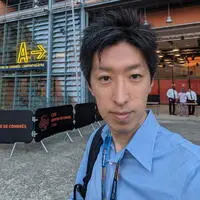
Takeshi Kondo, MD, MHPE, PhD, is a Hospital Lecturer at the Center for Postgraduate Clinical Training and Career Development, Nagoya University Hospital, Japan. He is a general physician and medical education researcher. He received a Master of Health Professions Education from Maastricht University and a PhD from Nagoya University, and is currently a PhD candidate at the School of Health Professions Education, Maastricht University. His research focuses on workplace-based assessment, postgraduate medical education and the use of AI in medical education. He serves on the editorial board of Medical Education (Japan).
About the authors
- Takeshi Kondo (Department of General Medicine/Family & Community Medicine and Center for Medical Education, Nagoya University Graduate School of Medicine, Japan)
- Junichiro Miyachi (Center for Medical Education, Nagoya University Graduate School of Medicine; Academic and Research Centre, Hokkaido Centre for Family Medicine, Japan)
- Anders Jönsson (Faculty of Education, Kristianstad University, Sweden)
- Hiroshi Nishigori (Center for Medical Education, Nagoya University Graduate School of Medicine, Japan)
Read the article
Read the full research article, “A mixed-methods study comparing human-led and ChatGPT-driven qualitative analysis in medical education research,” published in the Nagoya Journal of Medical Science in 2024.
Full citation
Kondo, T., Miyachi, J., Jönsson, A., & Nishigori, H. (2024). A mixed-methods study comparing human-led and ChatGPT-driven qualitative analysis in medical education research. Nagoya Journal of Medical Science, 86(4), 620–644. doi.org/10.18999/nagjms.86.4.620
We are grateful to Dr. Kondo for sharing his perspective on this study and for his contribution to the careful, transparent use of AI in qualitative research.
Research, accuracy and responsible AI
How Evidano's output has been evaluated, how its models were built, how your data is handled, and how to disclose or cite AI use in your own work.
- Resource
Human vs AI: validated accuracy benchmarks
Four head-to-head comparisons against expert human analysis — 371 interview transcripts with Arizona State and Penn State, 298 evaluation reports, 224 open-ended survey responses with UT Austin and Wichita State, and a 160-response manual-coding review.
- Resource
How Evidano’s models were trained
Model provenance for research-ethics review: a provenance-tiered curated corpus, and customer uploads, prompts and outputs excluded from training entirely.
- Resource
Data security for qualitative research
Encryption in transit and at rest, customer-controlled deletion, regional storage, and SOC 2 Type 2, GDPR, HIPAA-ready and CCPA/CPRA compliance.
- Resource
How to cite and disclose Evidano
Citation formats in APA, MLA, Chicago, Harvard and Vancouver, methods-section wording per workflow, and an AI-policy review of 41 journals across 8 disciplines.
- Resource
Environmental impact of an analysis workflow
Measured energy and water footprint of a typical project, with regional comparisons and mitigation.