
Amharic
Amharic read as a syllabary, order by order
Fidel is not an alphabet of consonants and vowels but a syllabary of more than 250 characters, where each of thirty-odd base consonants carries seven small variations for the vowel that follows it, and the difference between two of those orders can be a stroke or a loop no taller than a comma. A worn parchment or a low-contrast photograph erases exactly that stroke, and generic Latin-trained OCR has no model for the shape at all. Evidano reads Amharic fidel from Geʽez-script parchment through printed banknotes and public signage, keeping the original image next to every line.
Sample pages
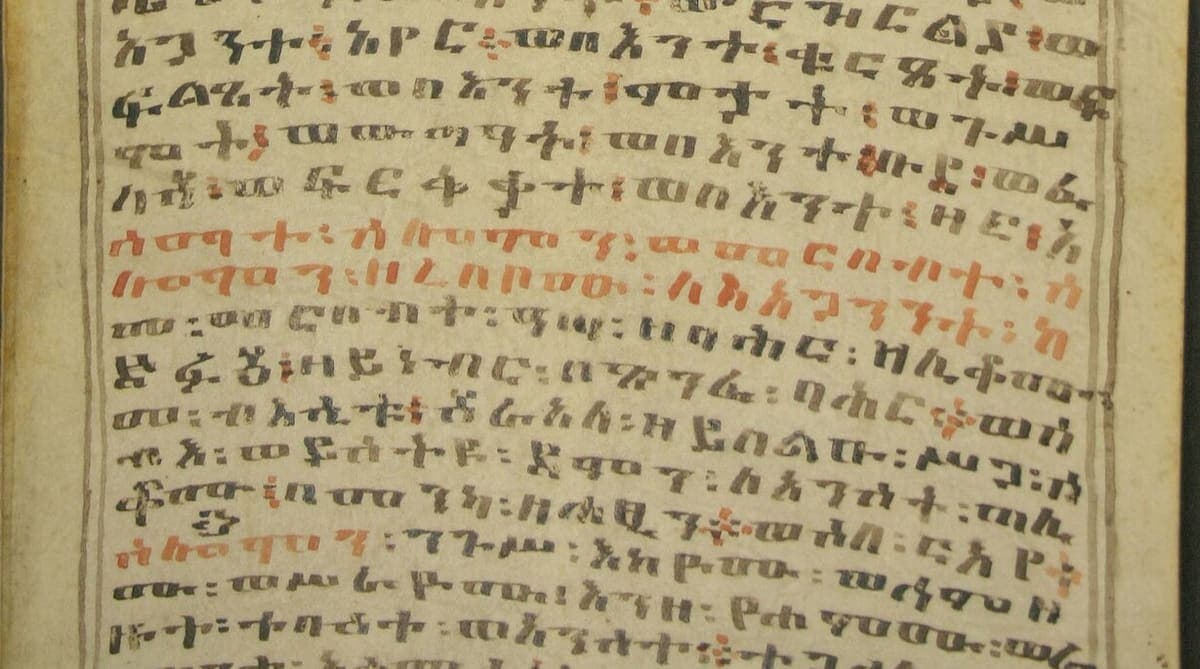
Metropolitan Museum of Art (acc. 95.66) · Source · Public domain
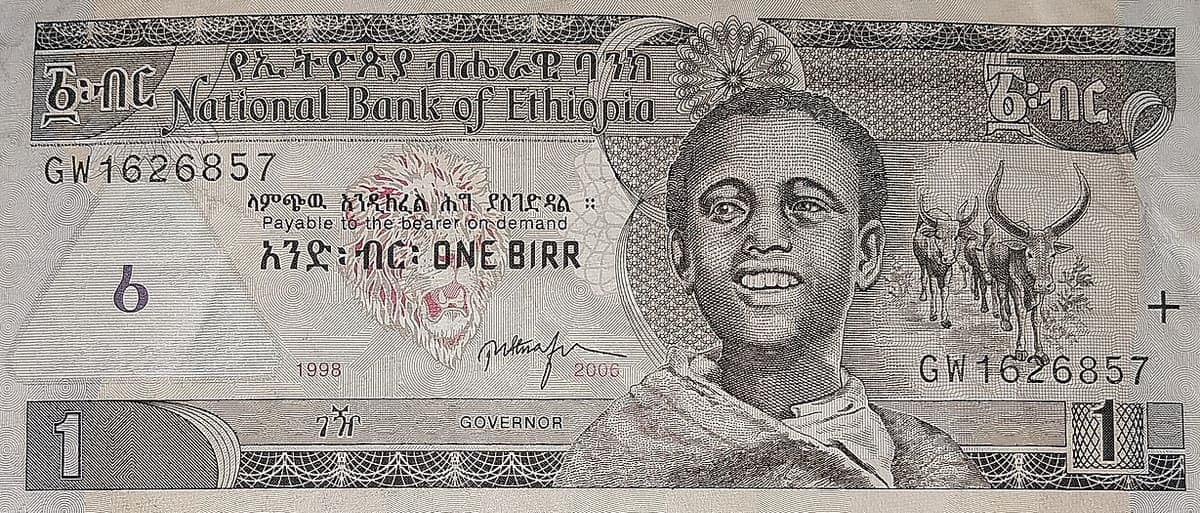
National Bank of Ethiopia, 2006 · Source · CC0 1.0 · Flosegura
Evidano Transcription
፩፡ብር
የኢትዮጵያ ብሔራዊ ባንክ
National Bank of Ethiopia
፩፡ብር
GW1626857
ላምጭዉ እንዲከፈል ሕግ ያስገድዳል ።
Payable to the bearer on demand
አንድ፡ብር፡ ONE BIRR
፩[?]
1998 [signature] 2006
GW1626857
1 ገዥ GOVERNOR 1
Generated by Evidano’s advanced model; not yet checked against a published edition.
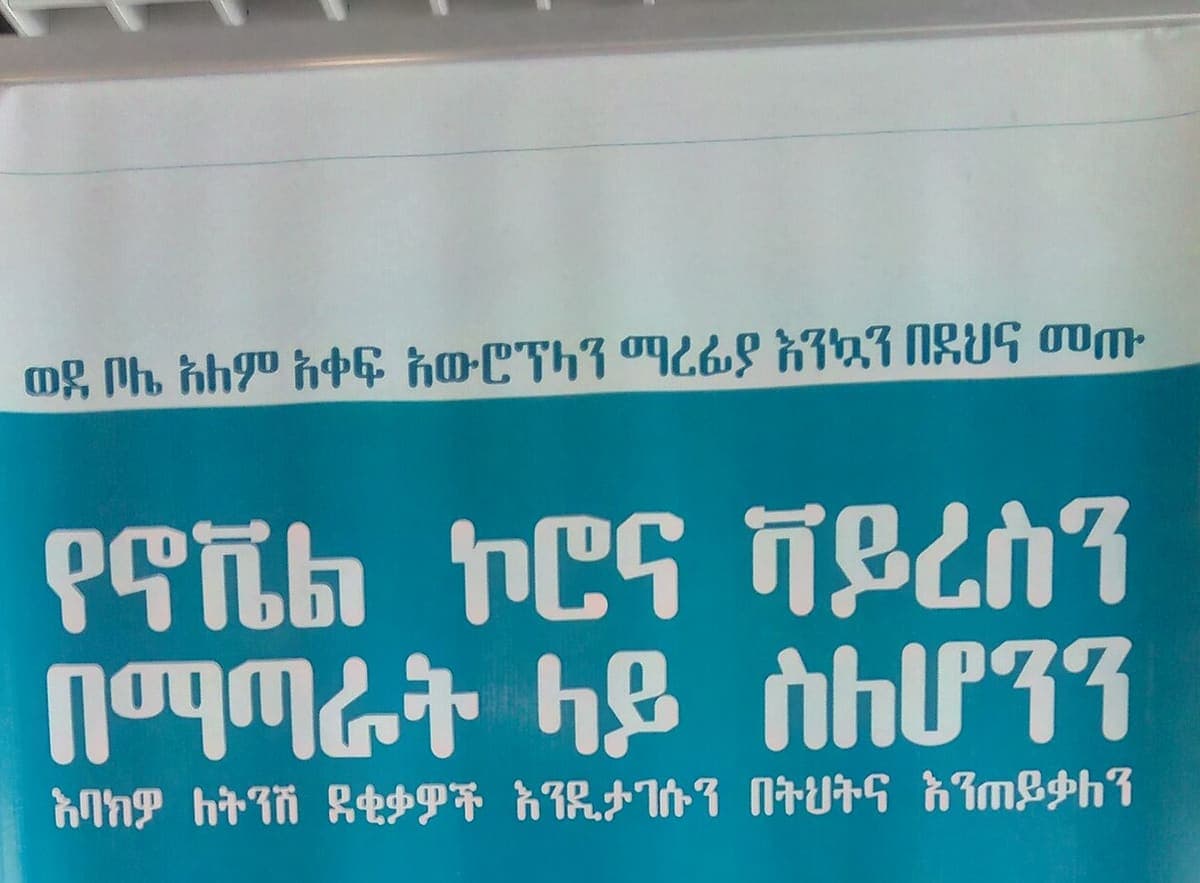
Source · CC BY-SA 4.0 · Jiròni B.
Evidano Transcription
ወደ ቦሌ አለም አቀፍ አውሮፕላን ማረፊያ እንኳን በደህና መጡ
የኖቬል ኮሮና ቫይረስን
በማጣራት ላይ ስለሆንን
እባክዎ ለትንሽ ደቂቃዎች እንዲታገሱን በትህትና እንጠይቃለን
Generated by Evidano’s advanced model; not yet checked against a published edition.
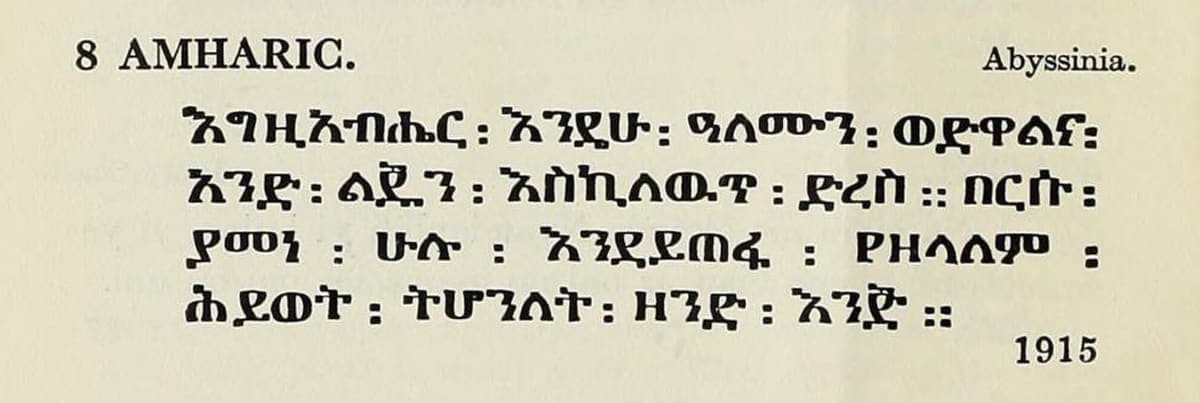
British and Foreign Bible Society, 1930 · Source · Public domain
Evidano Transcription
The four lines of fidel in the centre of the crop — John 3:16 in the 1915 Amharic version — taken from the proofread text of this exact page (pagequality level 3) on the multilingual Wikisource. The entry number, the region label "Abyssinia." and the date "1915" printed around the specimen are not part of the transcribed text. Line breaks follow the printed lines and the ፡ and ። marks are kept as they stand; the zero-width spaces the Wikisource markup adds around ፡ so the line can wrap have been stripped.
እግዚአብሔር፡እንዴሁ፡ዓለሙን፡ወድዋልና፡
አንድ፡ልጁን፡እስኪለውጥ፡ድረስ።በርሱ፡
ያመነ፡ሁሉ፡እንዳይጠፋ፡የዘላለም፡
ሕይወት፡ትሆንለት፡ዘንድ፡እንጂ።
Source: Page:The Gospel in Many Tongues (1930).pdf/8, via Wikisource (Public domain).
What Amharic fidel looks like on the page
The Geʽez script was developed for the classical liturgical language of Geʽez and later adapted, with extra characters, to write Amharic, Tigrinya and several other Ethiopian and Eritrean languages. Each character (a "fidel", plural "fidelat") represents a consonant plus a vowel, and every consonant appears in seven forms called orders, built by shortening, lengthening or adding a small loop, hook or bar to a base shape; the first order carries an inherent "ə" vowel and is the form usually cited as the letter’s name. Amharic adds a further set of labialised consonants for sounds such as "kw" and "gw", so the working syllabary used in ordinary writing runs past 250 distinct characters even before counting the punctuation and numerals that go with them.
On the page, words are divided by ፡, a pair of stacked dots rather than a space, and a sentence closes with ።, two pairs of dots one above the other; a comma-like pause is marked ፣ and a question ፧. Geʽez numerals are separate from both fidel and Arabic figures: they are their own set of characters for 1 to 10, for the tens, and for 100 and 10,000, each written with a line above and below, and they still appear on church calendars and manuscript colophons alongside the Ethiopian calendar’s own months and its seven- or eight-year-shorter count of the year. The oldest surviving Geʽez-script material is parchment: Gospel books, psalters and the long, narrow "magic scrolls" that a däbtera, a lettered cleric, wrote to order for a client, mixing prayer text with talismanic drawings of interlace and stylised faces. Print arrived far later — the first Amharic types were cut in Europe in the nineteenth century — and today’s fidel appears on everything from banknotes and shop signs to word-processed government forms, generally set with plain spaces alongside or instead of ፡.
Why ordinary OCR struggles here
Two hundred and fifty characters, seven orders each
A base consonant and its seven vowel orders often differ by a stroke that lengthens, a loop that closes, or a small tick added to one side, so misreading the order gives a real fidel character with the wrong vowel rather than an obvious error. A system trained mainly on alphabetic scripts has no equivalent unit to model, since the vowel is carried by the shape rather than by an added letter.
The ፡ separator looks like noise
A scanner or a generic layout model tends to treat the paired dots of ፡ as print noise, dust or a colon, rather than as the word boundary Amharic uses instead of a space; drop it silently and a line of separate words comes out as one run-on string.
Geʽez numerals are not Arabic figures
Manuscript colophons, calendars and older printed material give dates and quantities in the Geʽez numeral set, each letter marked with a line above and below, rather than in 0–9. An engine that does not recognise the set either drops the numeral or misreads it as an ordinary fidel character.
Magic scrolls mix prayer text with talismanic art
A healing or protective scroll interleaves close-set lines of black and red text with drawn faces, knotwork and geometric talismans that carry no phonetic content at all; a model has to tell the two apart rather than trying to read the drawing as more fidel.
Who works with this material
Manuscript scholars and church libraries
Ethiopian monastic libraries, the Hill Museum & Manuscript Library’s microfilm archive and university collections hold Gospel books, psalters and hagiographies that are catalogued far faster than they are transcribed. A first-pass reading of a Geʽez or Amharic leaf, with the two ink colours and the ፡ divisions kept, gives a scholar a working text before the critical edition begins.
Collectors and museums cataloguing scrolls and amulets
Healing and protective scrolls circulate through auction houses and private collections with only a physical description attached. A transcription that separates the prayer text from the talismanic drawing, and reads the archangel names and afflictions named in the prayer, turns a museum object record into something a researcher can actually search.
Banking, government and NGO document processing
Forms, currency, gazettes and public health material are printed bilingually or in fidel alone, often as scanned images rather than machine text. Offices working through these need the fidel read as fidel, with numerals and the ፡ and ። marks kept, rather than approximated in a Latin transliteration that a search index cannot match back to the original.
Amharic language technology and education projects
Building a corpus, a spellchecker or a teaching text for Amharic depends on ground-truth transcriptions of real printed and handwritten material across the seven orders and the labialised consonants, not just the clean type specimens most easily found online.
Getting the best transcription
Ask for fidel, not a transliteration
State plainly that the output should be the fidel characters themselves rather than a Latin romanisation, and that the seven vowel orders should be read exactly as they appear rather than normalised to a default order when a stroke is unclear.
Keep ፡ ፣ ። and ፧ in the output
Tell the prompt these marks are word and clause boundaries to preserve, not print noise to clean up. On a scroll or manuscript, ask for the two ink colours to be noted where they carry meaning, such as a rubricated name or heading.
Flag Geʽez numerals rather than converting them silently
For colophons, calendars or dated material, ask for Geʽez numerals to be transcribed as the numeral characters and, separately, given their Arabic-numeral value, so the date is checkable against the image rather than only appearing as a converted figure.
Separate prayer text from talismanic drawing
On a healing or protective scroll, ask for the running text to be transcribed line by line and for illustrated panels to be described rather than transcribed, so the output does not try to force letters out of an interlace pattern or a drawn face.
Frequently asked questions
- Can it tell the seven vowel orders of a fidel character apart?
- Yes. Each order is read as the distinct character it is rather than rounded to the nearest common form, and a stroke too faint or damaged to read with confidence is flagged instead of guessed.
- Does it keep the ፡ word separator instead of turning it into spaces?
- By default the mark itself is kept, since it is meaningful punctuation rather than a stylistic space; you can ask for it converted to ordinary spaces for a modern-style output, and the same rule is applied consistently across a batch.
- How are Geʽez numerals handled?
- They are transcribed as the numeral characters that appear, with the line above and below preserved, and you can request the equivalent Arabic-numeral value alongside them for dates and quantities.
- Can it read Amharic alongside Tigrinya or Geʽez on the same page?
- The shared fidel base is read consistently, and language-specific characters unique to Tigrinya or classical Geʽez are recognised rather than folded into the nearest Amharic letter; naming which language dominates the page helps with the handful of characters shared across all three with different values.
- What happens with the drawings on a healing scroll?
- Talismanic drawings, knotwork and faces are described rather than transcribed as text, and the running prayer lines around them are read in order, so the output does not mistake decorative strokes for fidel.
Related scripts and pages
Turn your Amharic sources into text
Upload a manuscript scroll, a printed form, a banknote or a photographed sign, and check the fidel reading line by line against the image.