
Ottoman Turkish · c. 1500–1800
From a divan folio to a searchable text
The classical Ottoman book is written in two hands that behave quite differently: an upright naskh that keeps to its line, and a nastaʿliq whose words slide downhill and stack on top of one another. Evidano transcribes both, keeps the couplet structure of a divan and the red rubrics of a chronicle, and lets you compare each line with the folio before you accept it.
Sample pages
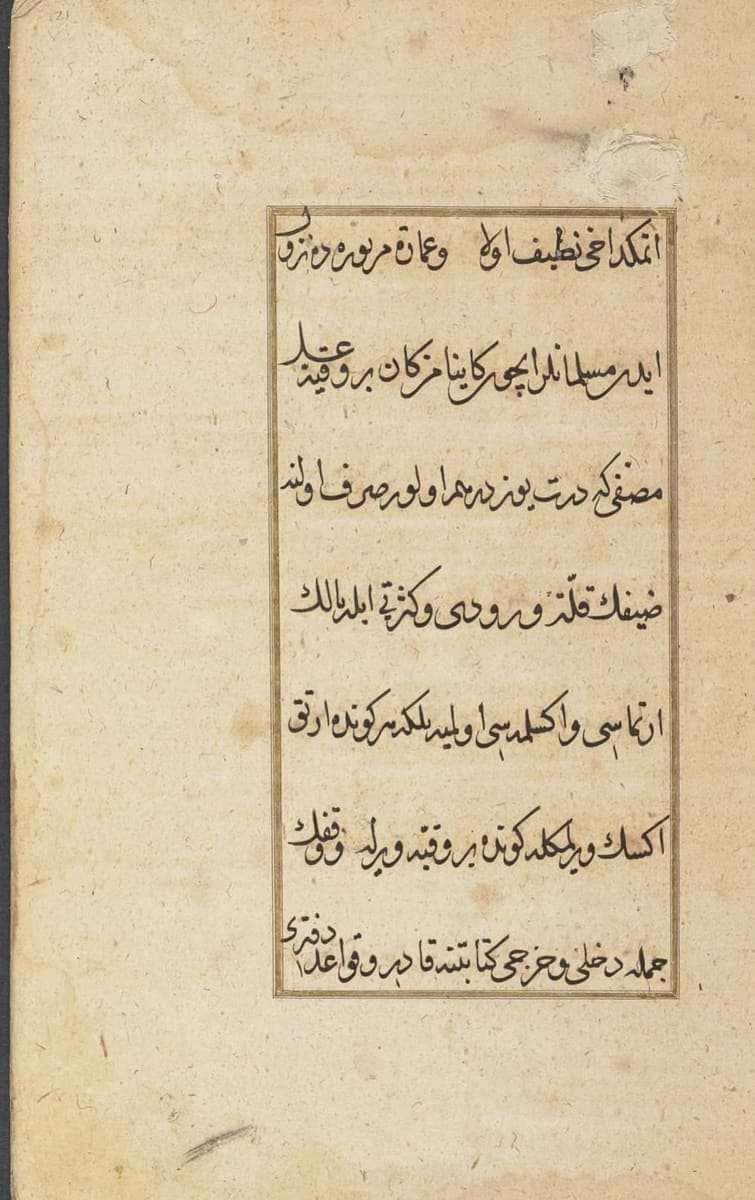
Free Library of Philadelphia, Rare Book Department, Lewis O 92, 1511 · Source · Public domain · Digitised by the University of Pennsylvania Libraries for OPenn
Evidano Transcription
اتمكدخی نظیف اولا وعمارت مزبوره ده نزول
ایدن [?] مسلمانلر ایچون کاینا من کان بروقیه عسل
مصفی که درت یوز درهم اولور صرف اولنه
ضيفك قلّت [?] و ورودى وكثرتى ايله مالك
ارتماسی واكسلمهسی اولمیه بلكه هر كونده ارتق
اكسك ويرلمكله كونده بر وقتده ويرله وقفک
جمله دخلى وخرجى كتابتنه قادر وقواعد دفتری
Generated by Evidano’s advanced model; not yet checked against a published edition.
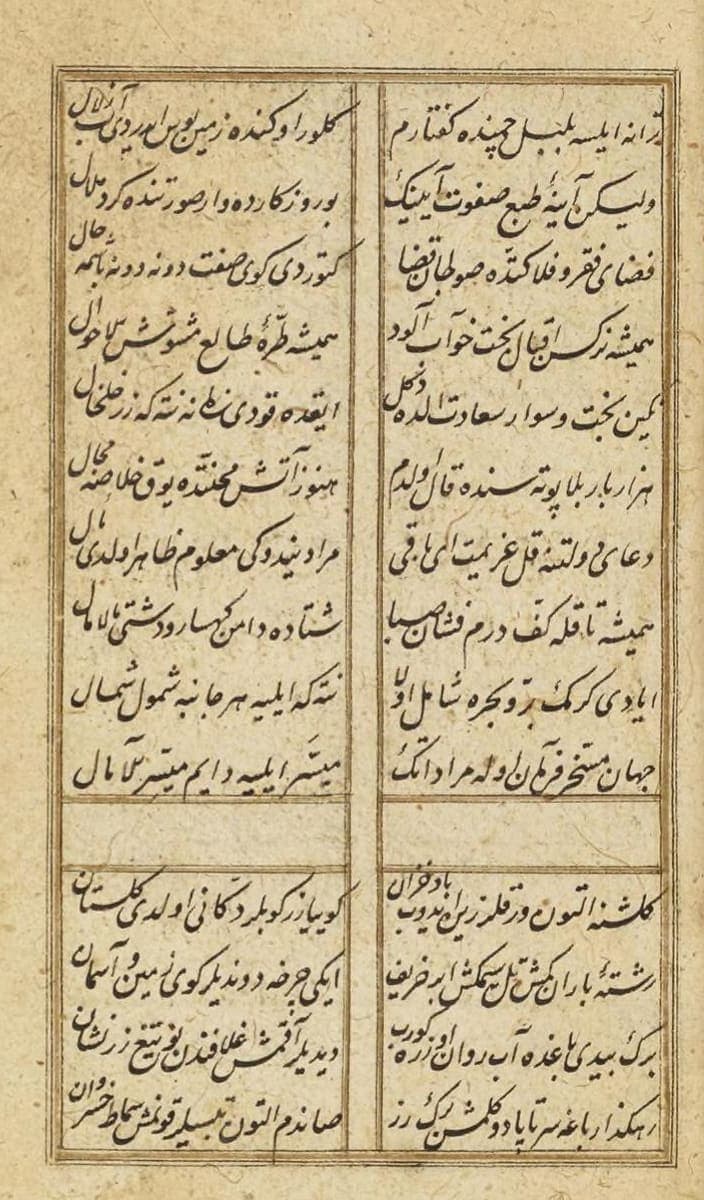
Free Library of Philadelphia, Rare Book Department, Lewis O 157, c. 1700 · Source · Public domain · Digitised by the University of Pennsylvania Libraries for OPenn
Evidano Transcription
ترانه ایلسه بلبل چمنده گفتارم
ولیکن آینهٔ طبع صفوت آیینك
فضای فقر و فلاکتده صولجان قضا
همیشه نرگس اقبال بخت خواب آلود
یکین بخت و سوار سعادت الده دکل
هزار بار بلا پوته سنده قال اولدم
دعای دولتنه قل عزیمت ای باقی
همیشه تا قله کف درم فشان صبا
ایادی کرمك بر و بحره شامل اولا
جهان مسخر فرمان اوله مرادانك
کلشنه التون ورقلر زین ایدوب باد خزان
رشتهٔ باران کشش تل سمکش ابر خریف
برك بیدی باغده آب روان اوزره کوروب
رهکذار باغه سرتاپا دوکلمش برك رز
کلور اوکنده زمین بوس ایدردی آب زلال
بو روزکارده وار صورتنده کرد ملال
کتوردی کوی صفت دونه دونه باشمه حال
همیشه طرهٔ طالع مشوش احوال
ایقده قودی نعلی [?] نته که زر خلخال
هنوز آتش محنتده یوق خلاصه مجال
مراد نیدوکی معلوم ظاهر اولدی آمال
شتاده دامن کهسار و دشتی مالامال
نته که ایلیه هر جانبه شمول شمال
میسر ایلیه دایم میسر الآمال
کویا زرکوبلر دکانی اولدی کلستان
ایکی چرخه دوندیلر کوی زمین و آسمان
دیدیلر آقمش غلافندن بو تیغ زرفشان
صاندم التون تسبیلر قونمش سماط خسروان
Generated by Evidano’s advanced model; not yet checked against a published edition.
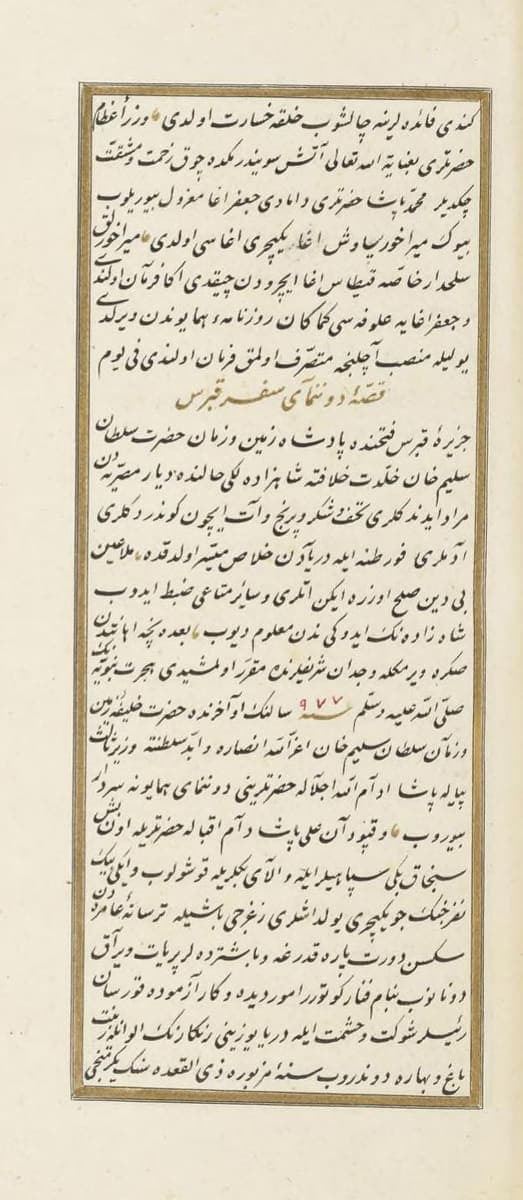
Free Library of Philadelphia, Rare Book Department, Lewis O 93, 1722 · Source · Public domain · Digitised by the University of Pennsylvania Libraries for OPenn
Evidano Transcription
کندی فائده لرینه چالشوب خلقه خسارت اولدی * وزرأ عظام
حضرتلری بعنایة الله تعالی آتش سوندرمکده چوق زحمت و مشقت
چکدیلر محمد پاشا حضرتلری دامادی جعفر اغا معزول بیوریلوب
بیوک میر اخور سیاوش اغا یکچری اغاسی اولدی * میر اخورلق
سلحدار خاصه قبطاس اغا ایچرو دن چیقدی اکا فرمان اولندی
و جعفر اغایه علوفه سی کما کان روزنامهء همایوندن ویرلمک
یولیله منصب آچلنجه متصرف اولمق فرمان اولندی فی یوم
قصهء دوننمای سفر قبرس
جزیرهء قبرس فتحنده پادشاه زمین و زمان حضرت سلطان
سلیم خان خلدت خلافته شاهزاده لکی حالنده دیار مصریه دن
مراد ایدندکلری تحف شکر و پرنچ و ات ایچون کوندردکلری
آدملری فورطنه ایله دریادن خلاص میسر اولدقده ملاعین
بی دین صلح اوزره ایکن آتلری و سایر متاعی ضبط ایدوب
شاهزاده نک ایدوکی ندن معلوم دیوب * بعده نچه اهانتلردن
صکره ویرمکله وجدان شریفلرنده مقرر اولمشیدی هجرت نبویه نک
صلی الله علیه وسلم ۹۷۷ سالنک اواخرنده حضرت خلیفهء زمین
و زمان سلطان سلیم خان اعز الله انصاره وابد سلطنته وزیر ثالث
پیاله پاشا ادام الله اجلاله حضرتلرینی دوننمای همایونه سردار
بیوروب * و قپودان علی پاشا دام اقباله حضرتلریله اون بش
سنجاق بکی سپاهیلر ایله و آلای بکلریله قوشولوب و ایکی بیک
نفر جنکجو یکچری یولداشلری زغرجی باشیله ترسانهء عامره دن
سکسن دورت پاره قدرغه و باشترده لر پریات و یراق
دونانوب بنام فنار کوتورر امور دیده و کار آزموده قورسان
رئیس شوکت و حشمت ایله دریا یوزینی رنکارنک الوانلریله زینت
باغ و بهاره دوندیروب سنهء مزبوره ذی القعده سنک یکرمنجی
Generated by Evidano’s advanced model; not yet checked against a published edition.
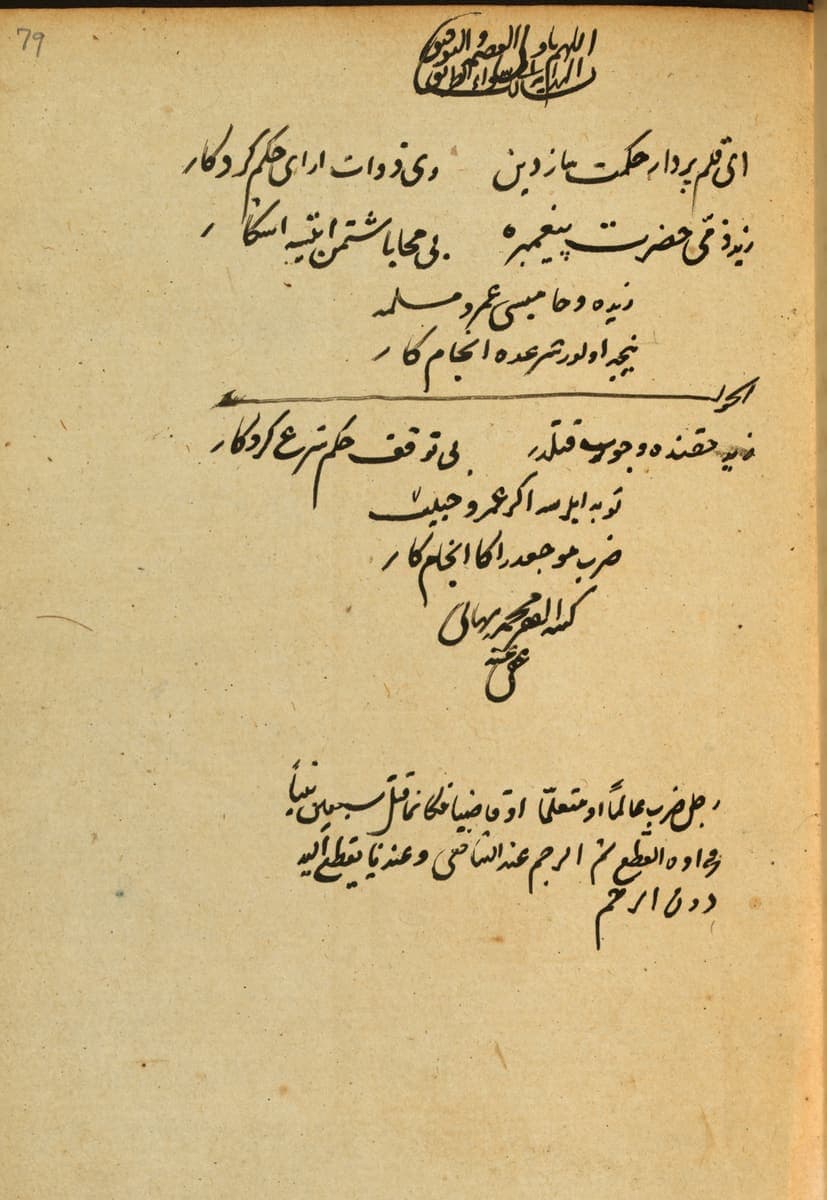
Walters Art Museum, Baltimore, W.591, 1512 · Source · Public domain
Evidano Transcription
79
اللهم يا ولي [?] العصمة والتوفيق
[illegible] سواء الطريق
ای قلم پرداز حکمت ساز دین
وی ذوات ارای حکم کردگار
زید ذمّی حضرت پیغمبره
بی محابا شتم ایتسه اشکار
زیده و حامیسی عمرو مسلمه
نیجه اولور شرعده انجام کار
الجواب
زید حقنده وجوب قتلدر
بی توقف حکم شرع کردگار
توبه ایدرسه [?] اگر عمرو خبیث
ضرب موجعدر اکا انجام کار
کتبه الفقیر محمد بهائی
عفی عنه
رجل ضرب عالماً او متعلماً او قاضياً فكأنما قتل سبعين نبياً
جزاؤه القطع ثم الرجم عند الشافعي وعندنا يقطع اليد
دون الرجم
Generated by Evidano’s advanced model; not yet checked against a published edition.
The two hands of the Ottoman book
From the sixteenth century Ottoman scribes divided their work between scripts. Prose — histories, legal opinions, endowment deeds, religious manuals — is normally copied in naskh, an upright, evenly spaced hand with most of the dots present and headings picked out in red. Poetry and Persianate literary material, and much private correspondence, go into nastaʿliq: the baseline of each word descends from right to left, letters are joined in long sweeping groups, and a word can be written above the tail of the one before it. In verse the two hemistichs of a couplet sit in ruled columns, and the rhyme word is often lifted into the margin when the line runs out of room.
Ottoman Turkish of these centuries is Turkic in grammar and largely Arabic and Persian in vocabulary. The Persian izafet chains words together with a vowel that is usually not written at all, so bir nüsha-i şerife looks like three separate words on the page. Arabic supplies fixed formulae — the basmala, salutations after the Prophet’s name, sallallahu aleyhi ve sellem contracted to a few letters, the ﷽ of an opening — and Arabic plurals are used for Turkish nouns. Vowel signs appear only where a word might be mistaken, and shadda, hamza and the Arabic case endings turn up in quoted passages and then vanish.
The apparatus around the text matters as much as the text. Catchwords in the lower left corner of the verso chain the quires. Glosses run between the lines and in the margins, sometimes at a slant, sometimes in a later and quite different hand. Corrections are marked with a small ṣaḥḥ, omitted words are written in the margin with a caret-like sign, and endowment or ownership statements and seal impressions are stamped across the first and last pages. A page can therefore carry four or five separate texts, and separating them is part of the transcription rather than a step after it.
Why ordinary OCR struggles here
A baseline that will not stay still
Nastaʿliq compresses a word group into a diagonal that ends far below where it began, then starts the next group high again. Layout analysis built for horizontal type slices such a line in the wrong place, splitting words between two output lines or fusing a rhyme word in the margin onto the wrong hemistich.
Ligatures that hide letters
Discretionary ligatures such as lam-mim-ha or the tight sin-ha of a scribal hand fuse three or four letters into one continuous shape whose individual teeth are no longer drawn. Reading them depends on recognising the whole word, which is why a system that thinks in characters fails on precisely the commonest words.
Selective vowelling and drifting dots
A copyist vowels a Qurʾanic quotation carefully and leaves the surrounding Turkish bare, or drops a dot under a ye at the end of a word because nothing else could go there. The transcription has to reproduce what is on the page rather than a regularised version of it.
Marginalia, seals and later hands
Endowment stamps, reader’s notes, price marks and eighteenth-century collation notes all sit on the same folios as the sixteenth-century text. Unless the pass distinguishes them, a manuscript’s search index quietly mixes a scribe’s words with a later owner’s.
Who works with this material
Literary scholars editing divans
Producing a text of an Ottoman poet means collating several manuscripts couplet by couplet. What helps is a transcription that keeps each hemistich in its column, records the rhyme word even when it has migrated into the margin, and does not silently repair a defective metre.
Historians reading chronicles and şeriyye records
Court registers, chronicles and biographical dictionaries are consulted for names, dates, prices and offices. A first pass that captures the red rubrics and the marginal additions is enough to build a searchable index long before a full critical text exists.
Islamic manuscript cataloguers
Cataloguers need incipit, explicit, colophon, copyist, date and the endowment or ownership notes on the flyleaves. These are short, formulaic and often in Arabic, and getting them out of a codex reliably is what turns a shelf list into a catalogue.
Conservation and provenance research
Seal impressions, waqf statements and price notes trace a book from a library in Istanbul to a European sale room. Transcribing them, with a note of where on the page each sits, gives provenance work something to search.
Getting the best transcription
Name the script and the layout
Tell the model whether the folio is naskh prose in a single ruled frame or nastaʿliq verse in two columns, and how many columns and lines to expect. Layout is the largest single source of error on Ottoman book pages, and stating it removes most of it.
Decide what to do with izafet and abbreviations
Say whether contractions such as the honorific after a name should be expanded, marked or left as written, and whether an izafet vowel should be supplied in transliteration. Fixing this once keeps a whole manuscript internally consistent.
Ask for the margins as a separate layer
Glosses, corrections and later notes should come back labelled by position — right margin, upper margin, interlinear — rather than folded into the main text. That also makes it obvious when a gloss belongs to a different century than the text it comments on.
Start with the colophon
The last page usually gives the copyist, the place and the date in a formulaic sentence. It is short, checkable and full of proper names, so it tells you quickly whether the settings are right before you commit to three hundred folios.
Further reading on this hand
The palaeography guides the in-app selector points to for this domain, if you want to check a transcription against the standard references.
- Scripts
This University of Pennsylvania guide introduces Naskh, Nastaʿliq, and other scripts used across Islamic manuscript cultures. It describes Naskh as a common book hand and Nastaʿliq as a strongly sloping, highly ligatured script associated particularly with Persianate production. The guide compares stroke angle, proportion, joining behavior, and typical textual functions. These distinctions are useful for Ottoman manuscripts in which Turkish, Arabic, and Persian content may be assigned different scripts or levels of formality.
Frequently asked questions
- Does nastaʿliq need different handling from naskh?
- Yes. Naskh sits on a line and can be segmented conventionally; nastaʿliq has to be read as descending word groups, and its line detection has to allow one word to overlap the tail of the next. Saying which script is on the page is the single most useful instruction you can give.
- Will couplets stay in the right order?
- In a two-column verse layout the reading order is across the line, not down each column, and that has to be stated. The output can keep one couplet per line so that a later collation against a printed edition lines up.
- How are Persian and Arabic passages handled inside a Turkish text?
- They are transcribed in place and can be labelled by language, which matters because a Persian couplet quoted in a Turkish chronicle would otherwise pollute a Turkish word list. Vowel signs present in the quotation are kept.
- Can catchwords be excluded from the running text?
- They can be captured separately or dropped. Keeping them is useful when you are checking quire structure or looking for a missing leaf, but they should never be run on to the last line of the page.
- What about a folio where the ink has bled through from the other side?
- Show-through is a common problem on thin Ottoman paper. Reversed ghost letters can be recognised as coming from the verso and left out, and a note recorded where the show-through makes a real letter uncertain.
Related scripts and pages
Transcribe your Ottoman codices
Upload a folio, choose Classical Ottoman Naskh and Nastaʿliq Manuscripts, and settle the layout on one page before running the volume.