
Persian · c. 1400–1700
Persian poetry as the calligraphers set it
Nastaʿliq is built out of falling word groups rather than letters on a line: the pen starts high, drops to the left, and lifts again for the next word, and inside a word the letters lie on top of one another. Add four ruled columns of verse, a diagonal panel in the corner and margins written at three different angles, and reading order becomes as hard as reading the letters. Evidano keeps the columns, the hemistichs and the glosses apart.
Sample pages
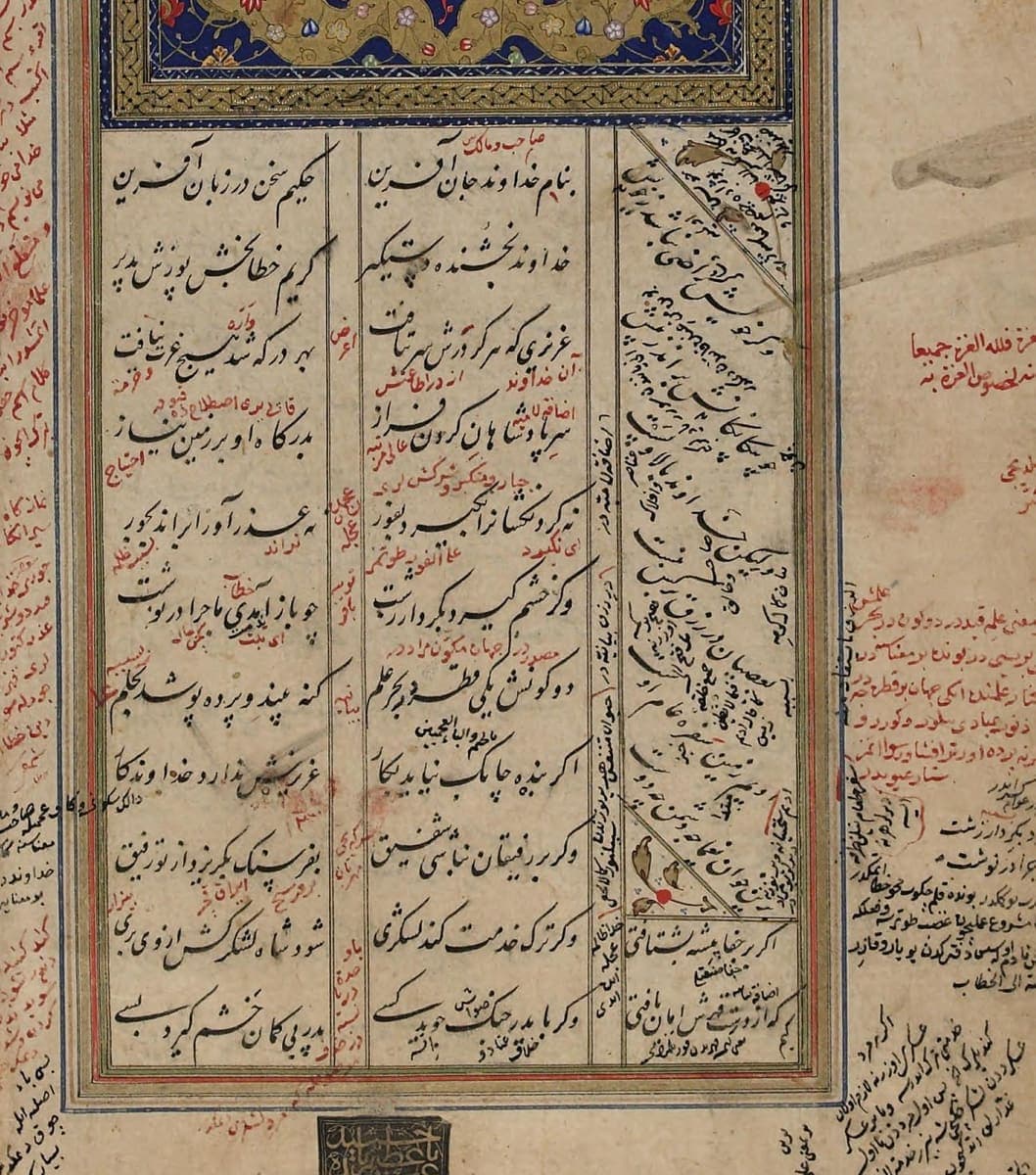
Library of Congress, African and Middle Eastern Division, 1-86-154.120, 16th century · Source · Public domain · Library of Congress, African and Middle East Division, Near East Section Persian Manuscript Collection
Evidano Transcription
The first six couplets of the two ruled columns, which follow the opening of Saʿdī’s Būstān in the order printed here; the right-hand column carries the first hemistich of each couplet and the left-hand column the second. The couplets lower down the page stand in a different order from the printed text and are not included, and neither are the red glosses or the marginal commentary. The Ganjoor text carries editorial vowel marks that the manuscript does not.
به نام خداوندِ جانآفرین / حکیمِ سخن در زبانآفرین خداوند بخشندهٔ دستگیر / کریم خطابخش پوزشپذیر عزیزی که هر کز درش سر بتافت / به هر در که شد هیچ عزّت نیافت سر پادشاهان گردنفراز / به درگاه او بر زمینِ نیاز نه گردنکشان را بگیرد به فور / نه عذرآوران را براند به جور وگر خشم گیرد ز کردارِ زشت / چو بازآمدی ماجرا درنوشت
Source: سعدی، بوستان، در نیایش خداوند، بخش ۱ – سرآغاز, Ganjoor (Public domain).
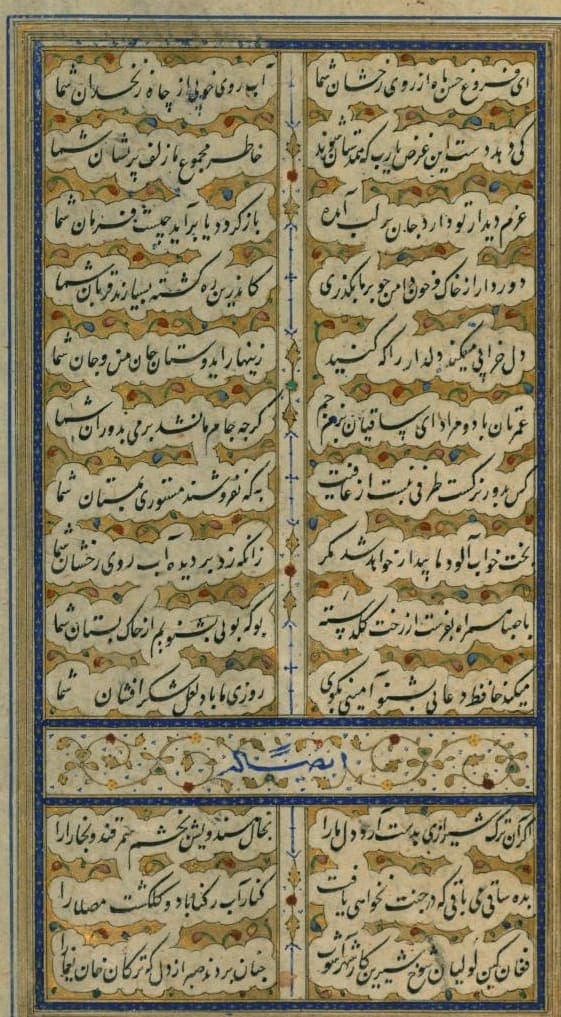
Walters Art Museum, Baltimore, W.630, f. 2a, 1559 · Source · Public domain
Evidano Transcription
The three couplets of the lower panel, below the illuminated heading: the opening of Ḥāfiẓ’s ghazal 3 in the standard numbering. Each line of the manuscript is one couplet, first hemistich right, second hemistich left. The ghazal above the heading, whose lines all end in شما, is not included. Ganjoor prints the text with editorial vowel signs that the page does not carry.
اگر آن تُرکِ شیرازی به دست آرَد دلِ ما را / به خال هِندویَش بَخشَم سَمَرقند و بُخارا را بده ساقی مِیِ باقی که در جَنَّت نخواهی یافت / کنارِ آبِ رُکناباد و گُلگَشتِ مُصَلّا را فَغان کاین لولیانِ شوخِ شیرینکارِ شهرآشوب / چُنان بُردند صبر از دل که تُرکان خوانِ یَغما را
Source: حافظ، غزلیات، غزل شمارهٔ ۳, Ganjoor (Public domain).
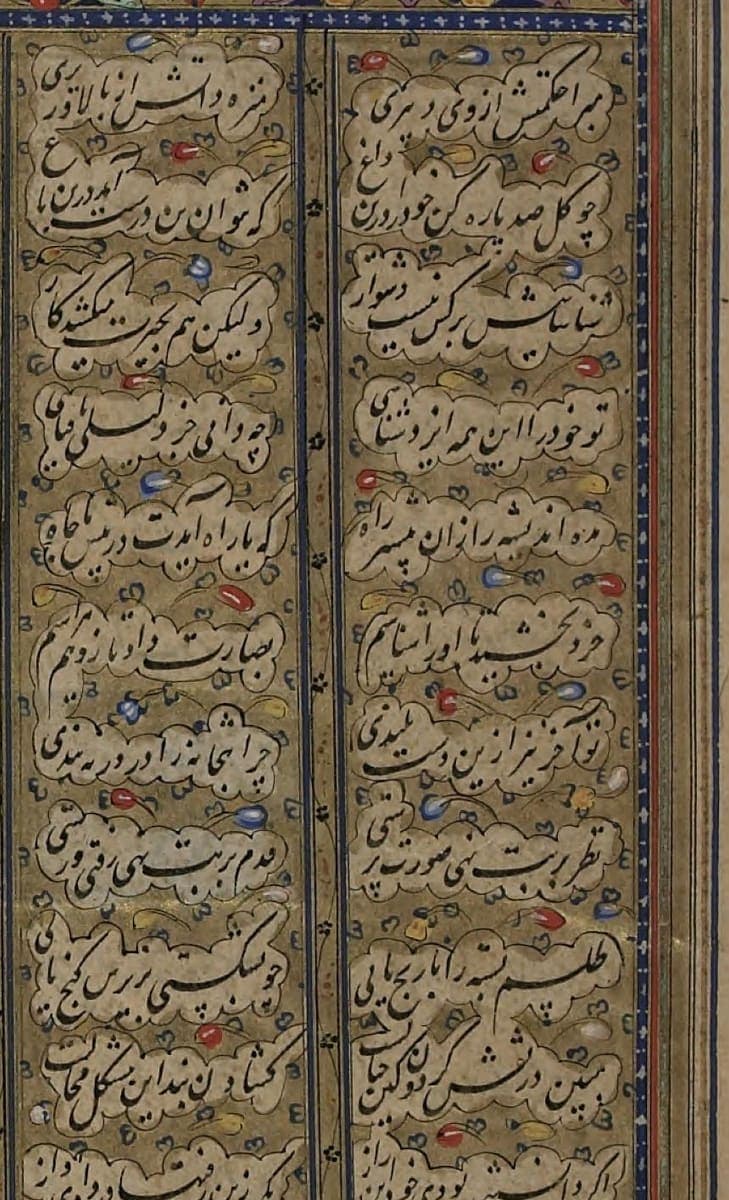
Library of Congress, African and Middle Eastern Division, 1-84-154.2b, 16th century · Source · Public domain · Library of Congress, African and Middle East Division, Near East Section Persian Manuscript Collection
Evidano Transcription
مبرا حکمتش از [?] دیری
چو گل صد پاره کن خود را درین داغ
شناسایش بر کس نیست دشوار
تو خود را این همه ازو [?] شناسی
مده اندیشه را زان بیشتر راه
خرد بخشید تا او را شناسیم
تو آخر نیز ازین دست پلیدی [?]
نظر بر بت نهی صورت پرستی
طلسم بسته را با رنج [?] یابی
مبین در نقش گردون کان [?] خیالست
اگر دانسته بودی خود ازین راز [cut off]
منزه ذاتش از بالا و زیری
که نتوان بی درست آید درین باغ
ولیکن هم بحیرت میکشد کار
چه دانی جز دلیلی یا قیاسی [?]
که یا راه آیدت در پیش یا چاه
بصارت داد تا زو هم هراسیم
چرا بتخانه را در در [?] نبندی
قدم بر بت نهی رفتی و رستی
چو بشکستی بزیرش گنج یابی
گشادن بند این شکل محالست
[cut off]
Generated by Evidano’s advanced model; not yet checked against a published edition.
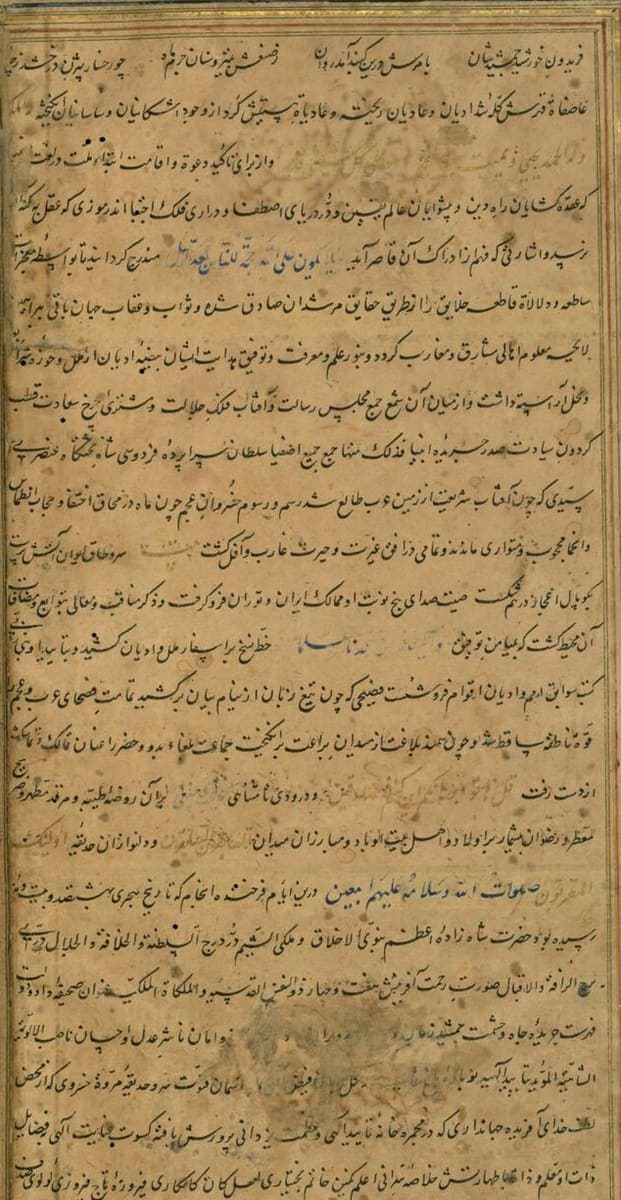
Walters Art Museum, Baltimore, W.600, f. 2b, 16th century · Source · Public domain
Evidano Transcription
[first line: four verse fragments, not verified]
عاصفات قهرش گل شدادیان و عادیان ریخته و عادیات هیبتش [?] گرد از وجود اشکانیان و ساسانیان انگیخته
[faded gold, illegible] و از برای تاکید دعوة و اقامت ابتنای [?] ملت و لغت [?]
که عقده گشایان راه دین و پیشوایان عالم یقین و دُرّ دریای اصطفا و دراری فلک اجتبا اندر رموزی که عقل به کنه
نرسید و اشارتی که فهم از ادراک آن قاصر آید [faded] علی الله حجة للناس بعد الرسل [?] مندرج گردانید تا بواسطه معجزات
ساطعه و دلالات قاطعه خلایق را از طریق حقایق مرشدان صادق شرع و ثواب و عقاب جهان [?] باقی براهین
لایحه معلوم اهالی مشارق و مغارب گردد و بنور علم و معرفت و توفیق هدایت ایشان [?] ادیان [?] و حوزه [?]
و خلل [?] بسته داشت و از میان آن شمع جمع مجلس رسالت و آفتاب فلک جلالت و مشتری چرخ سعادت قطب
گردون سیادت صدر جریده انبیا فذلک منها جمع جمیع اصفیا سلطان سراپرده [?] فردوسی شاه تختگاه عنصری [?]
[?] که چون آفتاب شریعت از زمین عرب طالع شد رسم و رسوم خسروان عجم چون ماه در محاق اختفا و حجاب انطما
و انجا محجوب و متواری ماندند و تمامی در افق غیرت و حیرت غارب و آفل گشت [faded gold] سر و طاق ایوان آتش پرست
بکوپال اعجاز در هم شکست صیت صدای پنج نوبت او ممالک ایران و توران فرو گرفت و ذکر مناقب و معالی بتوابع و مضافات
آن محیط گشت که بمیامن توفیق [faded] خط نسخ بر اسفار ملل و ادیان کشید و بتایید ایزدی
کتب سوابق امم و ادیان اقوام فرو شست فصیحی که چون تیغ زبان از نیام بیان برکشید تمامت فصحای عرب و عجم
قوة ناطقه [?] ساقط شد و چون سمند بلاغت از میدان براعت برانگیخت جماعت بلغاء بدو و حضر را عنان تمالک و تماسک [?]
از دست رفت [faded gold] و درودی نامتناهی [faded] بران روضه طیبه و مرقد مطهر [?]
معطر و رضوان بسیار بر اولاد و اهل بیت او باد و مبارزان میدان [faded gold] و دلنوازان حدیقه [faded gold]
[faded gold] صلوات الله و سلامه علیهم اجمعین درین ایام فرخنده انجام که تاریخ هجری بهشتصد و بیست و نه
رسیده بود حضرت شاه زاده اعظم [?] الاخلاق و ملکی الشیم دُرّ درج السلطنة و الخلافة و الجلال [?]
برج الرافة و الاقبال صورت رحمت آفرینش هفت و چهار ذو النفس القدسیه و الملکات الملکیه عنوان صحیفه داد و [?]
فهرست جریده جاه و حشمت جمشید زمان [stained, illegible] و امان ناشر عدل او جهان ناصب الالویة
[?] المؤید بتایید آسمانی [stained, illegible] آسمان فتوت [?] و حدیقه مروة خسروی که از محض
لطف خدای آفریده جهانداری که در حجره خانه تایید الهی و [?] یزدانی پرورش یافته کسوت عنایت الهی فضایل
ذات او بعلم و [?] باطهارتش خلاصه [illegible] خاتم [?] بختیاری لعل کان کامکاری فیروزه تاج فیروزی لولوی صدف
Generated by Evidano’s advanced model; not yet checked against a published edition.
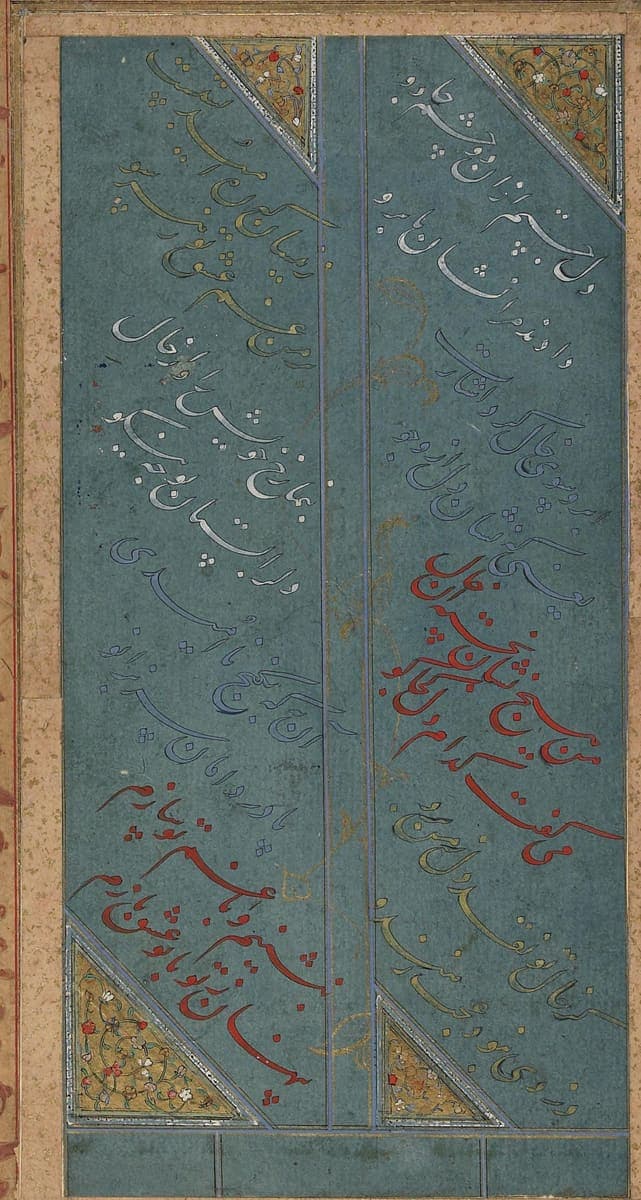
Library of Congress, African and Middle Eastern Division, 1-85-154.71, 16th century · Source · Public domain · Library of Congress, African and Middle East Division, Near East Section Persian Manuscript Collection
Evidano Transcription
دل جستم از ان دو چشم جادو
دادند مرا نشان بابرو
ابرو سوی [?] خال کرد اشارت
یعنی که نشان دل ازو جو
من هیچ نشان نجسته ان خال
می گفت کدام دل کجا کو
گر خال تو نقد دل ز من برد
دزدی نبود عجب ز هندو
[illegible] امید بشکست
از من غم عشق تو ز هر سو
بنما رخ خویش را و ان خال
دلرا [illegible] تو چه نیکو
آن که بکنج نا امیدی
پا در دامان [illegible] زانو
بنشینم و با غم تو سازم
پنهان ز تو با تو عشق بازم
Generated by Evidano’s advanced model; not yet checked against a published edition.
The shape of a nastaʿliq page
Nastaʿliq was codified in Iran around 1400 and stayed the script of Persian poetry until printing arrived. Mīr ʿAlī Tabrīzī is credited with the synthesis, and a line of masters after him — Sulṭān ʿAlī Mashhadī in Herat, Mīr ʿAlī Haravī, Malik Daylamī and Shāh Maḥmūd Nīshāpūrī under the Safavids — fixed its proportions so precisely that a page can often be dated within a generation from the shape of the letters alone. The hand is written with a broad nib cut at a steep angle, so every stroke swings between a hairline and a thick wedge. Each word is a unit that hangs from its first letter and descends to the left; the final ی، ن and ل sweep back beneath the word in a deep bowl, and the tail of one word regularly passes under the body of the next.
Books are ruled before they are written. Masnavī poetry is set in two or four narrow columns divided by gold rules, with the two hemistichs of a verse side by side, so a page of four columns is read as two half-pages: the right pair carries the first twenty couplets and the left pair the next twenty. Ghazals and qaṣīdas sit in two columns; a chapter heading is written in white or blue inside an illuminated band; and where a poem ends short, a triangular thumb-piece of gold and flowers fills the corner left by a panel of diagonal writing. Album pieces are freer still: on a qiṭʿa the lines are written on the diagonal in white, red, yellow and blue ink on tinted paper, with the calligrapher’s signature squeezed into the last corner.
Around all this the readers wrote. A studied copy of the Būstān or the Gulistān carries a lexical gloss over half the words, in red or in a smaller black hand, tied to the word it explains; a commentary can run up the outer margin at forty-five degrees, turn at the corner, and continue upside down along the foot. Cloud bands in gold separate the writing from its background, small rosettes divide the verses, a catchword sits under the last line of every verso, and a seal impression or an ownership note may be stamped across the frame. All of it is text, and none of it is in the reading order of the poem.
Why ordinary OCR struggles here
There is no baseline to follow
In nastaʿliq each word sits on its own descending axis, so the letters of a single word occupy several vertical levels and the word after it starts higher again. A recogniser that assumes letters sit in a row cuts the word in the wrong places, and the pieces come out as different letters.
Letters written on top of one another
Ligatures pile the members of a word vertically: a کـ can be tucked under a following ه, a س flattened to a bar under a whole cluster. The stack has to be resolved into a linear sequence of letters, which depends on knowing the word rather than on separating the ink.
Ruled columns that are not read in order
On a four-column masnavī page, reading straight across pairs the first hemistich of one couplet with the second hemistich of another and produces fluent nonsense. The transcription has to know that column one pairs with column two, and that columns three and four continue the same poem further down the text.
Margins written at every angle
Interlinear glosses, marginal commentaries running diagonally and upside down, headings in a different script, catchwords and later ownership notes all share the sheet with the poem. Merged into one stream they destroy the text; kept apart and labelled, they are half the value of the page.
Who works with this material
Editors of Persian classical poetry
Collating a ghazal across twenty manuscripts means recording each witness line by line, including the couplets a copy omits and the ones it adds. What matters is that the transcription reports the order of the page rather than the order of the printed edition.
Librarians cataloguing Persian codices
A catalogue entry needs the incipit, the explicit, the colophon and any seals. Those are exactly the passages a first pass can supply, and having them in text form makes a collection searchable long before every folio has been read.
Historians of the book and of reading
Glosses, commentaries and ownership notes show how a poem was taught and who owned it. They are only usable when they are separated from the poem, located on the page, and linked to the word or line they annotate.
Calligraphy and album research
Work on qiṭʿas and muraqqaʿs turns on signatures, attributions and the pairing of a text with a hand. A transcription that catches the small signature in the corner as well as the verses saves the slow part of the job.
Getting the best transcription
Describe the ruling before you start
Say how many columns the page has and whether the poem is a masnavī in hemistich pairs or a ghazal in full lines. Given the layout, the model can pair the halves of each couplet correctly instead of reading straight across the sheet.
Ask for the layers separately
Request the main text, the interlinear glosses, the marginal commentary and the headings as separate blocks, each with a note of where it sits and which way up it is written. Merging them is easy afterwards; unpicking a merged transcription is not.
Name the poet and the work if you know them
Telling the model that the page is Ḥāfiẓ or the Shāhnāma gives it the metre and the vocabulary, which settles many dotless clusters. Say also that you want the manuscript’s reading kept where it differs from the printed text, not silently corrected to the edition.
Check the colophon and the seals last
Dates, the copyist’s name and seal inscriptions are short, high-value and often in a different script from the body of the book. Run them as a separate pass on a close crop rather than expecting them to survive a whole-page transcription.
Further reading on this hand
The palaeography guides the in-app selector points to for this domain, if you want to check a transcription against the standard references.
- Calligraphy
This Encyclopaedia Iranica article surveys the history and principal styles of Persian calligraphy. It discusses Nastaʿliq, its codified proportions, rounded forms, compact organization, and central role in Persian literary manuscript culture. The article situates the script among earlier and later Persianate hands and relates formal rules to calligraphic practice. It is especially useful for poetry manuscripts whose diagonal baselines and carefully proportioned word groups are integral to reading order.
Frequently asked questions
- Can it keep the two hemistichs of a couplet together?
- Yes, when you say how the page is ruled. Column pairing is applied as a layout rule, so the first hemistich from the right column is joined to the second from the column beside it, and a four-column page is read as two consecutive half-pages rather than as four parallel texts.
- How are interlinear glosses in red treated?
- They are recognised as a separate layer and can be returned attached to the word they explain. Because a gloss often sits between two lines, the pairing is reported with the position it was based on so that a doubtful attachment can be checked against the image.
- Does the transcription follow the manuscript or the printed edition?
- The manuscript. Where a copy has a variant reading, an extra couplet or an unusual order, that is what comes back, because a transcription that agrees with a modern edition everywhere is of no use for collation. Suspected omissions can be flagged if you ask.
- What about verses written diagonally in the corners?
- Diagonal panels are common at the end of a chapter and on album leaves, and they are read along their own axis rather than being forced into horizontal lines. Their reading order relative to the horizontal columns is reported rather than assumed.
- Can it read coloured ink on tinted paper?
- White, gold and pale inks on blue or purple paper are harder than black on cream, and contrast is the limiting factor rather than the script. Where a stroke cannot be separated from the ground it is marked as illegible instead of being invented.
Related scripts and pages
Transcribe your Persian poetry manuscripts
Upload a folio, choose Classical Persian Nastaʿliq Literary Manuscripts as the domain, and tell it how many columns the page is ruled in.