Site Logo
All research spotlights
Cornell University · Malcolm Knowles Award 2023Research SpotlightCornell University

Research Spotlight: Mutual Learning in a Campus Community

Evidano7 min read
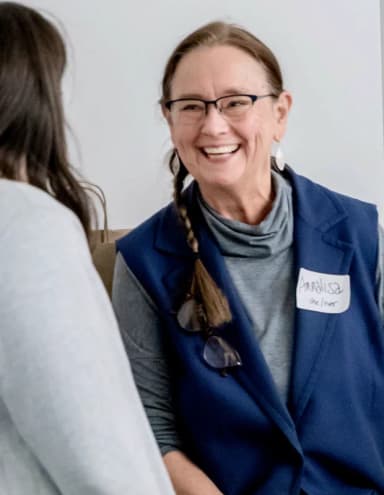
Annalisa Raymer, Senior Lecturer at Cornell University and Director of CLASP

On a university campus, learning often appears to flow in familiar directions, from faculty to students, from course materials to assignments, and from institutional programs to the people they serve. The Community Learning and Service Partnership, CLASP, invites a different view. In CLASP, Cornell students partner with adult learners from the campus workforce, including service employees, and the learning goal belongs to the adult learner. It makes adult education visible inside the daily life of a campus and asks students to learn with people whose work, histories, languages, and life experiences may be very different from their own. A classroom lesson becomes a relationship, and a relationship becomes a site of mutual learning.

We spoke with one of the authors, Annalisa Raymer of Cornell University, to learn more about how CLASP tells its own story, how artificial intelligence was used to provide another perspective on that story, and what adult educators can learn from bringing machine generated analysis into conversation with human judgment.

About the article

Research question

The article asks how CLASP might understand and communicate its overarching narrative after receiving the 2023 Malcolm Knowles Award. Raymer and Nelson focus on whether an unfinished in-house film, analyzed through Evidano and discussed with adult education colleagues, could reveal the program’s central themes and gaps.

Key finding

The study found that Evidano and human conference participants converged on a portrait of CLASP as a program built around mutual learning, personal growth, and meaningful connection across social roles. The human feedback also added practical nuance, especially about how the film could better introduce learning partnerships, course context, program history, and the unusual collaboration among union, human resources, and academic stakeholders.

Why this research matters

Adult education is often discussed through programs, outcomes, and credentials, but this article returns attention to the relationships that make learning possible. CLASP brings together undergraduate students, staff members, union leaders, managers, and community learners in a structure that treats every participant as someone who teaches and learns. As the paper states, “Reciprocal relationships are the heart of CLASP.”

For educators and institutional leaders, the article offers a practical reminder that inclusive learning cultures do not emerge only from formal policy. They are also built through repeated encounters in which people listen, mentor, ask questions, adapt, and recognize one another’s knowledge. The article is especially valuable because it shows how student learning, employee learning, labor participation, and university support can be woven into a shared educational ecosystem.

Dr. Raymer reflected on the broader significance of the study: “One implication is both a proof of concept and an invitation to rethink how learning occurs and who is learning. Conference discussants were quite surprised to realize that none of the participating students were education majors, and yet these undergraduates could ‘speak so articulately about adult learning’ and effectively mentor adults while keeping a mindset of mutual growth and development. The learning partnerships of one student and one adult provides opportunities for individuals of different generations to see their partners as fellow knowledgeable, interesting humans with admirable abilities and experiences.”

Key findings from the article

The article’s contribution is not simply that CLASP received an award, or that an AI tool produced themes from a transcript. Its contribution is the way it places multiple perspectives side by side, the voices in the film, the Evidano analysis, and the responses of expert adult educators at the AAACE conference.

CLASP is presented as a program of mutual learning rather than a one-way service model. The article describes students using andragogical practice to mentor adult learners, while employees bring experience, wisdom, goals, and perspectives that reshape student learning. Nelson’s recollection of the film reinforces this point by emphasizing that the program is about students and employees coming together to learn from each other.

The AI analysis identified themes that aligned with the program’s stated aims. After the film transcript was uploaded into Evidano, the tool summarized perspectives from administrators, union leaders, employees, and students. A second Evidano analysis identified eight prominent themes, including motivation, engagement, language learning and cultural exchange, personal growth and confidence building, mutual learning and personal connection, impact and benefits, and lifelong learning.

Human feedback added context that AI alone could not supply. AAACE conference participants responded positively to the film and did not see adult learners portrayed condescendingly, but they also identified what was unclear or missing. They suggested earlier explanations of learning partnerships, descriptions of the related courses, more history of CLASP, and more attention to the program’s stakeholder composition.

The program’s enthusiastic stakeholders include union leaders, managers, employees, students, human resource officers and community partners. This approach could transform campus cultures more broadly, offering a concrete way for institutions to live their stated values about community, inclusion, and lifelong learning.

Methods and research approach

The article is a reflective and interpretive account centered on an unfinished CLASP film, the film transcript, Evidano outputs, and audience feedback from the AAACE 2023 annual conference in Lexington, Kentucky. The film included program participants and observers across four roles: administrators and managers, employees and adult learners, union leaders, and students or others taking andragogical courses at Cornell.

The data were complex because they represented many relationships, roles, and forms of learning at once. The authors first used Evidano to summarize the perspectives of each group in the film, then used it again to conduct a thematic analysis of the transcript. They then compared those outputs with comments from adult education colleagues, making the article a qualitative, reflective, and practice-based inquiry into how a program narrates its own educational meaning.

How Evidano supported the research

The authors uploaded the film transcript into Evidano and first asked the tool to summarize the perspectives of the four participant groups. They then uploaded the transcript again with an instruction to conduct thematic analysis.

In this workflow, Evidano offered a detached perspective on a program that the authors knew intimately. Its outputs helped identify patterns across participant roles and themes in the transcript, but the article does not treat those outputs as final authority. Instead, the authors placed AI-generated analysis alongside human educator feedback, showing that scholarly judgment, interpretation, and responsibility remained with the authors.

Dr. Raymer also noted how AI tools can support careful research workflows when used responsibly: “Some AI tools are quick to praise and complement the human users, and it is difficult to determine their true utility. Evidano does not do that. With Evidano, I feel that I have a straightforward thinking partner, rather than an internet pet eager to please.”

Broader implications

For researchers, the article offers a balanced example of AI-supported qualitative analysis. Rather than presenting AI as a replacement for researcher expertise, it uses Evidano to create an additional analytic viewpoint. This approach is especially relevant in qualitative and practice-based research, where interpretation depends on context, relationships, and ethical attention to representation.

For educators, CLASP shows how adult learning can challenge assumptions about who holds knowledge in a university. The program asks students to practice facilitation, listening, and adaptation, while supporting employees as adult learners with their own goals and agency. That model speaks to social sciences, education, organizational learning, public engagement, and any field concerned with how institutions build dignity into everyday learning.

For readers considering what to carry forward from the study, Dr. Raymer offered these two takeaways: “One is that principles and practices of adult learning need not be limited to instructors and educators; they are applicable in many fields and settings. Second, the transformative potential of reciprocal, non-hierarchical learning partnerships can transcend traditional institutional boundaries and social divisions while engendering rapport, respect and enjoyment in learning together.”

Taken together, the article reminds us that technology can help surface patterns, but the deeper work of education still depends on human attention, reciprocal respect, and the courage to learn across difference.

About Annalisa Raymer

Annalisa Raymer, Senior Lecturer at Cornell University and Director of CLASP
Photo by Serge Petchenyi, Cornell Center for Teaching Innovation

Annalisa Raymer is a Senior Lecturer in the Ashley School of Global Development and the Environment at Cornell University. She is faculty lead for the adult learning curriculum and Director of the Community Learning and Service Partnership, CLASP. Her research and outreach focus on ecosystems of learning, education and development, learning cities, collaborative learning, communities of practice, and sustainability. Annalisa enjoys designing and facilitating processes for learning and organizational change, curriculum development, problem-solving and innovation. She can be reached at alr26@cornell.edu.

About the authors

  • Annalisa L. Raymer (Ashley School of Global Development and the Environment, Cornell University, New York, USA)
  • David Nelson (Biddeford High School, Maine, USA)

Read the article

Read the full research article, Malcolm Knowles Awardee 2023, the Community Learning and Service Partnership (CLASP): Artificial Intelligence and Human Perspectives on Our Story,” published in the American Association for Adult and Continuing Education (AAACE) 2023 Conference Proceedings in 2023.

View the publication

We are grateful to the authors for their contribution to adult learning, relational education, and responsible reflection on artificial intelligence, and for referencing Evidano as part of their research process.

Company
About
Newsletter

Product updates, research, and tips — straight to your inbox.

© Evidano, All Rights Reserved.