
Police chiefs are highly visible public leaders, yet the people evaluating candidates must often make decisions before they can observe how those candidates will lead. Credentials become signals, but some signals may carry more weight than others.
That selection problem is examined in “What signals police leadership quality to the public? A look at evidence-based policing and professional standards,” by Gordon Abner and Emily Mee. The article tests how members of the U.S. public weigh experience, current role, city size, evidence-based policing, and professional standards when choosing between hypothetical police chief applicants.
We spoke with corresponding author Gordon Abner of the LBJ School of Public Affairs at the University of Texas at Austin to learn more about public preferences, external credentials, signaling, and the interpretation of open-ended responses. The study combines a conjoint experiment with qualitative analysis to examine both what people choose and how they explain those choices.
About the article
Research question
Which observable credentials and experiences matter most to the public when evaluating police chief applicants, and how do people distinguish between implementing evidence-based policing or professional standards and receiving external recognition for those efforts?
Key finding
Emphasis on professional standards was the most influential attribute in selection decisions. Population size served and commitment to evidence-based policing tied for second, followed by years of experience, while current position mattered least. Respondents preferred externally validated credentials, such as CALEA accreditation and Evidence-Based Policing Hall of Fame recognition, over implementation experience without the same external signal.
Why this research matters
Police chief appointments shape organizational priorities, ethics, resources, personnel systems, and relationships with the public. Despite the importance of the role, there has been limited empirical evidence about which candidate signals the public values when comparing applicants.
The study also contributes to research on signaling. Leadership qualities such as integrity or supportiveness are difficult to observe before appointment, so selectors may rely on credentials that appear costly, verified, or prestigious. Understanding those preferences can help compare public expectations with actual appointment processes.
Gordon Abner reflected on the broader significance of the study: “The most important implication is that city leaders may be able to strengthen public confidence in their choice for police leadership by prioritizing candidates who have independently verified records of implementing professional standards and evidence-based policing.”
Key findings from the article
Three findings explain how respondents evaluated police leadership quality.
Professional standards carried the greatest weight. Respondents preferred candidates associated with CALEA accreditation over candidates described only as having helped implement professional standards. Accreditation was often interpreted as rigorous external validation and evidence of going beyond minimum expectations.
Evidence-based policing mattered, especially when externally recognized. Respondents preferred Hall of Fame recognition over implementation experience, although qualitative responses also raised concerns about prestige, politics, careerism, and distance from hands-on work.
Context and experience still shaped choice. Applicants serving larger populations and those with more years of experience were preferred, while current position had the smallest effect. The results suggest that respondents valued verified accomplishment more than title alone.
Looking back on the results, Gordon Abner said: “The most surprising finding was that respondents placed greater importance on a candidate’s demonstrated commitment to professional standards and evidence-based policing than on traditional qualifications such as years of experience or current rank.”
Methods and research approach
The study used a mixed-methods design. A discrete-choice conjoint experiment presented 303 Prolific respondents with nine pairs of hypothetical police chief applicants. Candidate profiles varied across current position, years of experience, population size served, professional standards credentials, and evidence-based policing credentials.
Approximately two weeks later, a follow-up survey collected 224 complete responses to two open-ended questions about how people distinguished CALEA accreditation from implementation experience and Hall of Fame recognition from evidence-based policing implementation. The first author conducted inductive thematic analysis, and the researchers compared those themes with an AI-assisted analysis.
How Evidano supported the research
The article used Evidano, formerly known as AILYZE, to triangulate the qualitative findings from the follow-up survey. The researchers used the platform to look for oversights, alternative frames, and possible personal biases in the human-coded themes.
Most human-coded themes were supported by the AI-assisted analysis with only minor wording differences. Evidano also suggested a Community and Departmental Benefits theme that the authors had not retained because the relevant responses were varied and did not cohere strongly enough in the human analysis.
That disagreement is methodologically informative. The research team did not automatically accept an additional AI-generated theme. They returned to the responses, judged coherence and support, and retained responsibility for the final thematic structure.
Gordon Abner also noted how AI tools can support careful research workflows when used responsibly: “Evidano was used to triangulate the qualitative findings from the open-ended responses by serving as an independent AI-assisted analysis that could identify potential oversights, alternative interpretations, and researcher biases. We found that AI can strengthen qualitative research by providing an independent check on human coding, but final decisions about theme validity should remain with researchers, who must assess whether a theme is sufficiently coherent, frequent, and supported by the data.”
Broader implications
For mayors, city managers, and councils, the results provide a public baseline against which appointment criteria can be compared. Selection processes can be more transparent about how professional standards, evidence use, experience, and organizational context are weighted.
For police leaders, the study suggests that external recognition can communicate quality to the public, but credentials should be connected with credible practice. Qualitative responses show that prestige can also trigger questions about politics, career incentives, and practical involvement.
For researchers, the article opens a broader agenda on police leadership selection. Future studies can examine city leaders, cross-national contexts, demographic moderators, and public responses to other reforms such as body-worn cameras, de-escalation, accountability systems, and crisis intervention.
Gordon Abner offered this takeaway for city leaders and researchers: “Public trust in police leadership may be shaped less by traditional credentials and more by visible, independently verified commitments to professionalism and evidence-based practices.”
The study ultimately shows that the public does not evaluate police chief candidates by title alone. It looks for credible signals that a candidate can institutionalize professional standards and use evidence in practice.
About Gordon Abner
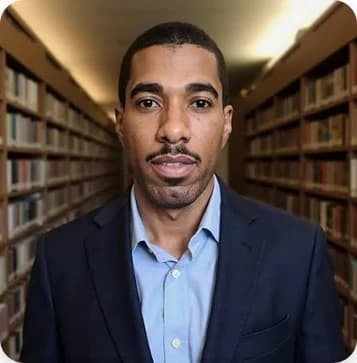
Gordon Abner is an Associate Professor at the LBJ School of Public Affairs at the University of Texas at Austin and is the corresponding author of this study. He received a Joint PhD in Public Policy from Indiana University-Bloomington. His primary research interests are in the areas of employee morale and organizational performance in the public sector broadly, as well as in policing specifically.
About the authors
- Gordon Abner (Associate Professor, LBJ School of Public Affairs, University of Texas at Austin)
- Emily Mee (Assistant Professor, Hugo Wall School of Public Affairs, Wichita State University)
Read the article
Read the full research article, “What signals police leadership quality to the public? A look at evidence-based policing and professional standards,” published in the Journal of Experimental Criminology in 2026.
View the publicationWe are grateful to the authors for advancing evidence on public expectations of police leadership and for referencing Evidano, formerly AILYZE, as part of a human-validated qualitative triangulation process.
Related published research
Other published studies and evaluations that used Evidano on comparable material.
- Published research2026

ENAP and UBC used AI-assisted qualitative coding on 39,788 federal survey comments
A peer-reviewed, open-access study coded 39,788 open-ended comments against a predefined thematic grid, then manually verified a random 15% sample.
39,788 open-ended comments coded
Public Personnel Management (SAGE), 2026, open access
- Published research2024

William & Mary’s AI thematic analysis of 19,000+ open-ended responses from 3,443 adults
AI-assisted thematic analysis of 12 open-ended questions in batches of 150 responses, each run three times and verified quote by quote by a human researcher.
3,443 participants in the study
Research report by the William & Mary Center for Gifted Education for the Mensa Foundation, May 2024 (W&M ScholarWorks)
- Published research2024

Monash University study trialled AI thematic analysis to cross-check its themes
See how doctoral education researchers trialled Evidano for thematic analysis, with human researchers leading every interpretation.
23 doctoral writers’ responses analysed, from 29 recruited
Studies in Educational Evaluation, vol. 83, 101379 (Elsevier, 2024), open access
Explore more evidence
The full case-study library, the wording researchers published when citing Evidano, and how its output compares with manual coding.
- Resource
Case studies in published research
Peer-reviewed studies, UN evaluations and university research where teams used Evidano for AI-assisted qualitative analysis — with the methods, the numbers and the published source for each.
- Resource
How Evidano was used, in published methods sections
Verbatim excerpts from 20 published studies describing what Evidano did in their analysis — as a thought partner, a second coder, for initial coding, or for synthesis.
- Resource
Methodology guides and research writing
Practical guides to qualitative methods — thematic analysis, grounded theory, evidence synthesis and more — alongside the wider Evidano article library.
- Resource
Human vs AI: validated accuracy benchmarks
Three head-to-head comparisons against expert human analysis — 371 interview transcripts with Arizona State and Penn State, 298 evaluation reports for a UN evaluation group, and UNICEF’s manual-coding review.