
Imagine a student who understands the lesson before it begins, finishes the work early, and spends the rest of class waiting. From the outside, the student appears successful. From the inside, the experience may feel lonely, underchallenging, and confusing, especially when adults assume that being smart means needing less help.
That tension sits at the heart of the report “A Study of Unmet Needs Among Highly Intelligent Individuals,” a large study requested by the Mensa Foundation and conducted with researchers at the William & Mary Center for Gifted Education. The report asks a deceptively simple question, what kinds of support do highly intelligent adults say they needed, but did not always receive, across school, work, relationships, and mental health?
We spoke with the authors, Jennifer Riedl Cross, Research Professor at the University of Louisiana at Lafayette, Tracy L. Cross, Dean of the College of Education & Human Development at the University of Louisiana at Lafayette, and Anyesha Mishra, a recent doctoral graduate from William & Mary, to learn more about unmet needs among highly intelligent adults.
About the article
Research question
The report asks what educational, career development, social and emotional, and mental health needs highly intelligent adults report across the lifespan. It also examines how those needs relate to subjective wellbeing, age, personality, and the supports participants felt were missing or helpful.
Key finding
The study found that unmet need was not uniform. More than one quarter of participants fell into a High Needs profile, about half into a Moderate Needs profile, and about one quarter into a Low Needs profile, with especially visible needs around mentoring, academic skills, career planning, social and emotional learning, and mental health support from trusted people who understood them. In a follow-up analysis that better accounted for missing data, the authors found an even larger share of participants, about one third, in the High Needs profile, with about half in the Moderate Needs profile and about one fifth in the Low Needs profile.
Why this research matters
High intelligence is often treated as a built-in advantage, and in many ways it can be. Yet the report shows that ability alone does not guarantee appropriate challenge, supportive relationships, sound career guidance, or mental health care that feels trustworthy and informed.
For educators, counselors, employers, and families, the study offers a more nuanced picture of giftedness and high intelligence. It suggests that support should not be reserved only for visible struggle, because some participants described long histories of unmet need hidden behind strong performance.
Jennifer Riedl Cross reflected on the broader significance of the study: “The study was undertaken to help the Mensa Foundation identify ways they could address the needs of their membership and potential future members. We were able to recommend specific actions based directly on the responses of more than 3000 highly intelligent adults. The first was to focus on improving attitudes toward high intelligence, as this was a core aspect of unmet needs, particularly in their relationships. There is research to support ways this can happen. Providing academic and career guidance and supports, including financial supports for opportunities in both academics and career development, would go a long way in helping highly intelligent individuals meet their needs. Fostering social connectedness through social skill development and providing opportunities to interact with similar others can support social and emotional development. An organization like Mensa could provide training or maybe certification to mental health care providers in working with highly intelligent clients. Many participants commented on the difficulties they had in finding a counselor who understood them. Developing a network that shares information about mental health providers with specialized training would be beneficial to this community. These actions could change the landscape for individuals of all ability levels, with unique benefits to those with high intelligence. Thinking about the application of our findings (see Appendix D of the report) was one of the most rewarding aspects of this project. Things can change for future generations.”
Key findings from the report
Across survey responses and interviews, the report points to three major contributions that are especially relevant for anyone supporting highly intelligent people across the lifespan.
Mentoring and academic skill development emerged as core academic needs. In both kindergarten through grade 12 and college, mentors in participants’ areas of interest were the highest rated academic need, while lessons in academic skill development, such as time management and study skills, were also highly rated.
Career and social development were closely connected to guidance, belonging, and autonomy. Formal lessons in career planning, career advice, workplace support, social skill development, self regulation, and opportunities to meet intellectually similar or interesting peers all appeared as important areas of unmet need.
Mental health support depended on trust and understanding. The highest mental health needs in younger years included a counselor who understood the participant, a trusted person to help with mental health concerns, and effective strategies for dealing with anxiety, depression, distress, frustration, and failure.
Looking across the findings, one of the most important questions is what surprised the authors most. Jennifer Riedl Cross noted: “I was definitely surprised by the serious impacts felt by some of our participants from their experiences of unmet needs. Their social experiences seemed to be the most impactful. Many gave examples of being misunderstood and rejected by classmates, teachers, co-workers, supervisors, and even family members. Opportunities for interaction with others like them mattered, but so did opportunities for deeper or specific learning experiences. Some felt they could never reach their potential because they had not had certain experiences, specifically those that required resources, such as expensive out-of-school programs or travel. Financial hardship made it difficult for many to pursue their dreams. They also needed guidance about academic options or career planning. I was also surprised by how many participants reported a late diagnosis of ADHD or autism that helped them understand some of their difficulties earlier in life. It is a shame they couldn’t have had the supports they needed when they were young.”
Methods and research approach
The study used an online questionnaire completed by American Mensa members and other highly intelligent individuals around the world. After exclusions for missing age or missing domain responses, the final survey dataset included 3,443 participants, and 10 Mensa members representing five age groups participated in interviews.
The research combined quantitative and interpretive methods. The survey included demographic questions, the Flourishing Scale, a personality inventory, and custom items on academic, career, social and emotional, and mental health needs, while analysis included descriptive statistics, exploratory factor analysis, correlations, analysis of variance, latent profile analysis, and thematic analysis of open-ended survey responses and interview comments.
How Evidano supported the research
The researchers used Evidano to analyze the 12 open ended survey items, with instructions requesting emerging themes and supporting quotes from participants’ responses.
Appendix C describes a careful workflow in which response files were prepared in batches, uploaded to Evidano, and analyzed more than once so the outputs could be compared. The authors then manually reviewed the outputs, checked whether quotes appeared in the data, checked whether each quote fit the theme, combined similar themes, separated themes when needed, and refined explanations based on the patterns they found.
As the report states, “The final themes were a result of AI and human analysis.” Jennifer Riedl Cross also noted how AI tools can support careful research workflows when used responsibly: “We realized we needed the help of AI when we received far more responses than we expected. We had more than 19,000 open-ended comments in response to the survey. There was no way we could analyze that in a traditional way, especially given the timeline for the project and the resources at our disposal. Tracy had the idea to pursue an AI option. Anyesha discovered Evidano when looking for an affordable LLM with strong privacy protections. While we agree for the most part with the authors of a recent position paper explaining why their journal (Qualitative Psychology; Levitt, 2026; see also Jowsey et al., 2025) prohibits AI use in the analysis of qualitative data, we could not have met our goals without Evidano’s functionality.
“Anyesha managed the process by breaking the data into smaller datasets and running them through the analysis multiple times. She manually checked the results and identified themes that appeared across multiple datasets. We did not want an analysis that was produced entirely through an automated process, but we needed that automation to manage our voluminous data. We did our best to confirm the validity of the output ourselves. None of us believed we should allow the AI tool to analyze the data without human oversight. Researchers can work together with Evidano, but they have a responsibility to stay in touch with the data and take steps to confirm the output is accurate and unbiased. It would be easy to just run the analysis on the full corpus and walk away with a ‘finding.’ We didn’t want to leave it at that. We consider this an initial step and still expect to do more human analysis with the results from it.”
Anyesha Mishra comments, “Evidano was a useful starting point for identifying possible patterns across thousands of responses, while careful human review remained central to verifying the supporting data, interpreting and refining the themes, and making the final analytic decisions. The process was a collaboration between AI-assisted pattern identification and researcher judgment.”
Broader implications
For schools and universities, the report encourages a broader view of academic support. Highly intelligent students may need intellectual challenge, but they may also need explicit instruction in learning skills, access to mentors, peer connection, and adults who understand that advanced ability can coexist with uncertainty, frustration, or loneliness.
For researchers and practitioners, the study also points to the value of listening directly to people whose experiences are often flattened by stereotype. Tracy L. Cross offered this takeaway for readers: “This was a unique study in its look at experiences across the lifespan, highlighting how highly intelligent people are both the same as and different from others. The experiences and perceptions reported by our participants tell the stories of what it means to be highly intelligent. Some aspects of their lives are common and do not have anything to do with their level of intelligence per se; a family’s economic circumstances, for example. Others are unique to them, such as their experiences of stigma related to being perceived as more intelligent than those around them. This can manifest as feeling constantly they are a source of threat to their peers or colleagues – not an experience the average person has. As this was a study of self-reported, retrospective experiences, we must maintain an awareness that unmet needs are decided by the people themselves. Another outcome of this study is that it revealed variation in the experiences of cohort groups from different time periods. The experience of ‘need’ differed based on one’s time in history. We hope this study will support future generations by increasing awareness of the experiences highly intelligent people reported.”
Ultimately, the report makes a humane case for taking high intelligence seriously as both a strength and a context for need. If institutions can provide challenge, guidance, social connection, and informed mental health support, they can help more highly intelligent people move from merely coping to flourishing.
About Jennifer Riedl Cross
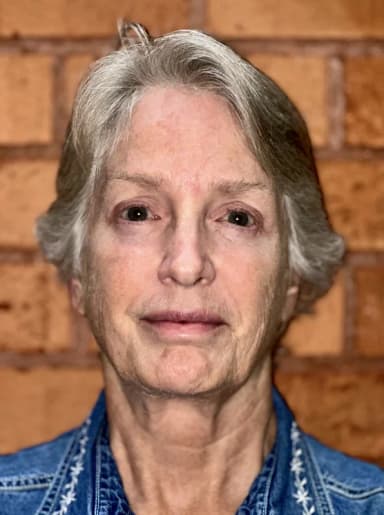
Jennifer Riedl Cross is the editor of Gifted Child Quarterly, the research journal of the National Association for Gifted Children, and is a Research Professor at the University of Louisiana at Lafayette. She previously served as Director of Research at the William & Mary Center for Gifted Education for 13 years. Her work examines social and psychological aspects of gifted education, including stigma, mental health, and the experiences of high ability students.
About Tracy L. Cross

Tracy L. Cross is recently retired as Dean of the College of Education & Human Development at the University of Louisiana. He previously served for 15 years as the William & Mary Endowed Chair of Psychology and Gifted Education, and the executive director of the W&M Center for Gifted Education and the Institute for Research on the Suicide of Gifted Students. He has published 14 books, more than 300 articles, book chapters, and columns; made hundreds of presentations at conferences; and brought in over $20,000,000 in grants. He is past editor of numerous journals, including Gifted Child Quarterly, Roeper Review, and Journal for the Education of the Gifted. He was named an NAGC Legacy and Distinguished Scholar and received the Lifetime Achievement Award from Mensa.
About Anyesha Mishra

Anyesha Mishra is an education researcher, psychologist, and founder–CEO of Nurturarc LLC, an edtech venture developing research-based, personalized tools to strengthen psychosocial and 21st-century skills in young people. She earned her Ph.D. in Educational Policy, Planning, and Leadership (Gifted Education Administration) from William & Mary, where her work examined identity development among highly able college students. Her research focuses on the psychological and social experiences, well-being, and talent development of students with gifts and talents.
About the authors
- Jennifer Riedl Cross (Research Professor, University of Louisiana at Lafayette; Editor, Gifted Child Quarterly)
- Tracy L. Cross (College of Education & Human Development, University of Louisiana at Lafayette)
- Anyesha Mishra (William & Mary; Founder–CEO, Nurturarc LLC)
Read the article
Read the full research report, “A Study of Unmet Needs Among Highly Intelligent Individuals,” published in collaboration with the Mensa Foundation and William & Mary in 2024.
View the publicationWe are grateful to the authors for their contribution to research on giftedness, wellbeing, and lifelong support, and for referencing Evidano as part of their research process.
Related published research
Other published studies and evaluations that used Evidano on comparable material.
- Published research2026

Sharjah Education Academy: AI thematic analysis of 9 teacher interviews, human-verified
Published in Frontiers in Education (2026): encrypted data, human-verified themes, and a transparent AI coding workflow across English and Arabic interviews.
9 Teachers interviewed
Frontiers in Education, 11:1690181 (Frontiers Media, 2026), open access
- Published research2026

UT Austin and Wichita State used AI thematic analysis to triangulate 224 survey responses
A peer-reviewed criminology study analysed its open-ended responses by hand, then used Evidano to triangulate the findings: 8 of 9 human themes were confirmed.
303 respondents in the conjoint survey
Journal of Experimental Criminology (Springer Nature), 2026, open access
- Published research2025

University of Trieste: AI thematic analysis of 54 science teachers’ survey responses
A 2025 mixed-methods education study cited Evidano (previously AILYZE) in its methods to identify themes across science teachers’ open-ended responses.
75 teachers in the training program
Education and New Developments 2025, Vol. I (inScience Press), pp. 321–325
Explore more evidence
The full case-study library, the wording researchers published when citing Evidano, and how its output compares with manual coding.
- Resource
Case studies in published research
Peer-reviewed studies, UN evaluations and university research where teams used Evidano for AI-assisted qualitative analysis — with the methods, the numbers and the published source for each.
- Resource
How Evidano was used, in published methods sections
Verbatim excerpts from 20 published studies describing what Evidano did in their analysis — as a thought partner, a second coder, for initial coding, or for synthesis.
- Resource
Methodology guides and research writing
Practical guides to qualitative methods — thematic analysis, grounded theory, evidence synthesis and more — alongside the wider Evidano article library.
- Resource
Human vs AI: validated accuracy benchmarks
Three head-to-head comparisons against expert human analysis — 371 interview transcripts with Arizona State and Penn State, 298 evaluation reports for a UN evaluation group, and UNICEF’s manual-coding review.