
Gujarati
Gujarati letters, read without the line that holds them together
Gujarati split off from the same Nagari root as Devanagari but dropped the continuous head line, so a line of print or handwriting is a row of separate floating letters rather than words strung along a bar. Evidano reads Gujarati print, business-ledger cursive and everyday handwriting, keeps its own numerals as written, and sets the transcription beside the image so every floating cluster can be checked against the page.
Sample pages
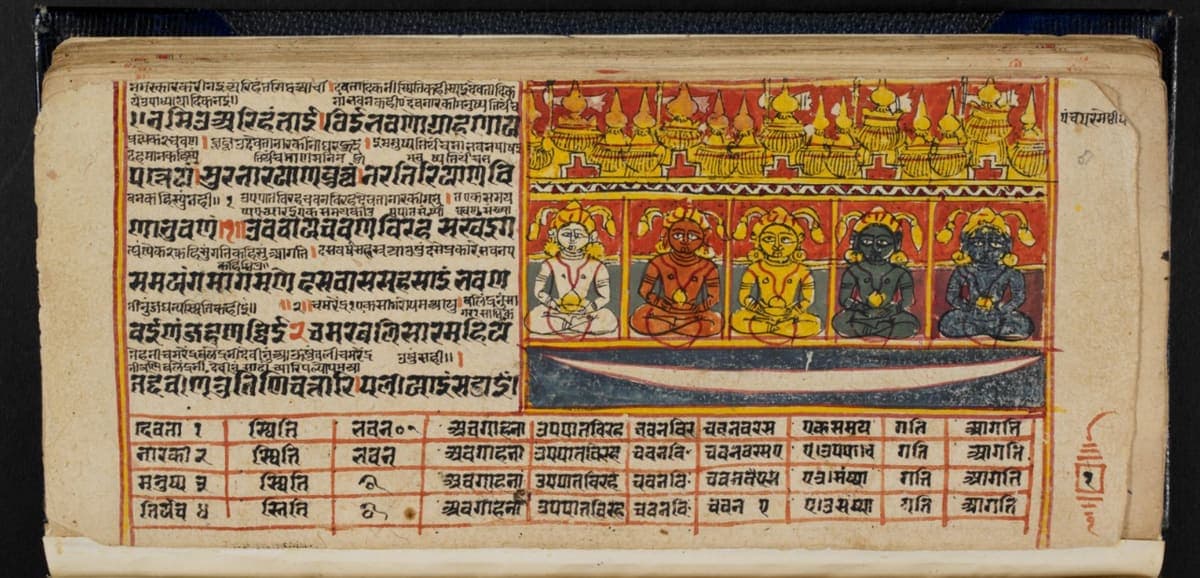
British Library, Or. 2116C, c. 1650 · Source · Public domain
Evidano Transcription
[main text and interlinear glosses illegible at this resolution]
| देवता १ | स्थिति | भवन० | अवगाहना | उपपातविरह | चवनविर | चवनवरस[?] | एकसमय | गति | आगति |
| नारकी २ | स्थिति | भवन | अवगाहना | उपपातविरह | चवनवि० | चवनवरसए[?] | [illegible] | गति | आगति |
| मनुष्य ३ | स्थिति | [illegible] | अवगाहना | उपपातविरह | चवनवि० | [illegible] | [illegible] | गति | आगति |
| तिर्यंच ४ | स्थिति | [illegible] | अवगाहना | उपपातविरह | चवनवि० | चवन ए | [illegible] | गति | आगति |
पंचपरमेष्ठीप[?]
Generated by Evidano’s advanced model; not yet checked against a published edition.
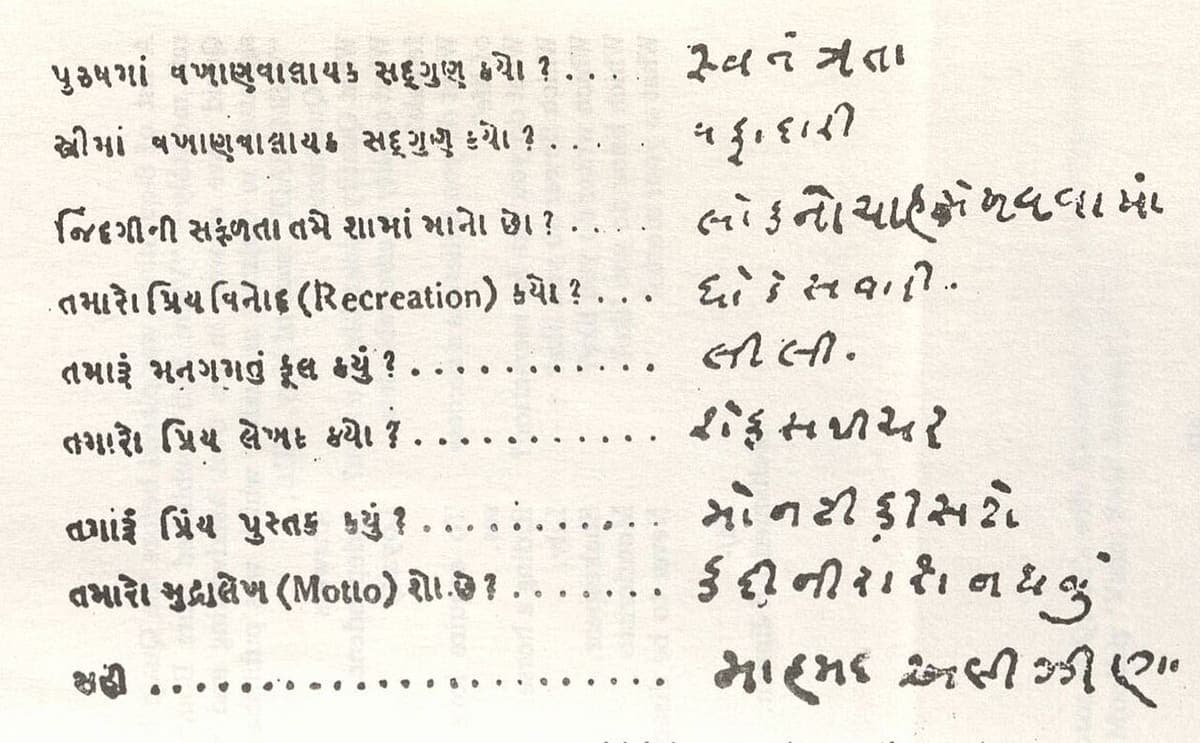
Evidano Transcription
પુરુષમાં વખાણવાલાયક સદ્ગુણ કયો ? . . . સ્વતંત્રતા
સ્ત્રીમાં વખાણવાલાયક સદ્ગુણ કયો ? . . . વફાદારી
જિંદગીની સફળતા તમે શામાં માનો છો ? . . . . લોકનો ચાહ મેળવવામાં
તમારો પ્રિય વિનોદ (Recreation) કયો ? . . . ઘોડે સવારી
તમારું મનગમતું ફૂલ કયું ? . . . . . . . . . . લીલી
તમારો પ્રિય લેખક કયો ? . . . . . . . . . . શેક્સપીયર
તમારું પ્રિય પુસ્તક કયું ? . . . . . . . . . . મોન્ટી ક્રીસ્ટો
તમારો મુદ્રાલેખ (Motto) શો છે ? . . . . . . . કદી નીરાશ ન થવું
સહી . . . . . . . . . . . . . . . . . . . . . મોહમદ અલી ઝીણા
Generated by Evidano’s advanced model; not yet checked against a published edition.
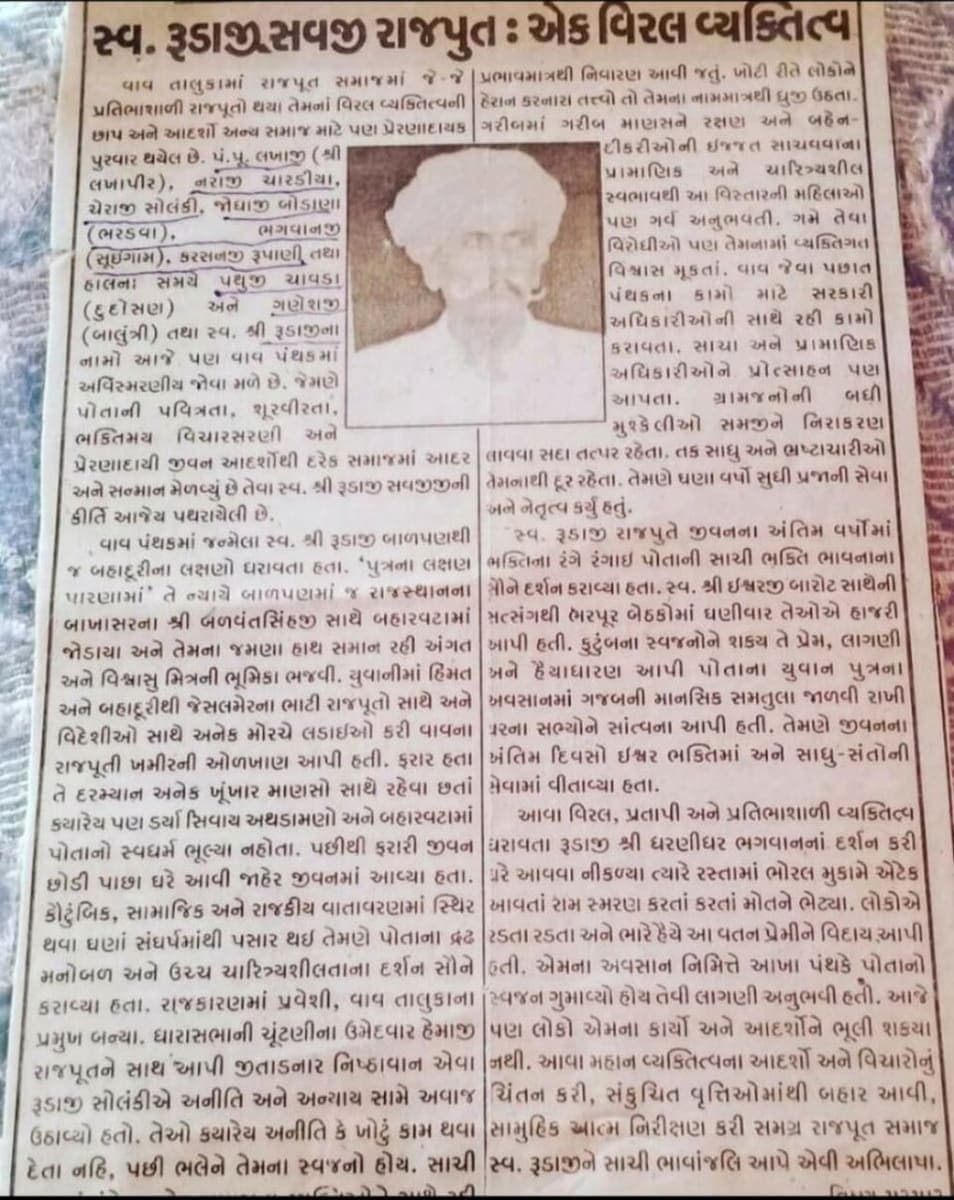
Evidano Transcription
સ્વ. રૂડાજી સવજી રાજપુત : એક વિરલ વ્યક્તિત્વ
વાવ તાલુકામાં રાજપૂત સમાજમાં જે-જે
પ્રતિભાશાળી રાજપૂતો થયા તેમનાં વિરલ વ્યક્તિત્વની
છાપ અને આદર્શો અન્ય સમાજ માટે પણ પ્રેરણાદાયક
પુરવાર થયેલ છે. પં.પૂ. લખાજી (શ્રી
લખાપીર), નરાજી ચારડીયા,
ચેરાજી સોલંકી, જોધાજી બોડાણા
(ભરડવા), ભગવાનજી
(સૂઈગામ), કરસનજી રૂપાણી તથા
હાલના સમયે પથુજી ચાવડા
(દુદોસણ) અને ગણેશજી
(બાલુંત્રી) તથા સ્વ. શ્રી રૂડાજીના
નામો આજે પણ વાવ પંથકમાં
અવિસ્મરણીય જોવા મળે છે. જેમણે
પોતાની પવિત્રતા, શૂરવીરતા,
ભક્તિમય વિચારસરણી અને
પ્રેરણાદાયી જીવન આદર્શોથી દરેક સમાજમાં આદર
અને સન્માન મેળવ્યું છે તેવા સ્વ. શ્રી રૂડાજી સવજીજીની
કીર્તિ આજેય પથરાયેલી છે.
વાવ પંથકમાં જન્મેલા સ્વ. શ્રી રૂડાજી બાળપણથી
જ બહાદુરીના લક્ષણો ધરાવતા હતા. 'પુત્રના લક્ષણ
પારણામાં' તે ન્યાયે બાળપણમાં જ રાજસ્થાનના
બાખાસરના શ્રી બળવંતસિંહજી સાથે બહારવટામાં
જોડાયા અને તેમના જમણા હાથ સમાન રહી અંગત
અને વિશ્વાસુ મિત્રની ભૂમિકા ભજવી. યુવાનીમાં હિંમત
અને બહાદુરીથી જેસલમેરના ભાટી રાજપૂતો સાથે અને
વિદેશીઓ સાથે અનેક મોરચે લડાઈઓ કરી વાવના
રાજપૂતી ખમીરની ઓળખાણ આપી હતી. ફરાર હતા
તે દરમ્યાન અનેક ખૂંખાર માણસો સાથે રહેવા છતાં
ક્યારેય પણ ડર્યા સિવાય અથડામણો અને બહારવટામાં
પોતાનો સ્વધર્મ ભૂલ્યા નહોતા. પછીથી ફરારી જીવન
છોડી પાછા ઘરે આવી જાહેર જીવનમાં આવ્યા હતા.
કૌટુંબિક, સામાજિક અને રાજકીય વાતાવરણમાં સ્થિર
થવા ઘણાં સંઘર્ષમાંથી પસાર થઈ તેમણે પોતાના દ્રઢ
મનોબળ અને ઉચ્ચ ચારિત્ર્યશીલતાના દર્શન સૌને
કરાવ્યા હતા. રાજકારણમાં પ્રવેશી, વાવ તાલુકાના
પ્રમુખ બન્યા. ધારાસભાની ચૂંટણીના ઉમેદવાર હેમાજી
રાજપૂતને સાથ આપી જીતાડનાર નિષ્ઠાવાન એવા
રૂડાજી સોલંકીએ અનીતિ અને અન્યાય સામે અવાજ
ઉઠાવ્યો હતો. તેઓ ક્યારેય અનીતિ કે ખોટું કામ થવા
દેતા નહિ, પછી ભલેને તેમના સ્વજનો હોય. સાચી
[cut off]
પ્રભાવમાત્રથી નિવારણ આવી જતું. ખોટી રીતે લોકોને
હેરાન કરનારા તત્વો તો તેમના નામમાત્રથી ધ્રુજી ઉઠતા.
ગરીબમાં ગરીબ માણસને રક્ષણ અને બહેન-
દીકરીઓની ઈજ્જત સાચવવાના
પ્રામાણિક અને ચારિત્ર્યશીલ
સ્વભાવથી આ વિસ્તારની મહિલાઓ
પણ ગર્વ અનુભવતી. ગમે તેવા
વિરોધીઓ પણ તેમનામાં વ્યક્તિગત
વિશ્વાસ મૂકતાં. વાવ જેવા પછાત
પંથકના કામો માટે સરકારી
અધિકારીઓની સાથે રહી કામો
કરાવતા. સાચા અને પ્રામાણિક
અધિકારીઓને પ્રોત્સાહન પણ
આપતા. ગ્રામજનોની બધી
મુશ્કેલીઓ સમજીને નિરાકરણ
લાવવા સદા તત્પર રહેતા. તક સાધુ અને ભ્રષ્ટાચારીઓ
તેમનાથી દૂર રહેતા. તેમણે ઘણા વર્ષો સુધી પ્રજાની સેવા
અને નેતૃત્વ કર્યું હતું.
સ્વ. રૂડાજી રાજપુતે જીવનના અંતિમ વર્ષોમાં
ભક્તિના રંગે રંગાઈ પોતાની સાચી ભક્તિ ભાવનાના
સૌને દર્શન કરાવ્યા હતા. સ્વ. શ્રી ઈશ્વરજી બારોટ સાથેની
સત્સંગથી ભરપૂર બેઠકોમાં ઘણીવાર તેઓએ હાજરી
આપી હતી. કુટુંબના સ્વજનોને શક્ય તે પ્રેમ, લાગણી
અને હૈયાધારણ આપી પોતાના યુવાન પુત્રના
અવસાનમાં ગજબની માનસિક સમતુલા જાળવી રાખી
ઘરના સભ્યોને સાંત્વના આપી હતી. તેમણે જીવનના
અંતિમ દિવસો ઈશ્વર ભક્તિમાં અને સાધુ-સંતોની
સેવામાં વીતાવ્યા હતા.
આવા વિરલ, પ્રતાપી અને પ્રતિભાશાળી વ્યક્તિત્વ
ધરાવતા રૂડાજી શ્રી ધરણીધર ભગવાનનાં દર્શન કરી
ઘરે આવવા નીકળ્યા ત્યારે રસ્તામાં ભોરલ મુકામે એટેક
આવતાં રામ સ્મરણ કરતાં કરતાં મોતને ભેટ્યા. લોકોએ
રડતા રડતા અને ભારે હૈયે આ વતન પ્રેમીને વિદાય આપી
હતી. એમના અવસાન નિમિત્તે આખા પંથકે પોતાનો
સ્વજન ગુમાવ્યો હોય તેવી લાગણી અનુભવી હતી. આજે
પણ લોકો એમના કાર્યો અને આદર્શોને ભૂલી શક્યા
નથી. આવા મહાન વ્યક્તિત્વના આદર્શો અને વિચારોનું
ચિંતન કરી, સંકુચિત વૃત્તિઓમાંથી બહાર આવી,
સામુહિક આત્મ નિરીક્ષણ કરી સમગ્ર રાજપૂત સમાજ
સ્વ. રૂડાજીને સાચી ભાવાંજલિ આપે એવી અભિલાષા.
[cut off]
Generated by Evidano’s advanced model; not yet checked against a published edition.
Source · CC BY-SA 3.0 · Maulik Joshi
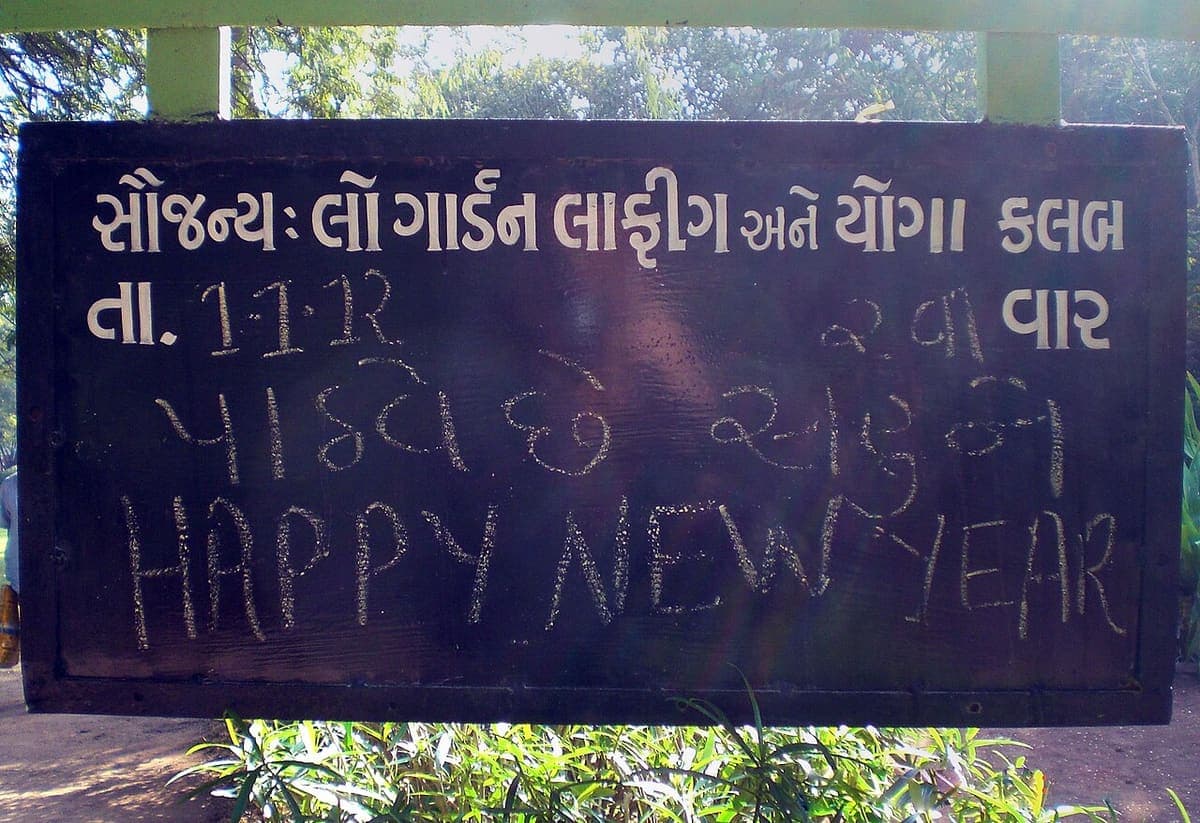
Evidano Transcription
સૌજન્ય: લૉ ગાર્ડન લાફીંગ અને યોગા કલબ
તા. 1-1-12 રવી વાર
પાઠવે છે સહુને
HAPPY NEW YEAR
Generated by Evidano’s advanced model; not yet checked against a published edition.
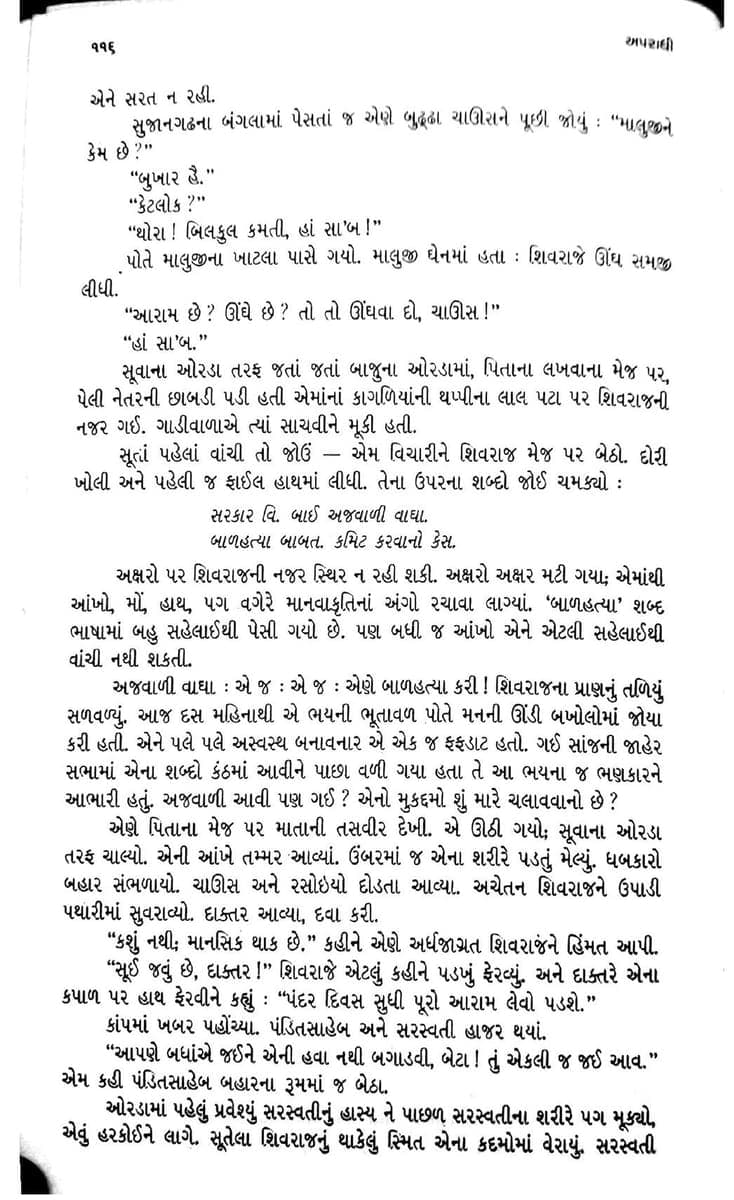
Source · Public domain · City Library copy scanned for the Gujarati Wikisource proofreading project
Evidano Transcription
The whole of printed page 116, proofread and then validated on Gujarati Wikisource (quality level 4 of 4) against this same scan. The running head and wiki markup are dropped and the centred italic file heading is kept as its own two lines; elsewhere the breaks are those the Wikisource text records, which follow the printed lines closely but not everywhere.
એને સરત ન રહી. સુજાનગઢના બંગલામાં પેસતાં જ એણે બુઢ્ઢા ચાઊસને પૂછી જોયું : “માલુજીને કેમ છે ?” “બુખાર હૈ.” “કેટલોક ?” “થોરા ! બિલકુલ કમતી, હાં સા’બ !” પોતે માલુજીના ખાટલા પાસે ગયો. માલુજી ઘેનમાં હતા : શિવરાજે ઊંઘ સમજી લીધી. “આરામ છે ? ઊંઘે છે ? તો તો ઊંઘવા દો, ચાઊસ !” “હાં સા’બ.” સૂવાના ઓરડા તરફ જતાં જતાં બાજુના ઓરડામાં, પિતાના લખવાના મેજ પર, પેલી નેતરની છાબડી પડી હતી એમાંનાં કાગળિયાંની થપ્પીના લાલ પટા પર શિવરાજની નજર ગઈ. ગાડીવાળાએ ત્યાં સાચવીને મૂકી હતી. સૂતાં પહેલાં વાંચી તો જોઉં — એમ વિચારીને શિવરાજ મેજ પર બેઠો. દોરી ખોલી અને પહેલી જ ફાઈલ હાથમાં લીધી. તેના ઉપરના શબ્દો જોઈ ચમક્યો : સરકાર વિ. બાઈ અજવાળી વાઘા. બાળહત્યા બાબત. કમિટ કરવાનો કેસ. અક્ષરો પર શિવરાજની નજર સ્થિર ન રહી શકી. અક્ષરો અક્ષર મટી ગયા; એમાંથી આંખો, મોં, હાથ, પગ વગેરે માનવાકૃતિનાં અંગો રચાવા લાગ્યાં. ‘બાળહત્યા’ શબ્દ ભાષામાં બહુ સહેલાઈથી પેસી ગયો છે. પણ બધી જ આંખો એને એટલી સહેલાઈથી વાંચી નથી શકતી. અજવાળી વાઘા : એ જ એ જ : એણે બાળહત્યા કરી ! શિવરાજના પ્રાણનું તળિયું સળવળ્યું. આજ દસ મહિનાથી એ ભયની ભૂતાવળ પોતે મનની ઊંડી બખોલોમાં જોયા કરી હતી. એને પલે પલે અસ્વસ્થ બનાવનાર એ એક જ ફફડાટ હતો. ગઈ સાંજની જાહેર સભામાં એના શબ્દો કંઠમાં આવીને પાછા વળી ગયા હતા તે આ ભયના જ ભણકારને આભારી હતું. અજવાળી આવી પણ ગઈ ? એનો મુકદ્દમો શું મારે ચલાવવાનો છે ? એણે પિતાના મેજ પર માતાની તસવીર દેખી. એ ઊઠી ગયો; સૂવાના ઓરડા તરફ ચાલ્યો. એની આંખે તમ્મર આવ્યાં. ઉંબરમાં જ એના શરીરે પડતું મેલ્યું. ધબકારો બહાર સંભળાયો. ચાઊસ અને રસોઈયો દોડતા આવ્યા. અચેતન શિવરાજને ઉપાડી પથારીમાં સુવરાવ્યો. દાક્તર આવ્યા, દવા કરી. “કશું નથી; માનસિક થાક છે.” કહીને એણે અર્ધજાગ્રત શિવરાજને હિંમત આપી. “સૂઈ જવું છે, દાક્તર !” શિવરાજે એટલું કહીને પડખું ફેરવ્યું. અને દાક્તરે એના કપાળ પર હાથ ફેરવીને કહ્યું : પંદર દિવસ સુધી પૂરો આરામ લેવો પડશે.” કાંપમાં ખબર પહોંચ્યા. પંડિતસાહેબ અને સરસ્વતી હાજર થયાં. “આપણે બધાંએ જઈને એની હવા નથી બગાડવી, બેટા ! તું એકલી જ જઈ આવ.” એમ કહી પંડિતસાહેબ બહારના રૂમમાં જ બેઠા. ઓરડામાં પહેલું પ્રવેશ્યું સરસ્વતીનું હાસ્ય ને પાછળ સરસ્વતીના શરીરે પગ મૂક્યો, એવું હરકોઈને લાગે. સૂતેલા શિવરાજનું થાકેલું સ્મિત એના કદમોમાં વેરાયું. સરસ્વતી
Source: પૃષ્ઠ:Aparadhi - Gujarati Novel (1938).pdf/૧૨૦, Gujarati Wikisource (CC BY-SA 4.0).
What Gujarati text looks like on the page
Gujarati letters descend from the same medieval Nagari hand that gave North India Devanagari, and as late as the sixteenth and seventeenth centuries the two were close enough that a single manuscript could carry a Nagari main text with an Old Gujarati commentary squeezed between the lines. What became distinctly Gujarati grew out of the fast cursive that merchants and clerks across Gujarat used for correspondence and accounts: writing quickly and without lifting the pen, they let the continuous horizontal head line that ties Devanagari letters into a word wear away, so that by the time Gujarati type was first cut for print in the 1790s the script had settled into the head-line-less form still used today. The result is the mirror image of Devanagari’s problem: instead of learning to find letter boundaries under one continuous bar, a reader — or a model — has to learn to group separate, unconnected letters into words using spacing and shape alone.
Below that missing line, Gujarati keeps most of the apparatus Devanagari has: vowel signs attached above, below, before or after a consonant, conjuncts formed by stacking or by half-forms of one consonant before another, and a visarga, anusvara and virama doing the same jobs they do further north. Gujarati also has its own set of digits, ૦ to ૯, whose shapes diverge from both the Devanagari numerals and the Hindu-Arabic ones, so a page of prices or dates needs to be read as Gujarati and not silently corrected into a more familiar numeral set. Everyday cursive — a personal letter, a shop’s account book, a note dashed off in the margin of a form — compresses vowel signs into small hooks and runs letters together far more than a school hand does, without ever gaining a line to hold them steady.
In print, Gujarati has carried newspapers, novels and government notices since Bombay’s first Gujarati paper appeared in 1822, and it remains one of the working languages of state administration in Gujarat, printed today alongside a great deal of English on forms, signs and notices. A modern signboard or notice is as likely to mix Gujarati and English in the same few lines as to appear in Gujarati alone, and a transcription has to keep the two apart rather than merging them into one run of text.
Why ordinary OCR struggles here
Letters that float free of each other
With no head line to string them together, a Gujarati word is a row of separate glyphs held apart only by spacing and shape. A model that expects Devanagari’s continuous bar has nothing to anchor on, and a cramped or uneven hand can make the gap inside a word look the same as the gap between two words.
A numeral set of its own
Gujarati’s digits, ૦–૯, are shaped differently from both the Devanagari numerals and Hindu-Arabic ones. A model trained mainly on one of those two number systems will often force a Gujarati digit into the nearest shape it already knows rather than reading the figure that is actually there.
The vahi ledger hand
Merchant account books, known as vahis, are written at speed in a rounded, looping cursive that shrinks vowel signs to small hooks and runs consecutive letters into one continuous stroke. It is legible to someone who reads it often and nearly opaque to anyone trained only on printed Gujarati.
English wedged into a Gujarati line
Signs, forms and even personal letters routinely drop an English word or abbreviation into an otherwise Gujarati sentence — a recreation named in brackets, a greeting chalked in Latin letters under a Gujarati notice. The transcription has to keep each script as its own run rather than transliterating one into the other.
Who works with this material
Family historians and trading-community archives
Gujarati and Kutchi trading families, in India and across the diaspora, often hold vahis and correspondence going back generations. A transcription that can be checked against the ledger page turns a locked family archive into something a genealogist can actually search.
Newspaper and periodical digitisation
Gujarati has been a newspaper language since 1822, and archives working through decades of runs need a transcription that keeps headlines, columns and photo captions distinct so a scanned page becomes a searchable article rather than one undivided block of text.
Literary and political archives
Letters and manuscripts by Gujarati-writing public figures — a category that includes political leaders far beyond Gujarat itself — need a diplomatic transcription that keeps embedded English words and phrases visibly separate from the surrounding Gujarati.
Institutions and trusts with old paper records
Temple trusts, schools and small businesses in Gujarat sit on decades of registers, notices and account books. Transcribing them page by page makes it possible to search a register for a name or a date without rereading the whole volume by eye.
Getting the best transcription
Say there is no head line to rely on
If a prompt is written with Devanagari in mind, say explicitly that Gujarati letters are not joined by a line, so the model groups them by spacing and shape rather than expecting a bar to segment words for it.
Set a policy for Gujarati numerals
Decide whether ૦–૯ should be kept as written or converted to standard digits, and say so in the prompt. Dates and prices are the most common place this matters, and the default should keep the figures exactly as printed unless you need them normalised.
Test a vahi or cursive page before a whole ledger
Business-ledger cursive compresses far more than a school or print hand does. Run the fastest, least formal page in a batch first, and if the model separates its rows and columns correctly there, the clearer pages that follow need only a light check.
Flag embedded English on signs and forms
Tell the model to keep English words, abbreviations or English-script headings in their own script rather than transliterating them into Gujarati letters or dropping them, since forms and signs frequently switch scripts mid-line.
Frequently asked questions
- How does the transcription cope with Gujarati having no head line?
- It reads each letter and vowel sign as a separate unit and groups them into words by spacing and shape rather than looking for a connecting bar, which is the opposite of how a Devanagari transcription has to work.
- Are Gujarati numerals kept as written or converted?
- Kept as written by default, since ૦–૯ are a distinct set of digits from both Devanagari and Hindu-Arabic numerals. Ask for them converted to standard digits if that suits your project better, and the conversion is applied consistently.
- Can it read a vahi or other business-ledger cursive?
- Yes, though a very compressed ledger hand benefits from being tested on one representative page first. Tell the model this is fast cursive rather than a formal print or book hand so it does not expect the clearer spacing of typeset Gujarati.
- What happens with English words inside a Gujarati sentence or sign?
- They are transcribed in their own script and kept in place rather than transliterated into Gujarati letters, so a bracketed English word or a Latin-script greeting on a sign comes back exactly as it appears.
- Can it tell Gujarati apart from Devanagari automatically?
- Yes — the absence of a head line and the distinct letterforms and numerals are enough to identify Gujarati reliably, even on a page that also carries some Devanagari or Sanskrit text, as in an older manuscript with an interlinear commentary.
Related scripts and pages
Transcribe your Gujarati pages
Upload a ledger, a letter, a newspaper clipping or a sign and check the Gujarati transcription against the image before you export it.