
Punjabi
Punjabi in either script, read as written
Punjabi is written two ways that share nothing on the page: Gurmukhi, left to right with a head line like Devanagari, in India, and Shahmukhi, a right-to-left Perso-Arabic nastaliq hand, in Pakistan. Evidano reads a Gurmukhi manuscript, a Shahmukhi print, or a bilingual signboard, keeps the direction and the letterforms of whichever script is on the page, and sets the transcription beside the image so every subscript letter and every nastaliq ligature can be checked.
Sample pages
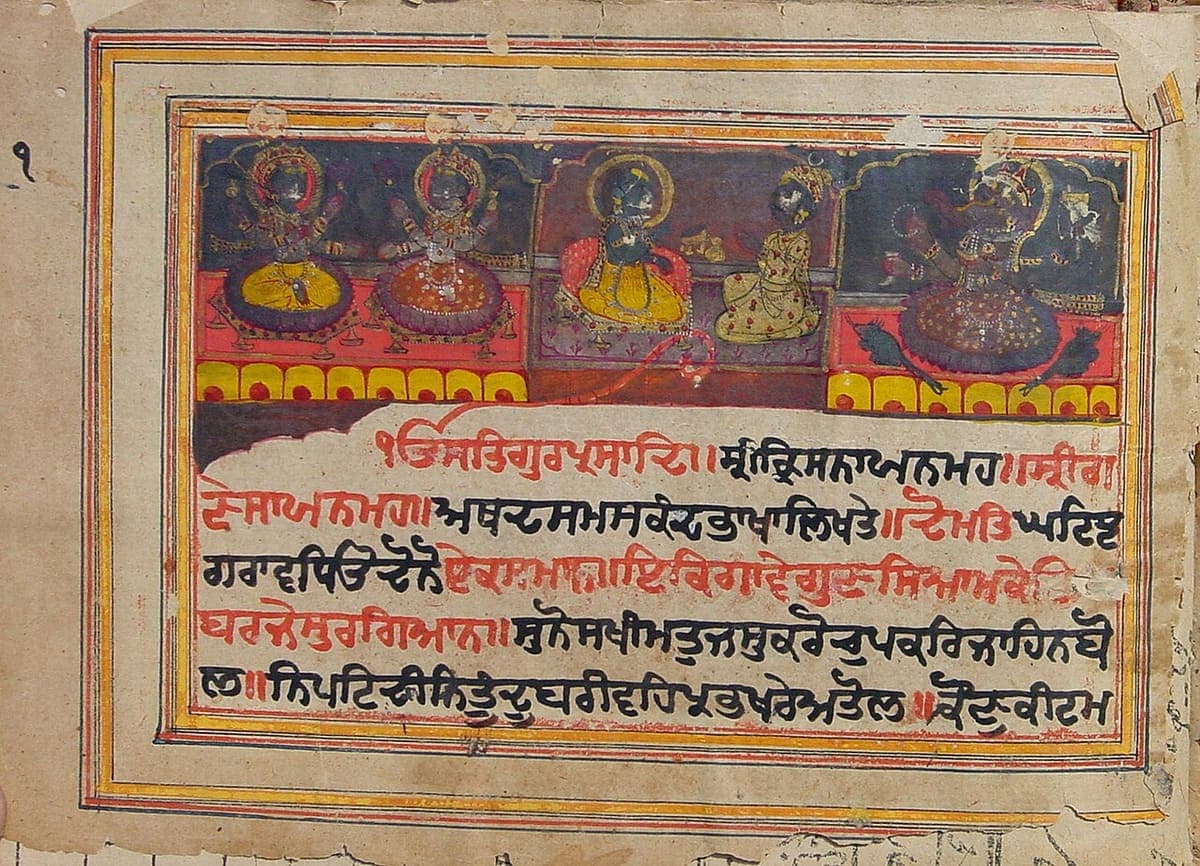
Evidano Transcription
੧
ੴ ਸਤਿਗੁਰਪ੍ਰਸਾਦਿ ॥ ਸ੍ਰੀ ਕ੍ਰਿਸਨਾਯ ਨਮਹ ॥ ਸ੍ਰੀ ਗ
ਣੇਸਾਯ ਨਮਹ ॥ ਅਥ ਦਸਮ ਸਕੰਧ ਭਾਖਾ ਲਿਖਤੇ ॥ ਦੋਮਤਿ[?] ਅਦਿਤ[?]
ਗਰਾਵ੍ਹਪਿਤਿ ਦੋਨੋ ਏਕ ਸਮਾਨ[?] ॥ ਇਕਿ ਗਾਵੈ ਗੁਣ ਸਿਆਮ ਕੇ ਇਕਿ[?]
ਧਰਜੇ ਸੁਰਗਿਆਨ ॥ ਸੁਨੋ ਸਖੀ ਮਤੁ ਜਸੁ ਕਰੋ ਰੂਪ ਕਰਿ ਜਾਹਿ ਨਬੋ
ਲ ॥ ਨਿਪਟਿ ਲੀਨਿ ਤ੍ਰੈਲੁ ਘਰੀ ਵਹਿ ਪ੍ਰਭ ਖਰੇ ਅਤੋਲ ॥ ਕੌਣੁ ਕੀਟਮ
Generated by Evidano’s advanced model; not yet checked against a published edition.
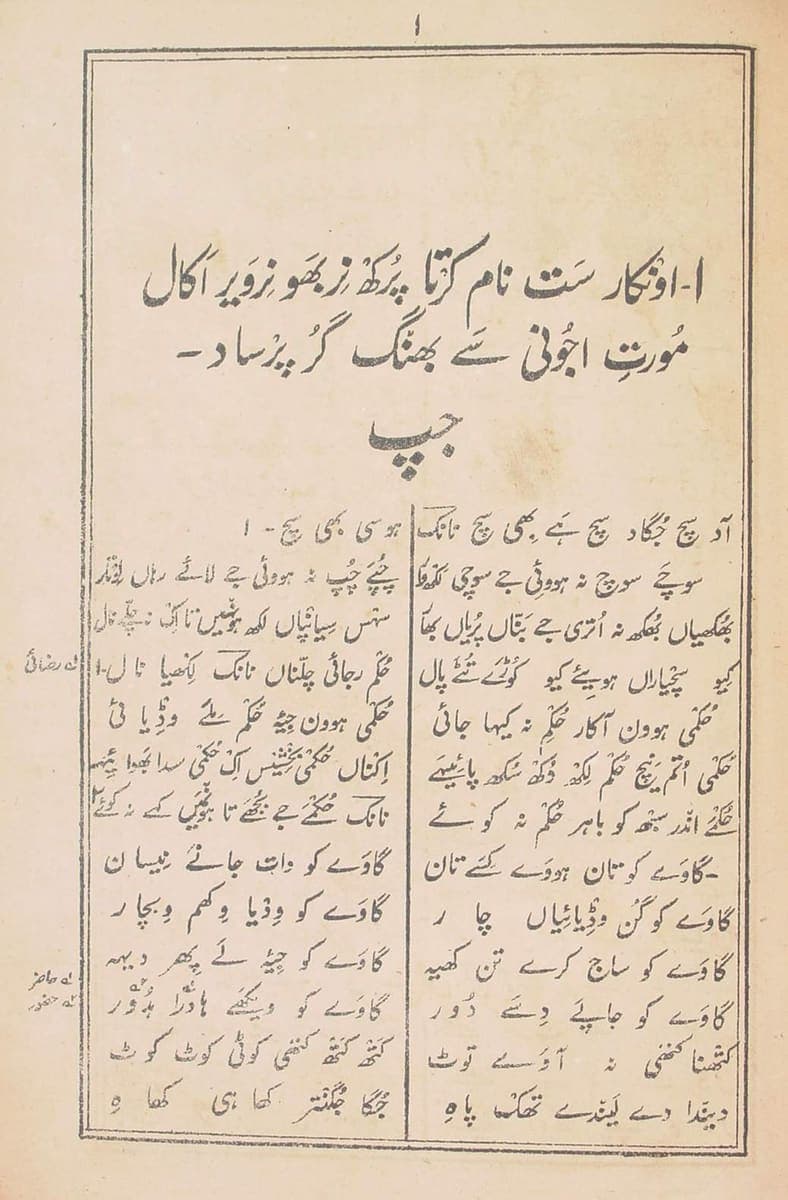
Panjab Digital Library · Source · Public domain
Evidano Transcription
١
١- اونکار ست نام کرتا پرکھ نربھو نرویر اکال
مورت اجونی سے بھنگ گر پرساد -
جپ
| آد سچ جگاد سچ ہے بھی سچ نانک | ہوسی بھی سچ - ١ |
|---|---|
| سوچے سوچ نہ ہووئی جے سوچی لکھ وار | چپے چپ نہ ہووئی جے لائے رہاں لوتار |
| بھکھیاں بھکھ نہ اتری جے بناں پریاں بھار | سہس سیانپاں لکھ ہوہیں تا اک نہ چلے نال |
| کیو سچیاراں ہویئے کیو کوڑے ٹٹے پال | حکم رجائی \١- اللہ رضائی/ چلناں نانک لکھیا نال - ١ |
| حکمی ہوون آکار حکم نہ کیہا جائی | حکمی ہوون جیو حکم ملے وڈیائی |
| حکمی اتم نیچ حکم لکھ دکھ سکھ پائیے | اکناں حکمی بخشیس اک حکمی سدا بھوائیے |
| حکمے اندر سبھ کو باہر حکم نہ کوئے | نانک حکمے جے بجھے تا ہومیں کہے نہ کوئے - ٢ |
| گاوے کو تان ہووے کسے تان | گاوے کو دات جانے نیسان |
| گاوے کو گن وڈیائیاں چار | گاوے کو وڈیا وکھم وچار |
| گاوے کو ساج کرے تن کھیہ | گاوے کو جیو لے پھر دیہہ |
| گاوے کو جاپے دسے دور | گاوے کو ویکھے ہادرا \٢- حاضر/ ہدور \٣- حضور/ |
| کتھنا کتھنی نہ آوے توٹ | کتھ کتھ کتھنی کوٹی کوٹ کوٹ |
| دیندا دے لیندے تھک پاہ | جگا جگنتر کھاہی کھاہ |
Generated by Evidano’s advanced model; not yet checked against a published edition.
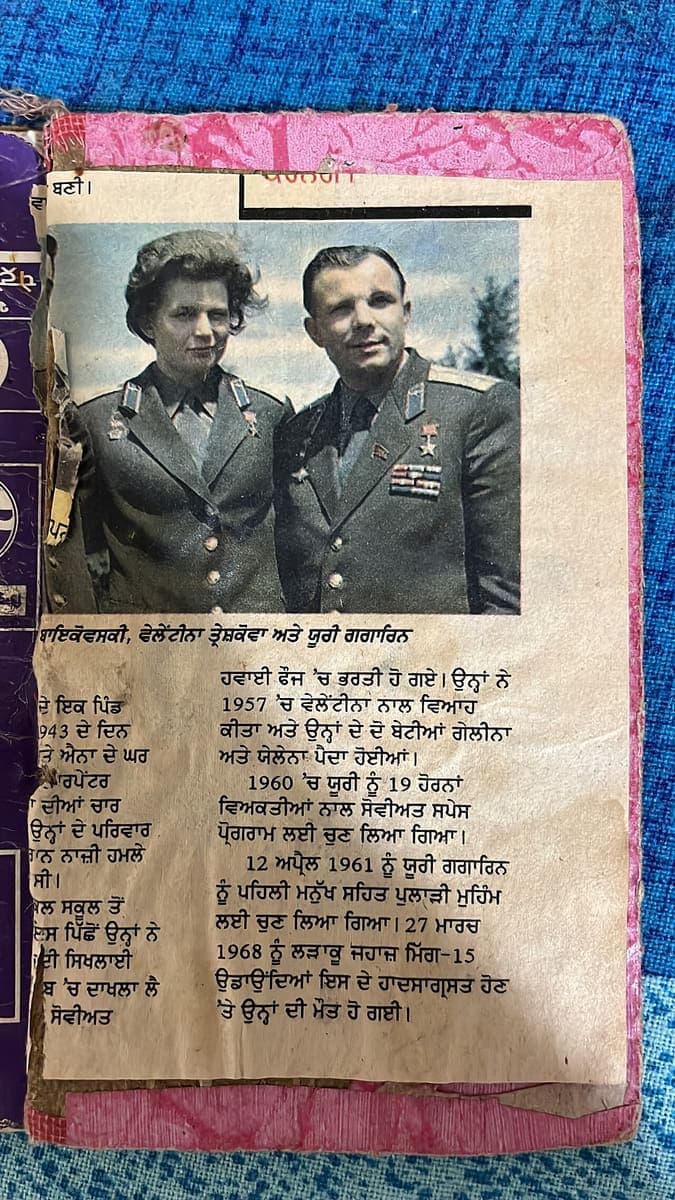
Source · CC BY-SA 4.0 · Mnv179, Wiki Loves Punjab 2026
Evidano Transcription
[cut off] ਬਣੀ।
[photograph]
[cut off]ਾਇਕੋਵਸਕੀ, ਵੇਲੇਂਟੀਨਾ ਤ੍ਰੇਸ਼ਕੋਵਾ ਅਤੇ ਯੂਰੀ ਗਗਾਰਿਨ
[cut off]ਦੇ ਇਕ ਪਿੰਡ
[cut off]943 ਦੇ ਦਿਨ
[cut off]ਤੇ ਐਨਾ ਦੇ ਘਰ
[cut off]ਾਰਪੇਂਟਰ
[cut off] ਦੀਆਂ ਚਾਰ
ਉਨ੍ਹਾਂ ਦੇ ਪਰਿਵਾਰ
[cut off]ਾਨ ਨਾਜ਼ੀ ਹਮਲੇ
ਸੀ।
[cut off]ਲ ਸਕੂਲ ਤੋਂ
[cut off]ਇਸ ਪਿੱਛੋਂ ਉਨ੍ਹਾਂ ਨੇ
[cut off]ੀ ਸਿਖਲਾਈ
[cut off]ਬ 'ਚ ਦਾਖਲਾ ਲੈ
ਸੋਵੀਅਤ
ਹਵਾਈ ਫੌਜ 'ਚ ਭਰਤੀ ਹੋ ਗਏ। ਉਨ੍ਹਾਂ ਨੇ
1957 'ਚ ਵੇਲੇਂਟੀਨਾ ਨਾਲ ਵਿਆਹ
ਕੀਤਾ ਅਤੇ ਉਨ੍ਹਾਂ ਦੇ ਦੋ ਬੇਟੀਆਂ ਗੇਲੀਨਾ
ਅਤੇ ਯੇਲੇਨਾ ਪੈਦਾ ਹੋਈਆਂ।
1960 'ਚ ਯੂਰੀ ਨੂੰ 19 ਹੋਰਨਾਂ
ਵਿਅਕਤੀਆਂ ਨਾਲ ਸੋਵੀਅਤ ਸਪੇਸ
ਪ੍ਰੋਗਰਾਮ ਲਈ ਚੁਣ ਲਿਆ ਗਿਆ।
12 ਅਪ੍ਰੈਲ 1961 ਨੂੰ ਯੂਰੀ ਗਗਾਰਿਨ
ਨੂੰ ਪਹਿਲੀ ਮਨੁੱਖ ਸਹਿਤ ਪੁਲਾੜੀ ਮੁਹਿੰਮ
ਲਈ ਚੁਣ ਲਿਆ ਗਿਆ। 27 ਮਾਰਚ
1968 ਨੂੰ ਲੜਾਕੂ ਜਹਾਜ਼ ਮਿਗ-15
ਉਡਾਉਂਦਿਆਂ ਇਸ ਦੇ ਹਾਦਸਾਗ੍ਰਸਤ ਹੋਣ
'ਤੇ ਉਨ੍ਹਾਂ ਦੀ ਮੌਤ ਹੋ ਗਈ।
Generated by Evidano’s advanced model; not yet checked against a published edition.
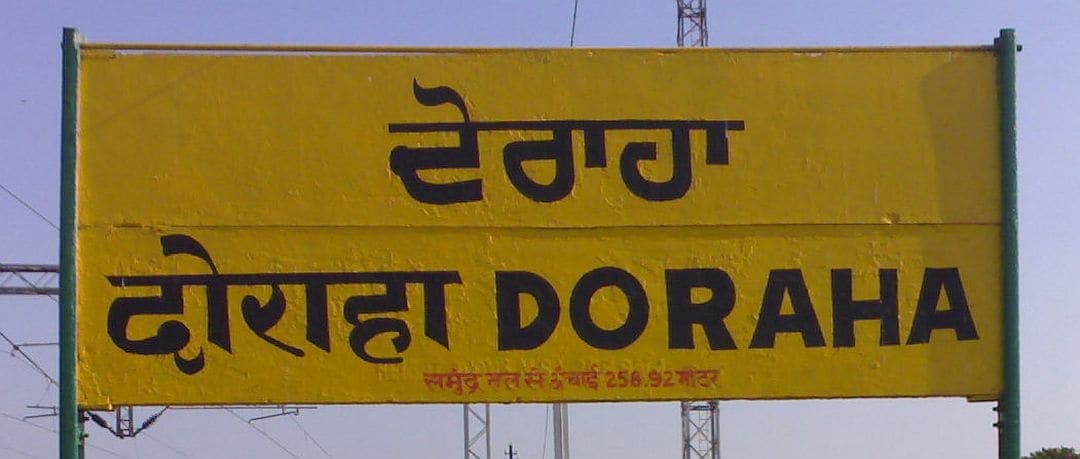
Source · CC BY-SA 4.0 · rupinder, via panoramio
Evidano Transcription
ਦੋਰਾਹਾ
दोराहा DORAHA
समुद्र तल से ऊंचाई 258.92 मीटर
Generated by Evidano’s advanced model; not yet checked against a published edition.
Source · Public domain · Copy scanned for the Punjabi Wikisource proofreading project
Evidano Transcription
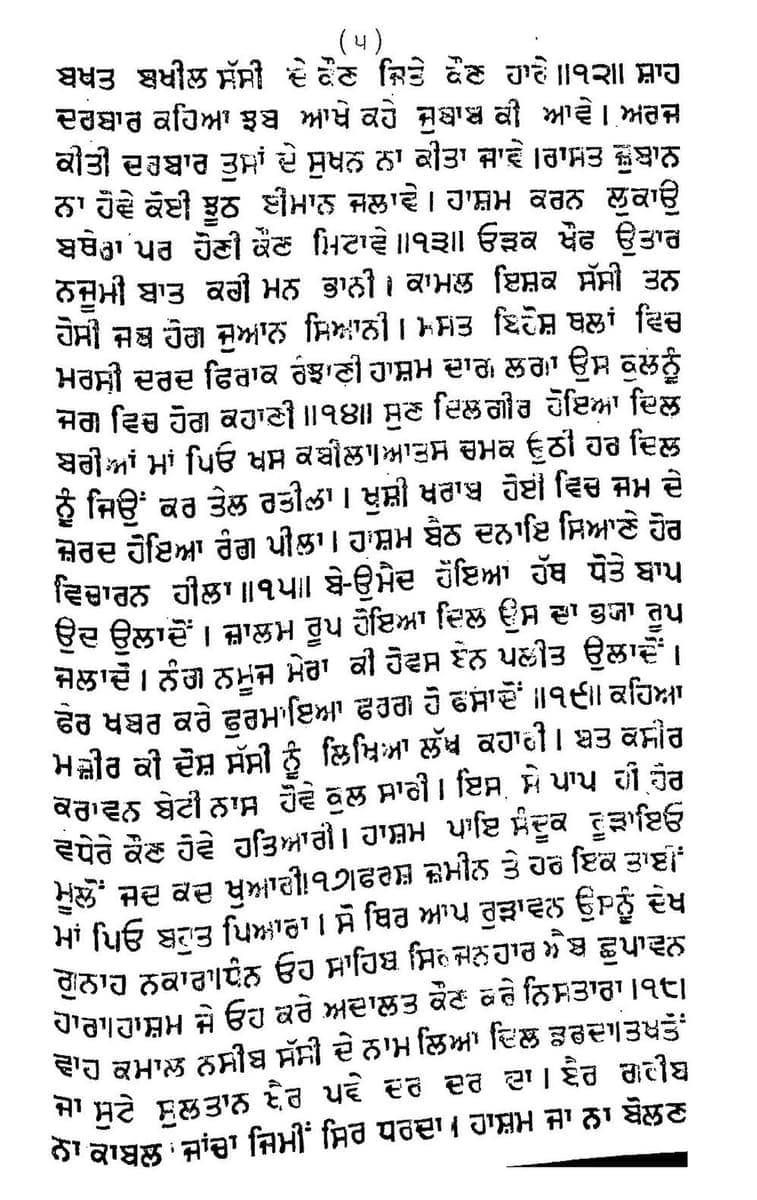
All twenty-six printed lines of page ੫, proofread and then validated on Punjabi Wikisource (quality level 4 of 4) against this same scan. The breaks are the printed line breaks, and the stanza numbers stand as printed, including the two places where the chapbook closes a stanza with single dandas rather than double.
ਬਖਤ ਬਖੀਲ ਸੱਸੀ ਦੇ ਕੌਣ ਜਿਤੇ ਕੌਣ ਹਾਰੇ॥੧੨॥ ਸ਼ਾਹ
ਦਰਬਾਰ ਕਹਿਆ ਝਬ ਆਖੇ ਕਹੇ ਜੁਬਾਬ ਕੀ ਆਵੇ। ਅਰਜ
ਕੀਤੀ ਦਰਬਾਰ ਤੁਸਾਂ ਦੇ ਸੁਖਨ ਨਾ ਕੀਤਾ ਜਾਵੇ। ਰਾਸਤ ਜ਼ੁਬਾਨ
ਨਾ ਹੋਵੇ ਕੋਈ ਝੂਠ ਈਮਾਨ ਜਲਾਵੇ। ਹਾਸ਼ਮ ਕਰਨ ਲੁਕਾਉ
ਬਥੇਰਾ ਪਰ ਹੋਣੀ ਕੌਣ ਮਿਟਾਵੇ॥੧੩॥ ਓੜਕ ਖੌਫ ਉਤਾਰ
ਨਜੂਮੀ ਬਾਤ ਕਰੀ ਮਨ ਭਾਨੀ। ਕਾਮਲ ਇਸ਼ਕ ਸੱਸੀ ਤਨ
ਹੋਸੀ ਜਬ ਹੋਗ ਜੁਆਨ ਸਿਆਨੀ। ਮਸਤ ਬਿਹੋਸ਼ ਥਲਾਂ ਵਿਚ
ਮਰਸੀ ਦਰਦ ਫਿਰਾਕ ਰੰਝਾਣੀ ਹਾਸ਼ਮ ਦਾਗ ਲਗਾ ਉਸ ਕੁਲਨੂੰ
ਜਗ ਵਿਚ ਹੋਗ ਕਹਾਣੀ॥੧੪॥ ਸੁਣ ਦਿਲਗੀਰ ਹੋਇਆ ਦਿਲ
ਬਰੀਆਂ ਮਾਂ ਪਿਓ ਖਸ ਕਬੀਲਾ। ਆਤਸ ਚਮਕ ਉਠੀ ਹਰ ਦਿਲ
ਨੂੰ ਜਿਉਂ ਕਰ ਤੇਲ ਰਤੀਲਾਂ। ਖੁਸ਼ੀ ਖਰਾਬ ਹੋਈ ਵਿਚ ਜਮ ਦੇ
ਜ਼ਰਦ ਹੋਇਆ ਰੰਗ ਪੀਲਾ। ਹਾਸ਼ਮ ਬੈਠ ਦਨਾਇ ਸਿਆਣੇ ਹੋਰ
ਵਿਚਾਰਨ ਹੀਲਾ॥੧੫॥ ਬੇ-ਉਮੈਦ ਹੋਇਆ ਹੱਥ ਧੋਤੇ ਬਾਪ
ਉਦ ਉਲਾਦੋਂ। ਜ਼ਾਲਮ ਰੂਪ ਹੋਇਆ ਦਿਲ ਉਸ ਦਾ ਭਯਾ ਰੂਪ
ਜਲਾਦੋ। ਨੰਗ ਨਮੂਜ ਮੇਰਾ ਕੀ ਹੋਵਸ ਏਨ ਪਲੀਤ ਉਲਾਦੋਂ।
ਫੇਰ ਖਬਰ ਕਰੇ ਫਰਮਾਇਆ ਫਰਗ ਹੋ ਫਸਾਦੋਂ॥੧੯॥ ਕਹਿਆ
ਮਜ਼ੀਰ ਕੀ ਦੋਸ਼ ਸੱਸੀ ਨੂੰ ਲਿਖਿਆ ਲੱਖ ਕਹਾਰੀ। ਬਤ ਕਸੀਰ
ਕਰਾਵਨ ਬੇਟੀ ਨਾਸ ਹੋਵੇ ਕੁਲ ਸਾਰੀ। ਇਸ ਸੇ ਪਾਪ ਹੀ ਹੋਰ
ਵਧੇਰੇ ਕੌਣ ਹੋਵੇ ਹਤਿਆਰੀ। ਹਾਸ਼ਮ ਪਾਇ ਸੰਦੂਕ ਰੂੜਾਇਓ
ਮੂਲੋਂ ਜਦ ਕਦ ਖੁਆਰੀ।੧੭। ਫਰਸ਼ ਜ਼ਮੀਨ ਤੇ ਹਰ ਇਕ ਤਾਈਂ
ਮਾਂ ਪਿਓ ਬਹੁਤ ਪਿਆਰਾ। ਸੋ ਥਿਰ ਆਪ ਰੁੜਾਵਨ ਉਸਨੂੰ ਦੇਖ
ਗੁਨਾਹ ਨਕਾਰਾ। ਧੰਨ ਓਹ ਸਾਹਿਬ ਸਿਰਜਨਹਾਰ ਐਬ ਛੁਪਾਵਨ
ਹਾਰਾ। ਹਾਸ਼ਮ ਜੇ ਓਹ ਕਰੇ ਅਦਾਲਤ ਕੌਣ ਕਰੇ ਨਿਸਤਾਰਾ।੧੮।
ਵਾਹ ਕਮਾਲ ਨਸੀਬ ਸੱਸੀ ਦੇ ਨਾਮ ਲਿਆ ਦਿਲ ਡਰਦਾ। ਤਖਤੋਂ
ਜਾ ਸੁਟੇ ਸੁਲਤਾਨ ਖੈਰ ਪਵੇ ਦਰ ਦਰ ਦਾ। ਬੈਰ ਗਰੀਬ
ਨਾ ਕਾਬਲ ਜਾਂਚਾ ਜਿਮੀਂ ਸਿਰ ਧਰਦਾ। ਹਾਸ਼ਮ ਜਾ ਨਾ ਬੋਲਣ
Source: ਪੰਨਾ:Sassi Punnu - Hashim.pdf/5, Punjabi Wikisource (CC BY-SA 4.0).
What Punjabi text looks like on the page
Gurmukhi was fixed as a standard script by the second Sikh Guru, Guru Angad, in the sixteenth century, out of earlier Punjabi trader hands, and became the script of the Guru Granth Sahib. It has thirty-five base letters, three of them extended with a dot (nuqta) for sounds borrowed from Persian and English, and a continuous head line joining the letters of a word, exactly as in Devanagari. Vowels are shown by signs attached above, below, before or after the consonant, nasalisation by a dot (bindi) or a crescent (tippi) over the head line, and a doubled consonant by a small hook (addak) above the line before it. Three consonants — ਹ, ਰ and ਵ — also appear as small subscript forms hanging under the letter before them, and Gurmukhi has its own numerals, ੦ to ੯, alongside the Hindu-Arabic digits used in modern print.
Shahmukhi is the older of the two by centuries: the Sufi poets and qissa-writers of the Punjab, among them Waris Shah, wrote in a Perso-Arabic hand well before Guru Angad standardised Gurmukhi, and it remains the everyday script of Punjabi in Pakistan, where Punjabi itself has no official status but is spoken by tens of millions. Nastaliq joins almost every letter to its neighbour in a sloping, right-to-left line, so a letter takes a different shape depending on whether it opens, sits inside, closes, or stands alone in a word. Short vowels are rarely marked at all, leaving them to be inferred from context the way they are in Urdu, and a handful of Shahmukhi letters — for the retroflex ਟ, ਡ and ੜ, and for the aspirated sounds that mark Punjabi’s distinctive word tones — exist only to serve Punjabi and are easy to mistake for their plain Urdu look-alikes.
Everyday material adds its own layer on top of either script. Newspapers, government forms and personal papers in Indian Punjab are printed or handwritten in Gurmukhi, often beside Hindi or English; road and railway signs there are commonly trilingual, giving the same name in Gurmukhi, Devanagari and Latin letters one above the other. Older Gurmukhi manuscripts, particularly illuminated Puranic and devotional texts, use the script for material well beyond scripture, since Gurmukhi was for a long time simply the script Punjabis reached for, whatever the subject.
Why ordinary OCR struggles here
Two scripts, two directions
A page in Gurmukhi runs left to right under a head line; a page in Shahmukhi runs right to left in joined nastaliq. Software built for one fails outright on the other, and a bilingual dictionary, sign or letter that mixes the two needs each stretch read in its own direction rather than forced into one.
Subscript letters under the head line
The subscript forms of ਹ, ਰ and ਵ sit low and close beside the following vowel sign, and a worn scan can turn one into a stray mark or drop it into the letter above. Losing it changes a plain consonant into a consonant cluster, which changes the word.
Nastaliq’s joined, mostly unvocalised letters
Shahmukhi letters change shape by position in the word and short vowels are usually left unmarked, so the same string of consonants can read more than one way without local knowledge of Punjabi vocabulary. The extra letters Shahmukhi adds for retroflex and toned sounds are easily read as their ordinary Urdu counterparts by a model trained only on Urdu.
Small marks that carry real information
The bindi and tippi for nasalisation and the addak for a doubled consonant are single dots or hooks above the head line, easily lost to a soft scan, glare, or a fast hand. A transcription that drops them silently changes the pronunciation and sometimes the meaning of the word beneath them.
Who works with this material
Sikh heritage and scripture projects
Gurdwaras, libraries and private collectors hold Gurmukhi manuscripts of the Guru Granth Sahib, the Dasam Granth and countless gutkas that have never been catalogued in detail. A transcription that keeps the subscript letters and vowel signs as written gives a first pass an editor can check folio by folio.
Punjabi-language archives and newspaper digitisation
Digital libraries working through decades of Gurmukhi periodicals need consistent readings of mastheads, columns and advertisements from print that ranges from crisp to badly foxed, with results that can be searched and cross-referenced across a whole run.
Shahmukhi literary scholars
Editors working with Punjabi Sufi poetry and qissas printed in nastaliq — Waris Shah’s Heer, the kafis of Bulleh Shah — need a right-to-left transcription that keeps the unvocalised text as printed, so editorial vowelling and glossing can be added as a separate, visible step.
Genealogists and land-record researchers
Revenue and migration papers from undivided and post-Partition Punjab mix Gurmukhi with English or Urdu on the same page. A transcription that keeps each script distinct rather than merging them makes names and place references easier to trace across records.
Getting the best transcription
Say which script is on the page
Tell the model whether the page is Gurmukhi or Shahmukhi rather than relying on it to guess; the two share no letterforms, and a wrong guess on a faint or damaged scan wastes a pass. For a mixed-script document, mark where each stretch begins.
Set a policy for subscripts, nasal marks and numerals
Decide whether the pairin forms of ਹ, ਰ and ਵ should be kept as subscript characters or expanded to full letters, whether bindi and tippi are kept exactly as written, and whether Gurmukhi numerals should stay as ੦–੯ or be converted to standard digits.
Decide how to handle Shahmukhi’s missing vowels
Ask for the nastaliq text exactly as printed, with short vowels left out as the page has them, or for editorial vowel points added in brackets. Note any Punjabi-specific letters for retroflex or toned sounds so they are not read as their ordinary Urdu equivalents.
Start with the most damaged sample
Test the prompt on a foxed clipping or an illuminated manuscript page with paint bleeding into the text before running a full batch. If the model separates text from decoration and flags what it cannot read there, cleaner pages need little further checking.
Frequently asked questions
- Does Evidano read both Gurmukhi and Shahmukhi?
- Yes. Tell it which script the page uses, or let it detect the direction and letterforms, and it transcribes Gurmukhi left to right or Shahmukhi right to left rather than trying to force one script’s rules onto the other.
- How are the pairin subscript letters and vowel signs handled?
- The subscript forms of ਹ, ਰ and ਵ are recognised as part of the consonant cluster they belong to rather than read as stray marks, and vowel signs are kept exactly where they sit — above, below, before or after the letter — unless you ask for them normalised.
- Can it transcribe Shahmukhi without the vowels being marked?
- Yes, and by default it will, since most printed and handwritten Shahmukhi leaves short vowels unmarked. If you want editorial vowelling added for readability, say so and it will be inserted in a way that is clearly distinguished from the original text.
- Are Gurmukhi numerals converted to standard digits?
- Only if you ask for it. The default keeps ੦–੯ as written, since older print and manuscripts use them, but many modern documents already use Hindu-Arabic digits and the transcription reflects whichever is on the page.
- What about a page that mixes Punjabi with English or Hindi, like a road sign?
- Each script is transcribed in its own right rather than merged into one line, so a trilingual sign or a bilingual government form comes back with the Gurmukhi, Devanagari and Latin text kept separate and in the order they appear.
Related scripts and pages
Transcribe your Punjabi pages
Upload a Gurmukhi manuscript, a Shahmukhi print, or a bilingual sign and check the transcription against the image before you export it.