
Hebrew · c. 1200–1800
One alphabet, three languages, four hands
A book made in the Rhineland or in Poland may run from Hebrew into Aramaic and out again into Yiddish without changing a single letterform, and the reader is expected to notice from the vocabulary alone. On top of that the Ashkenazi quill makes ד and ר, ב and כ, ה and ח differ by a hair, and every third word is an abbreviation. Evidano transcribes what is on the parchment, keeps the vowel points where they exist, and tells you which language each block is in.
Sample pages
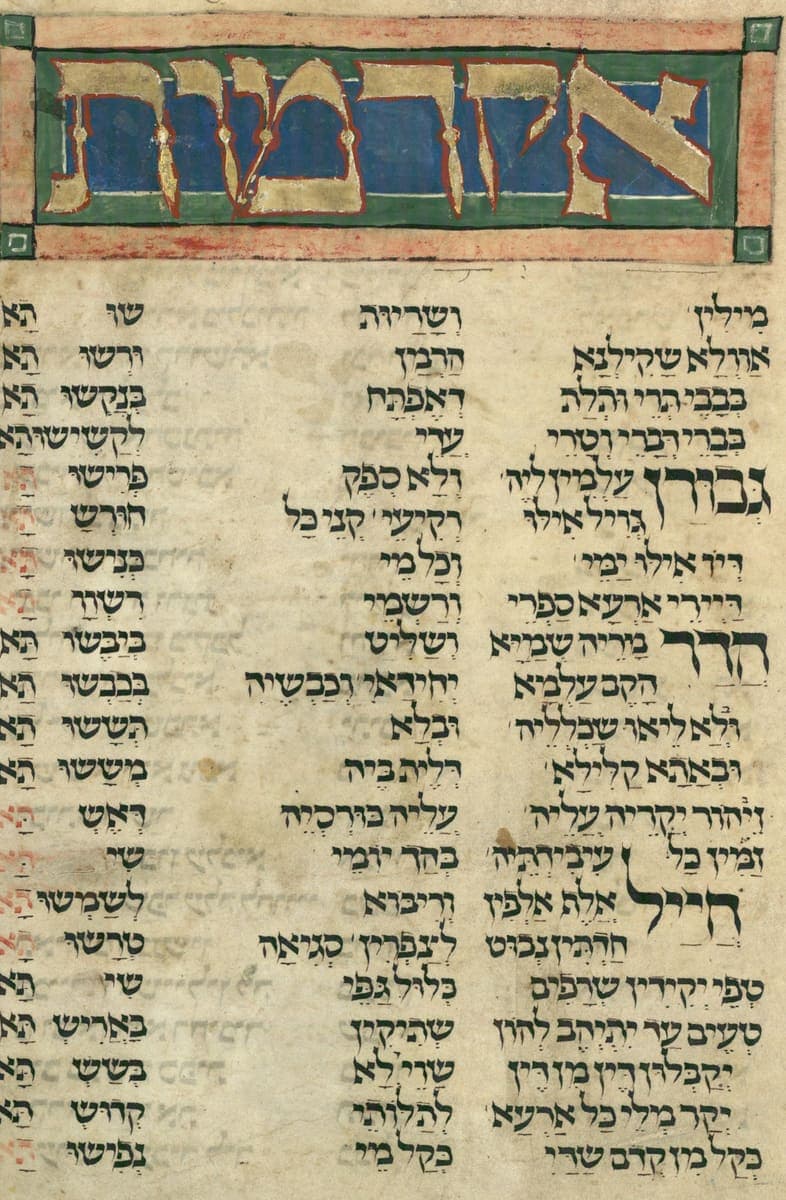
National Library of Israel, Jerusalem, MS Heb. 4°781, 1272 · Source · Public domain
Evidano Transcription
The first ten lines of the poem, in the standard Ashkenazi text; the opening word אַקְדָמוּת itself is the display word in the panel and is printed here at the head of line 1. The manuscript splits each line across four columns and spells several words differently — הֲדַר appears as הדר מריה, and וּבְלָא לֵאוּ further down as ולא ליאו — so this is the received wording of the poem rather than a diplomatic copy of the folio.
אַקְדָמוּת מִלִּין וְשָׁרָיוּת שׁוּתָא
אַוְלָא שָׁקִילְנָא הַרְמָן וּרְשׁוּתָא
בְּבָבֵי תְּרֵי וּתְלַת דְּאֶפְתַּח בְּנַקְשׁוּתָא
בְּבָרֵי דְבָרֵי וְטָרֵי עֲדֵי לְקַשִּׁישׁוּתָא
גְּבוּרָן עָלְמִין לֵהּ וְלָא סִפֵּק פְּרִישׁוּתָא
גְּוִיל אִלּוּ רְקִיעֵי קְנֵי כָּל חֻרְשָׁתָא
דְּיוֹ אִלּוּ יַמֵּי וְכָל מֵי כְּנִישׁוּתָא
דַּיְרֵי אַרְעָא סַפְרֵי וְרַשְׁמֵי רַשְׁוָתָא
הֲדַר מָרֵי שְׁמַיָּא וְשַׁלִיט בְּיַבֶּשְׁתָּא
הָקֵם עָלְמָא יְחִידָאֵי וְכַבְּשֵׁהּ בְּכַבְּשׁוּתָא
Source: אקדמות, ויקיטקסט (CC BY-SA 4.0).
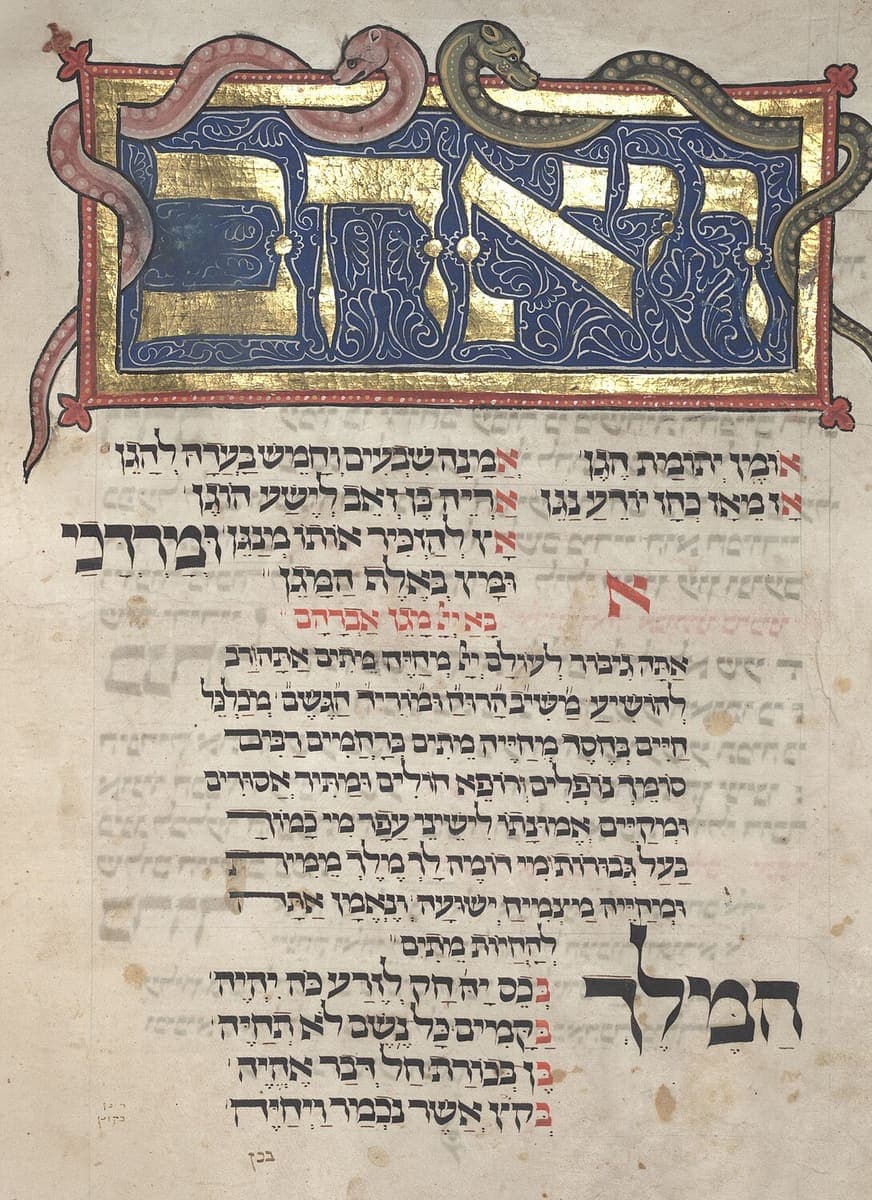
Universitätsbibliothek Leipzig, MS V. 1102, 14th century · Source · Public domain
Evidano Transcription
The seven fully written lines in the middle of the page, which carry the Gevurot blessing in the Ashkenazi wording, from אַתָּה גִּבּוֹר to וְנֶאֱמָן אַתָּה לְהַחֲיוֹת מֵתִים. The text is given here in the sentence divisions of the printed rite, not in the manuscript’s line breaks; the manuscript writes the divine name as a pair of yods. The piyyut lines above and below this block, and the acrostic letters in red, are not included.
אַתָּה גִּבּוֹר לְעוֹלָם, אֲדֹנָי. מְחַיֵּה מֵתִים אַתָּה, רַב לְהוֹשִׁיעַ.
מַשִּׁיב הָרוּחַ וּמוֹרִיד הַגֶּשֶׁם
מְכַלְכֵּל חַיִּים בְּחֶסֶד, מְחַיֵּה מֵתִים בְּרַחֲמִים רַבִּים, סוֹמֵךְ נוֹפְלִים, וְרוֹפֵא חוֹלִים, וּמַתִּיר אֲסוּרִים, וּמְקַיֵּם אֱמוּנָתוֹ לִישֵׁנֵי עָפָר. מִי כָמוֹךָ בַּעַל גְּבוּרוֹת, וּמִי דוֹמֶה לָּךְ, מֶלֶךְ מֵמִית וּמְחַיֶּה וּמַצְמִיחַ יְשׁוּעָה.
וְנֶאֱמָן אַתָּה לְהַחֲיוֹת מֵתִים.
Source: תפילת עמידה – שבח, גבורות, ויקיטקסט (CC BY-SA 4.0).
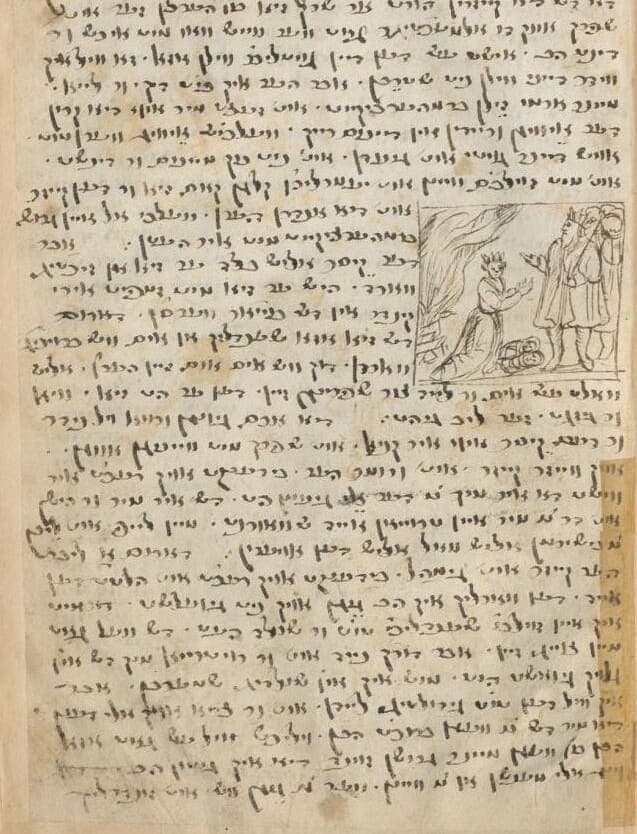
Leo Baeck Institute, c. 1580–1600 · Source · Public domain
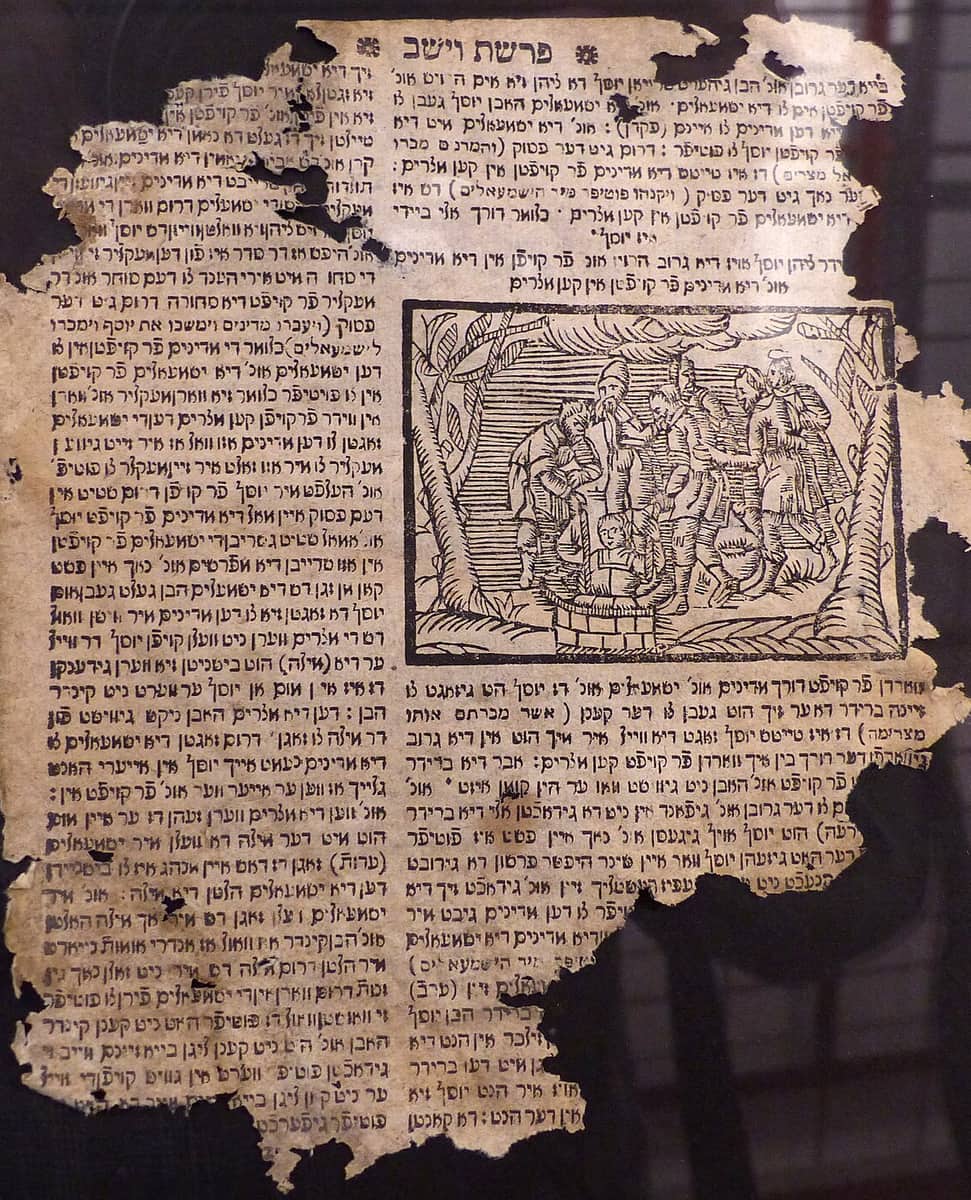
Jüdisches Museum Franken, Schwabach, c. 1800 · Source · CC BY-SA 4.0 · Photograph by Wolfgang Sauber
Evidano Transcription
פרשת וישב
[cut off] [?] גרובן אונ' הבן גיהערט שרייאן יוסף דא ציהן זיא אים [?] אונ'
פֿר קויפֿטן אים צו דיא ישמעאלים · אונ' [hole] ישמעאלים האבן יוסף געבן צו
[cut off]יא דען מדינים צו איינם [?] (פקדן) : אונ' דיא ישמעאלים מיט דיא
[cut off]ר קויפֿטן יוסף צו פוטיפֿר : דרום גיט דער פסוק (והמדנים מכרו
אל מצרים) דז איז טייטש דיא מדינים פֿר קויפֿטן אים קען מצרים :
[cut off]ער נאך גיט דער פסוק ( ויקנהו פוטיפר מיד הישמעאלים ) דש איז
דיא ישמעאלים פֿר קויפֿטן אים קען מצרים · כלומר דורך אלי ביידי
איז יוסף ·
[cut off]דר ציהן יוסף אויז דיא גרוב הרויז אונ' פֿר קויפֿן אים דיא מדינים
אונ' דיא מדינים פֿר קויפֿטן אים קען מצרים
[woodcut]
[remaining text of both columns not verified: small vaybertaytsh with burnt edges cutting most lines]
Generated by Evidano’s advanced model; not yet checked against a published edition.
How an Ashkenazi page is written
The Ashkenazi script family took shape in the German and northern French communities from the twelfth century and travelled east into Bohemia, Poland and Lithuania. It is written with a broad quill cut at a steep angle, which gives the square hand its heavy head-strokes and hairline uprights: the top of every letter is a thick wedge, the aleph is a diagonal bar with two flags, the lamed rises well above the line, and final kaf, nun and pe drop long tails below it. Bibles, festival prayer books and haggadot use that square hand; commentaries and private copies use a lighter semi-cursive; notes, accounts and letters use a joined cursive that a reader of printed Hebrew will not recognise at all. The three modes often share one volume, marking the rank of the texts rather than a change of language.
Because Hebrew has no capitals, the page is organised by display words. The first word of a piyyut or a section is written large in gold or colour inside a decorated panel, sometimes with dragons or hybrids growing out of it, and the poem that follows is laid out in short columns whose first letters spell an alphabetical acrostic or the poet’s name; those letters are usually picked out in red. Vocalisation is applied where a text is sung or must be read aloud, and is left off elsewhere on the same page. Numbers are written with letters, so a date, a folio number and a word look alike, and the pairs ט״ו and ט״ז stand in for fifteen and sixteen to avoid spelling out the divine name. Abbreviation is constant: a single geresh marks a shortened word, gershayim an acronym, and the divine name is written as two or three yods rather than in full.
Yiddish shares the same letters. Old Yiddish spells vowels with א, ע and י, doubles ו and adds the pairs װ, ױ and ײ, while any word of Hebrew or Aramaic origin keeps its Hebrew spelling — so a single line mixes two orthographies. From the sixteenth century Yiddish books were printed in a type cut in imitation of the Ashkenazi semi-cursive, the hand later called vaybertaytsh, which is why a printed Yiddish page looks more like a manuscript than like a Hebrew book. Fragments of both survive in the genizot of German synagogue attics, torn, stained and often burnt at the edge.
Why ordinary OCR struggles here
The language changes without warning
Hebrew, Aramaic and Yiddish are written in the same alphabet, and a mahzor moves between them within a line. A model that assumes one language will normalise Aramaic and Yiddish words into the Hebrew ones they resemble, which is the hardest kind of error to spot afterwards.
Letters that differ by a hairline
ד and ר are told apart by a small heel at the top right, ב and כ by whether the base corner is square, ה and ח by a gap of half a millimetre, and ו, ז, י and final נ by length alone. On rubbed parchment, with the ink of the other side showing through, those distinctions are the first to go.
Abbreviations and letters used as numbers
Contractions run to several a line, and not all of them are marked with a geresh or gershayim. The same letters also serve as numerals for dates, folios and verse counts, so a reading has to decide whether a two-letter group is a word, an acronym or a number before it can be written down.
Text that is also decoration
Display words sit inside gold panels, acrostic letters are enlarged and coloured, and a scribe may draw a border out of tiny writing. All of it is text and belongs in the transcription, but none of it is in the running line, and treating a panel as an illustration silently drops the opening word of a poem.
Who works with this material
Scholars of liturgy and piyyut
Thousands of liturgical poems survive only in festival prayer books, and are identified by their opening words and acrostics. A transcription that reports the display word, the acrostic letters and the order of the poems turns a mahzor into something an index can absorb.
Yiddish studies
Old Yiddish story collections, verse epics and household books are the earliest continuous evidence for the language. Editors need the spelling exactly as written, because the vowel letters are the whole basis for reconstructing how the words sounded.
Genizah projects in German communities
Attics and roof voids of village synagogues have yielded tens of thousands of worn leaves from prayer books, printed Yiddish works and account books. Sorting them begins with reading a few words on each, which is exactly what a first pass over a photograph can supply.
Manuscript cataloguers
A colophon gives the scribe, the place and the date in letters used as numbers; owners’ notes, birth records and censors’ marks accumulate on the flyleaves. These short, awkward passages carry most of what a catalogue entry needs.
Getting the best transcription
Say which languages to expect
Tell the model whether the page may contain Aramaic and Yiddish as well as Hebrew, and ask it to label each block. Naming the possibilities is what stops a Yiddish line being quietly rewritten as the Hebrew words it looks like.
Decide about the vowel points before you start
Say whether pointing should be transcribed, dropped, or returned in a parallel unpointed version. Mixing the two conventions across a project makes the results impossible to search, and a pointed text is far more expensive to correct by hand.
Set one rule for abbreviations
Choose whether ר״ת and similar contractions are expanded, expanded in brackets, or left as written with their geresh and gershayim, and repeat the rule in every prompt. Ask separately for letters that are being used as numbers, so that dates and foliation come back as figures you can check.
Try a page with show-through first
Thin parchment written on both sides is the standard case, not the exception. If the mirror-image letters from the other side are ignored and the red acrostic letters come back as their own field, the rest of the volume will behave.
Further reading on this hand
The palaeography guides the in-app selector points to for this domain, if you want to check a transcription against the standard references.
- HebrewPal: Hebrew Palaeography Album
This scholarly Hebrew palaeography album provides comparative manuscript examples organized by script type, region, and date. It includes Ashkenazi square, semi-cursive, and cursive hands alongside other regional traditions. The resource supports letter-by-letter comparison and demonstrates how recurring forms change across manuscripts and individual writers. It is useful for Hebrew and Yiddish materials because both languages can appear in related Ashkenazi script modes.
Frequently asked questions
- Can it tell Yiddish from Hebrew on the same page?
- Usually, because the vocabulary and the spelling habits differ even though the letters do not: Yiddish uses א, ע and doubled ו as vowels and keeps Hebrew spelling only for words of Hebrew origin. Blocks can be returned tagged by language so that the two can be indexed separately.
- Are the vowel points transcribed?
- They can be. Pointing is treated as a layer over the consonants rather than as extra characters, so you can ask for a pointed transcription, an unpointed one, or both from the same run. Where a mark is ambiguous — a qamats worn to a dot — it is flagged rather than guessed.
- What happens to the decorated word at the head of a poem?
- It is read as text and returned as the opening word, with a note that it stands in a display panel. That matters for liturgy, where poems are cited by their first word, and it is the part a system tuned to running text is most likely to skip.
- How are Hebrew letters used as numbers handled?
- They are reported as written and, on request, also as a figure, so that a folio number, a date in the creation era or a chapter count can be checked against the letters that produced it. The conventions ט״ו and ט״ז for fifteen and sixteen are recognised.
- Does printed Yiddish in vaybertaytsh work as well as manuscript?
- It behaves like a very regular semi-cursive hand, so it is easier than most manuscripts, but it is not ordinary Hebrew type and a model trained on square print will misread it. The larger obstacle with genizah material is the physical damage rather than the letterforms.
Related scripts and pages
Read your Ashkenazi manuscripts
Upload a mahzor page, a Yiddish leaf or a genizah fragment, choose Ashkenazi Hebrew and Yiddish Manuscripts, and say whether you want the pointing kept.