
Icelandic
Icelandic read the way it has always been written
Icelandic has changed so little that a modern reader can still work through a fourteenth-century saga manuscript, and its everyday print still carries two letters, þ and ð, that the rest of Europe dropped centuries ago. Evidano reads both ends of that continuity, from the abbreviation-heavy vellum hand of the sagas to an ordinary newspaper page, without collapsing þ and ð into a p or a d.
Sample pages
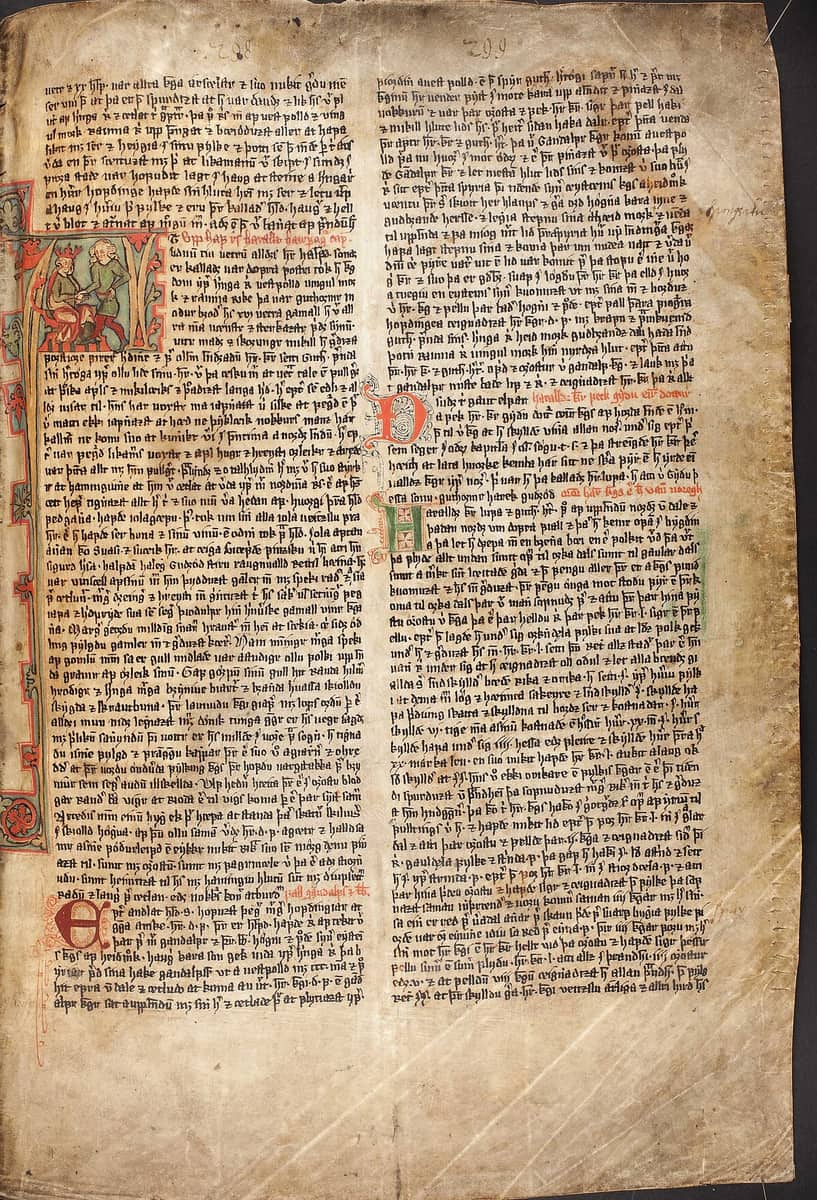
Árni Magnússon Institute for Icelandic Studies (Stofnun Árna Magnússonar í íslenskum fræðum), Reykjavík, GKS 1005 fol., f. 76r, c. 1387–1394 · Source · Public domain · Jón Þórðarson and Magnús Þórhallsson (scribes); image via handrit.is
Evidano Transcription
288 299
uetr z xx [illegible] var allra k[onun]ga vinsælstr z lito mikit g[o]du m[enn]
ser um þ[at] er þa er þ[at] spurdizt at h[an]n var daudr z lik h[an]s v[ar] fl
utt ap hringa riki [illegible] graptar . þa [illegible] ap uest polld z vingul
mork raumma riki upp þingat z baudduzt allir at hapa
likit m[ed] ser z heygia j sinu fylke z þotti [illegible] mikit [illegible]
v[on] ap en þ[eir] sættuzt m[ed] þ[ui] at likamanum v[ar] skipt j [illegible]
[illegible] v[ar] hopudit lagt j haug at steine a hringariki
[illegible]
Upphaf af Haralldi harfagra cap.
[illegible] tiu uetra alld[r] [illegible]
er kalladr var dofri [illegible]
[remaining lines illegible]
[illegible]
Generated by Evidano’s advanced model; not yet checked against a published edition.
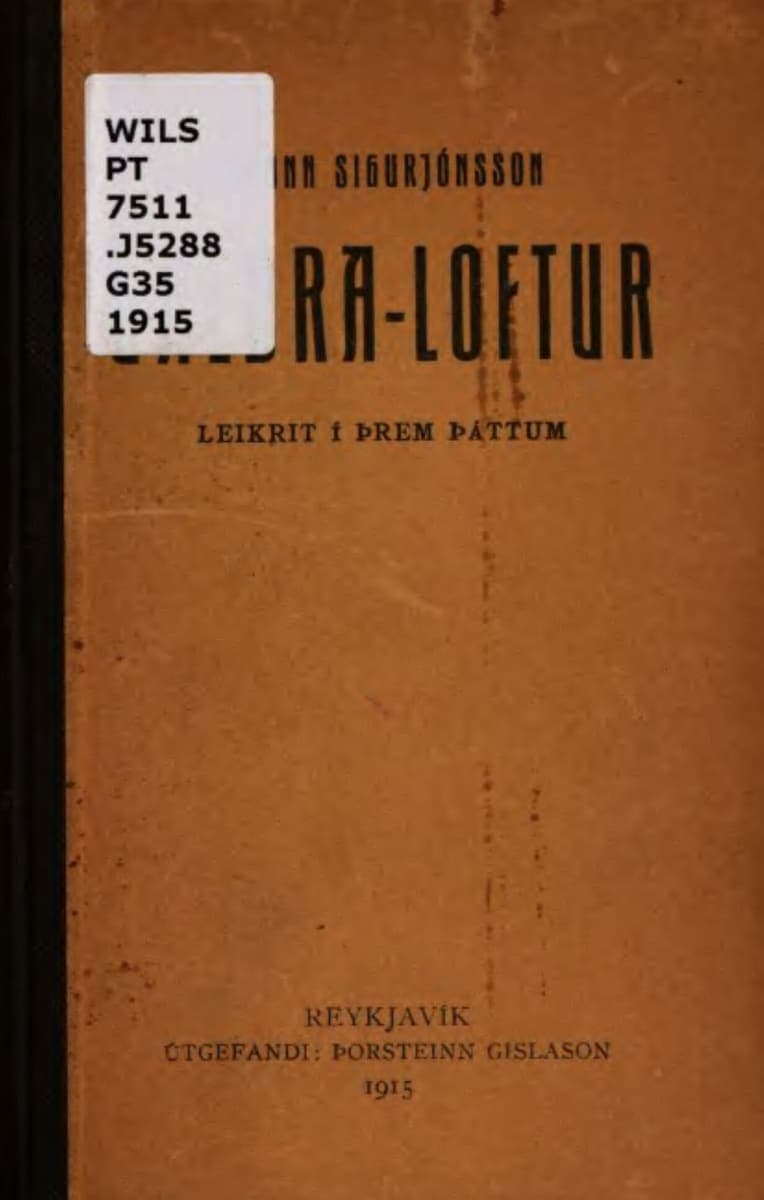
Evidano Transcription
The cover shown, transcribed on Icelandic Wikisource and validated to its highest proofreading status; the transcription supplies the author’s name and title as printed, including the words this particular copy’s shelfmark sticker now covers.
JÓHANN SIGURJÓNSSON
GALDRA-LOFTUR
LEIKRIT Í ÞREM ÞÁTTUM
REYKJAVÍK
ÚTGEFANDI: ÞORSTEINN GÍSLASON
1915
Source: Blaðsíða:Galdra-Loftur (1915).djvu/1, via Icelandic Wikisource (Public domain).
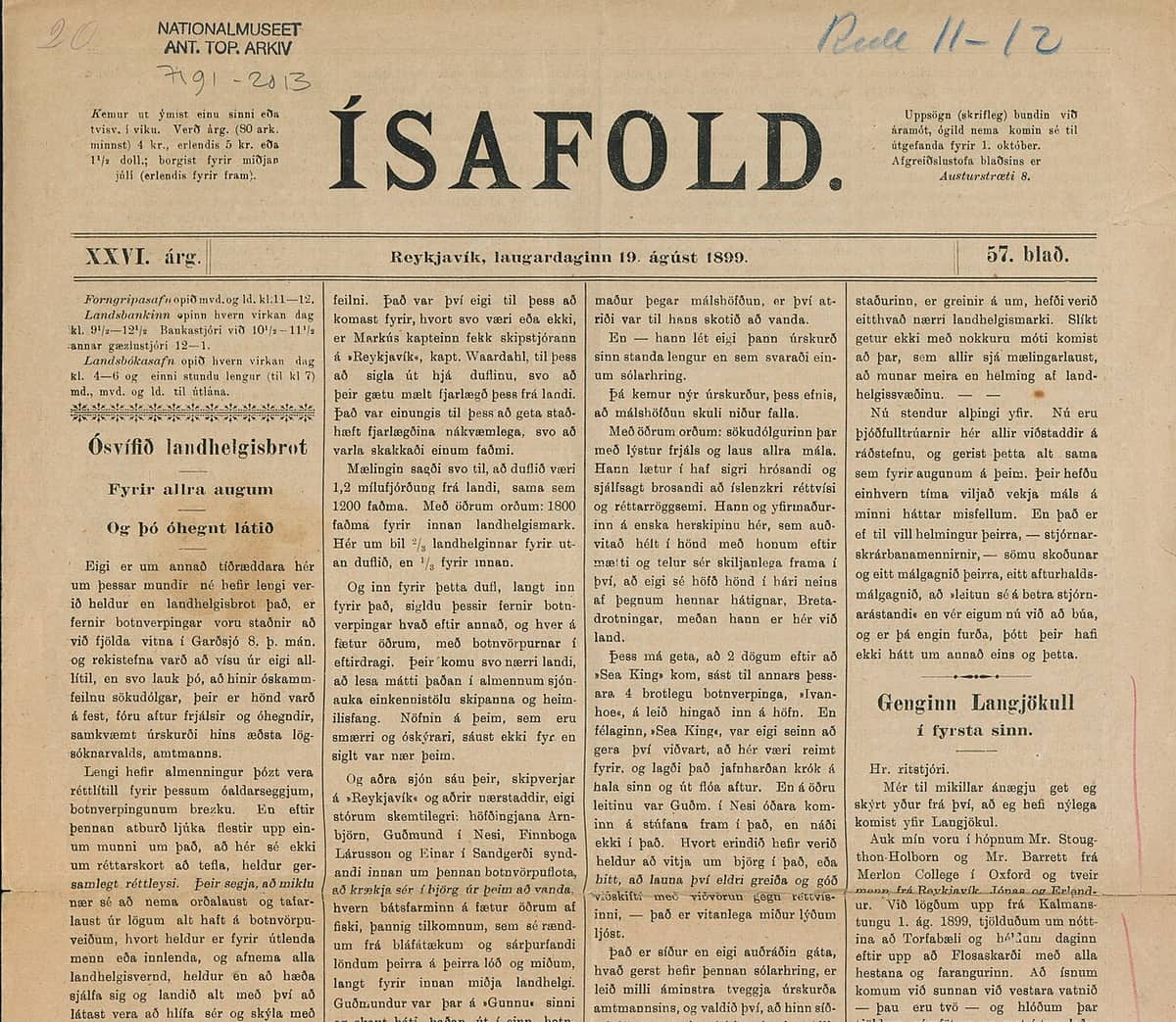
Nationalmuseet (National Museum of Denmark), 19 August 1899 · Source · Public domain
Evidano Transcription
20
NATIONALMUSEET
ANT. TOP. ARKIV
7191 - 2013
Reel 11-12
Kemur ut ýmist einu sinni eða
tvisv. í viku. Verð árg. (80 ark.
minnst) 4 kr., erlendis 5 kr. eða
1½ doll.; borgist fyrir miðjan
júlí (erlendis fyrir fram).
ÍSAFOLD.
Uppsögn (skrifleg) bundin við
áramót, ógild nema komin sé til
útgefanda fyrir 1. október.
Afgreiðslustofa blaðsins er
Austurstræti 8.
XXVI. árg. | Reykjavík, laugardaginn 19. ágúst 1899. | 57. blað.
Forngripasafn opið mvd. og ld. kl. 11—12.
Landsbankinn opinn hvern virkan dag
kl. 9½—12½ Bankastjóri við 10½—11½
annar gæzlustjóri 12—1.
Landsbókasafn opið hvern virkan dag
kl. 4—6 og einni stundu lengur (til kl 7)
md., mvd. og ld. til útlána.
Ósvífið landhelgisbrot
Fyrir allra augum
Og þó óhegnt látið
Eigi er um annað tíðræddara hér
um þessar mundir né hefir lengi ver-
ið heldur en landhelgisbrot það, er
fernir botnverpingar voru staðnir að
við fjölda vitna í Garðsjó 8. þ. mán.
og rekistefna varð að vísu úr eigi all-
lítil, en svo lauk þó, að hinir óskamm-
feilnu sökudólgar, þeir er hönd varð
á fest, fóru aftur frjálsir og óhegndir,
samkvæmt úrskurði hins æðsta lög-
sóknarvalds, amtmanns.
Lengi hefir almenningur þózt vera
réttlítill fyrir þessum óaldarseggjum,
botnverpingunum brezku. En eftir
þennan atburð ljúka flestir upp ein-
um munni um það, að hér sé ekki
um réttarskort að tefla, heldur ger-
samlegt réttleysi. Þeir segja, að miklu
nær sé að nema orðalaust og tafar-
laust úr lögum alt haft á botnvörpu-
veiðum, hvort heldur er fyrir útlenda
menn eða innlenda, og afnema alla
landhelgisvernd, heldur en að hæða
sjálfa sig og landið alt með því að
látast vera að hlífa sér og skýla með
feilni. Það var því eigi til þess að
komast fyrir, hvort svo væri eða ekki,
er Markús kapteinn fekk skipstjórann
á »Reykjavík«, kapt. Waardahl, til þess
að sigla út hjá duflinu, svo að
þeir gætu mælt fjarlægð þess frá landi.
Það var einungis til þess að geta stað-
hæft fjarlægðina nákvæmlega, svo að
varla skakkaði einum faðmi.
Mælingin sagði svo til, að duflið væri
1,2 mílufjórðung frá landi, sama sem
1200 faðma. Með öðrum orðum: 1800
faðma fyrir innan landhelgismark.
Hér um bil ⅔ landhelginnar fyrir ut-
an duflið, en ⅓ fyrir innan.
Og inn fyrir þetta dufl, langt inn
fyrir það, sigldu þessir fernir botn-
verpingar hvað eftir annað, og hver á
fætur öðrum, með botnvörpurnar í
eftirdragi. Þeir komu svo nærri landi,
að lesa mátti þaðan í almennum sjón-
auka einkennistölu skipanna og heim-
ilisfang. Nöfnin á þeim, sem eru
smærri og óskýrari, sáust ekki fyr en
siglt var nær þeim.
Og aðra sjón sáu þeir, skipverjar
á »Reykjavík« og aðrir nærstaddir, eigi
stórum skemtilegri: höfðingjana Arn-
björn, Guðmund í Nesi, Finnboga
Lárusson og Einar í Sandgerði synd-
andi innan um þennan botnvörpuflota,
að krækja sér í björg úr þeim að vanda,
hvern bátsfarminn á fætur öðrum af
fiski, þannig tilkomnum, sem sé rænd-
um frá bláfátækum og sárþurfandi
löndum þeirra á þeirra lóð og miðum,
langt fyrir innan miðja landhelgi.
Guðmundur var þar á »Gunnu« sinni
[cut off]
maður þegar málshöfðun, er því at-
riði var til hans skotið að vanda.
En — hann lét eigi þann úrskurð
sinn standa lengur en sem svaraði ein-
um sólarhring.
Þá kemur nýr úrskurður, þess efnis,
að málshöfðun skuli niður falla.
Með öðrum orðum: sökudólgurinn þar
með lýstur frjáls og laus allra mála.
Hann lætur í haf sigri hrósandi og
sjálfsagt brosandi að íslenzkri réttvísi
og réttarröggsemi. Hann og yfirmaður-
inn á enska herskipinu hér, sem auð-
vitað hélt í hönd með honum eftir
mætti og telur sér skiljanlega frama í
því, að eigi sé höfð hönd í hári neins
af þegnum hennar hátignar, Breta-
drotningar, meðan hann er hér við
land.
Þess má geta, að 2 dögum eftir að
»Sea King« kom, sást til annars þess-
ara 4 brotlegu botnverpinga, »Ivan-
hoe«, á leið hingað inn á höfn. En
félaginn, »Sea King«, var eigi seinn að
gera því viðvart, að hér væri reimt
fyrir, og lagði það jafnharðan krók á
hala sinn og út flóa aftur. En á öðru
leitinu var Guðm. í Nesi óðara kom-
inn á stúfana fram í það, en náði
ekki í það. Hvort erindið hefir verið
heldur að vitja um björg í það, eða
hitt, að launa því eldri greiða og góð
viðskifti með viðvörun gegn réttvís-
inni, — það er vitanlega miður lýðum
ljóst.
Það er síður en eigi auðráðin gáta,
hvað gerst hefir þennan sólarhring, er
leið milli áminstra tveggja úrskurða
amtmannsins, og valdið því, að hinn síð-
[cut off]
staðurinn, er greinir á um, hefði verið
eitthvað nærri landhelgismarki. Slíkt
getur ekki með nokkuru móti komist
að þar, sem allir sjá mælingarlaust,
að munar meira en helming af land-
helgissvæðinu. — —
Nú stendur alþingi yfir. Nú eru
þjóðfulltrúarnir hér allir viðstaddir á
ráðstefnu, og gerist þetta alt sama
sem fyrir augunum á þeim. Þeir hefðu
einhvern tíma viljað vekja máls á
minni háttar misfellum. En það er
ef til vill helmingur þeirra, — stjórnar-
skrárbanamennirnir, — sömu skoðunar
og eitt málgagnið þeirra, eitt afturhalds-
málgagnið, að »leitun sé á betra stjórn-
arástandi« en vér eigum nú við að búa,
og er þá engin furða, þótt þeir hafi
ekki hátt um annað eins og þetta.
Genginn Langjökull
í fyrsta sinn.
Hr. ritstjóri.
Mér til mikillar ánægju get eg
skýrt yður frá því, að eg hefi nýlega
komist yfir Langjökul.
Auk mín voru í hópnum Mr. Stoug-
thon-Holborn og Mr. Barrett frá
Merlon College í Oxford og tveir
menn frá Reykjavík, Jónas og Erlend-
ur. Við lögðum upp frá Kalmans-
tungu 1. ág. 1899, tjölduðum um nótt-
ina að Torfabæli og héldum daginn
eftir upp að Flosaskarði með alla
hestana og farangurinn. Að ísnum
komum við sunnan við vestara vatnið
— þau eru tvö — og hlóðum þar
[cut off]
Generated by Evidano’s advanced model; not yet checked against a published edition.
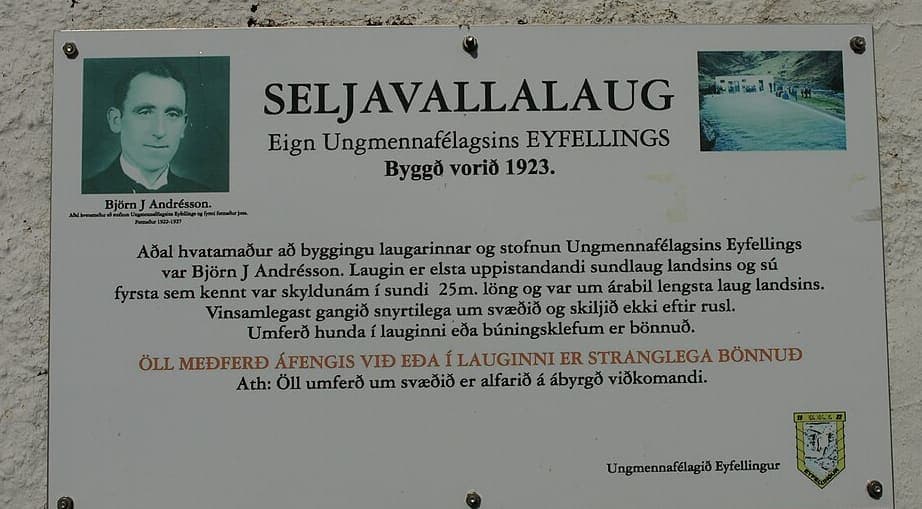
Source · Public domain · Photograph by Jabbi
Evidano Transcription
SELJAVALLALAUG
Eign Ungmennafélagsins EYFELLINGS
Byggð vorið 1923.
Björn J Andrésson.
Aðal hvatamaður að stofnun Ungmennafélagsins Eyfellings og fyrsti formaður þess.
Formaður 1922-1927
Aðal hvatamaður að byggingu laugarinnar og stofnun Ungmennafélagsins Eyfellings
var Björn J Andrésson. Laugin er elsta uppistandandi sundlaug landsins og sú
fyrsta sem kennt var skyldunám í sundi 25m. löng og var um árabil lengsta laug landsins.
Vinsamlegast gangið snyrtilega um svæðið og skiljið ekki eftir rusl.
Umferð hunda í lauginni eða búningsklefum er bönnuð.
ÖLL MEÐFERÐ ÁFENGIS VIÐ EÐA Í LAUGINNI ER STRANGLEGA BÖNNUÐ
Ath: Öll umferð um svæðið er alfarið á ábyrgð viðkomandi.
Ungmennafélagið Eyfellingur
Generated by Evidano’s advanced model; not yet checked against a published edition.
From vellum to newsprint, one language throughout
Iceland was settled from Norway and the British Isles in the ninth century, and the sagas describing that settlement were written down from the thirteenth century onward in a Gothic bookhand on vellum: rounded minuscule letters, heavy use of suspension strokes and superscript letters, and a Tironian ⁊ for og. Because Icelandic pronunciation and grammar have changed comparatively little since then, a modern Icelander can read Njáls saga or Egils saga in something close to the original spelling, an experience with no real equivalent in English or the other Nordic languages. The great vellum codices, among them Flateyjarbók and the Poetic Edda’s Codex Regius, were carried to Copenhagen for study in the seventeenth and eighteenth centuries, above all by the collector Árni Magnússon, and most were returned to Iceland during the twentieth century; they are now held together at the Árni Magnússon Institute for Icelandic Studies in Reykjavík.
Two of the manuscript hand’s letters never left the printed language. Þ (thorn) and ð (eth), both inherited from the same runic-Latin mixture that gave Old English its thorn and eth, still open and close ordinary Icelandic words today, the only place in the modern world where either survives in everyday print. Icelandic also keeps six vowels marked with an acute accent, á, é, í, ó, ú and ý, each a distinct vowel rather than a stressed one, plus ö; a model that treats the accent as decoration and strips it turns one word into another. Manuscript abbreviation thinned out only slowly: early printed books, from the 1540 New Testament to the 1584 Guðbrandsbiblía, still carried suspended endings and the ⁊, and it is really the eighteenth century before Icelandic print settles into the spelled-out alphabet used now.
Everyday Icelandic material for transcription is just as continuous. A nineteenth-century newspaper sets its news and advertisements in the same þ-and-ð alphabet a reader uses today; a hand-lettered information plaque on a farm building or a village pool carries a full paragraph of prose, capitals and all; and modern Icelandic cursive, taught to a distinct national model, still gives þ a descender and ð a crossed ascender that are easy for a generic model to misread as p, b or d.
Why ordinary OCR struggles here
Þ, ð and the accented vowels
Þ and ð sit outside the Latin alphabet most models are tuned on, so þ is read as p or y and ð as d or o; the six acute-accented vowels fare little better, since á, é, í, ó, ú and ý mark distinct vowels rather than stress, and dropping the accent turns one word into a different one entirely.
A bookhand built on suspension
The saga hand marks a missing letter or syllable with a stroke above the line, a raised letter, or a shape borrowed from Latin scribal shorthand, and the same stroke can resolve differently depending on the word around it. Reading it means recognising the abbreviation system, not just decoding individual letterforms.
Two columns, dense and continuous
Saga pages are ruled into two tight columns with no paragraph breaks, chapter headings picked out only in a red rubric, and a coloured initial the only signal that a new section has begun. Column order and rubric placement have to be read correctly before a single word is transcribed, or lines from opposite columns end up stitched together.
A language readable across eight centuries
Because Icelandic has barely changed, a model can mistake a genuine medieval spelling for a typing error, or make the opposite mistake and silently modernise a saga’s own forms to match today’s dictionary. Either error erases exactly the evidence a philologist is trying to read.
Who works with this material
Saga editors and philologists
Scholarly editions of the sagas and eddic poems are built folio by folio from the vellum, distinguishing what the scribe wrote from what a later editor supplies. A transcription that keeps suspension marks, rubrics and folio breaks in place gives an editor a usable first pass rather than a normalised paraphrase.
Genealogists and local-history projects
Iceland’s patronymic naming and small population make parish registers, censuses and local newspapers unusually rich genealogical sources, but only if þ, ð and the accented vowels in a name are kept exact; Þórðardóttir and Thordardottir will not match in a search.
Museums and heritage groups
Small museums, swimming pools and farms across Iceland carry hand-lettered or printed information boards explaining their own history, often the only record of a detail nobody wrote down elsewhere. Digitising them usefully means transcribing the sign as it stands, not correcting its spelling or dropping its diacritics.
Newspaper and archive digitisation
Iceland’s nineteenth- and twentieth-century press ran for decades in the same dense, small-type column layout, and a project indexing it needs þ and ð recognised as themselves rather than folded into t, y, p or d, or a search for þingmaður will miss half of its own archive.
Getting the best transcription
Say which letters must survive
List þ, ð and the six acute-accented vowels in the prompt and ask for them to be kept exactly as printed. That one step is what stops þing becoming ping and Þórunn becoming Thorunn.
Set an abbreviation policy for manuscript pages
For saga vellum, decide whether suspended letters should be expanded silently, expanded with the supplied letters marked, or left as the scribe’s stroke. State it once and the same rule holds across a whole codex.
Name the folio’s two columns
Ask for the left column to be transcribed in full before the right, and for rubrics and initials to be flagged rather than merged into the surrounding prose. Getting the reading order right the first time avoids sentences stitched together from opposite columns.
Test on the most damaged item first
Before running a full batch of signs, newsprint or vellum, start with whichever item is faded, cracked or worn at the edges. If illegible stretches are marked rather than guessed there, the cleaner pages in the same batch need only a spot check.
Frequently asked questions
- Will þ and ð come through correctly?
- Yes. Both are recognised as their own letters rather than variants of p, y or d, on manuscript vellum and on a modern printed sign alike, and the same applies to the acute-accented vowels á, é, í, ó, ú and ý.
- Can it read a saga manuscript’s abbreviations?
- It recognises suspension strokes, raised letters and the Tironian ⁊ as abbreviations rather than stray marks. You choose whether they are expanded silently, expanded with the supplied letters marked, or left as the scribe wrote them.
- Will it modernise an old spelling to match today’s Icelandic?
- Not unless you ask for it. Because Icelandic has changed so little, it is easy for a model to blur a genuine medieval or nineteenth-century spelling into the modern form; the default keeps the page’s own spelling so the date and hand remain visible.
- Can it keep a saga folio’s two columns in the right order?
- Yes, if the layout is described in the prompt. Reading the left column fully before the right, and marking rubrics and initials rather than folding them into the text, keeps the sense of the page intact.
- Does it work on photographed signs as well as scans?
- Yes. A photographed information plaque or shop sign is read the same way as a scanned page, allowing for the angle and lighting of the photograph, and a short sign with no separate published source is marked as such rather than left unmarked.
Related scripts and pages
Transcribe your Icelandic documents
Upload a saga folio, a newspaper page or a photographed sign, and check the first page for þ, ð and the accented vowels before running the rest.