
Sinhala
Sinhala manuscripts, documents and signage turned into text
Sinhala letters are unusually round, a shape scribes settled on so that a metal stylus never had to cut a straight line across the grain of a dried palm leaf and split it. The everyday alphabet also balloons the moment a Pali or Sanskrit loanword needs a consonant the spoken language does not use. Evidano reads Sinhala from ola-leaf manuscripts, printed notices, official papers and roadside signs, and sets the transcription beside the image so every rounded look-alike letter can be checked.
Sample pages
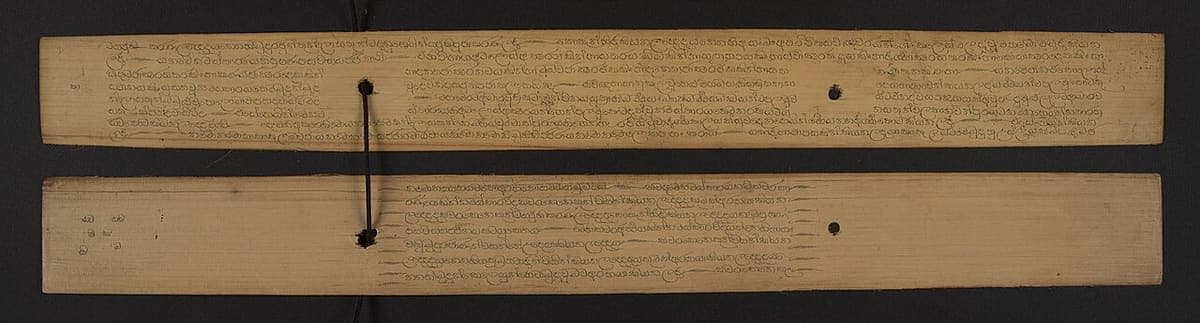
British Library, Or. 6603/258, ff. 1v–2r, 1756 · Source · CC0 1.0
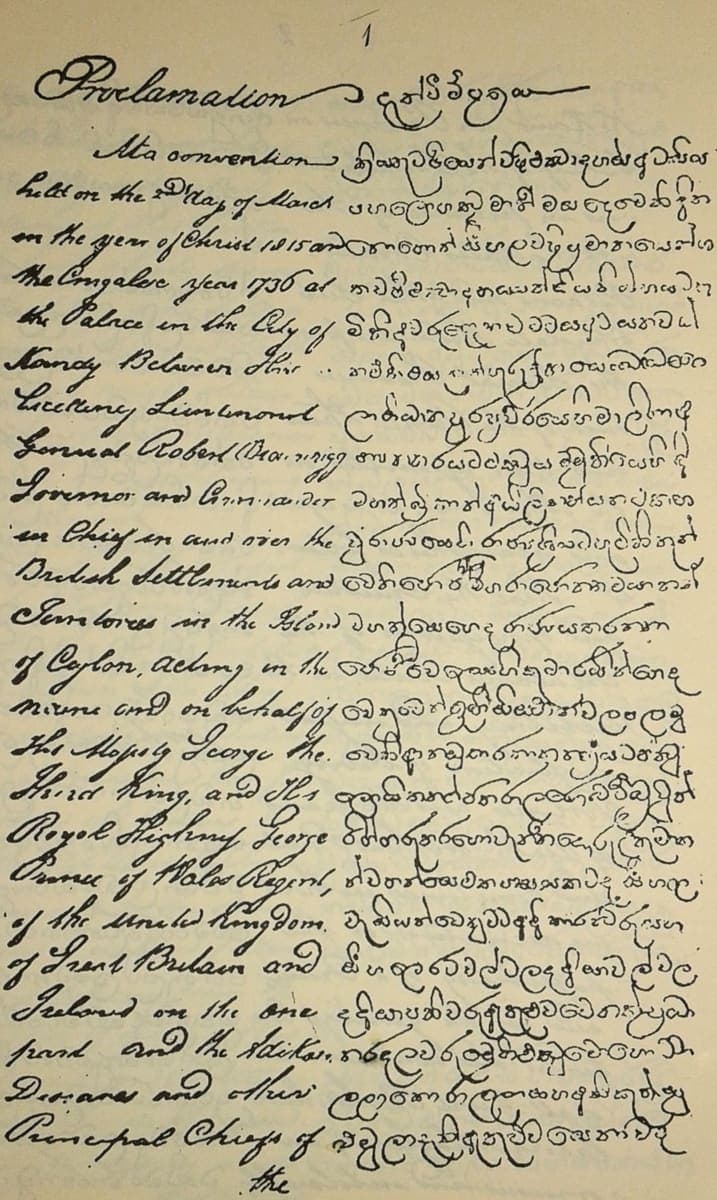
Government Archives of Sri Lanka, 2 March 1815 · Source · Public domain · The Government Archives of Sri Lanka, photographed by MediaJet
Evidano Transcription
1
Proclamation
At a convention
held on the 2d day of March
in the year of Christ 1815 and
the Cingalese year 1736 at
the Palace in the City of
Kandy Between His
Excellency Lieutenant
General Robert Brownrigg
Governor and Commander
in Chief in and over the
British Settlements and
Territories in the Island
of Ceylon, acting in the
name and on behalf of
His Majesty George the
Third King, and His
Royal Highness George
Prince of Wales Regent,
of the United Kingdom
of Great Britain and
Ireland on the one
part and the Adikars[?]
Dessaves and other
Principal Chiefs of
the
දැන්වීම්පත්රය[?]
[Sinhala text illegible]
Generated by Evidano’s advanced model; not yet checked against a published edition.
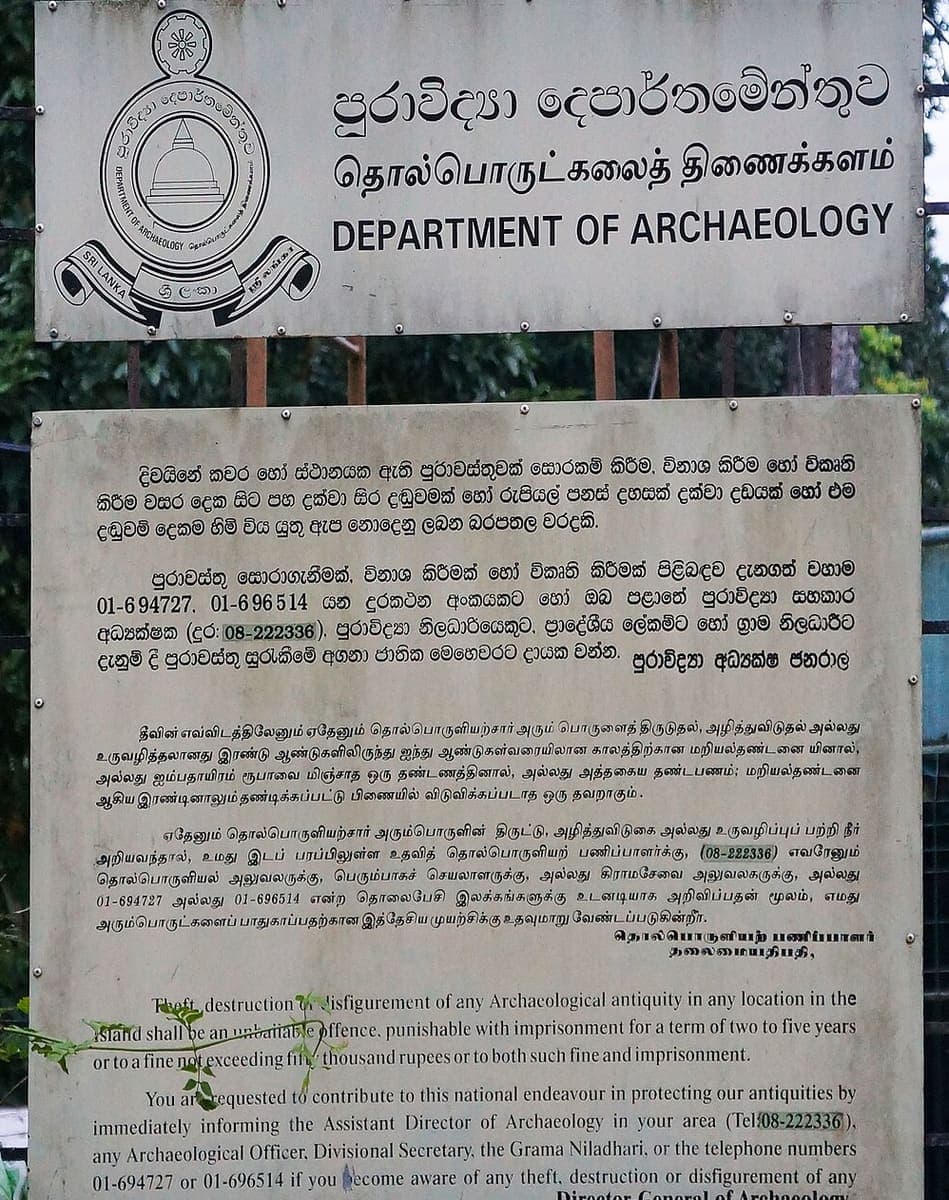
Source · CC BY-SA 4.0 · Pierre André Leclercq
Evidano Transcription
පුරාවිද්යා දෙපාර්තමේන්තුව
தொல்பொருட்கலைத் திணைக்களம்
DEPARTMENT OF ARCHAEOLOGY
දිවයිනේ කවර හෝ ස්ථානයක ඇති පුරාවස්තුවක් සොරකම් කිරීම, විනාශ කිරීම හෝ විකෘති
කිරීම වසර දෙක සිට පහ දක්වා සිර දඬුවමක් හෝ රුපියල් පනස් දහසක් දක්වා දඩයක් හෝ එම
දඬුවම් දෙකම හිමි විය යුතු ඇප නොදෙනු ලබන බරපතල වරදකි.
පුරාවස්තු සොරාගැනීමක්, විනාශ කිරීමක් හෝ විකෘති කිරීමක් පිළිබඳව දැනගත් වහාම
01-694727. 01-696514 යන දුරකථන අංකයකට හෝ ඔබ පළාතේ පුරාවිද්යා සහකාර
අධ්යක්ෂක (දුර: 08-222336), පුරාවිද්යා නිලධාරියෙකුට, ප්රාදේශීය ලේකම්ට හෝ ග්රාම නිලධාරීට
දැනුම් දී පුරාවස්තු සුරැකීමේ අගනා ජාතික මෙහෙවරට දායක වන්න.
පුරාවිද්යා අධ්යක්ෂ ජනරාල්
தீவின் எவ்விடத்திலேனும் ஏதேனும் தொல்பொருளியற்சார் அரும் பொருளைத் திருடுதல், அழித்துவிடுதல் அல்லது
உருவழித்தலானது இரண்டு ஆண்டுகளிலிருந்து ஐந்து ஆண்டுகள்வரையிலான காலத்திற்கான மறியல்தண்டனை யினால்,
அல்லது ஐம்பதாயிரம் ரூபாவை மிஞ்சாத ஒரு தண்டணத்தினால், அல்லது அத்தகைய தண்டபணம்; மறியல்தண்டனை
ஆகிய இரண்டினாலும் தண்டிக்கப்பட்டு பிணையில் விடுவிக்கப்படாத ஒரு தவறாகும்.
ஏதேனும் தொல்பொருளியற்சார் அரும்பொருளின் திருட்டு, அழித்துவிடுகை அல்லது உருவழிப்புப் பற்றி நீர்
அறியவந்தால், உமது இடப் பரப்பிலுள்ள உதவித் தொல்பொருளியற் பணிப்பாளர்க்கு, (08-222336) எவரேனும்
தொல்பொருளியல் அலுவலருக்கு, பெரும்பாகச் செயலாளருக்கு, அல்லது கிராமசேவை அலுவலகருக்கு, அல்லது
01-694727 அல்லது 01-696514 என்ற தொலைபேசி இலக்கங்களுக்கு உடனடியாக அறிவிப்பதன் மூலம், எமது
அரும்பொருட்களைப் பாதுகாப்பதற்கான இத்தேசிய முயற்சிக்கு உதவுமாறு வேண்டப்படுகின்றீர்.
தொல்பொருளியற் பணிப்பாளர்
தலைமையதிபதி,
Theft, destruction or disfigurement of any Archaeological antiquity in any location in the
Island shall be an unbailable offence, punishable with imprisonment for a term of two to five years
or to a fine not exceeding fifty thousand rupees or to both such fine and imprisonment.
You are requested to contribute to this national endeavour in protecting our antiquities by
immediately informing the Assistant Director of Archaeology in your area (Tel:08-222336),
any Archaeological Officer, Divisional Secretary, the Grama Niladhari, or the telephone numbers
01-694727 or 01-696514 if you become aware of any theft, destruction or disfigurement of any
[cut off]
Director General of Archaeology [cut off]
Generated by Evidano’s advanced model; not yet checked against a published edition.
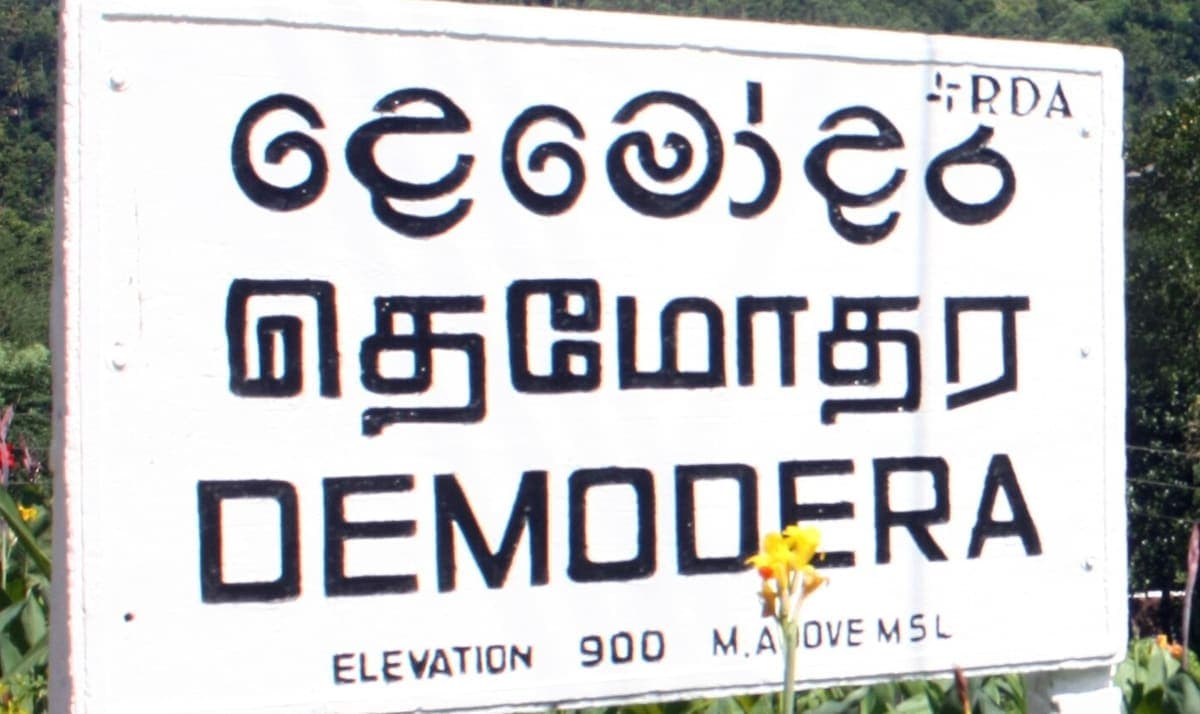
Source · CC BY-SA 4.0 · AntanO
Evidano Transcription
RDA
දෙමෝදර
தெமோதர
DEMODERA
ELEVATION 900 M. ABOVE MSL
Generated by Evidano’s advanced model; not yet checked against a published edition.
What Sinhala text looks like on the page
Sinhala script descends from Brahmi by way of the southern Grantha tradition that reached the island through contact with South India, and its letters kept getting rounder as the main writing surface stayed the ola leaf for well over a thousand years: a stylus dragged across the leaf lengthwise would split it along the fibre, so scribes replaced straight strokes with loops and curves wherever they could. The habit carried over once movable type arrived in the nineteenth century, and printed Sinhala still reads as an unbroken run of circles, hooks and closed bowls, a consonant carrying an inherent vowel unless a vowel sign is attached above, below, before or after it.
Ordinary Sinhala is written with what grammarians call the śuddha, or pure, alphabet: around thirty-six letters that cover every sound the spoken language needs. Reading and copying the Pali and Sanskrit texts central to Buddhist learning calls for more letters than that, so a second, fuller set — the miśra or mixed alphabet — adds aspirated stops, extra sibilants and other consonants that Sinhala itself does not distinguish, so that a loanword can be spelled exactly as its source language spells it rather than flattened to the nearest everyday sound. A trained eye tells the two registers apart at a glance; an OCR model trained only on everyday print usually cannot.
A page also carries habits that belong to its material. Ola-leaf manuscripts are incised with a sharp metal stylus and then rubbed with a paste of soot and oil so the cut lines darken against the pale leaf; leaves are strung on a cord through one or two holes and kept between a pair of covers, plain wood or painted, and a scribe often closes a text with the kunddaliya, a small spiral flourish that marks the end the way a full stop does. Older manuscripts and documents also carry the traditional illakkam numerals for dates and sums, shapes that have nothing in common with the Hindu-Arabic digits standard in Sinhala print today.
Why ordinary OCR struggles here
Aspirated pairs that differ by one small hook
The plain and aspirated members of a consonant pair, such as ට and ඨ or ඩ and ඪ, are built from the same rounded shape with only a short extra stroke or loop marking the aspirate. A soft scan or a worn stylus cut loses exactly that stroke, and the two letters become indistinguishable to a model that has not been told to look for it.
A vowel sign that can sit on any side of its letter
Sinhala vowel signs attach above, below, in front of or after the consonant they belong to, so the mark that decides a syllable is often not touching the letter it modifies. Cropping a scan even slightly, or reading letters strictly left to right, can separate a vowel sign from its consonant or attach it to the wrong one.
Two alphabets sharing most of their letters
Many of the extra consonants that spell Pali and Sanskrit words correctly look like a slightly modified version of an everyday Sinhala letter — ශ next to ස, ණ next to න. A system trained mostly on ordinary prose defaults to the common letter and silently erases the distinction a Buddhist or Sanskrit text depends on.
Incised leaves, old numerals and uneven photographs
An ola leaf photographs differently depending on the angle of light across its incised grooves, and the soot-and-oil fill can flake or fade unevenly along one leaf while staying dark on the next. Dates and sums in older documents may use the illakkam numeral shapes rather than digits, which a model expecting modern print will not recognise as numbers at all.
Who works with this material
Pali and Buddhist-text editors
Projects reading Sinhala-script ola-leaf copies of the Pali canon and its commentaries need the miśra letters that spell Pali sounds kept distinct from their everyday Sinhala look-alikes, since the whole point of the fuller alphabet is to preserve exactly that distinction.
Legal and land historians
Grants, deeds and treaties such as the Kandyan Convention decide real disputes over land and title, so a transcription needs to render every clause and place name in the parallel Sinhala column as carefully as the English column beside it.
Family and temple historians
Ownership notes on manuscript covers, donor colophons at the end of a text, and temple registers all name people and dates in Sinhala; getting a rounded initial or an illakkam-numeral date wrong quietly breaks the record a family or a temple has kept for generations.
Heritage and public-notice translators
Government departments post the same regulatory notice in Sinhala, Tamil and English side by side, and cataloguing or auditing that signage means transcribing all three columns consistently rather than treating only the English as authoritative.
Getting the best transcription
Say whether the page is incised or printed
Tell the model whether it is looking at an ola leaf, a handwritten document or set type, so it expects uneven stylus depth and soot fill on a leaf rather than trying to regularise it into print-perfect letterforms.
Ask for the fuller alphabet to be kept as written
On Pali or Sanskrit material, specify that aspirated and extra consonants such as ශ, ෂ, ඛ and ඨ should be transcribed exactly as they appear rather than normalised to the nearest everyday Sinhala letter.
Flag the aspirate and retroflex pairs rather than guess
Where a scan is too soft to be sure whether a small hook belongs to the plain or aspirated form of a letter, ask for the uncertainty to be marked instead of resolved silently, especially on a photographed leaf rather than a flat scan.
Test on the hardest item in a batch first
Run a photographed ola leaf or a trilingual sign before a run of clean printed pages. If the model separates the languages and keeps the Sinhala vowel signs attached to the right consonant there, the easier material will need only a light check.
Frequently asked questions
- Can it tell apart Sinhala’s round, similar-looking letters?
- Yes. Aspirated and unaspirated pairs such as ට/ඨ and ඩ/ඪ are recognised as distinct letters, and where a scan is too degraded to be confident which one is written, that uncertainty is flagged rather than guessed.
- Does it know the difference between the pure and mixed Sinhala alphabets?
- Yes. The extra consonants that the miśra alphabet uses for Pali and Sanskrit loanwords, such as ශ, ෂ and the aspirated stops, are transcribed as written rather than folded into the nearest everyday śuddha letter.
- Can it read an ola-leaf manuscript, not just printed Sinhala?
- Yes. Incised leaf text is read on its own terms, including vowel signs and conjuncts formed the way a stylus draws them, rather than expected to match the crisper strokes of set type.
- What happens with old illakkam numerals?
- They are recognised as the traditional numeral shapes they are rather than mistaken for unfamiliar letters, so dates and sums in older documents come through as numbers rather than as noise.
- Can it transcribe a trilingual Sinhala, Tamil and English sign?
- Yes. Each language is transcribed in place, so a heritage notice or a place-name board comes back as three aligned columns rather than one merged block of text.
Related scripts and pages
Transcribe your Sinhala documents
Upload an ola-leaf manuscript, an official paper or a sign, and check the Sinhala line by line before you export it.