
Burmese
Burmese script, signs and official papers turned into text
Burmese letters are built almost entirely from circles and curves, a habit that goes back to writing on palm leaves, where a straight stroke would slice along the fibre and split the leaf. The script also runs one word straight into the next with no space to show where a word ends, and stacks a second consonant beneath the first wherever a syllable needs one. Evidano reads Burmese from palm-leaf manuscripts, everyday signage and official forms, and sets the transcription beside the image so every stacked consonant and every word break can be checked.
Sample pages
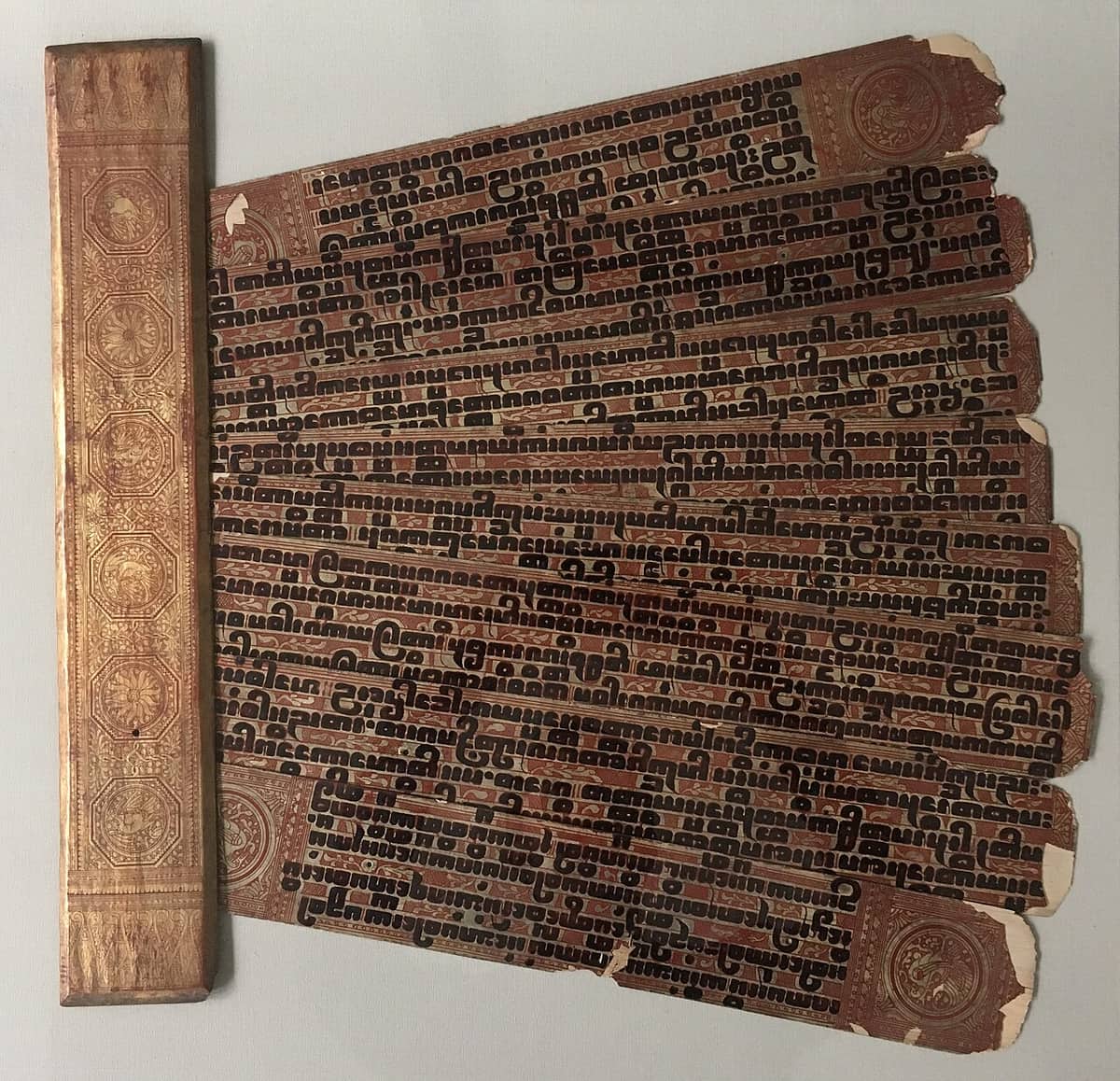
San Diego Public Library, 19th century · Source · CC0 1.0 · Kaldari
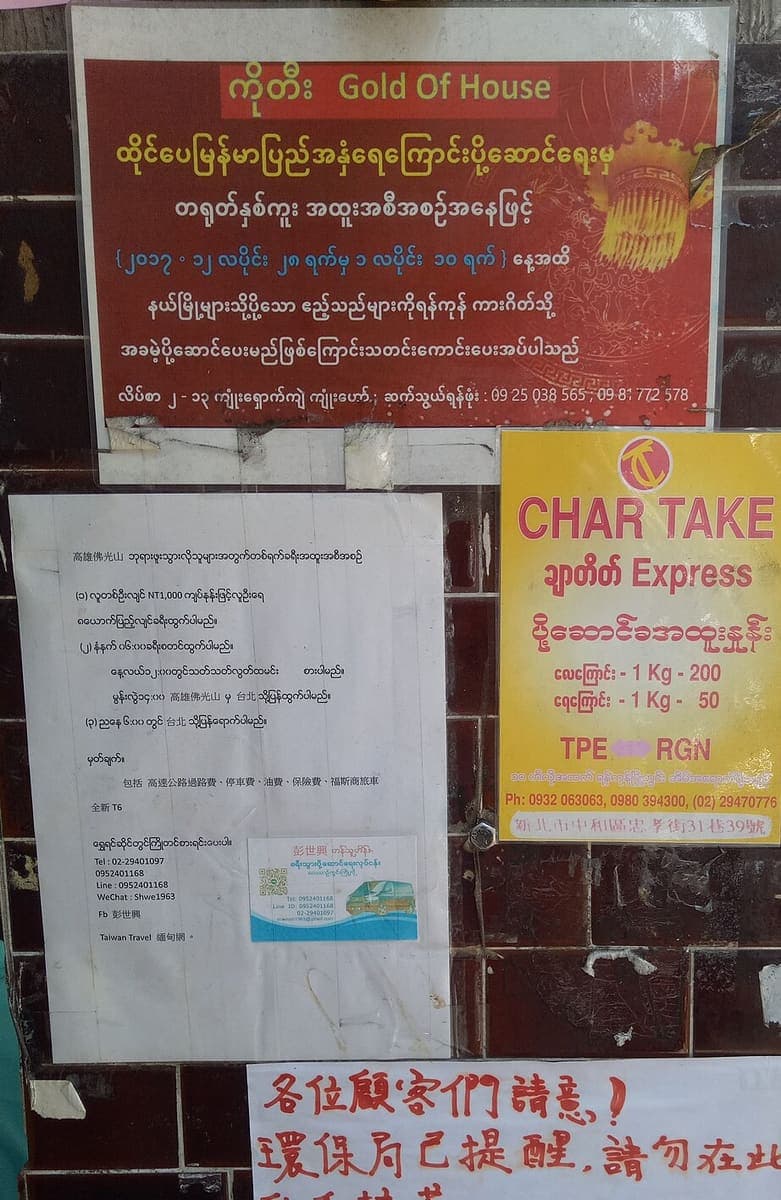
Evidano Transcription
ကိုတီး Gold Of House
ထိုင်ပေမြန်မာပြည်အနှံ့ရေကြောင်းပို့ဆောင်ရေးမှ
တရုတ်နှစ်ကူး အထူးအစီအစဉ်အနေဖြင့်
{၂၀၁၇ ◦ ၁၂ လပိုင်း ၂၈ ရက်မှ ၁ လပိုင်း ၁၀ ရက်} နေ့အထိ
နယ်မြို့များသို့ပို့သော ဧည့်သည်များကိုရန်ကုန် ကားဂိတ်သို့
အခမဲ့ပို့ဆောင်ပေးမည်ဖြစ်ကြောင်းသတင်းကောင်းပေးအပ်ပါသည်
လိပ်စာ ၂ - ၁၃ ကျုံးရှောက်ကျဲ ကျုံးဟော်; ဆက်သွယ်ရန်ဖုန်း : 09 25 038 565 ; 09 81 772 578
高雄佛光山 ဘုရားဖူးသွားလိုသူများအတွက်တစ်ရက်ခရီးအထူးအစီအစဉ်
(၁) လူတစ်ဦးလျှင် NT1,000 ကျပ်နှုန်းဖြင့်လူဦးရေ
၈ယောက်ပြည့်လျှင်ခရီးထွက်ပါမည်။
(၂) နံနက် ၀၆:၀၀ခရီးစတင်ထွက်ပါမည်။
နေ့လယ်၁၂:၀၀တွင်သတ်သတ်လွတ်ထမင်း စားပါမည်။
မွန်းလွဲ၁၄:၀၀ 高雄佛光山 မှ 台北 သို့ပြန်ထွက်ပါမည်။
(၃) ညနေ ၆:၀၀ တွင် 台北 သို့ပြန်ရောက်ပါမည်။
မှတ်ချက်။
包括 高速公路過路費、停車費、油費、保險費、福斯商旅車
全新 T6
ရွှေရှင်ဆိုင်တွင်ကြိုတင်စာရင်းပေးပါ။ [?]
Tel : 02-29401097
0952401168
Line : 0952401168
WeChat : Shwe1963
Fb 彭世興
Taiwan Travel 緬甸網
彭世興 [illegible]
ခရီးသွားပို့ဆောင်ရေးလုပ်ငန်း
[illegible]
Tel: 0952401168
Line ID: 0952401168
02-29401097
[illegible]
CHAR TAKE
ချာတိတ် Express
ပို့ဆောင်ခအထူးနှုန်း
လေကြောင်း - 1 Kg - 200
ရေကြောင်း - 1 Kg - 50
TPE RGN
[illegible]
Ph: 0932 063063, 0980 394300, (02) 29470776
新北市中和區忠孝街31巷39號
各位顧客們請意!
環保局已提醒,請勿在此 [cut off]
Generated by Evidano’s advanced model; not yet checked against a published edition.
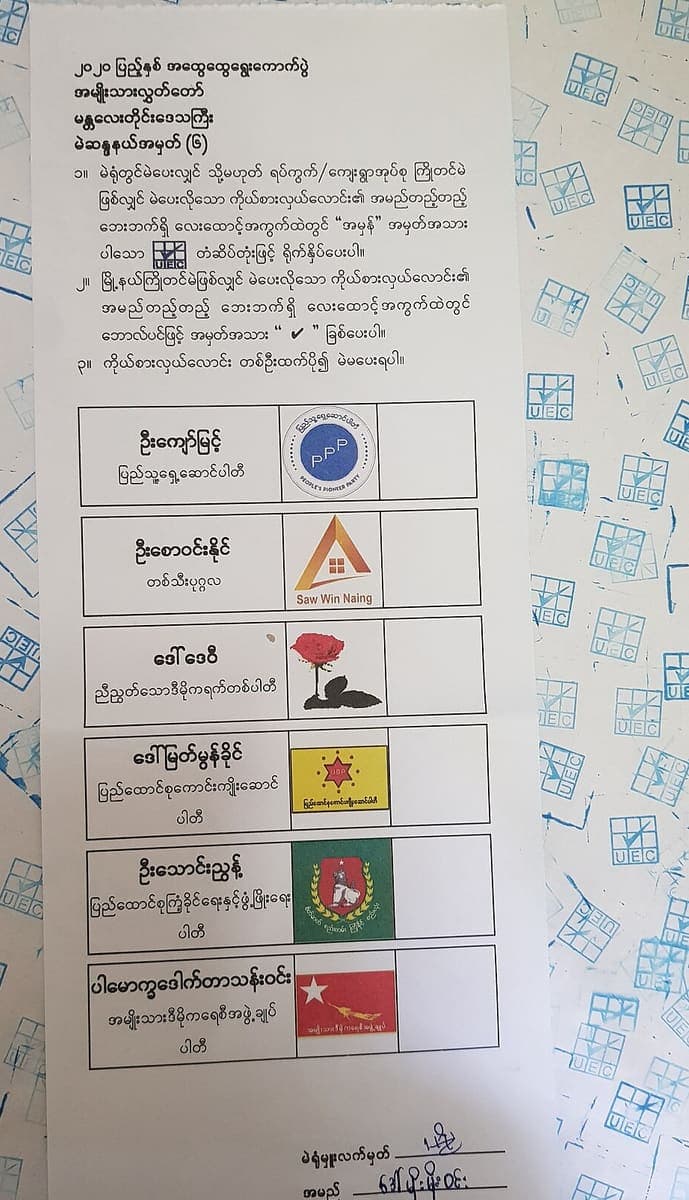
Source · CC BY-SA 4.0 · Kantabon
Evidano Transcription
၂၀၂၀ ပြည့်နှစ် အထွေထွေရွေးကောက်ပွဲ
အမျိုးသားလွှတ်တော်
မန္တလေးတိုင်းဒေသကြီး
မဲဆန္ဒနယ်အမှတ် (၆)
၁။ မဲရုံတွင်မဲပေးလျှင် သို့မဟုတ် ရပ်ကွက်/ကျေးရွာအုပ်စု ကြိုတင်မဲ
ဖြစ်လျှင် မဲပေးလိုသော ကိုယ်စားလှယ်လောင်း၏ အမည်တည့်တည့်
ဘေးဘက်ရှိ လေးထောင့်အကွက်ထဲတွင် "အမှန်" အမှတ်အသား
ပါသော [UEC stamp] တံဆိပ်တုံးဖြင့် ရိုက်နှိပ်ပေးပါ။
၂။ မြို့နယ်ကြိုတင်မဲဖြစ်လျှင် မဲပေးလိုသော ကိုယ်စားလှယ်လောင်း၏
အမည်တည့်တည့် ဘေးဘက်ရှိ လေးထောင့်အကွက်ထဲတွင်
ဘောလ်ပင်ဖြင့် အမှတ်အသား " ✔ " ခြစ်ပေးပါ။
၃။ ကိုယ်စားလှယ်လောင်း တစ်ဦးထက်ပို၍ မဲမပေးရပါ။
| ဦးကျော်မြင့် ပြည်သူ့ရှေ့ဆောင်ပါတီ | [symbol] PPP | |
| ဦးစောဝင်းနိုင် တစ်သီးပုဂ္ဂလ | [symbol] Saw Win Naing | |
| ဒေါ်ဒေဝီ ညီညွတ်သောဒီမိုကရက်တစ်ပါတီ | [symbol] | |
| ဒေါ်မြတ်မွန်ခိုင် ပြည်ထောင်စုကောင်းကျိုးဆောင် ပါတီ | [symbol] | |
| ဦးသောင်းညွန့် ပြည်ထောင်စုကြံ့ခိုင်ရေးနှင့်ဖွံ့ဖြိုးရေး ပါတီ | [symbol] | |
| ပါမောက္ခဒေါက်တာသန်းဝင်း အမျိုးသားဒီမိုကရေစီအဖွဲ့ချုပ် ပါတီ | [symbol] |
မဲရုံမှူးလက်မှတ် [signature]
အမည် ဒေါ်မိုးမိုးဝင်း
Generated by Evidano’s advanced model; not yet checked against a published edition.
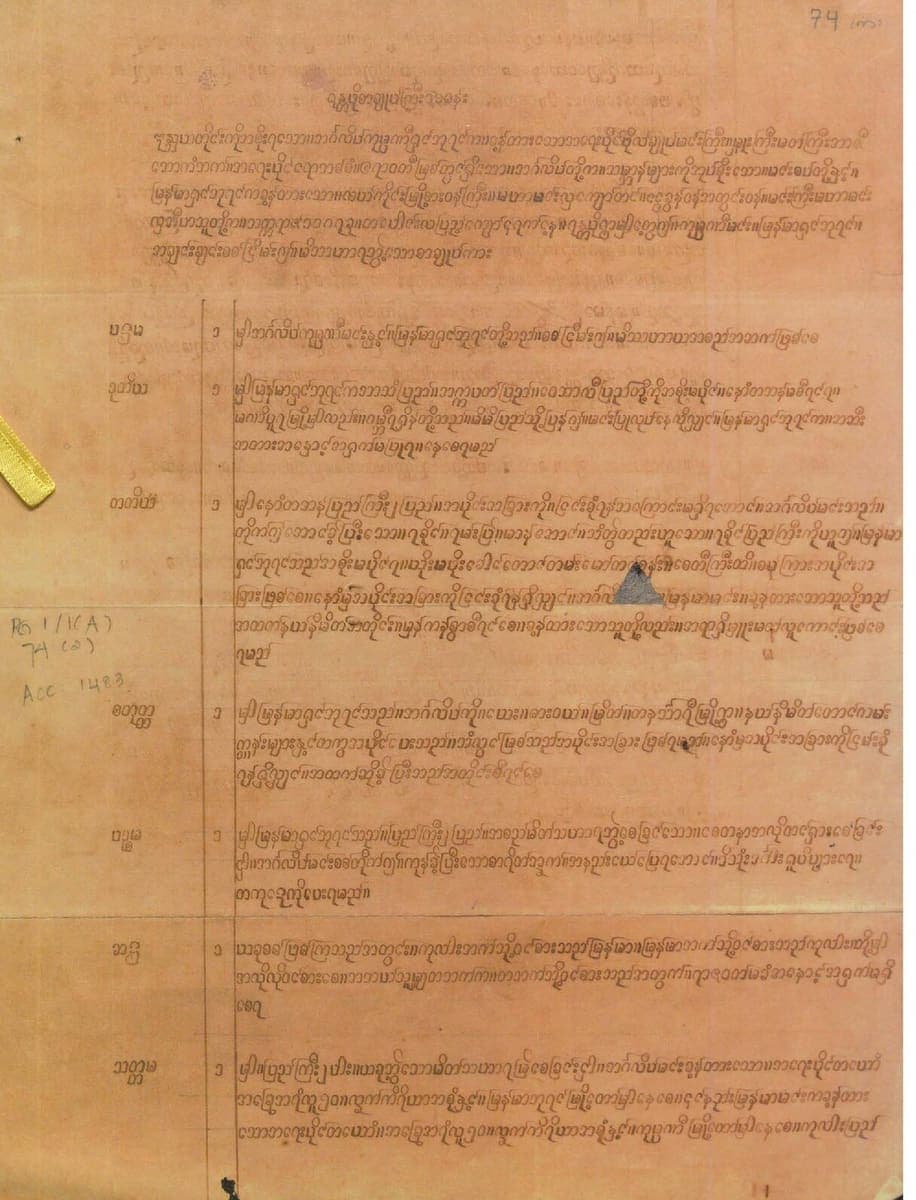
National Archives of Myanmar, 1826 · Source · Public domain
Evidano Transcription
The whole of the page shown — the title, the preamble and articles one to seven, the seventh breaking off at the foot of the sheet where it runs on to the next page — as proofread on Burmese Wikisource from this same scan. The text is set out clause by clause rather than following the manuscript’s line breaks, and the original spelling, the Burmese numerals and the ။ written between phrases are kept as they stand; the wiki markup that centres the title has been dropped.
ရန္တပိုစာချုပ်ကြီး၁၁ခန်း
ဣန္ဒယတိုင်းကိုအစိုးရသော။အင်္ဂလိပ်ကုမ္ပဏီရှင်ဘုရင်က။ခန့်ထားသောအရေးပိုင်ဗိုလ်ချုပ်မင်းကြီး။မှူးမတ်ကြီးအာဇီဘောကံဘက်။အရေးပိုင်ရောဘစ်စံ။ဧရာဝတီမြစ်တွင်ရှိသော။အင်္ဂလိပ်တို့က။သမ္ဘာန်များကိုအုပ်စိုးသော။မင်းစပ်တို့နှင့်။မြန်မာရှင်ဘုရင်ကခန့်ထားသော။လယ်ကိုင်းမြို့စားဝန်ကြီး။မဟာမင်းလှကျော်ထင်။ငွေခွန်ဝန်အတွင်းဝန်။မင်းကြီးမဟာမင်းလှသီဟသူတို့က။သက္ကရာဇ်၁၁၈၇ခု။တပေါင်းလပြည့်ကျော်၄ရက်နေ့။ရန္တပိုရွာမှါတွေ့၍။ကုမ္ပဏီမင်း။မြန်မာရှင်ဘုရင်။အချင်းချင်းစစ်ငြိမ်း၍။မိတ်ဿဟာယဘွဲ့သောစာချုပ်ကား။
ပဌမ ၁ မှါအင်္ဂလိပ်မင်းနှင့်။မြန်မာရှင်ဘုရင်တို့သည်။စစ်ငြိမ်း၍။မိတ်ဿဟာယ။အစည်အဆက်ဖြစ်စေ။
ဒုတိယ ၁ မှါမြန်မာရှင်ဘုရင်ကအာသံပြည်။အက္ကပတ်ပြည်။ဝေသာလီပြည်တို့ကိုအစိုးမပိုင်။နောံတစ်ဘန်မစီရင်ရ။
မဏိပူရမြို့မှါလည်း။ဂမ္ဘီရရှိန်တို့သည်။မိမိပြည်သို့ပြန်၍။မင်းပြုလုပ်နေလိုလျှင်။မြန်မာရှင်ဘုရင်က။အဆီးအတားအနှောင့်အရှက်မပြုရ။နေစေရမည်
တတိယ ၁ မှါနောံတဘန်ပြည်ကြီး၂ပြည်။အပိုင်းအခြားကို။ငြင်းခုံရန်အကြောင်းမရှိရအောင်။အင်္ဂလိပ်မင်းသည်။တိုက်၍အောင်ခဲ့ပြီးသော။ရခိုင်။ရမ်းပြဲ။မာန်အောင်။သံတွဲတည်းဟူသော။ရခိုင်ပြည်ကြီးကိုယူ၍။မြန်မာရှင်ဘုရင်သည်အစိုးမပိုင်ရ။ယိုးမဖိုးခေါင်တောင်တမ်း။မော်တင်စွန်း။စေတီကြီးထိ။စပ်ကြားအပိုင်းအခြားဖြစ်စေ။နောံမှအပိုင်းအခြားကိုငြင်းခုံရန်ရှိလျှင်။အင်္ဂလိပ်မင်း မြန်မာမင်း။ခန့်ထားသောသူတို့သည်။အထက်နယ်နိမိတ်အတိုင်း။မှန်ကန်စွာစီရင်စေ။ခန့်ထားသောသူတို့လည်း။အရာရှိမှူးမတ်လူကောင်းဖြစ်စေရမည်
စတုတ္ထ ၁ မှါမြန်မာရှင်ဘုရင်သည်။အင်္ဂလိပ်ကို။ယေး။ဓားဝယ်။မြိတ်။တနင်္သာရီမြို့ရွာ။နယ်နိမိတ်တောင်ကမ်းကျွန်းများနှင့်တကွ အပိုင်ပေးသည်။သံလွင်မြစ်သည်အပိုင်းအခြားဖြစ်ရမည်။နောံမှအပိုင်းအခြားကိုငြမ်းခုံရန်ရှိလျှင်။အထက်ဆိုခဲ့ပြီးသည့်အတိုင်းစီရင်စေ
ပဉ္စမ ၁ မှါမြန်မာရှင်ဘုရင်သည်။ပြည်ကြီး၂ပြည်။အစည်မိတ်သဟာရဘွဲ့စေခြင်သော။စေတနာအလိုထင်ရှားစေခြင်းငှါ။အင်္ဂလိပ်မင်းစစ်တိုက်၍။ကုန်ခဲ့ပြီးသောစရိတ်အ္နက်။အနည်းငယ်ပြေရအောင်။၁ိသုံးဒင်္ဂါးရူပီပျားရေ။တကုဋေကိုပေးရမည်
ဆဋ္ဌ ၁ ယခုစစ်ဖြစ်ကြသည်အတွင်း။ကုလါးဘက်သို့ဝင်စားသည်မြန်မာ။မြန်မာဘက်သို့ဝင်စားသည်ကုလါး။တို့မှာအလိုလိုဝင်စားစေ။အဘယ်သူမျှတဘက်က။တဘက်သို့ဝင်စားသည်အတွက်။ရာဇဝတ်မခံအနောင့်အရှက်မရှိစေရ
သတ္တမ  ၁   မှါ။ပြည်ကြီး၂ပါး။ယခုဘွဲ့သောမိတ်သဟာရမြဲစေခြင်းငှာ။အင်္ဂလိပ်မင်းခန့်ထားသော။အရေးပိုင်တယောံအခြွေအရံလူ၅၀။လ္နက်ကိရိယာအစုံနှင့်။မြန်မာဘုရင်မြို့တော်မှါနေစေ။၎င်နည်းမြန်မာမင်းကခန့်ထားသောအရေးပိုင်တယောံ။အခြွေအရံလူ၅၀။လ္နက်ကိရိယာအစုံနှင့်။ကုမ္ပဏီမြို့တော်မှါနေစေ။ကုလါးပြည်
Source: ရန္တပိုစာချုပ်, proofread page 1, via Burmese Wikisource (CC BY-SA 4.0).
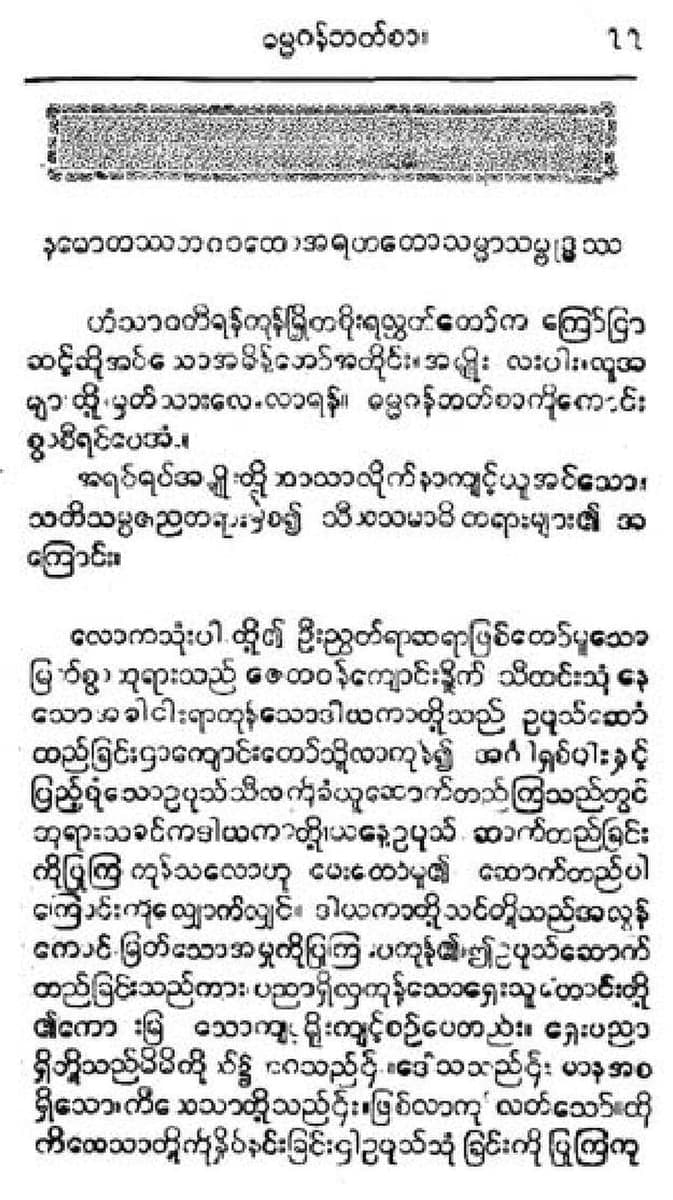
Evidano Transcription
The 22 lines of the text block, as proofread on Burmese Wikisource from this same scan, one transcribed line to one printed line, including the words that break across a line end. The running head, the page number and the ornamental band above the text are not part of it, and the older contraction ၎်း for လည်း is kept where the page prints it.
နမောတဿ ဘဂဝတော အရဟတော သမ္မာသမ္ဗုဒ္ဓဿ
ဟံသာဝတီ ရန်ကုန်မြို့ အစိုးရလွှတ်တော်က ကြော်ငြာ
ဆင့်ဆိုအပ်သော အမိန့်တော်အတိုင်း အမျိုးလေးပါး လူအ
များတို့ မှတ်သားလေ့လာရန် ဓမ္မဂန်ဘတ်စာကို ကောင်း
စွာ စီရင်ပေအံ့။
အရပ်ရပ်အမျိုးတို့ဘာသာ လိုက်နာကျင့်ယူအပ်သော
သတိသမ္ပဇညတရားမှစ၍ သီလသမာဓိတရားများ၏ အ
ကြောင်း။
လောကသုံးပါးတို့၏ ဦးညွတ်ရာ ဆရာဖြစ်တော်မူသော
မြတ်စွာဘုရားသည် ဇေတဝန်ကျောင်းနှိုက် သီတင်းသုံးနေ
သောအခါ ငါးရာကုန်သော ဒါယကာတို့သည် ဥပုသ်ဆောံ
တည်ခြင်းငှာ ကျောင်းတော်သို့လာကုန်၍ အင်္ဂါရှစ်ပါးနှင့်
ပြည့်စုံသော ဥပုသ်သီလကို ခံယူဆောက်တည်ကြသည်တွင်
ဘုရားသခင်က "ဒါယကာတို့ ယနေ့ ဥပုသ်ဆောက်တည်ခြင်း
ကို ပြုကြကုန်သလော" ဟု မေးတော်မူ၏။ ဆောက်တည်
ပါကြောင်းကို လျှောက်လျှင် "ဒါယကာတို့ သင်တို့သည် အလွန်
ကောင်းမြတ်သောအမှုကို ပြုကြပေကုန်၏။ ဤဥပုသ်ဆောက်
တည်ခြင်းသည်ကား ပညာရှိလှကုန်သော ရှေးသူဟောင်းတို့
၏ ကောင်းမြတ်သော ကျင့်ရိုးကျင့်စဉ်ပေတည်း။ ရှေးပညာ
ရှိတို့သည် မိမိကိုယ်၌ ရာဂသည်၎်း၊ ဒေါသသည်၎်း မာန အစ
ရှိသော ကိလေသာတို့သည်၎်း ဖြစ်လာကုံလတ်သော် ထို
ကိလေသာတို့ကို နှိပ်နင်းခြင်းငှါ ဥပုသ်သုံးခြင်းကို ပြုကြကုန်
Source: ပူရဏ်ကျမ်း, proofread page 76, via Burmese Wikisource (CC BY-SA 4.0).
What Burmese text looks like on the page
Burmese writing descends from a Brahmi-derived script that reached the Irrawaddy valley by way of Mon and Pyu intermediaries; the earliest substantial dated example of the language is the Myazedi inscription of 1113, which gives the same text in Pyu, Mon, Pali and Burmese on four faces of the same stone. From an early date the script was copied mainly onto dried palm leaves with a metal stylus, and, exactly as with its Sinhalese and Khmer relatives, a straight line risked splitting the leaf along the grain, so letters rounded into the circles and loops that still define Burmese print today.
A Burmese sentence runs on without spaces between its words; a gap in a printed or handwritten line marks a break between clauses or phrases, not the boundary of a word, so working out where one word stops and the next begins is a matter of reading the sentence rather than reading the spacing. Consonant clusters are shown either by stacking a second consonant directly beneath the first or by attaching a medial sign — a small hook, loop or tail for y, r, w or h — to the side of the main letter, so the same base consonant can look different again depending on what follows it.
Manuscript Burmese has its own material habits. Parabaik are long sheets of mulberry-bark paper folded accordion-style into a narrow book; a plain black parabaik, its paper darkened and written on in white steatite chalk, served for court records, drafts and administrative notes, while a painted parabaik illustrated a chronicle or a Buddhist narrative in colour with captions worked into the margins. Ordination texts for Buddhist monks, by contrast, were usually copied onto lacquered and gilded palm leaf in a squared, boxier variant of the script reserved for that purpose. Since the nineteenth century, mission and state printing have settled Burmese into the rounded typeface seen in books, forms and signage across the country today.
Why ordinary OCR struggles here
No spaces to mark where a word ends
A line of Burmese text gives no visual boundary between one word and the next, so a system has to work out the division from the language itself. Guessing wrong attaches a suffix to the wrong word or runs two separate words together as if they were one.
Stacked and medial consonants that change a letter’s shape
A consonant written beneath another, or a medial sign attached to the side of the letter before it, does not look like that same letter written on its own. Reading a stacked or medial form as an unrelated letter, or dropping it as decoration, changes the syllable it belongs to.
Round letters that differ by one small loop
Many Burmese consonants share the same basic circular shape and are told apart only by where a loop opens, closes or doubles back on itself. That distinction is the first thing a worn manuscript, a small printed caption or a low-resolution photograph loses.
Lacquer, gilding and folded paper
Kammavaca leaves are lacquered and gilded so the letters sit slightly raised or indented rather than simply inked on a flat surface, and a parabaik folds accordion-style, so a photograph often shows several panels at an angle with the text bending near each fold.
Who works with this material
Buddhist manuscript and Kammavācā scholars
Reading ordination texts and Pali manuscripts on lacquered palm leaf means keeping the squared Kammavaca letterforms, and their stacked and medial consonants, distinct from the rounder printed forms they most resemble.
Historians of the Konbaung court and administration
Parabaik registers and illustrated chronicles are a primary source for pre-colonial Burmese government, and a transcription needs to keep captions, marginal notes and the main narrative separate rather than merged into one block.
Election monitors and civil-society organisations
Ballot papers, candidate lists and official notices need to be transcribed quickly and accurately, matching every candidate name and party symbol to the printed row it belongs to.
Diaspora community organisations
Notices, advertisements and community boards put up by Burmese communities abroad need reliable transcription for translation, moderation or archiving, even where one wall mixes several languages and hands.
Getting the best transcription
Say whether word breaks should be inserted
Modern digital Burmese is sometimes written with spaces between phrases rather than words. Specify whether you want breaks added for readability, left out as in the source, or matched exactly to what is printed or written.
Ask for stacked and medial consonants to be kept as syllables
Tell the model to transcribe a stacked consonant or a medial sign as part of the syllable it belongs to, not as a separate letter, so a cluster comes back as the single sound it represents.
Flag lacquered or gilded manuscripts as a special material
On a Kammavaca or other lacquered leaf, say so, so raised or indented letters are read as the script they are rather than treated as damage to be smoothed over.
Test on the busiest section first
Run a folded or overlapping parabaik panel, or a stamped and hand-annotated form, before the rest of a batch. If the model separates print, stamp and handwriting correctly there, plainer pages need only a light check.
Frequently asked questions
- Can it work out where one Burmese word ends and the next begins?
- Yes, from the sentence itself. Burmese text carries no spaces between words, so word boundaries are inferred from grammar and vocabulary rather than read off the spacing, and you can ask for the result with or without breaks inserted.
- How does it read stacked and medial consonants?
- A stacked consonant or a medial sign for y, r, w or h is read as part of the syllable it modifies, not as an unrelated extra letter, so a consonant cluster comes through as the single sound it represents.
- Can it read a Kammavaca or parabaik manuscript, not just modern print?
- Yes. The squared Kammavaca letterforms used for ordination texts and the accordion-folded pages of a parabaik are each read on their own terms, including captions and marginal notes on an illustrated page.
- Can it transcribe an official form like a ballot paper, including stamps and handwriting?
- Yes. Printed instructions and candidate rows, an official stamp, and a handwritten entry are treated as separate elements on the page rather than merged into a single block of text.
- Can it handle a sign or notice that mixes Burmese with another language?
- Yes. Each language on a mixed sign or notice board is transcribed in place, so a bilingual notice comes back as separate, aligned text rather than one language overwriting the other.
- What about an old letterpress book or a nineteenth-century archival document?
- Both are read as Burmese rather than as damage: the heavy fount of an early Rangoon press, where a word runs over the end of a justified line with nothing to mark the join, and a browned archival sheet in a rounded office hand. Older contracted spellings are left as they stand instead of being modernised.
Related scripts and pages
Transcribe your Burmese documents
Upload a manuscript, a form or a sign, and check the Burmese line by line before you export it.