
Slovak
Read Slovak before and after it had one spelling
Slovak had no agreed standard until 1787, so older Slovak sources are as likely to be written in Czech or Latin as in Slovak itself, and even after two competing reforms fixed a Slovak alphabet, county and parish records kept running in Latin or Hungarian well into the twentieth century. Evidano reads every stage, from Bernolák’s Latin grammar through Štúr’s new alphabet to today’s ľ, ĺ, ŕ, ô and ä, and shows the source page beside every line it produces.
Sample pages
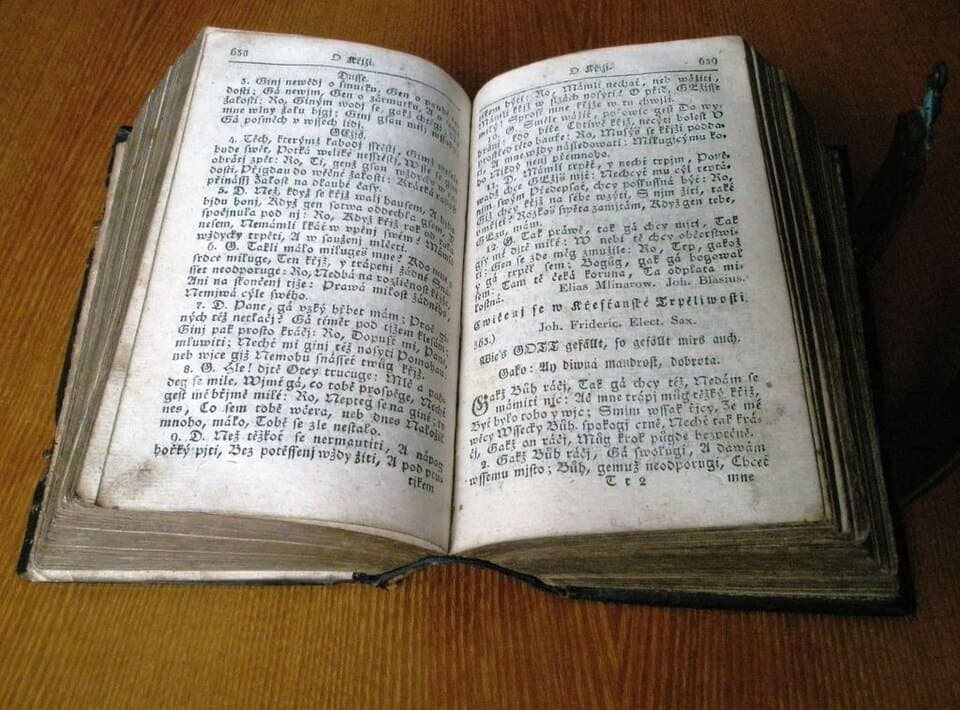
Evidano Transcription
658 O Křjži.
[left page: line ends curve into the gutter and cannot be verified; not transcribed]
O Křjži. 659
tjkem býti: No, Mámli nechat, neb wáliti,
Mámli kříž w ſlách noſyti? O kříž, GEžjſſe
milý! Sproſt mne Křjže w tu chwjli.
G. Směle wáliž, počewic geſt Do wy
bránj, [illegible] Chriſtowě kříž, necýtj boleſt O
proſtřed této bauře: No, Muſýš ſe kříži podda
ti, A mne wždy náſledowati: Milugjcýmu ko
ho Křjž, nenj přemnoho.D. Mámli trpět, y nechť trpjm, Poně
wadž chce GEžjš mjť: Nechcyť mu cýl trpě
njm ſwým Předepſat, chcy poſluſſná být: No,
Gá chcy kříž na ſebe wzýti, S njm žiti, také
vmřjti: Rozkoš ſwěta zamjtám, Když gen tebe,
GEžj, mám.G. Tak práwě, tak gá chcy mjti, Tak
gſy mé djtě milé: W nebi tě chcy občerſtwi
ti: Gen ſe zde můg zmužile: No, Trp, gakož
y gá trpěl ſem; Bogůg, gak gá bogowal
ſem: Tam tě čeká koruna, Ta odplata mi
loſtná.
Elias Mlinarow. Joh. Blasius.
Cwičenj ſe w Křeſťanſké Trpěliwoſti.
Joh. Frideric. Elect. Sax.
365.)
Wie's GOTT gefällt, ſo gefällt mirs auch.
Gako: Ay diwná moudroſt, dobrota.
Gakž Bůh ráčj, Tak gá chcy též, Nedám ſe
mámiti nic: Ač mne trápj můg těžký kříž,
Byť bylo toho y wjc; Smjm wſſak tjcy, Že mé
wěcy Wſſecky Bůh. ſpokogj ctně, Nechť tak krá
čj, Gakž on ráčj, Můg krok půgde bezpečně.
- Gakž Bůh ráčj, Gá ſwolugj, A dawám
wſſemu mjſto; Bůh, gemuž neodporugj, Chceť
T t 2 mne
Generated by Evidano’s advanced model; not yet checked against a published edition.
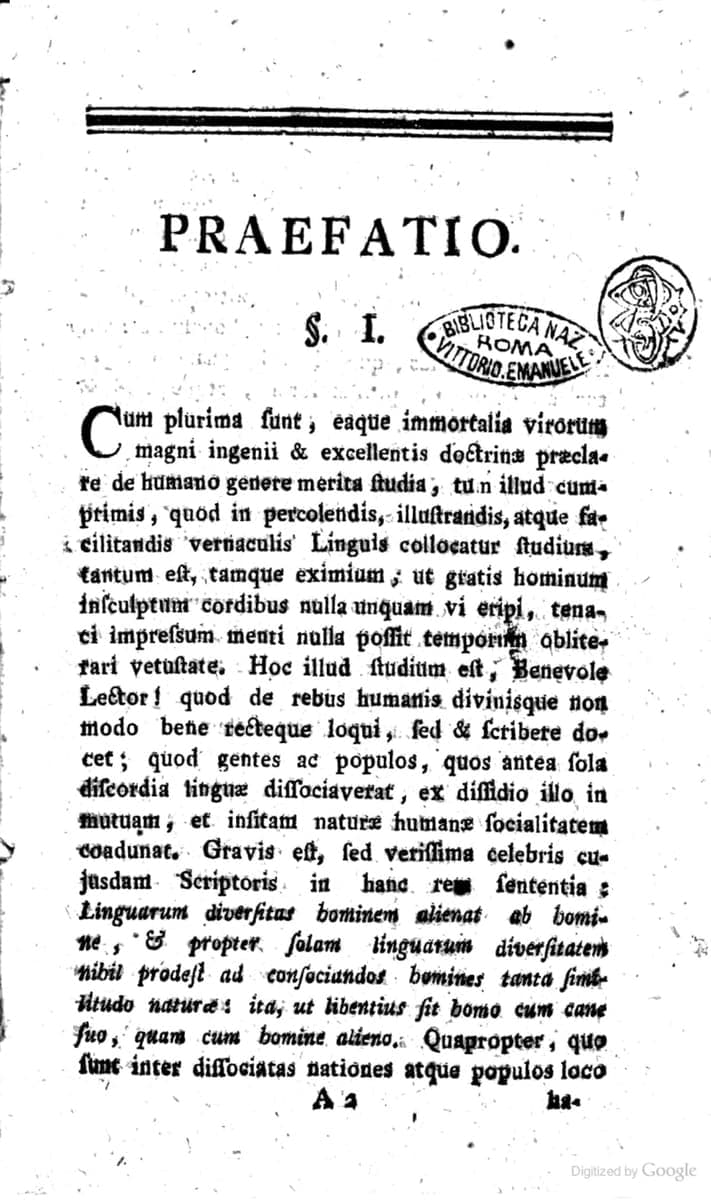
Evidano Transcription
PRAEFATIO.
§. I. BIBLIOTECA NAZ ROMA VITTORIO EMANUELE
Cum plurima sunt, eaque immortalia virorum
magni ingenii & excellentis doctrinæ præcla-
re de humano genere merita studia, tum illud cum-
primis, quod in percolendis, illustrandis, atque fa-
cilitandis vernaculis Linguis collocatur studium,
tantum est, tamque eximium, ut gratis hominum
insculptum cordibus nulla unquam vi eripi, tena-
ci impressum menti nulla possit temporum oblite-
rari vetustate. Hoc illud studium est, Benevole
Lector! quod de rebus humanis divinisque non
modo bene recteque loqui, sed & scribere do-
cet; quod gentes ac populos, quos antea sola
discordia linguæ dissociaverat, ex dissidio illo in
mutuam, et insitam naturæ humanæ socialitatem
coadunat. Gravis est, sed verissima celebris cu-
jusdam Scriptoris in hanc rem sententia :
Linguarum diversitas hominem alienat ab homi-
ne, & propter solam linguarum diversitatem
nihil prodest ad consociandos homines tanta simi-
litudo naturæ : ita, ut libentius sit homo cum cane
suo, quam cum homine alieno. Quapropter, quo
sunt inter dissociatas nationes atque populos loco
A 2 ha-
Generated by Evidano’s advanced model; not yet checked against a published edition.
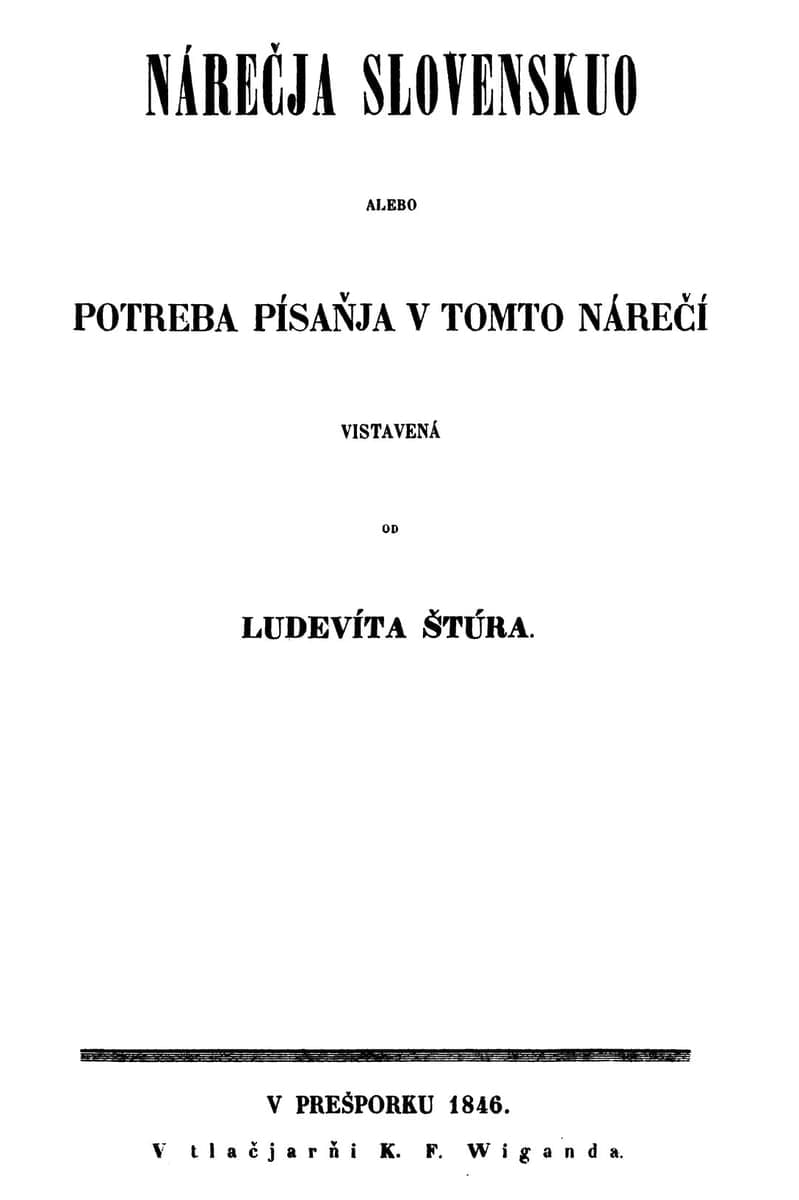
Evidano Transcription
The title page down to the place-and-year line, as transcribed on the digitisation page of the Ľudovít Štúr Institute of Linguistics of the Slovak Academy of Sciences. The printer’s imprint set in spaced capitals at the very foot of the sheet, V tlačjarňi K. F. Wiganda., is legible in the image but is not carried in that source, so it is not included here.
Nárečja Slovenskuo
alebo
Potreba písaňja v tomto nárečí
vistavená od
Ludevíta Štúra
V Prešporku 1846
Source: Nárečja Slovenskuo, digitisation page, Ľudovít Štúr Institute of Linguistics, Slovak Academy of Sciences (Public domain).
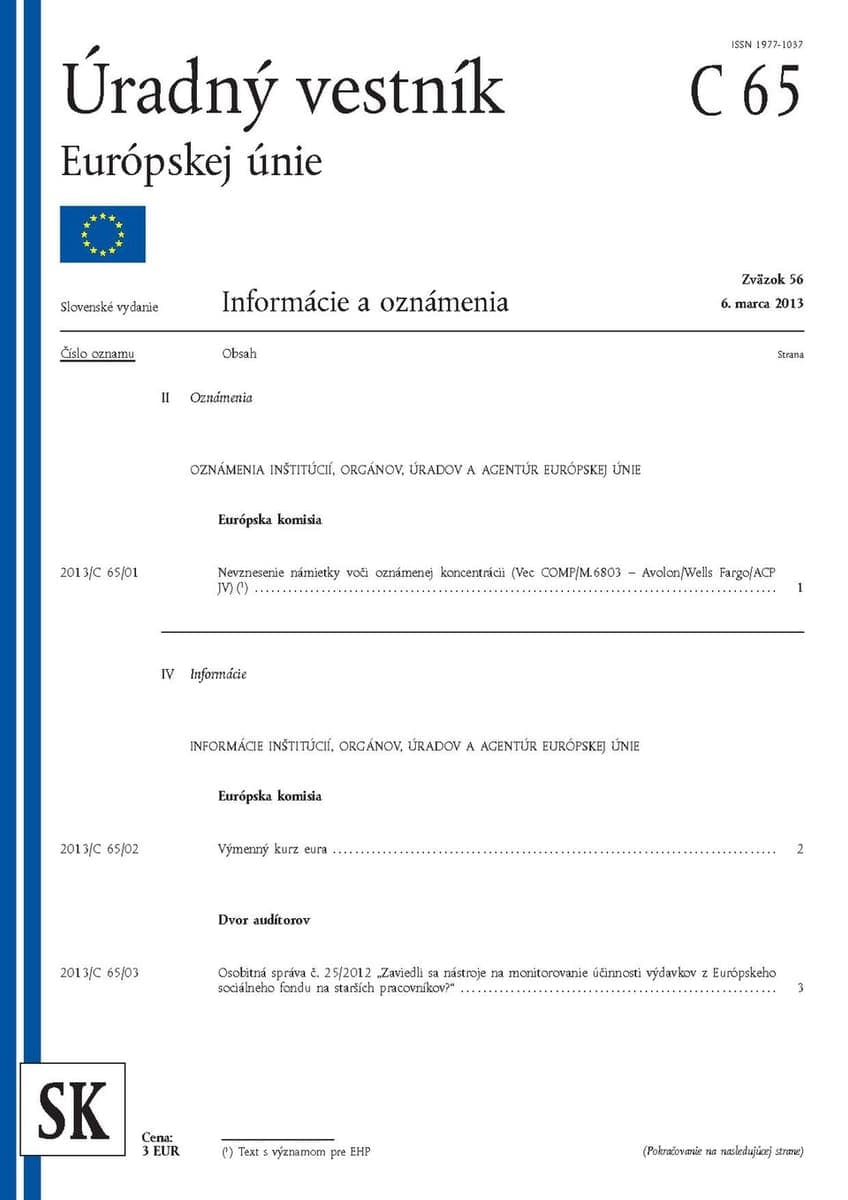
Evidano Transcription
The head of the contents block: the column headings, the section II heading and the single Európska komisia entry beneath it, matched against the official EUR-Lex publication of this issue. The lower half of the page carries a section IV with two further entries, 2013/C 065/02 and 065/03, which are not covered here.
Číslo oznamu — Obsah — Strana
II Oznámenia
OZNÁMENIA INŠTITÚCIÍ, ORGÁNOV, ÚRADOV A AGENTÚR EURÓPSKEJ ÚNIE
Európska komisia
2013/C 065/01 Nevznesenie námietky voči oznámenej koncentrácii (Vec COMP/M.6803 – Avolon/Wells Fargo/ACP JV) — 1
Source: Official Journal of the European Union C 65, 6 March 2013, EUR-Lex (Public domain).
What Slovak writing has looked like
Before 1787, Slovak simply had no literary standard of its own. Protestant Slovaks wrote and worshipped in Czech, above all the Czech of the Bible of Kralice and of Juraj Tranovský’s 1636 hymnal Cithara Sanctorum, which was reprinted for congregational use for the better part of three centuries. Catholic clergy and administrators worked mostly in Latin, since the Kingdom of Hungary, of which Slovakia was part until 1918, kept its county and parish records in Latin until the 1840s and, increasingly after that, in Hungarian. A Slovak name in a baptismal, marriage or land record from this period is routinely spelled the way a Latin- or Hungarian-trained clerk’s ear caught it, not the way any Slovak orthography would have written it.
The Catholic priest Anton Bernolák broke with this arrangement in 1787, basing a new written standard on the cultivated Western Slovak of Trnava. He set out his rules in a Latin treatise, then a full Latin-language grammar, the Grammatica Slavica of 1790, and crowned the project with a vast Czech-Latin-German-Hungarian dictionary of Slovak finished only after his death. Bernolák’s spelling served Catholic writers such as Juraj Fándly for a few decades but never won over the Protestant intelligentsia, who kept writing in Czech.
Ľudovít Štúr and his circle proposed a rival standard in 1843, deliberately built on central Slovak dialect instead, and justified it in the 1846 pamphlet Nárečja Slovenskuo alebo Potreba písaňja v tomto nárečí ("The Slovak dialect, or the need to write in this dialect"). Štúr’s new spelling went straight into use in Slovenskje národňje novini, the first Slovak-language newspaper, from 1845. A further revision by Michal Miloslav Hodža and Martin Hattala in 1851–52 smoothed the system into essentially the orthography used today, complete with the soft ľ, the long ĺ and ŕ, the diphthong ô and the open ä that give modern printed Slovak its distinctive look.
Why ordinary OCR struggles here
One archive, several possible languages
A Slovak family or parish archive before the 1840s can hold documents in Latin, Hungarian, German or Czech as well as Slovak, and a system has to work out which language and script a page uses before it can read a single word, with a Slovak personal or place name liable to turn up embedded in any of them.
Bernolák’s spelling is neither Czech nor modern Slovak
Bernolák’s late-eighteenth-century orthography, built on a different regional base than either Czech or Štúr’s later standard, spells a number of sounds its own way. A system trained on Czech or on modern Slovak has no reliable pattern to match these words against and misreads them as one or the other.
Diacritics that mark length and softness alike
ľ, ĺ, ŕ, ô and ä each look like an ordinary letter with a small mark added, and confusing one mark for another changes a real word into a different one or into nonsense. General OCR trained mainly on Czech or Polish, which do not use this exact set of marks, tends to drop them or substitute the wrong one.
Names spelled by ear in Hungarian Kingdom records
Clerks working in Latin or Hungarian in county and parish offices transliterated Slovak names as they heard them, so the same surname can appear spelled several different ways across different registers, none of them matching standard Slovak spelling.
Who works with this material
Historians of the Slovak national revival
Tracing the Bernolák and Štúr movements means reading each period’s print in its own orthography rather than silently correcting it toward modern Slovak, since the spelling itself is part of the historical evidence.
Genealogists researching Kingdom-of-Hungary-era ancestors
Family historians working back past 1918 need Latin- and Hungarian-language parish and county records read accurately, with Slovak names recognised as such even when spelled inconsistently by clerks working in a different language.
Church archivists and hymnal researchers
Slovak Lutheran parishes and synod archives hold generations of Cithara Sanctorum printings and related Czech-language devotional material that predates a Slovak literary standard entirely.
Libraries digitising Slovak periodicals and official texts
From Slovenskje národňje novini onward, Slovak-language newspapers, journals and official gazettes need reliable transcription to become searchable, whatever decade’s spelling conventions they use.
Getting the best transcription
Say which language and era a page is in
State whether a document predates 1787 and is likely Czech or Latin, uses Bernolák’s spelling, uses Štúr’s or the modern standard, or is a Hungarian- or Latin-language administrative record, so the model applies the right expectations from the start.
Flag Slovak names inside Latin or Hungarian records
For county and parish documents, note that personal and place names may be Slovak even though the surrounding text is Latin or Hungarian, so those names are read as Slovak rather than forced into Latin or Hungarian spelling patterns.
Ask for ľ, ĺ, ŕ, ô and ä to be kept exact
Tell the model to preserve these marked letters precisely rather than normalising them to their unmarked counterparts, since a dropped or swapped mark changes the word.
Test on a word or date you can already check
Before transcribing a whole register or pamphlet, run a page containing a name, date or word you already know, so a spelling-system or language mismatch is caught early rather than repeated through the rest of the document.
Frequently asked questions
- Can Evidano read Slovak from before Bernolák’s 1787 reform?
- Yes, though before 1787 most Slovak sources are actually in Czech or Latin rather than Slovak itself, so tell the model which language to expect and it will read that language’s conventions rather than guessing at a Slovak standard that did not yet exist.
- Does it handle Latin- or Hungarian-language records with Slovak names?
- Yes, once told to expect them, Slovak personal and place names inside Latin or Hungarian administrative text are read as Slovak rather than forced into the surrounding language’s spelling.
- Can it read Cithara Sanctorum and other older Czech-language hymnals?
- Yes, the older Czech orthography used in these hymnals is read on its own terms, which matters since it differs from both modern Czech and any stage of Slovak spelling.
- Does it get ľ, ĺ, ŕ, ô and ä right in modern Slovak?
- Yes, each is recognised as a distinct letter rather than collapsed to its unmarked form, which matters most for names and technical vocabulary in forms and official documents.
- Do I need to say whether a page uses Bernolák’s or Štúr’s spelling?
- It helps. The two systems spell some sounds differently, and naming which one a page uses means the model applies the right expectations immediately rather than working them out from a few lines of text.
Related scripts and pages
Turn your Slovak sources into text
Upload a pre-codification text, a Kingdom-of-Hungary-era record or a modern Slovak document, and check the reading against the image before you export.