
Hungarian
Hungarian read letter by letter, name first
Hungarian print marks a long vowel with a double acute over ő and ű, a shape most OCR training data has never seen and flattens to ö or ü, quietly turning one word into another. Every Hungarian register, from a baptismal entry to a modern form, gives the family name before the given name, the reverse of the order a Western reading model expects, and the country’s oldest surviving script, rovásírás, is not in the Latin alphabet at all. Evidano reads Hungarian print, handwriting and runic signage in the order Hungarian actually writes it, and keeps the source image next to every line.
Sample pages
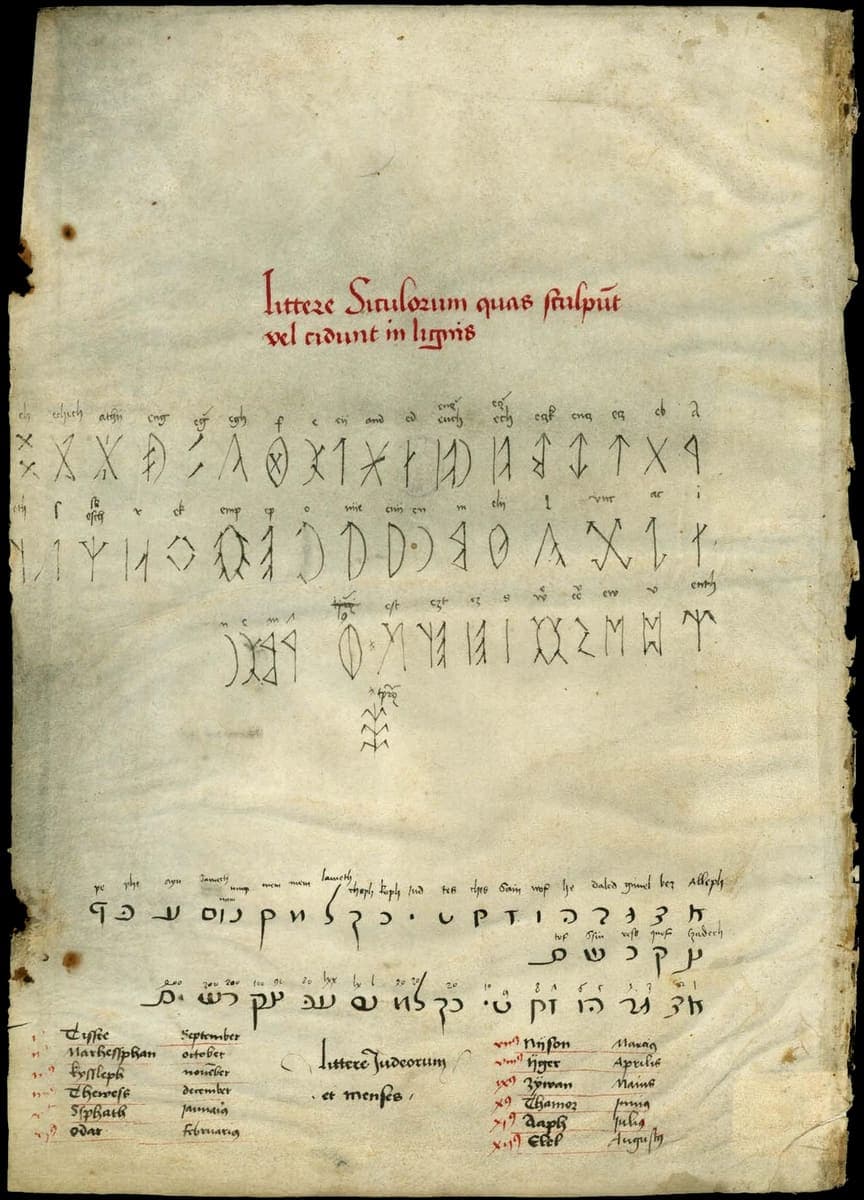
Source · Public domain · Országos Széchényi Könyvtár, via nyelvemlekek.oszk.hu
Evidano Transcription
Littere Siculorum quas sculpu[n]t
vel cidunt in lignis
[three rows of Székely runes with small letter-name labels above them; labels too small to verify at this resolution]
[Hebrew alphabet with Latin letter names and number values; too small to verify at this resolution]
j Tysre[?] September
ij Marhesphan october
iij Kysleph nouember
iiij Thewest[?] december
v Ssphath[?] januari[us]
vj Odar februari[us]
Littere Judeorum
et menses
vij Nyson Marci[us]
viij Hyer Aprilis
ix Zywan Mai[us]
x Thamoz Juni[us]
xj Daph Juli[us]
xij Elel August[us]
Generated by Evidano’s advanced model; not yet checked against a published edition.
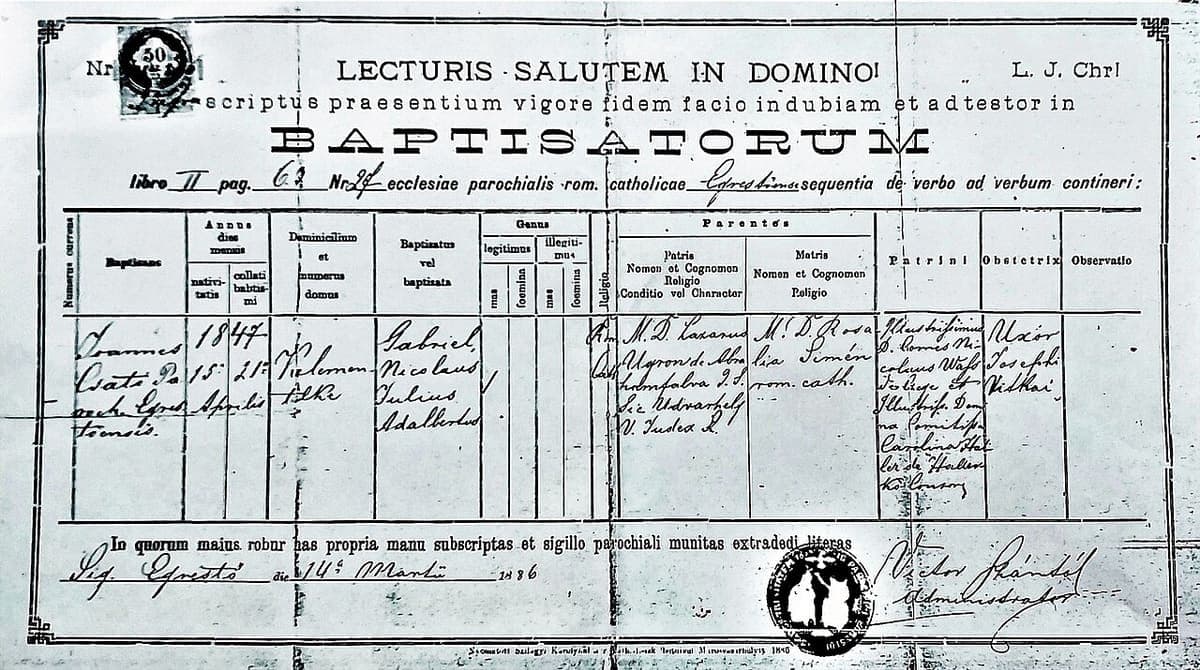
Source · CC BY-SA 4.0 · Ugron András Gábor, family collection
Evidano Transcription
Nr [stamp: 30] LECTURIS SALUTEM IN DOMINO! L. J. Chr!
scriptus praesentium vigore fidem facio indubiam et adtestor in
BAPTISATORUM
libro II pag. 63 Nr 24 ecclesiae parochialis rom. catholicae Egrestöensis sequentia de verbo ad verbum contineri:
| Numerus currens | Baptisans | Annus dies mensis nativitatis | Annus dies mensis collati babtismi | Dominicilium et numerus domus | Baptisatus vel baptisata | Genus legitimus mas | Genus legitimus foemina | Genus illegitimus mas | Genus illegitimus foemina | Religio | Parentes: Patris Nomen et Cognomen Religio Conditio vel Character | Parentes: Matris Nomen et Cognomen Religio | Patrini | Obstetrix | Observatio |
|---|---|---|---|---|---|---|---|---|---|---|---|---|---|---|---|
| Joannes Csató Paroch. Egrestöensis. | 1847 15. Aprilis | 21. | Kelemen-telke | Gabriel, Nicolaus Julius Adalbertus | / | Rom. Cath. | M. D. Lazarus Ugron de Abrahamfalva I. S. Sic. Udvarhely V. Judex R. | M. D. Rosalia Simén rom. cath. | Illustrissimus D. Comes Nicolaus Wass de Czege et Illustriss. Domina Comitissa Carolina Haller de Hallerkő Consors | Uxor Josephi Vitkai |
In quorum maius robur has propria manu subscriptas et sigillo parochiali munitas extradedi literas
Sig. Egrestő die 14a Martii 1886
[seal]
Victor Szántó[?]
Administrator
[printer's line too small to read]
Generated by Evidano’s advanced model; not yet checked against a published edition.
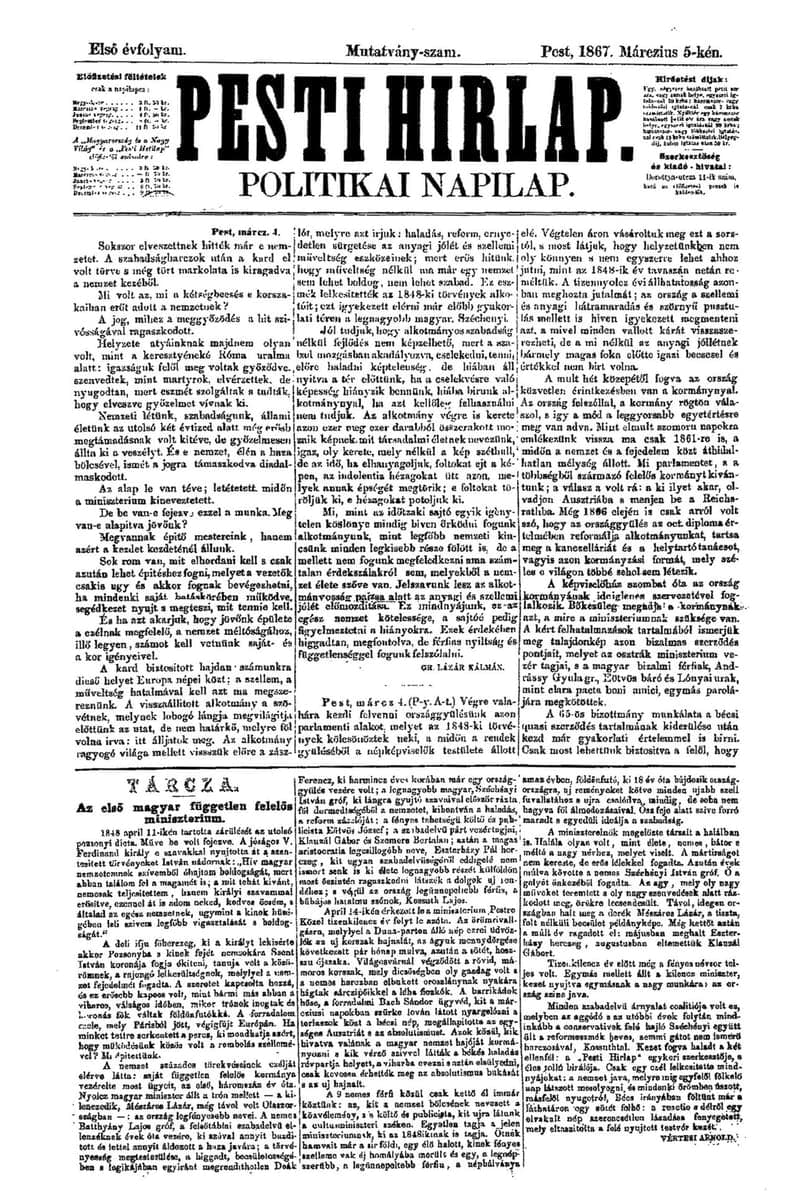
Source · Public domain · Lázár Kálmán, Frankenburg Adolf
Evidano Transcription
Első évfolyam. Mutatvány-szám. Pest, 1867. Márczius 5-kén.
Előfizetési föltételek
csak a napilapra:
[price list too small to read]
A „Magyarország és a Nagy
Világ“ és a „Pesti Hetilap“
előfizetői számára:
[price list too small to read]
PESTI HIRLAP.
POLITIKAI NAPILAP.
Hirdetési dijak:
[small print too small to read]
Szerkesztőség
és kiadó-hivatal:
Dorottya-utcza 11-ik szám,
hová az előfizetési pénzek is
küldendők.
Pest, márcz. 4.
Sokszor elveszettnek hitték már e nem-
zetet. A szabadságharczok után a kard el
volt törve s még tört markolata is kiragadva
a nemzet kezéből.
Mi volt az, mi a kétségbeesés e korsza-
kában erőt adott a nemzetnek?
A jog, mihez a meggyőződés a hit szi-
vósságával ragaszkodott.
Helyzete atyáinknak majdnem olyan
volt, mint a keresztyéneké Róma uralma
alatt: igazságuk felől meg voltak győződve,
szenvedtek, mint martyrok, elvérzettek, de
nyugodtan, mert eszmét szolgáltak s tudták,
hogy elveszve győzelmet vivnak ki.
Nemzeti létünk, szabadságunk, állami
életünk az utolsó két évtized alatt még erősb
megtámadásnak volt kitéve, de győzelmesen
állta ki a veszélyt. És e nemzet, élén a haza
bölcsével, ismét a jogra támaszkodva diadal-
maskodott.
Az alap le van téve; letétetett midőn
a miniszterium kineveztetett.
De be van-e fejezve ezzel a munka. Meg
van-e alapitva jövőnk?
Megvannak épitő mestereink, hanem
azért a kezdet kezdeténél állunk.
Sok rom van, mit elhordani kell s csak
azután lehet épitéshez fogni, melyet a vezetők
csakis ugy és akkor fognak bevégezhetni,
ha mindenki saját hatáskörében működve,
segédkezet nyujt s megteszi, mit tennie kell.
És ha azt akarjuk, hogy jövőnk épülete
a czélnak megfelelő, a nemzet méltóságához,
illő legyen, számot kell vetnünk saját- és
a kor igényeivel.
A kard biztositott hajdan számunkra
dicső helyet Europa népei közt; a szellem, a
műveltség hatalmával kell azt ma megsze-
reznünk. A visszaállitott alkotmány a sző-
vétnek, melynek lobogó lángja megvilágitja
előttünk az utat, de nem határkő, melyre föl
volna irva: itt álljatok meg. Az alkotmány
ragyogó világa mellett viszszük előre a zász-
lót, melyre azt irjuk: haladás, reform, ernye-
detlen sürgetése az anyagi jólét és szellemi
műveltség eszközeinek; mert erős hitünk,
hogy műveltség nélkül ma már egy nemzet
sem lehet boldog, nem lehet szabad. Ez esz-
mék lelkesitették az 1848-ki törvények alko-
tóit; ezt igyekezett elérni már előbb gyakor-
lati téren a legnagyobb magyar, Széchenyi.
Jól tudjuk, hogy alkotmányos szabadság
nélkül fejlődés nem képzelhető, mert a sza-
bad mozgásban akadályozva, cselekedni, tenni,
előre haladni képtelenség, de hiában áll
nyitva a tér előttünk, ha a cselekvésre való
képesség hiányzik bennünk, hiába birunk al-
kotmánynyal, ha azt kellőleg felhasználni
nem tudjuk. Az alkotmány végre is kerete
azon ezer meg ezer darabból összerakott mo-
zaik képnek, mit társadalmi életnek nevezünk,
igaz, oly kerete, mely nélkül a kép széthull,
de az idő, ha elhanyagoljuk, foltokat ejt a ké-
pen, az indolentia hézagokat üt azon, me-
lyek annak épségét megtörik; e foltokat tö-
röljük ki, e hézagokat potoljuk ki.
Mi, mint az időszaki sajtó egyik igény-
telen közlönye mindig hiven őrködni fogunk
alkotmányunk, mint legfőbb nemzeti kin-
csünk minden legkisebb része fölött is, de a
mellett nem fogunk megfeledkezni ama szám-
talan érdekszálakról sem, melyekből a nem-
zet élete szőve van. Jelszavunk lesz az alkot-
mányosság paizsa alatt az anyagi és szellemi
jólét előmozditása. Ez mindnyájunk, ez az
egész nemzet kötelessége, a sajtóé pedig
figyelmeztetni a hiányokra. Ezek érdekében
higgadtan, megfontolva, de férfias nyiltság és
függetlenséggel fogunk felszólalni.
GR. LÁZÁR KÁLMÁN.
Pest, márcz. 4. (P-y. A-t.) Végre vala-
hára kezdi felvenni országgyülésünk azon
parlamenti alakot, melyet az 1848-ki törvé-
nyek kölcsönöztek neki, a midőn a rendek
gyüléséből a népképviselők testülete állott
elé. Végtelen áron vásároltuk meg ezt a sors-
tól, s most látjuk, hogy helyzetünkben nem
oly könnyen s nem egyszerre lehet ahhoz
jutni, mint az 1848-ik év tavaszán netán re-
méltük. A tizennyolcz évi állhatatosság azon-
ban meghozta jutalmát; az ország a szellemi
és anyagi hátramaradása és szörnyű puszta-
lás mellett is hiven igyekezett megmenteni
azt, a mivel minden vallott kárát visszasze-
rezheti, de a mi nélkül az anyagi jóllétnek
bármely magas foka előtt igazi becscsel és
értékkel nem birt volna.
A mult hét közepétől fogva az ország
közvetlen érintkezésben van a kormánynyal.
Az ország felszóllal, a kormány rögtön vála-
szol, s igy a mód a leggyorsabb egyetértésre
meg van adva. Mint elmult szomoru napokra
emlékezünk vissza ma csak 1861-re is, a
midőn a nemzet és a fejedelem közt áthidal-
hatlan mélység állott. Mi parlamentet, s a
többségből származó felelős kormányt kiván-
tunk; a válasz a volt rá: a ki ilyet akar, ol-
vadjon Ausztriába s menjen be a Reichs-
rathba. Még 1866 elején is csak arról volt
szó, hogy az országgyülés az oct. diploma ér-
telmében reformálja alkotmányunkat, tartsa
meg a kanczelláriát és a helytartótanácsot,
vagyis azon kormányzási formát, mely szé-
les e világon többé sehol sem létezik.
A képviselőház szombat óta az ország
kormányának ideiglenes szervezetével fog-
lalkozik. Békésüleg megadja a kormánynak
azt, a mire a miniszteriumnak szüksége van.
A kért felhatalmazások tartalmából ismerjük
meg tulajdonkép azon bizalmas szerződés
pontjait, melyet az osztrák miniszterium ve-
zér tagjai, s a magyar bizalmi férfiak, And-
rássy Gyula gr., Eötvös báró és Lónyai urak,
mint clara pacta boni amici, egymás parolá-
jára megkötöttek.
A 65-ös bizottmány munkálata a bécsi
quasi szerződés tartalmának kiderülése után
kezd már gyakorlati értelemmel is birni.
Csak most lehettünk biztositva a felől, hogy
TÁRCZA.
Az első magyar független felelős
miniszterium.
1848 april 11-ikén tartotta zárülését az utolsó
pozsonyi dieta. Műve be volt fejezve. A jóságos V.
Ferdinand király e szavakkal nyujtotta át a szen-
tesitett törvényeket István nádornak: „Hiv magyar
nemzetemnek szivemből óhajtom boldogságát, mert
abban találom fel a magamét is; a mit tehát kivánt,
nemcsak teljesitettem, hanem királyi szavammal
erősitve, ezennel át is adom neked, kedves öcsém, s
általad az egész nemzetnek, ugymint a kinek hűsé-
gében leli szivem legfőbb vigasztalását s boldog-
ságát.“
A deli ifju főherczeg, ki a királyt lekisérte
akkor Pozsonyba s kinek fejét nemsokára Szent
István koronája fogja ékiteni, tanuja volt a kön-
römnek, a rajongó lelkesültségnek, melylyel a nem-
zet fejedelmét fogadta. A szeretet kapcsolta hozzá,
és ez erősebb kapocs volt, mint bármi más abban a
viharos, válságos időben, mikor trónok inogtak és
koronás fők váltak földönfutókká. A forradalom
szele, mely Párisból jött, végigfujt Európán. Ha
minket tettre serkentett a percz, ki mondhatja azért,
hogy működésünk közös volt a rombolás szellemé-
vel? Mi épitettünk.
A nemzet százados törekvéseinek czélját
elérve látta: saját független felelős kormánya
vezérelte most ügyeit, az első, háromszáz év óta.
Nyolcz magyar miniszter állt a trón mellett — a ki-
lenczedik, Mészáros Lázár, még távol volt Olaszor-
szágban —: az ország legfényesebb nevei. A nemes
Batthyány Lajos gróf, a felsőházi szabadelvű el-
lenzéknek évek óta vezére, ki szóval annyit buzdi-
tott és tettel annyit áldozott a haza javára; a törvé-
nyesség megtestesülése, a higgadt, becsületességé-
ben s logikájában egyiránt megrendithetlen Deák
Ferencz, ki harmincz éves korában már egy ország-
gyülés vezére volt; a legnagyobb magyar, Széchényi
István gróf, ki lángra gyujtó szavaival először rázta
föl dermedtségéből a nemzetet, kibontván a haladás,
a reform zászlóját; a fényes tehetségü költő és pub-
licista Eötvös József; a szabadelvű párt vezértagjai,
Klauzál Gábor és Szemere Bertalan; aztán a magas
aristocratia legcsillogóbb neve, Eszterházy Pál her-
czeg, kit ugyan szabadelvüségéről eddigelé nem
ismert senk is ki élete legnagyobb részét külföldön
most őszintén ragaszkodni látszék a dolgok uj ren-
déhez; s végül az ország legünnepeltebb férfia, a
bűbájos hatalmu szónok, Kossuth Lajos.
April 14-ikén érkezett le a miniszterium Pestre
Közel tizenkilencz év folyt le azóta. Az örömrivall-
gásra, melylyel a Duna-parton álló nép ezrei üdvöz-
lék az uj korszak hajnalát, az ágyuk mennydörgése
következett pár hónap mulva, azután a sötét, hosz-
szu éjszaka. Világosvárnál végződött a rövid, má-
moros korszak, mely dicsőségben oly gazdag volt s
a nemes harczban elbukott oroszlánynak nyakára
hágtak sárczipőikkel a léha ficzkók. A barrikádok
hőse, a forradalmi Bach Sándor ügyvéd, kit a már-
cziusi napokban szürke lován látott nyargalozni a
torlaszok közt a bécsi nép, megállapitotta az egy-
séges Ausztriát s az absolutismust. Azok közül, kik
hivatva valának a magyar nemzet hajóját kormá-
nyozni s kik vérző szivvel látták a békés haladás
révpartja helyett, a viharba evezni s aztán elsülyedni,
csak kevesen érhették meg az absolutismus bukását
s az uj hajnalt.
A 9 nemes férfi közül csak kettő él immár
köztünk: az, kit a nemzet bölcsének nevezett a
közvélemény, s a költő és publicista, kit ujra látunk
a cultusminiszteri széken. Egyetlen tagja a jelen
miniszteriumnak, ki az 1848-kinak is tagja. Ötnek
hamvait már a sir födi[?], egy élő halott, kinek fényes
szelleme vak éj homályába merült és egy, a legnép-
szerűbb, a legünnepeltebb férfiu, a népbálványa
amaz évben, földönfutó, ki 18 év óta bújdosik ország-
országra, uj reményeket kötve minden ujabb szell
fuvallatához s ujra csalódva, mindig, de soha nem
hagyva föl álmodozásaival. Ösz feje alatt szive forró
maradt s egyedüli ideálja a szabadság.
A miniszterelnök megelőzte társait a halálban
is. Halála olyan volt, mint élete, nemes, bátor s
méltó a nagy névhez, melyet viselt. A mártirságot
nem kereste, de erős lélekkel fogadta. Azután évek
múlva követte a nemes Széchényi István gróf. Ő a
golyót önkezéből fogadta. Az agy, mely oly nagy
műveket teremtett s oly nagy szenvedések alatt ráz-
kódott meg, örökre lecsendesült. Távol, idegen or-
szágban halt meg a derék Mészáros Lázár, a tiszta,
folt nélküli becsület példányképe. Még kettőt aztán
a múlt év ragadott el: májusban meghalt Eszter-
házy herczeg, augusztusban eltemettük Klauzál
Gábort.
Tizenkilencz év előtt még a fényes névsor tel-
jes volt. Egymás mellett állt a kilencz miniszter,
kezet nyujtva egymásnak a nagy munkára; az or-
szág szine java.
Minden szabadelvű árnyalat coalitiója volt ez,
melyben az aggódó s az utóbbi évek folytán mind-
inkább a conservativok felé hajló Széchényi együtt
ült a reformeszmék heves, semmi gátot nem ismerő
harczosával, Kossuthtal. Kezet fogva haladt a két
ellenfél: a „Pesti Hirlap“ egykori szerkesztője, s
éles tollú birálója. Csak egy czél lelkesitette mind-
nyájokat: a nemzet java, melyre mig egyfelől fölkelő
nap látszott mosolyogni, és mindenki örömben úszott,
másfelől nyugotról, Bécs irányában föltünt már a
láthatáron egy sötét felhő: a reactio s délről egy
elvakult nép szerencsétlen lázadása fenyegetett,
mely eltaszitotta a felé nyujtott testvér kezét.
VÉRTESI ARNOLD.
Generated by Evidano’s advanced model; not yet checked against a published edition.
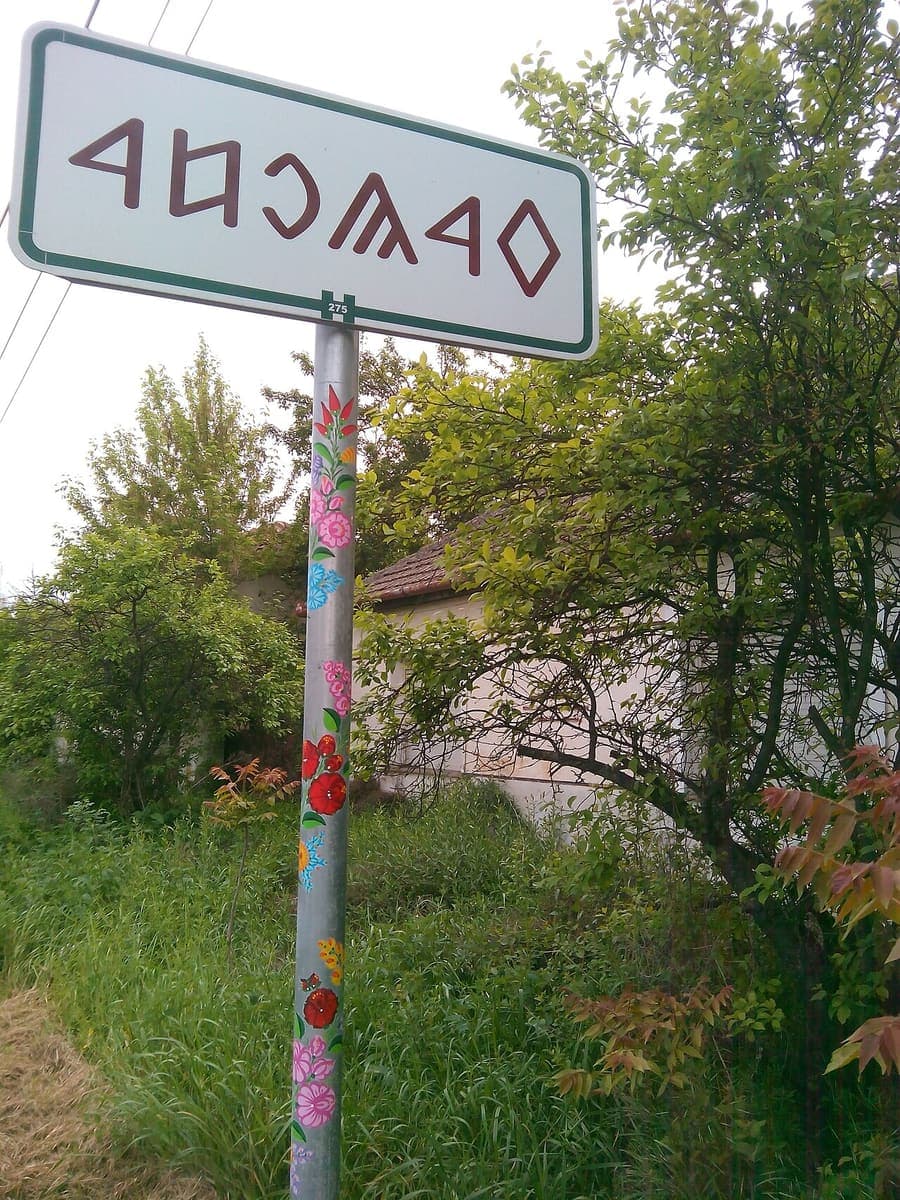
Source · CC BY-SA 4.0 · Zemszo
Evidano Transcription
The town name shown on the sign, transliterated into Latin letters; this reading follows the Commons file title and description, not a scholarly transcription of the individual rovásírás characters, but the word is short enough to check directly against the photograph.
KALOCSA
Source: Wikimedia Commons file page for Kalocsa rovásírásos helységnévtábla.jpg (CC BY-SA 4.0).
What Hungarian writing looks like on the page
The Hungarian alphabet uses the Latin letters plus a run of digraphs and one trigraph that each stand for a single sound: cs, dz, dzs, gy, ly, ny, sz, ty and zs. In print and in handwriting these behave as one letter for the purposes of alphabetical order, so a Hungarian dictionary, index or register files Szabó after sz and before t, not among the plain s surnames, and any process that alphabetises letter by letter puts entries in the wrong place. Long vowels carry a separate mark of their own: á, é, í, ó and ú lengthen a vowel with a single acute, while ő and ű lengthen ö and ü with a double acute unique to Hungarian, a shape that OCR trained on other Latin-script languages regularly flattens to a single acute or drops altogether, turning a word such as tűz (fire) into tüz or the surname Kőrösi into Körösi.
Hungarian gives the family name before the given name in every register, ledger and modern form, the reverse of the convention a foreign reading model expects, so a baptismal or civil entry headed Nagy János names a man called János Nagy. Church registers kept under Habsburg administration compound the problem: the same Hungarian name sits inside a Latin-language printed form, a parish clerk might Latinise its ending, and Christian-name-first Latin word order appears directly beside a Hungarian family-name-first entry on the same page. Printed matter from the mid-nineteenth century onward, once censorship eased and the press expanded after 1867, already uses the double-acute vowels and the digraph spellings consistently, so a period newspaper column reads no differently from a modern one apart from its typeface.
Older than the Latin alphabet in Hungary is rovásírás, the Old Hungarian runic script incised rather than written with a pen, recorded as early as the fifteenth century in alphabet lists such as the Nikolsburg leaf and traditionally read right to left. It fell out of everyday administrative use once the Latin alphabet took hold, but it never disappeared: it is taught as a cultural curiosity in some schools today and turns up on town-limit signs, shopfronts and memorials, almost always alongside, not instead of, the Latin-alphabet form of the same name.
Why ordinary OCR struggles here
A double acute that gets flattened to a single one
ő and ű are letters in their own right, not ö and ü wearing an accent borrowed from another language, but generic OCR trained mostly on German or Turkish text keeps mapping the double acute onto the nearest diaeresis or single acute it recognises. The result reads as plausible Hungarian while quietly saying a different word.
Digraphs that a letter-by-letter reading breaks apart
Cs, gy, ly, ny, sz, ty, zs and dzs are single sounds spelled with two or three letters, and Hungarian alphabetical order treats each as one unit. A transcription that does not know this can split a digraph across a line break as if it were two unrelated consonants, or sort a list of surnames as though sz came before t only by coincidence of its first letter.
A name order every foreign template gets backwards
Parish registers, civil records and most Hungarian forms put the family name first, so reading Kovács Éva as a given name Kovács and a surname Éva reverses the person entirely. Getting genealogical or civil data right means recognising which register convention is in play, not assuming Western name order by default.
Runic letters unrelated to any Latin shape
Rovásírás shares no letterforms with the Latin alphabet it eventually replaced, runs right to left rather than left to right, and appears today mixed into otherwise Latin-alphabet signage. A model has to recognise it as its own script before it can even attempt a transliteration.
Who works with this material
Genealogists tracing Hungarian ancestry
Family history research routinely crosses from Hungarian-language civil records into Latin-language parish registers kept under Habsburg administration, with the same person’s name in family-name-first Hungarian order in one book and Christian-name-first Latin order in the next. Reading both conventions correctly is what keeps a family tree from silently swapping generations.
Newspaper and archive digitisation projects
Libraries turning nineteenth- and twentieth-century Hungarian newspapers into searchable text need every ő, ű and digraph handled the same way across an entire run, since a search index that treats sz as s plus z, or ő as ö, will miss or misfile a large share of its own material.
Museums and heritage projects cataloguing rovásírás
Collections of runic inscriptions, calendar sticks and modern revival signage need a transliteration alongside the original characters, with the reading direction and letterforms treated as their own system rather than approximated from the Latin alphabet.
Translators and notaries handling official Hungarian documents
Birth certificates, diplomas and other documents submitted for translation or legalisation have to reproduce a name exactly, double-acute vowels included, since a Kőrösi rendered as Körösi on an official translation can be rejected as a different name entirely.
Getting the best transcription
Say which name order the record uses
Tell the model whether the source is a Hungarian family-name-first register or a Latin-language form with Christian-name-first entries, and ask for given name and family name as separate fields so nothing downstream reverses them.
Keep ő and ű distinct from ö and ü
Ask explicitly for the double-acute vowels to be preserved rather than normalised, particularly for names and place names where the difference changes the word.
Flag mixed-language pages
Where Hungarian names sit inside a Latin-language printed form, ask for each stretch labelled by language so a Latinised ending is not carried over into the Hungarian reading of the name.
Ask for a Latin transliteration of rovásírás alongside the original
For runic signage or manuscripts, request the transliteration as a second field rather than a replacement, and confirm the reading direction the model has assumed before trusting a longer inscription.
Frequently asked questions
- Does it keep ő and ű distinct from ö and ü?
- Yes, the double-acute vowels are read as their own letters rather than normalised to the single-acute or umlaut forms, which matters most in names and place names where the two spellings mean different things.
- Will it reorder a family-name-first record into given-name, family-name for a database?
- It can, if you ask for the two parts as separate fields; by default it transcribes the name in the order the document actually presents it, which is safer when you have not yet confirmed which convention a particular register follows.
- Can it read Old Hungarian runic script, rovásírás?
- Yes, it is recognised as its own script rather than approximated from the Latin alphabet, and the output can include a Latin-letter transliteration alongside the runic transcription.
- How are digraphs such as sz, cs and zs handled?
- They are kept as the single sounds they represent, so alphabetised output and line-break decisions treat szabó as starting with sz rather than splitting it into s and z.
- What about Hungarian names inside Latin-language church registers?
- The Latin surrounding text and the Hungarian name are read as what they are, and a Latinised name ending can be flagged separately from the vernacular form on request, rather than the two being merged into one uncertain reading.
Related scripts and pages
Turn your Hungarian documents into text
Upload a parish register, a period newspaper or a photograph of a runic sign, and check the Hungarian reading, name order included, against the image line by line.