
Turkish
Modern Turkish print, documents and signs turned into text
Turkey’s 1928 alphabet law replaced Ottoman Arabic script with a Latin one almost overnight, and the letters that new alphabet added still trip up software built for other Latin-script languages: a dotted İ and a dotless I are different letters with different lower-case forms, and ğ, ş and ç are letters in their own right rather than accented versions of g, s and c. Evidano reads modern Turkish print, official documents and signage, and sets the transcription beside the image so every one of those letters can be checked. Material written before the reform, in Ottoman Arabic script, has its own page.
Sample pages
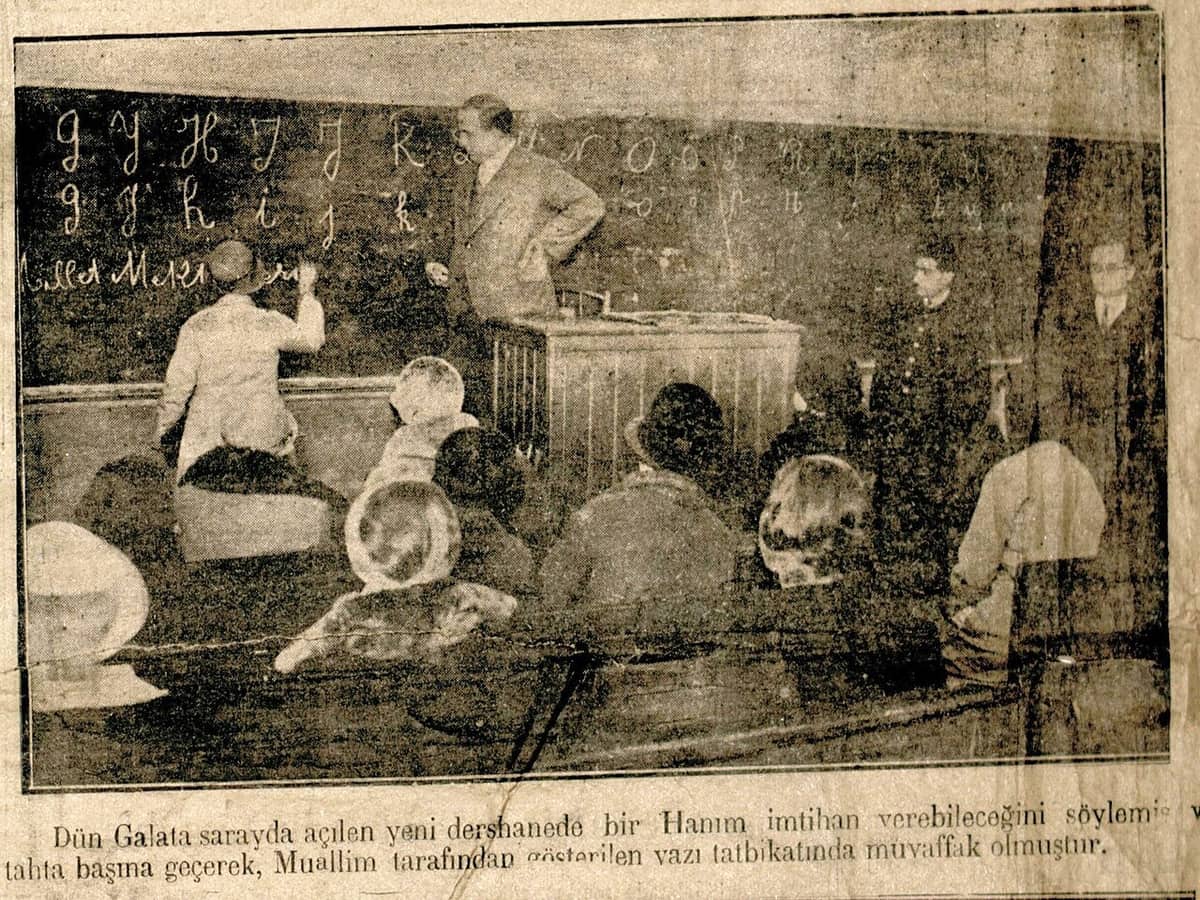
İ.B.B. Atatürk Kitaplığı Sayısal Arşiv ve e-Kaynaklar, 2 January 1929 · Source · Public domain
Evidano Transcription
G Ğ H I J K [illegible] N O Ö P R [faint letters, illegible]
g ğ h i j k [illegible] o ö p r [faint letters, illegible]
Millet Mekt[cut off]
Dün Galata sarayda açılan yeni dershanede bir Hanım imtihan verebileceğini söylemiş v[cut off]
tahta başına geçerek, Muallim tarafından gösterilen yazı tatbikatında muvaffak olmuştur.
Generated by Evidano’s advanced model; not yet checked against a published edition.
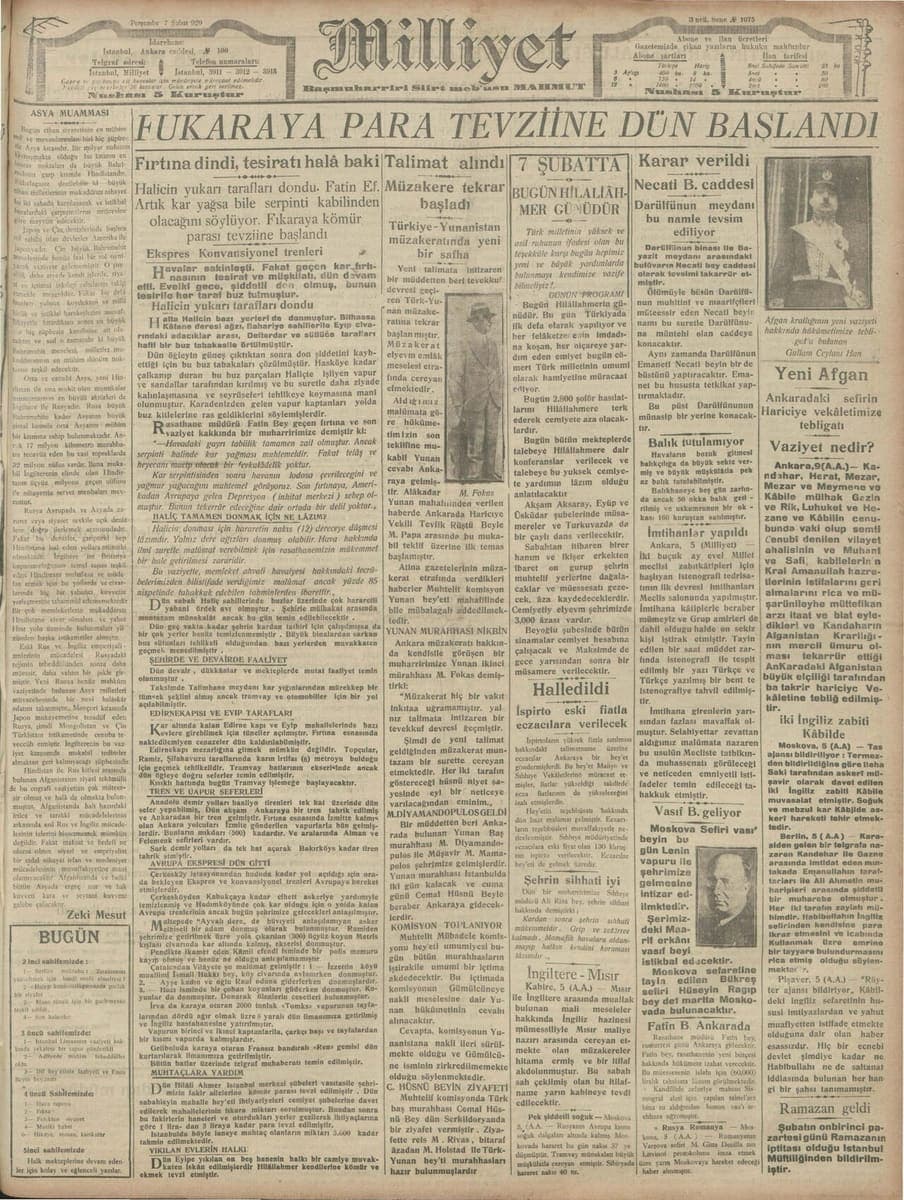
İstanbul Üniversitesi Kütüphane ve Dokümantasyon Daire Başkanlığı, 7 February 1929 · Source · Public domain
Evidano Transcription
Perşembe 7 Şubat 929
İdarehane:
İstanbul, Ankara caddesi, № 100
Telgraf adresi: | Telefon numaraları:
İstanbul, Milliyet | İstanbul, 3911 – 3912 – 3913
[two lines of small print illegible]
Nüshası 5 Kuruştur
Milliyet
Başmuharriri Siirt meb'usu MAHMUT
3 üncü sene № 1075
Abone ve ilan ücretleri
Gazetemizde çıkan yazıların hukuku mahfuzdur
Abone şartları | İlan tarifesi
[rate table illegible]
Nüshası 5 Kuruştur
FUKARAYA PARA TEVZİİNE DÜN BAŞLANDI
ASYA MUAMMASI
[article text too faded to verify]
Zeki Mesut
BUGÜN
[list too small to verify]
Fırtına dindi, tesiratı halâ baki
Halicin yukarı tarafları dondu. Fatin Ef.
Artık kar yağsa bile serpinti kabilinden
olacağını söylüyor. Fıkaraya kömür
parası tevziine başlandı
Ekspres Konvansiyonel trenleri
Havalar sakinleşti. Fakat geçen kar fırtı-
nasının tesirat ve müşkilâtı, dün devam
etti. Evvelki gece, şiddetli don olmuş, bunun
tesirile her taraf buz tutmuştur.
Halicin yukarı tarafları dondu
Hatta Halicin bazı yerleri de donmuştur. Bilhassa
Kâtane deresi ağzı, Bahariye sahillerile Eyüp civa-
rındaki adacıklar arası, Defterdar ve Sütlüce tarafları
hafif bir buz tabakasile örtülmüştür.
Dün öğleyin güneş çıktıktan sonra don şiddetini kayb-
ettiği için bu buz tabakaları çözülmüştür. Hasköye kadar
çalkanıp duran bu buz parçaları Haliçte işliyen vapur
ve sandallar tarafından kırılmış ve bu suretle daha ziyade
kalınlaşmasına ve seyrüseferi tehlikeye koymasına mani
olunmuştur. Karadenizden gelen vapur kaptanları yolda
buz kitlelerine rast geldiklerini söylemişlerdir.
Rasathane müdürü Fatin Bey geçen fırtına ve son
vaziyet hakkında bir muharririmize demiştir ki:
"—Havadaki gayri tabiîlik tamamen zail olmuştur. Ancak
serpinti halinde kar yağması muhtemeldir. Fakat telâş ve
heyecanı mucip olacak bir fevkalâdelik yoktur.
Kar serpintisinden sonra havanın lodosa çevrileceğini ve
yağmur yağacağını muhtemel görüyoruz. Son fırtınaya, Ameri-
kadan Avrupaya gelen Depresyon (inhitat merkezi) sebep ol-
muştur. Bunun tekerrür edeceğine dair ortada bir delil yoktur.„
HALİÇ TAMAMEN DONMAK İÇİN NE LÂZIM?
Halicin donması için hararetin nakıs (12) dereceye düşmesi
lâzımdır. Yalnız dere ağızları donmuş olabilir. Hava hakkında
ilmi surette malûmat verebilmek için rasathanemizin mükemmel
bir hale getirilmesi zaruridir.
Bu vaziyette, memleket ahvali havaiyesi hakkındaki tecrü-
belerimizden bilistifade verdiğimiz malûmat ancak yüzde 85
nispetinde tahakkuk edebilen tahminlerden ibarettir.„
[rest of column too small to verify]
ŞEHİRDE VE DEVAİRDE FAALİYET
[…]
EDİRNEKAPISI VE EYİP TARAFLARI
[…]
TREN VE VAPUR SEFERLERİ
[remaining text of column too small to verify]
Talimat alındı
Müzakere tekrar
başladı
Türkiye-Yunanistan
müzakeratında yeni
bir safha
Yeni talimata intizaren
bir müddetten beri tevekkuf
devresi geçi-
ren Türk-Yu-
nan müzake-
ratına tekrar
başlanmıştır.
Müzakerat
elyevm emlâk
meselesi etra-
fında cereyan
etmektedir.
Aldığımız
malûmata gö-
re hükûme-
timizin son
teklifine mu-
kabil Yunan
cevabı Anka-
raya gelmiş-
tir. Alâkadar
Yunan mahafilinden verilen
haberde Ankarada Hariciye
Vekili Tevfik Rüştü Beyle
M. Papa arasında bu muka-
bil teklif üzerine ilk temas
başlamıştır.
M. Fokas
[rest of column too small to verify; subheads include:]
YUNAN MURAHHASI NİKBİN
M. DİYAMANDOPULOS GELDİ
KOMİSYON TOPLANIYOR
C. HÜSNÜ BEYİN ZİYAFETİ
7 ŞUBATTA
BUGÜN HİLALİAH-
MER GÜNÜDÜR
Türk milletinin yüksek ve
asil ruhunun ifadesi olan bu
teşekküle karşı bugün hepimiz
yeni ve büyük yardımlarda
bulunmayı kendimize vazife
bilmeliyiz!.
GÜNÜN PROGRAMI
[article text too small to verify]
Halledildi
İspirto eski fiatla
eczacılara verilecek
[…]
Şehrin sıhhati iyi
[…]
İngiltere - Mısır
[…]
Karar verildi
Necati B. caddesi
Darülfünun meydanı
bu namle tevsim
ediliyor
Darülfünun binası ile Ba-
yazit meydanı arasındaki
bulüvarın Necati bey caddesi
olarak tevsimi takarrür et-
miştir.
Ölümüyle bütün Darülfü-
nun muhitini ve maarifçileri
müteessir eden Necati beyin
namı bu suretle Darülfünu-
na müntehi olan caddeye
konacaktır.
Aynı zamanda Darülfünun
Emaneti Necati beyin bir de
büstünü yaptıracaktır. Ema-
net bu hususta tetkikat yap-
tırmaktadır.
Bu püst [?] Darülfünunun
münasip bir yerine konacak-
tır.
Balık tutulamıyor
[…]
İmtihanlar yapıldı
[…]
Vasıf B. geliyor
Moskova Sefiri vası' [?]
beyin bu
gün Lenin
vapuru ile
şehrimize
gelmesine
intizar ed-
ilmktedir [?].
Şerimiz-
deki Maa-
rif erkânı
vasıf beyi
istikbal edecektir.
Moskova sefaretine
tayin edilen Bükreş
sefiri Hüseyin Ragıp
bey de martta Mosko-
vada bulunacaktır.
Fatin B. Ankarada
[remaining text of column too small to verify]
Afgan krallığının yeni vaziyeti
hakkında hükûmetimize tebli-
gatı bulunan
Gulam Ceylani [?] Han
Yeni Afgan
Ankaradaki sefirin
Hariciye vekâletimize
tebligatı
Vaziyet nedir?
[article text not verified]
iki İngiliz zabiti
Kâbilde
Moskova, 5 (A.A) — Tas
ajansı bildiriyor: Termez-
den bildirildiğine göre Haba
Saki tarafından askerî mü-
şavir olarak davet edilen
iki İngiliz zabiti Kâbile
muvasalat etmiştir. Soğuk
ve mebzul kar Kâbilde as-
kerî hareketi tehir etmek-
tedir.
[two further dispatches not verified]
Ramazan geldi
Şubatın onbirinci pa-
zartesi günü Ramazanın
iptitası olduğu İstanbul
Müftülüğünden bildirilm-
iştir.
Generated by Evidano’s advanced model; not yet checked against a published edition.
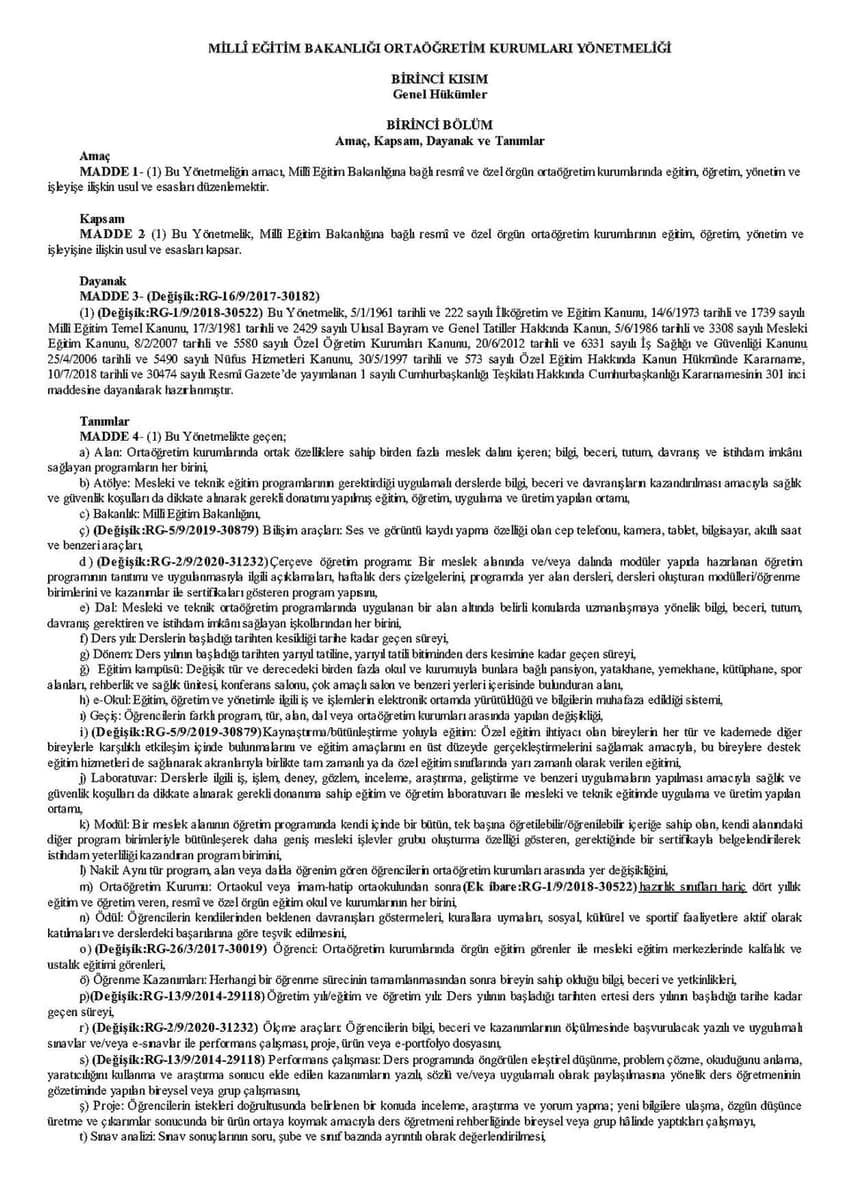
Türkiye Cumhuriyeti Cumhurbaşkanlığı, 7 September 2013 · Source · Public domain
Evidano Transcription
MİLLÎ EĞİTİM BAKANLIĞI ORTAÖĞRETİM KURUMLARI YÖNETMELİĞİ
BİRİNCİ KISIM
Genel Hükümler
BİRİNCİ BÖLÜM
Amaç, Kapsam, Dayanak ve Tanımlar
Amaç
MADDE 1- (1) Bu Yönetmeliğin amacı, Millî Eğitim Bakanlığına bağlı resmî ve özel örgün ortaöğretim kurumlarında eğitim, öğretim, yönetim ve
işleyişe ilişkin usul ve esasları düzenlemektir.
Kapsam
MADDE 2- (1) Bu Yönetmelik, Millî Eğitim Bakanlığına bağlı resmî ve özel örgün ortaöğretim kurumlarının eğitim, öğretim, yönetim ve
işleyişine ilişkin usul ve esasları kapsar.
Dayanak
MADDE 3- (Değişik:RG-16/9/2017-30182)
(1) (Değişik:RG-1/9/2018-30522) Bu Yönetmelik, 5/1/1961 tarihli ve 222 sayılı İlköğretim ve Eğitim Kanunu, 14/6/1973 tarihli ve 1739 sayılı
Millî Eğitim Temel Kanunu, 17/3/1981 tarihli ve 2429 sayılı Ulusal Bayram ve Genel Tatiller Hakkında Kanun, 5/6/1986 tarihli ve 3308 sayılı Mesleki
Eğitim Kanunu, 8/2/2007 tarihli ve 5580 sayılı Özel Öğretim Kurumları Kanunu, 20/6/2012 tarihli ve 6331 sayılı İş Sağlığı ve Güvenliği Kanunu,
25/4/2006 tarihli ve 5490 sayılı Nüfus Hizmetleri Kanunu, 30/5/1997 tarihli ve 573 sayılı Özel Eğitim Hakkında Kanun Hükmünde Kararname,
10/7/2018 tarihli ve 30474 sayılı Resmî Gazete’de yayımlanan 1 sayılı Cumhurbaşkanlığı Teşkilatı Hakkında Cumhurbaşkanlığı Kararnamesinin 301 inci
maddesine dayanılarak hazırlanmıştır.
Tanımlar
MADDE 4- (1) Bu Yönetmelikte geçen;
a) Alan: Ortaöğretim kurumlarında ortak özelliklere sahip birden fazla meslek dalını içeren; bilgi, beceri, tutum, davranış ve istihdam imkânı
sağlayan programların her birini,
b) Atölye: Mesleki ve teknik eğitim programlarının gerektirdiği uygulamalı derslerde bilgi, beceri ve davranışların kazandırılması amacıyla sağlık
ve güvenlik koşulları da dikkate alınarak gerekli donatımı yapılmış eğitim, öğretim, uygulama ve üretim yapılan ortamı,
c) Bakanlık: Millî Eğitim Bakanlığını,
ç) (Değişik:RG-5/9/2019-30879) Bilişim araçları: Ses ve görüntü kaydı yapma özelliği olan cep telefonu, kamera, tablet, bilgisayar, akıllı saat
ve benzeri araçları,
d) (Değişik:RG-2/9/2020-31232) Çerçeve öğretim programı: Bir meslek alanında ve/veya dalında modüler yapıda hazırlanan öğretim
programının tanıtımı ve uygulanmasıyla ilgili açıklamaları, haftalık ders çizelgelerini, programda yer alan dersleri, dersleri oluşturan modülleri/öğrenme
birimlerini ve kazanımlar ile sertifikaları gösteren program yapısını,
e) Dal: Mesleki ve teknik ortaöğretim programlarında uygulanan bir alan altında belirli konularda uzmanlaşmaya yönelik bilgi, beceri, tutum,
davranış gerektiren ve istihdam imkânı sağlayan işkollarından her birini,
f) Ders yılı: Derslerin başladığı tarihten kesildiği tarihe kadar geçen süreyi,
g) Dönem: Ders yılının başladığı tarihten yarıyıl tatiline, yarıyıl tatili bitiminden ders kesimine kadar geçen süreyi,
ğ) Eğitim kampüsü: Değişik tür ve derecedeki birden fazla okul ve kurumuyla bunlara bağlı pansiyon, yatakhane, yemekhane, kütüphane, spor
alanları, rehberlik ve sağlık ünitesi, konferans salonu, çok amaçlı salon ve benzeri yerleri içerisinde bulunduran alanı,
h) e-Okul: Eğitim, öğretim ve yönetimle ilgili iş ve işlemlerin elektronik ortamda yürütüldüğü ve bilgilerin muhafaza edildiği sistemi,
ı) Geçiş: Öğrencilerin farklı program, tür, alan, dal veya ortaöğretim kurumları arasında yapılan değişikliği,
i) (Değişik:RG-5/9/2019-30879) Kaynaştırma/bütünleştirme yoluyla eğitim: Özel eğitim ihtiyacı olan bireylerin her tür ve kademede diğer
bireylerle karşılıklı etkileşim içinde bulunmalarını ve eğitim amaçlarını en üst düzeyde gerçekleştirmelerini sağlamak amacıyla, bu bireylere destek
eğitim hizmetleri de sağlanarak akranlarıyla birlikte tam zamanlı ya da özel eğitim sınıflarında yarı zamanlı olarak verilen eğitimi,
j) Laboratuvar: Derslerle ilgili iş, işlem, deney, gözlem, inceleme, araştırma, geliştirme ve benzeri uygulamaların yapılması amacıyla sağlık ve
güvenlik koşulları da dikkate alınarak gerekli donanıma sahip eğitim ve öğretim laboratuvarı ile mesleki ve teknik eğitimde uygulama ve üretim yapılan
ortamı,
k) Modül: Bir meslek alanının öğretim programında kendi içinde bir bütün, tek başına öğretilebilir/öğrenilebilir içeriğe sahip olan, kendi alanındaki
diğer program birimleriyle bütünleşerek daha geniş mesleki işlevler grubu oluşturma özelliği gösteren, gerektiğinde bir sertifikayla belgelendirilerek
istihdam yeterliliği kazandıran program birimini,
l) Nakil: Aynı tür program, alan veya dalda öğrenim gören öğrencilerin ortaöğretim kurumları arasında yer değişikliğini,
m) Ortaöğretim Kurumu: Ortaokul veya imam-hatip ortaokulundan sonra (Ek ibare:RG-1/9/2018-30522) hazırlık sınıfları hariç dört yıllık
eğitim ve öğretim veren, resmî ve özel örgün eğitim okul ve kurumlarının her birini,
n) Ödül: Öğrencilerin kendilerinden beklenen davranışları göstermeleri, kurallara uymaları, sosyal, kültürel ve sportif faaliyetlere aktif olarak
katılmaları ve derslerdeki başarılarına göre teşvik edilmesini,
o) (Değişik:RG-26/3/2017-30019) Öğrenci: Ortaöğretim kurumlarında örgün eğitim görenler ile mesleki eğitim merkezlerinde kalfalık ve
ustalık eğitimi görenleri,
ö) Öğrenme Kazanımları: Herhangi bir öğrenme sürecinin tamamlanmasından sonra bireyin sahip olduğu bilgi, beceri ve yetkinlikleri,
p) (Değişik:RG-13/9/2014-29118) Öğretim yılı/eğitim ve öğretim yılı: Ders yılının başladığı tarihten ertesi ders yılının başladığı tarihe kadar
geçen süreyi,
r) (Değişik:RG-2/9/2020-31232) Ölçme araçları: Öğrencilerin bilgi, beceri ve kazanımlarının ölçülmesinde başvurulacak yazılı ve uygulamalı
sınavlar ve/veya e-sınavlar ile performans çalışması, proje, ürün veya e-portfolyo dosyasını,
s) (Değişik:RG-13/9/2014-29118) Performans çalışması: Ders programında öngörülen eleştirel düşünme, problem çözme, okuduğunu anlama,
yaratıcılığını kullanma ve araştırma sonucu elde edilen kazanımların yazılı, sözlü ve/veya uygulamalı olarak paylaşılmasına yönelik ders öğretmeninin
gözetiminde yapılan bireysel veya grup çalışmasını,
ş) Proje: Öğrencilerin istekleri doğrultusunda belirlenen bir konuda inceleme, araştırma ve yorum yapma; yeni bilgilere ulaşma, özgün düşünce
üretme ve çıkarımlar sonucunda bir ürün ortaya koymak amacıyla ders öğretmeni rehberliğinde bireysel veya grup hâlinde yaptıkları çalışmayı,
t) Sınav analizi: Sınav sonuçlarının soru, şube ve sınıf bazında ayrıntılı olarak değerlendirilmesi,
Generated by Evidano’s advanced model; not yet checked against a published edition.
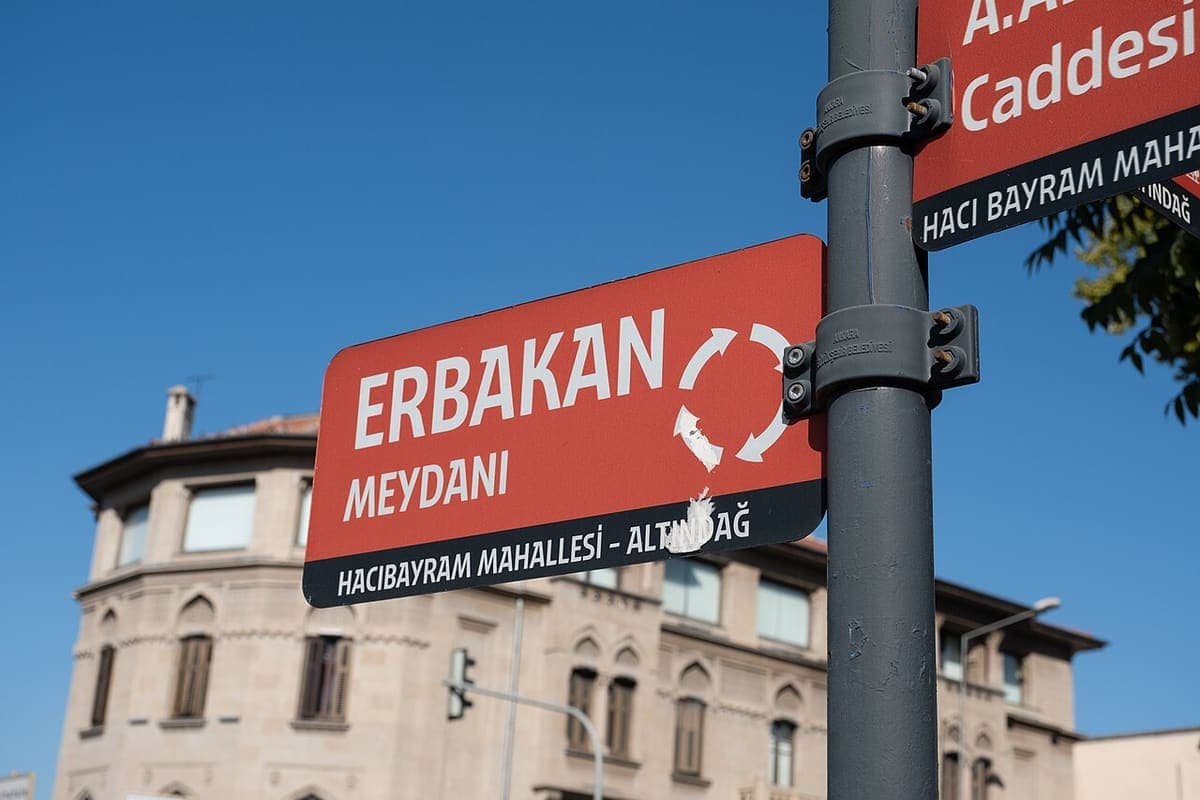
Evidano Transcription
A.
Caddesi
ANKARA
BÜYÜKŞEHİR BELEDİYESİ
HACI BAYRAM MAHA
INDAĞ
ERBAKAN
MEYDANI
ANKARA
BÜYÜKŞEHİR BELEDİYESİ
HACIBAYRAM MAHALLESİ - ALTINDAĞ
Generated by Evidano’s advanced model; not yet checked against a published edition.
Cumhuriyet Halk Partisi, 1938 · Source · Public domain
Evidano Transcription
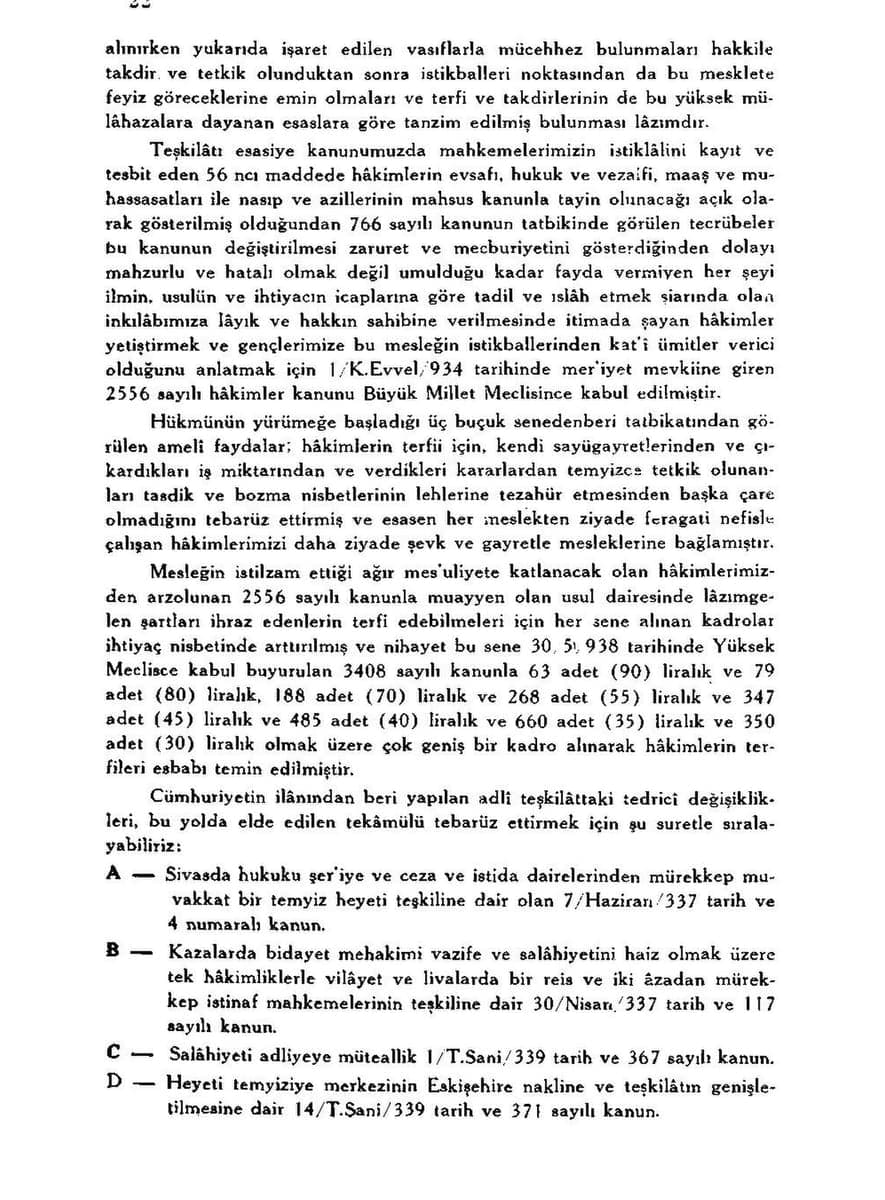
The whole of the printed page (numbered 22 in the book, the 33rd image in the scanned file), as proofread to validated quality on Turkish Wikisource. Three readings have been restored against the page image: two words the transcription page flags only implicitly as OCR noise, “fcragati” and “Nisarı”, become “feragati” and “Nisan”, and the date in item D, which the transcription gives as 4/T.Şani/339, is printed 14/T.Şani/339; the source’s own apostrophes, circumflexes and period spelling are otherwise kept as transcribed.
alınırken yukarıda işaret edilen vasıflarla mücehhez bulunmaları hakkile takdir ve tetkik olunduktan sonra istikballeri noktasından da bu mesklete feyiz göreceklerine emin olmaları ve terfi ve takdirlerinin de bu yüksek mülâhazalara dayanan esaslara göre tanzim edilmiş bulunması lâzımdır.
Teşkilâtı esasiye kanunumuzda mahkemelerimizin istiklâlini kayıt ve tesbit eden 56 ncı maddede hâkimlerin evsafı, hukuk ve vezaifi, maaş ve muhassasatları ile nasıp ve azillerinin mahsus kanunla tayin olunacağı açık olarak gösterilmiş olduğundan 766 sayılı kanunun tatbikinde görülen tecrübeler bu kanunun değiştirilmesi zaruret ve mecburiyetini gösterdiğinden dolayı mahzurlu ve hatalı olmak değil umulduğu kadar fayda vermiyen her şeyi ilmin, usulün ve ihtiyacın icaplarına göre tadil ve ıslâh etmek şiarında olan inkılâbımıza lâyık ve hakkın sahibine verilmesinde itimada şayan hâkimler yetiştirmek ve gençlerimize bu mesleğin istikballerinden kat’i ümitler verici olduğunu anlatmak için 1/K.Evvel/934 tarihinde mer’iyet mevkiine giren 2556 sayılı hâkimler kanunu Büyük Millet Meclisince kabul edilmiştir.
Hükmünün yürümeğe başladığı üç buçuk senedenberi tatbikatından görülen ameli faydalar; hâkimlerin terfii için, kendi sayügayretlerinden ve çıkardıkları iş miktarından ve verdikleri kararlardan temyizce tetkik olunanları tasdik ve bozma nisbetlerinin lehlerine tezahür etmesinden başka çare olmadığını tebarüz ettirmiş ve esasen her meslekten ziyade feragati nefisle çalışan hâkimlerimizi daha ziyade şevk ve gayretle mesleklerine bağlamıştır.
Mesleğin istilzam ettiği ağır mes’uliyete katlanacak olan hâkimlerimizden arzolunan 2556 sayılı kanunla muayyen olan usul dairesinde lâzımgelen şartları ihraz edenlerin terfi edebilmeleri için her sene alınan kadrolar ihtiyaç nisbetinde arttırılmış ve nihayet bu sene 30/5/938 tarihinde Yüksek Meclisce kabul buyurulan 3408 sayılı kanunla 63 adet (90) liralık ve 79 adet (80) liralık, 188 adet (70) liralık ve 268 adet (55) liralık ve 347 adet (45) liralık ve 485 adet (40) liralık ve 660 adet (35) liralık ve 350 adet (30) liralık olmak üzere çok geniş bir kadro alınarak hâkimlerin terfileri esbabı temin edilmiştir.
Cümhuriyetin ilânından beri yapılan adli teşkilâttaki tedrici değişiklikleri, bu yolda elde edilen tekâmülü tebarüz ettirmek için şu suretle sıralayabiliriz:
A — Sivasda hukuku şer’iye ve ceza ve istida dairelerinden mürekkep muvakkat bir temyiz heyeti teşkiline dair olan 7/Haziran/337 tarih ve 4 numaralı kanun.
B — Kazalarda bidayet mehakimi vazife ve salâhiyetini haiz olmak üzere tek hâkimliklerle vilâyet ve livalarda bir reis ve iki âzadan mürekkep istinaf mahkemelerinin teşkiline dair 30/Nisan/337 tarih ve 117 sayılı kanun.
C — Salâhiyeti adliyeye müteallik 1/T.Sani/339 tarih ve 367 sayılı kanun.
D — Heyeti temyiziye merkezinin Eskişehire nakline ve teşkilâtın genişletilmesine dair 14/T.Şani/339 tarih ve 371 sayılı kanun.
Source: Sayfa:C.H.P. 15. Yıl Kitabı (1938).pdf/33, Turkish Wikisource (page-quality level 3, validated) (Public domain).
What modern Turkish text looks like on the page
The Turkish Grand National Assembly adopted the new Latin alphabet on 1 November 1928, and within weeks the Millet Mektepleri, or Nation’s Schools, campaign was teaching the new letters to adults across the country in evening classes held in ordinary schoolrooms. Newspapers switched over almost as fast as the law itself, so a Turkish paper from December 1928 already looks like a modern one rather than like the Ottoman press that had run every day before it.
The alphabet the reform settled on has twenty-nine letters and no native q, w or x. Four of those letters are easy to confuse if you are not expecting them: İ and i are the dotted capital and lower-case pair, while I and ı are a completely separate dotless pair, so capitalising ı does not produce an I with no relation to dotting rules from English. Ç, ğ and ş are likewise independent letters rather than accented forms of c, g and s: ç and ş mark distinct consonant sounds, and ğ, the yumuşak ge or soft g, is silent or lengthens the vowel before it and never opens a word.
Everyday modern documents build their own conventions on top of that alphabet. Turkish laws and regulations are organised into numbered maddeler, or articles, and a clause that has been revised since first publication carries a parenthetical note citing the Official Gazette date and number where the amendment appeared. Newspapers, forms and street signs use the same standard orthography, though older newsprint adds the usual problems of period print: dense multi-column layouts, decorative masthead type, and the fading and foxing of seventy- or eighty-year-old paper.
Why ordinary OCR struggles here
Four letters where English keeps two
İ/i and I/ı are two independent letter pairs, not one pair with an optional dot. Software that case-folds Turkish text using English rules turns İstanbul into istanbul with the dot in the wrong place, or reads ısı, meaning temperature, as if it began with the letter i.
Ğ, ş and ç are not accented letters
A system built to strip diacritics the way it might for French or Spanish deletes information Turkish needs: ş and s, ç and c, ğ and g are different letters standing for different sounds, and collapsing them changes both the spelling and the meaning of a word.
An article-and-amendment apparatus in legal text
Turkish regulations number their articles as Madde 1, Madde 2 and so on, and a revised clause carries a parenthetical citation to the Official Gazette date and issue where the change was published. That apparatus has to stay attached to the exact clause it modifies rather than drifting into the surrounding prose.
Old newsprint, not old letterforms
A 1920s or 1930s Turkish newspaper is already in the modern alphabet, so none of the letterform confusion of Ottoman material applies, but tight multi-column layouts, decorative headline type and decades of fading and foxing still make period print harder to read than a current page.
Who works with this material
Legal and regulatory researchers
Turkish law is organised into numbered Madde articles with amendment histories cited inline, and getting those citations attached to the right clause is essential for legal research and compliance work.
Press historians of the early Republic
Newspapers from the months and years after 1928 document how quickly the new alphabet took hold and are a primary source for the Millet Mektepleri literacy campaign itself, provided the period print can be read reliably.
Translators and localisation teams
Correctly distinguishing İ, i, I and ı, and preserving ğ, ş and ç rather than stripping them, is basic to producing usable Turkish text from any source, since a dropped dot or a flattened letter silently changes a word.
Municipal and government-records staff
Street signs, permits and public notices need consistent transcription for address databases and public information systems, including the place names where ğ and ş are most common.
Getting the best transcription
Say which pair of i’s you need
Tell the model that İ/i and I/ı are four distinct letters and ask for casing to follow Turkish rules, not the English convention of folding I to i.
Ask for ğ, ş and ç to be kept as their own letters
Specify that these should never be stripped down to g, s and c, since doing so changes both the spelling and the sound of the word.
Preserve the article-and-amendment apparatus
On a law or regulation, ask for each Madde number and any parenthetical Official Gazette citation to stay attached to the exact clause it modifies, rather than drifting into the surrounding text.
Test on the densest or oldest sample first
Run a multi-column 1920s or 1930s newspaper page, or a heavily amended regulation, before the rest of a batch. If those come through cleanly, plainer modern material needs only a light check.
Frequently asked questions
- Does it distinguish dotted İ/i from dotless I/ı?
- Yes. These are treated as two separate letter pairs, and casing follows Turkish conventions rather than the English rule that folds I to i.
- Are ğ, ş and ç treated as separate letters?
- Yes. They are transcribed as the distinct letters they are, never stripped down to g, s or c the way accents might be removed in another language.
- Can it read pre-1928 Ottoman Turkish material?
- Ottoman Turkish, written in Arabic script before the 1928 reform, is a different writing system with its own page; this page covers modern Republican Turkish in the Latin alphabet.
- Can it read a legal or regulatory document with amendment citations?
- Yes. Numbered Madde articles and their parenthetical Official Gazette citations are transcribed together, so a reader can see exactly which clause a cited amendment changed.
- Can it read an old newspaper photograph or microfilm, like a 1920s issue?
- Yes. Faded, foxed or tightly columned period print is read on its own terms; because it is already in the modern alphabet, the main obstacles are print quality rather than letterforms.
Related scripts and pages
Transcribe your Turkish documents
Upload a document, a printed page or a sign, and check the modern Turkish transcription line by line before you export it.