In a mathematics classroom, the hardest question about ChatGPT may not be whether students use it. It is what happens after an answer appears on the screen. Does the response become a shortcut, a prompt for deeper thinking, or a first step toward a conversation with a teacher or classmate?
About Joko Soebagyo
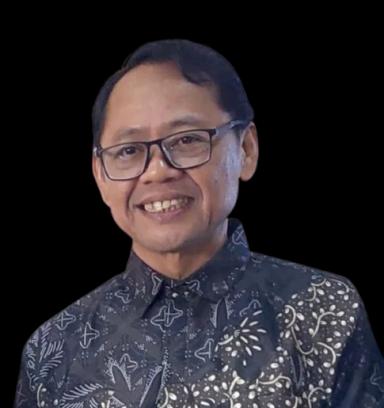
Dr. Joko Soebagyo, M.Pd., is a lecturer in mathematics education at Universitas Muhammadiyah Prof. Dr. HAMKA in Indonesia. His academic work includes mathematical problem solving, conceptual understanding, ethnomathematics, and the use of technology in mathematics learning. His publication record includes studies of student problem solving, learning models, ethnomathematics, and technology-supported mathematics education. In this spotlighted article, he and Ahmad Mumtaz Anwari examine how vocational high school students use ChatGPT during mathematics learning and how teacher guidance can shape that use.
About the authors
- Ahmad Mumtaz Anwari (Mathematics Education, Universitas Muhammadiyah Prof. Dr. HAMKA, Jakarta, Indonesia)
- Joko Soebagyo (Mathematics Education, Universitas Muhammadiyah Prof. Dr. HAMKA, Jakarta, Indonesia)
Read the article
Read the full research article, “Pemanfaatan ChatGPT sebagai Asisten Belajar Matematika: Tinjauan Kualitatif terhadap Pengalaman Siswa,” published in Jurnal Pendidikan Matematika Undiksha in 2025.
Full citation
Anwari, A. M., & Soebagyo, J. (2025). Pemanfaatan ChatGPT sebagai Asisten Belajar Matematika: Tinjauan Kualitatif terhadap Pengalaman Siswa. Jurnal Pendidikan Matematika Undiksha, 16(2), 92–96. doi.org/10.23887/jjpm.v16i2.101099
We are grateful to the authors for their contribution to research on AI-supported mathematics learning and for referencing Evidano, then known as AILYZE, as part of their research process.
Related published research
Other published studies and evaluations that used Evidano on comparable material.
- Published research2026
Volda and Melbourne researchers used AI interview analysis to triangulate manual coding
Two researchers coded 11 interviews by hand with over 90% agreement, then ran the anonymised transcripts through Evidano and compared the results for triangulation and validation.
209 survey participants, a 97% response rate
Educational Psychology 46(1): 27–51 (Routledge / Taylor & Francis), open access
- Published research2026

Sharjah Education Academy: AI thematic analysis of 9 teacher interviews, human-verified
Published in Frontiers in Education (2026): encrypted data, human-verified themes, and a transparent AI coding workflow across English and Arabic interviews.
9 Teachers interviewed
Frontiers in Education, 11:1690181 (Frontiers Media, 2026), open access
- Published research2026

University of Glasgow used AI triangulation on a 16-interview thematic analysis
Inside a Springer-published University of Glasgow study that used Evidano to generate an independent thematic overview and triangulate its six themes.
16 semi-structured interviews, about 60 minutes each
Agile Processes in Software Engineering and Extreme Programming, XP 2026, Springer LNBIP 578, pp. 3–19, open access