
Picture an athletic training student on a clinical rotation, standing beside physicians and other healthcare professionals as a patient case unfolds. The student may know the science and the clinical skills, yet collaborative care asks for something more: knowing when to speak, how to explain the athletic trainer’s role, how to listen across professional boundaries, and how to adapt when responsibility is shared.
About George Raul Torres III
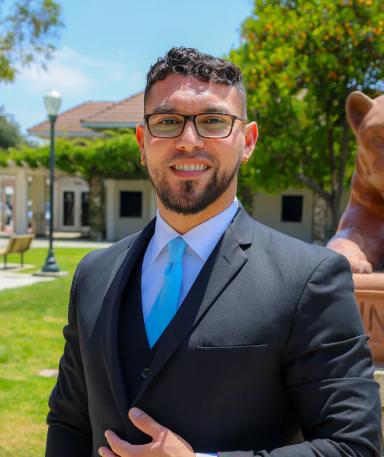
George Raul Torres III is a Certified Athletic Trainer and a 2026 Doctor of Education graduate of the LaFetra College of Education at the University of La Verne. He previously completed a Master of Science in Athletic Training at the University of La Verne. His doctoral research examines how Master of Science in Athletic Training students experience interprofessional education across classroom, simulation and clinical settings, and how those experiences shape their readiness for collaborative practice. Through this work, he examines the practical conditions that can strengthen communication, professional role clarity and meaningful collaboration in athletic training education.
About the authors
- George Raul Torres III (LaFetra College of Education, University of La Verne, United States)
Read the article
Read the full dissertation, “Barriers and Facilitators to Interprofessional Education: Exploring Athletic Training Students’ Experiences and Readiness for Collaborative Practice,” published in the University of La Verne ResearchWorks repository in 2026.
Full citation
Torres, G. R., III. (2026). Barriers and facilitators to interprofessional education: Exploring athletic training students’ experiences and readiness for collaborative practice [Doctoral dissertation, University of La Verne]. University of La Verne ResearchWorks. researchworks.laverne.edu/esploro/outputs/doctoral/Barriers-and-Facilitators-to-Interprofessional-Education/991004386102606311
We are grateful to George Raul Torres III for his contribution to understanding interprofessional education in athletic training, for the practical questions his research raises for educators, clinicians and future collaborative practice, and for referencing Evidano, then known as AILYZE, in his dissertation.
Related published research
Other published studies and evaluations that used Evidano on comparable material.
- Published research2026

UP Manila medical education study: AI thematic analysis produced an 11-theme codebook
How Evidano produced a complementary codebook and 11 granular themes to strengthen the dependability of a 2026 reflexive thematic analysis.
11 granular themes from the Evidano codebook
Annals of Medicine and Medical Sciences (AMMS) Vol. 05, 2026, pp. 161–166, open access
- Published research2026
Casos de estudio sobre el proceso OCDE – Costa Rica: una guía académica para docentes y estudiantes de Administración Pública
For a book chapter meta-evaluating Costa Rica’s National Evaluation Agenda, Dr. Mora-Martínez used Evidano to apply a single evaluation framework across ten reports spanning employment, education, health, culture, and the environment, acting as evaluator while Evidano analyzed the documents.
Esteban O. Mora-Martínez · University of Costa Rica
- Published research2025

Arizona State University’s AI thematic analysis of therapy-dog handler interviews
Disclosed in the methods, validated by the researcher, and rerun to confirm quote alignment, in a peer-reviewed Education Sciences study (2025).
7 handler interviews analyzed, 45 to 60 minutes each
Education Sciences (MDPI), 15(7), 929, open access