Site Logo
Doctoral dissertation published by the University of La VerneResearch SpotlightUniversity of La Verne

Research Spotlight: What Workplace Belonging Looks Like Through Neurodivergent Eyes

Evidano8 min read
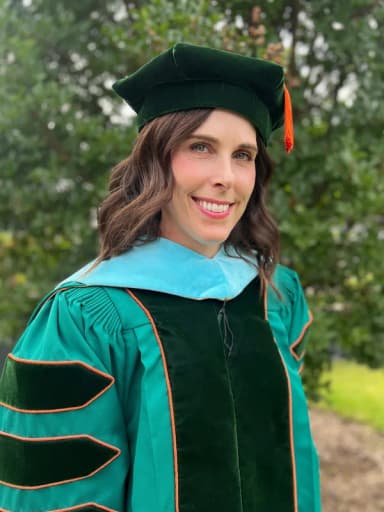
Allison Leanos, adjunct professor in the LaFetra College of Education at the University of La Verne

Imagine walking into a meeting with no agenda, fluorescent light and background noise all around you, and questions arriving before you have had time to process what is being asked. You may be highly capable and deeply committed to your work, yet still spend much of your energy filtering distractions, reading social expectations, and deciding whether it is safe to explain why you work differently.

That gap between being present and genuinely belonging sits at the center of Allison Michelle Leanos’s 2026 doctoral dissertation at the University of La Verne, “Through Their Eyes: Neurodivergent Perspectives on Workplace Inclusion and Belonging Initiatives.” Rather than asking employers what inclusion should look like, Leanos asked neurodivergent adults how workplace inclusion and belonging initiatives actually feel from the inside.

We spoke with Allison Michelle Leanos of the University of La Verne during her research process, and for this spotlight we invited her to share more about workplace neuroinclusion, belonging, and the role of leadership in turning stated values into everyday practice.

About the dissertation

Research question

The study asks how neurodivergent adults interpret and navigate workplace inclusion and belonging initiatives, and how inclusive those initiatives feel from their perspective. It also examines how participants understand inclusion and belonging, what they experience during workplace initiatives, and when they feel represented or excluded.

Key finding

Across ten interviews, Leanos identified four themes and nine major findings that point toward a recurring distinction between symbolic inclusion and lived belonging. Participants described authentic neuroinclusion as depending on psychological safety, proactive support, peer recognition, meaningful representation, and sustained leadership commitment.

Why this research matters

Workplace inclusion is often assessed through policies, training attendance, public messaging, or participation numbers. Leanos’s study shifts the unit of attention to lived experience, asking whether the people whom inclusion efforts are meant to serve actually feel seen, safe, supported, and able to contribute without excessive self-advocacy.

That perspective matters for organizational research because it exposes a gap between formal access and relational belonging. A program can exist on paper while workplace routines, meeting structures, sensory environments, communication norms, and leadership behavior continue to reward neurotypical ways of working.

The study also raises a practical question about what organizations should change first. Allison reflected on the broader significance of the research: “The most important implication of this research for employers and leaders is to recognize and appreciate that neurodivergent employees exist. Explore ways to engage the neurodivergent employee community and pull up a seat to hear their perspectives, ideas, and feedback. Invite them to be part of the creation of policies and programs by which they’re most impacted. These inclusive leadership behaviors and actions are meaningful and are foundational to creating a true sense of belonging.”

Key findings from the dissertation

The dissertation presents nine major findings. Three broader contributions stand out when those findings are read together.

  • Symbolic inclusion can coexist with systemic exclusion. Seventy percent of participants described inclusion and belonging efforts as lacking sufficient depth or systemic application, while eighty percent reported that neurodiversity was regularly overlooked or omitted from program delivery. The evidence includes accounts of visibility campaigns and awareness activities that were not matched by everyday support, dedicated belonging spaces, or meaningful neurodivergent representation.
  • Psychological safety changes whether people can participate authentically. Sixty percent of participants connected emotional and psychological safety with unconditional acceptance, while forty percent discussed hiding a diagnosis or masking and the resulting emotional drain. Participants also described the burden of repeatedly explaining processing needs, sensory needs, or working preferences in environments that did not anticipate those differences.
  • Leadership and co-created support systems can move inclusion toward belonging. Seventy percent of participants viewed leaders as responsible for setting organizational tone, and participants repeatedly called for practical involvement in the systems intended to support them. Suggested approaches included anonymous feedback, neurodivergent-led employee resource groups, flexible work practices, clearer meeting structures, and direct participation in decisions about neuroinclusion.

The findings combine critique with a clear appetite for constructive change. Allison reflected on what stood out most strongly across the interviews: “One participant said that organizational DEI or inclusion and belonging initiatives felt like ‘being invited to the party but not asked to dance.’ This illustrates how organizations prioritize recognizing some groups and not others, yet expect non-recognized groups to attend and engage with those trainings and events. It underscores an important point: organizations have more work to do to authentically foster inclusion and belonging for all employees.”

Methods and research approach

Leanos used a descriptive phenomenological design grounded in Clark Moustakas’s approach. The study included ten neurodivergent adults in the United States with current or previous experience of workplace inclusion and belonging initiatives, recruited through purposive criterion and snowball sampling. Data were collected between November 17 and December 22, 2025 through private Zoom interviews lasting 45 to 60 minutes, using twelve open-ended questions with follow-up probes. Interviews were recorded and transcribed with Otter.ai, participants received interview summaries for member checking, and the researcher used memoing and reflexive practices throughout the process.

Analysis followed the Moustakas sequence of epoché, data collection, phenomenological reduction, imaginative variation, and synthesis, with thematic analysis focused on the meaning of participants’ experiences rather than simple word frequency. Evidano, then known as AILYZE, assisted with initial coding and theme concepts, after which Leanos cross-referenced the codebook against the transcripts, revised meaning units and codes where necessary, created multiple reports, and manually interpreted and synthesized the findings. Two University of La Verne research experts also reviewed the analysis method and results. The findings chapter reports descriptive participant percentages for several patterns, but the study is fundamentally qualitative and interpretive.

How Evidano supported the research process

Evidano appears in the dissertation as part of the qualitative analysis workflow that followed interview transcription and member checking. Leanos used the platform to apply the Moustakas method to the interview transcripts and to support the development of codes into themes.

The dissertation states that the platform “generated the initial codes and theme concepts.” Leanos then examined the codebook against the source transcripts, manually revised items that were out of context or not relevant to the phenomenon, reviewed and updated meaning units and codes, and produced multiple reports to strengthen accuracy. The dissertation is explicit that interpretation and synthesis remained the researcher’s responsibility, so AI supported the workflow without replacing scholarly judgment.

This balance between computational assistance and researcher control is central to responsible AI-assisted qualitative work. Allison also reflected on the role of AI in the process: “Nowadays, it’s difficult to avoid AI — it’s everywhere. However, AI is not a properly trained researcher, so it’s important to use it responsibly. Using Evidano helped generate initial codes and theme concepts based on the Moustakas method, which I found helpful and time-effective. I then dissected and interpreted the data manually, which enhances the validity of the results.”

Broader implications

For organizational leaders and human resources teams, the study suggests that neuroinclusion should be treated as an operating practice rather than a periodic initiative. Clear meeting structures, flexible working arrangements, sensory-aware environments, proactive accommodations, leadership accountability, and neurodivergent participation in decision making all emerge as practical ways to reduce the burden placed on individuals to repeatedly ask for support.

For researchers, the dissertation demonstrates the value of centering lived experience when studying organizational inclusion. It also opens several questions for future work, including comparisons across sectors and neurotypes, the structural barriers that limit access to inclusion initiatives, and the intersections of neurodiversity with cultural identity and gender.

Allison’s message to leaders and researchers is: “To successfully foster neuroinclusion, it starts with psychological safety. Psychologically safe workplaces are significant for neurodivergent employees because they show that organizations value differences and authenticity — both factors that allow them to feel belonging, understood, and safe to do their best work.”

Taken together, “Through Their Eyes” argues that belonging is not created by invitation alone. It is built when organizational systems, everyday practices, peer relationships, and leadership behavior make it possible for neurodivergent employees to contribute without having to hide, continually explain, or adapt themselves to fit a single model of how work should be done.

About Allison Leanos

Allison Leanos, adjunct professor in the LaFetra College of Education at the University of La Verne

Dr. Allison Leanos is a neurodiversity researcher, educator, and advocate focused on advancing more inclusive and equitable workplaces for neurodivergent people. She earned her Doctor of Education in Organizational Leadership from the University of La Verne, where her dissertation, “Through Their Eyes: Neurodivergent Perspectives on Workplace Inclusion and Belonging Initiatives,” explored how neurodivergent adults experience and interpret organizational efforts to foster inclusion and belonging.

Allison is an adjunct professor in the University of La Verne’s doctoral program, where she teaches Organizational Development and Change, and she hosts the Neurodivergent Perspectives Podcast, which amplifies the lived experiences of neurodivergent adults in the workplace. Drawing on nearly two decades of experience in communications, organizational culture, and storytelling, she is passionate about translating research into practical strategies that help leaders create psychologically safe, neuroinclusive workplaces where people can authentically belong and thrive.

About the authors

  • Allison Michelle Leanos (LaFetra College of Education, University of La Verne, USA)

Read the article

Read the full dissertation, Through Their Eyes: Neurodivergent Perspectives on Workplace Inclusion and Belonging Initiatives,” published in the University of La Verne research repository in 2026.

View the publication

We are grateful to Allison Michelle Leanos for her contribution to research on neuroinclusion and workplace belonging, and for referencing AILYZE, now Evidano, as part of her research process.

Other published studies and evaluations that used Evidano on comparable material.

Explore more evidence

The full case-study library, the wording researchers published when citing Evidano, and how its output compares with manual coding.

  • Resource

    Case studies in published research

    Peer-reviewed studies, UN evaluations and university research where teams used Evidano for AI-assisted qualitative analysis — with the methods, the numbers and the published source for each.

  • Resource

    Methodology guides and research writing

    Practical guides to qualitative methods — thematic analysis, grounded theory, evidence synthesis and more — alongside the wider Evidano article library.

  • Resource

    Human vs AI: validated accuracy benchmarks

    Three head-to-head comparisons against expert human analysis — 371 interview transcripts with Arizona State and Penn State, 298 evaluation reports for a UN evaluation group, and UNICEF’s manual-coding review.