
Arabic · c. 1600–1950
From a copyist’s naskh to a journalist’s crossed-out draft
Between 1600 and 1950 the same language was written in two very different ways: a careful naskh for books, and a fast ruqʿah or half-ruqʿah for everything else, in which dots merge, vowels vanish and a whole word can shrink to a zigzag. The presses added a third layer, with numerals, running heads and two languages sharing a page.
Sample pages
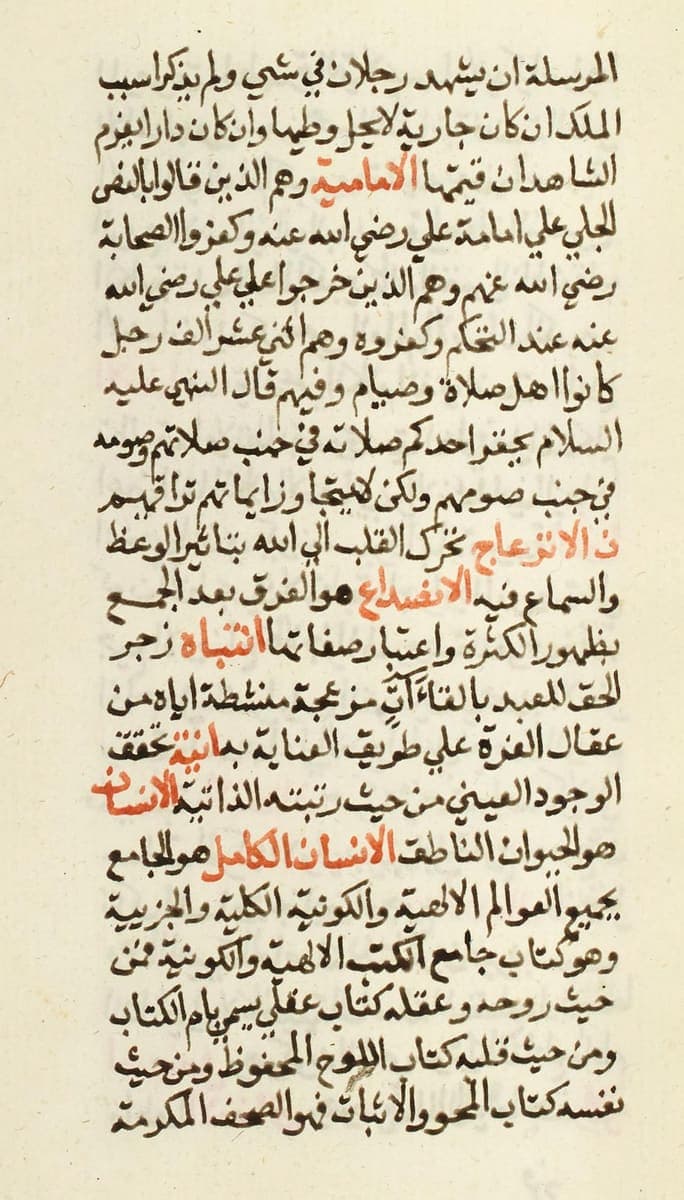
Bibliothèque universitaire des langues et civilisations (BULAC), Paris, MS.ARA.67, 1770 · Source · Public domain
Evidano Transcription
The whole text block, from the entry al-mursala to al-insān al-kāmil, proofread on Arabic Wikisource against this same scan. Words the manuscript writes in red are the headwords, which stand at the start of each line below; the isolated nūn is the section letter, written in red and centred in the transcription’s source.
المرسلة أن يشهد رجلان في شيء ولم يذكرا سبب الملك إن كان جارية لا يحل وطؤها وإن كان دارا يغرم الشاهدان قيمتها
الإمامية وهم الذين قالوا بالنص الجلي على إمامة علي رضي الله عنه وكفروا الصحابة رضي الله عنهم وهم الذين خرجوا على علي رضي الله عنه عند التحكم وكفروه وهم اثنا عشر الف رجل كانوا أهل صلاة وصيام وفيهم قال النبي عليه السلام يحقر أحدكم صلاته في جنب صلاتهم وصومه في جنب صومهم ولكن لا يتجاوز إسمانهم تراقيهم
ن
الانزعاج تحرك القلب إلى الله بتأثير الوعظ والسماع فيه
الانصداع هو الفرق بعد الجمع بظهور الكثرة واعتبار صفاتها
انتباه زجر الحق للعبد بإلقاءَات مزعجة منشطة إياه من عقال الغرة على طريق العناية به
آنية تحقق الوجود العيني من حيث رتبته الذاتية
الإنسان هو الحيوان الناطق
الإنسان الكامل هو الجامع بجميع العوالم الإلهية والكونية الكلية والجزئية وهو كتاب جامع الكتب الإلهية والكونية فمن حيث روحه وعقله كتاب عقلي يسمى بأم الكتاب ومن حيث قلبه كتاب اللوح المحفوظ ومن حيث نفسه كتاب المحو والإثبات فهو الصحف المكرمة
Source: صفحة:كتاب التعريفات (IA MS.ARA.67).pdf/33, Arabic Wikisource (Public domain).
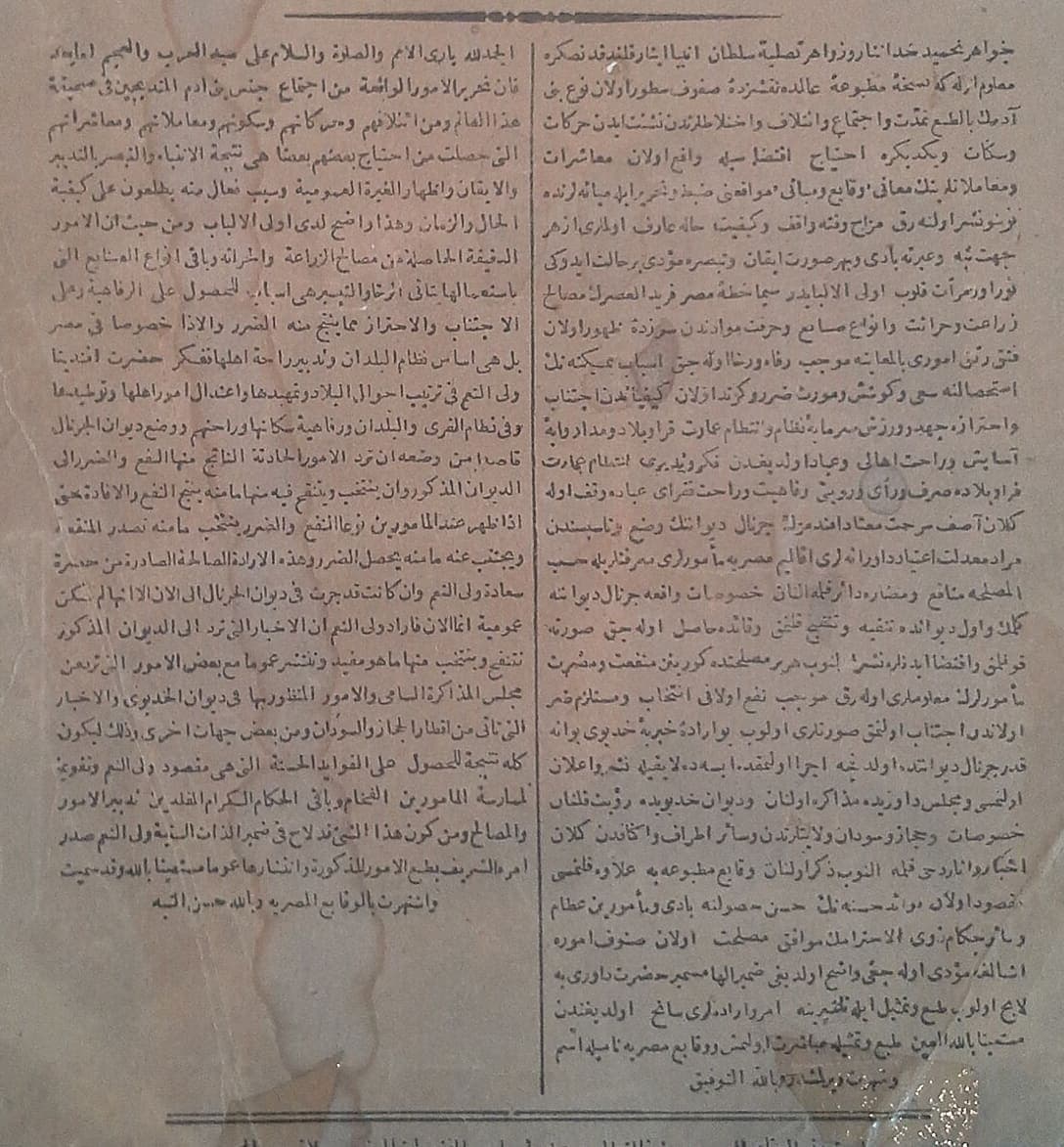
Bibliotheca Alexandrina, 1828 · Source · CC BY-SA 4.0 · Rania al-Bahara
Evidano Transcription
جواهر تحميد خدا نثار وزواهر تصلية سلطان انبيا ايثار قلندقدنصكره
معلوم اوله كه نسخه مطبوعه عالمده نقشمزده صفوف سطورا ولان نوع بنى
آدمك بالطبع تمدن واجتماع وائتلاف واختلاطلرندن نشئت ايدن حركات
وسكنات وبكديكره احتياج افضاسيله واقع اولان معاشرات
ومعاملاتلرينك معانى وقايع ومبانى مواقعنى ضبط وتحرير ايله ميانه لرنده
نوشت ونشر اولنه رق مزاج وقته واقف وكيفيت حاله عارف اولملرى ازهر
جهت تنبه وعبرته بادى وبهر صورت ايقان وتبصره مؤدى برحالت ايدوكى
نوراور مرآت قلوب اولى الالبابدر سيما خطه مصر فريد العصرك مصالح
زراعت وحرائث وانواع صنايع وحرفت موادندن سوزده ظهور اولان
فتق ورتق امورى بالمعاينه موجب رفاه ورخا اوله جق اسباب تمكينه نك
استحصالنه سعى وكوشش ومورث ضرر وكزند اولان كيفياتدن اجتناب
واحترازه جهد وورزش سرمايه نظام وانتظام عمارت قرا وبلاد ومدار پايه
آسايش وراحت اهالى وعبادا ولديغندن فكر وتدبيرى انتظام عمارت
قرا وبلاده صرف ورأى ورويتى رفاهيت وراحت قراى عباده وقف اوله
كلان آصف مرحمت معتاد افندمزك جرنال ديواننك وضع وتاسيسندن
مراد معدلت اعتياد داورانه لرى اقاليم مصريه مأمورلرى معرفتلريله حسب
المصلحه منافع ومضاره دائر قلمه[?] النان خصومات واقعه جرنال ديواننه
كلمك واول ديوانده تنقيه وتنقيح قلنمق وفائده حاصل اوله جق صورته
قونلمق واقتضا ايدنلره نشر ايلنوب هر بر مصلحتده كورينن منفعت ومضرت
مأمورلرك معلوملرى اوله رق موجب نفع اولانى انتخاب ومستلزم ضرر
اولاندن اجتناب اولنمق صورتلرى اولوب بواراده خيريه خديوى بوانه
قدر جرنال ديوانده اولديغجه اجرا اولنمقده ايسه ده لايقيله نشر واعلان
اولنمسی ومجلس داوريده مذاكره اولنان وديوان خديويده رؤيت قلنان
خصوصات وحجاز وسودان ولايتلرندن وسائر اطراف واكنافدن كلان
اخبار و اثار دخی قلمه النوب ذكر اولنان وقايع مطبوعه يه علاوه قلنمسی
مقصود اولان فوائد حسنه نك حسن حصولنه بادى ومأمورين عظام
وسائر حكام ذوى الاحترامك موافق مصلحت اولان صنوف اموره
اشتغالنه مؤدى اوله جغى واضح اولديغى ضمير الهام سمير حضرت داورى يه
لائح اولوب طبع وتمثيل ايله تلقيننه امر واراده لرى سانح اولديغندن
مستعينا بالله المعين طبع وتمثيله مباشرت اولنمش ووقايع مصريه ناميله اسم
وشهرت ويرلمشدر وبالله التوفيق
الحمد لله بارى الامم والصلوة والسلام على سيد العرب والعجم اما بعد
فان تحرير الامور الواقعة من اجتماع جنس بنى ادم المندمجين فى صحيفة
هذا العالم ومن ائتلافهم وحركاتهم وسكونهم ومعاملاتهم ومعاشراتهم
التى حصلت من احتياج بعضهم بعضا هى نتيجة الانتباه والتبصر والتدبير
والايقان واظهار الغيرة العمومية وسبب فعال منه يطلعون على كيفية
الحال والزمان وهذا واضح لدى اولى الالباب ومن حيث ان الامور
الدقيقة الحاصلة من مصالح الزراعة والحراثه وباقى انواع الصنايع التى
باستعمالها تاتى الرخا والتيسير هى اسباب للحصول على الرفاهية وعلى
الاجتناب والاحتراز مما ينتج منه الضرر والاذا خصوصا فى مصر
بل هى اساس نظام البلدان وتدبير راحة اهلها فتفكر حضرت افندينا
ولى النعم فى ترتيب احوال البلاد وتمهيدها واعتدال امور اهلها وتوطيدها
وفى نظام القرى والبلدان ورفاهية سكانها وراحتهم ووضع ديوان الجرنال
قاصدا من وضعه ان ترد الامور الحادثة الناتج منها النفع والضرر الى
الديوان المذكور وان ينتخب وينقح فيه منها ما منه ينتج النفع والافادة بحق
اذا ظهر عند المامورين نوعا النفع والضرر ينتخب ما منه تصدر المنفعة
ويجتنب عنه ما منه يحصل الضرر وهذه الارادة الصالحة الصادرة من حضرة
سعادة ولى النعم وان كانت قد جرت فى ديوان الجرنال الى الان الا انها لم تكن
عمومية انما الان فاراد ولى النعم ان الاخبار التى ترد الى الديوان المذكور
تتنقح وينتخب منها ما هو مفيد وتنتشر عموما مع بعض الامور التى ترى من
مجلس المذاكرة السامى والامور المنظور بها فى ديوان الخديوى والاخبار
التى تاتى من اقطار الحجاز والسودان ومن بعض جهات اخرى وذلك ليكون
كله نتيجة للحصول على الفوايد الحسنة التى هى مقصود ولى النعم وتقوية
لممارسة المامورين الفخام وباقى الحكام الكرام المقلدين تدبير الامور
والمصالح ومن كون هذا الشئ قد لاح فى ضمير الذات البهية ولى النعم صدر
امره الشريف بطبع الامور المذكورة وانتشارها عموما مستعينا بالله وقد سميت
واشتهرت بالوقايع المصريه وبالله حسن التنبه
[cut off]
Generated by Evidano’s advanced model; not yet checked against a published edition.
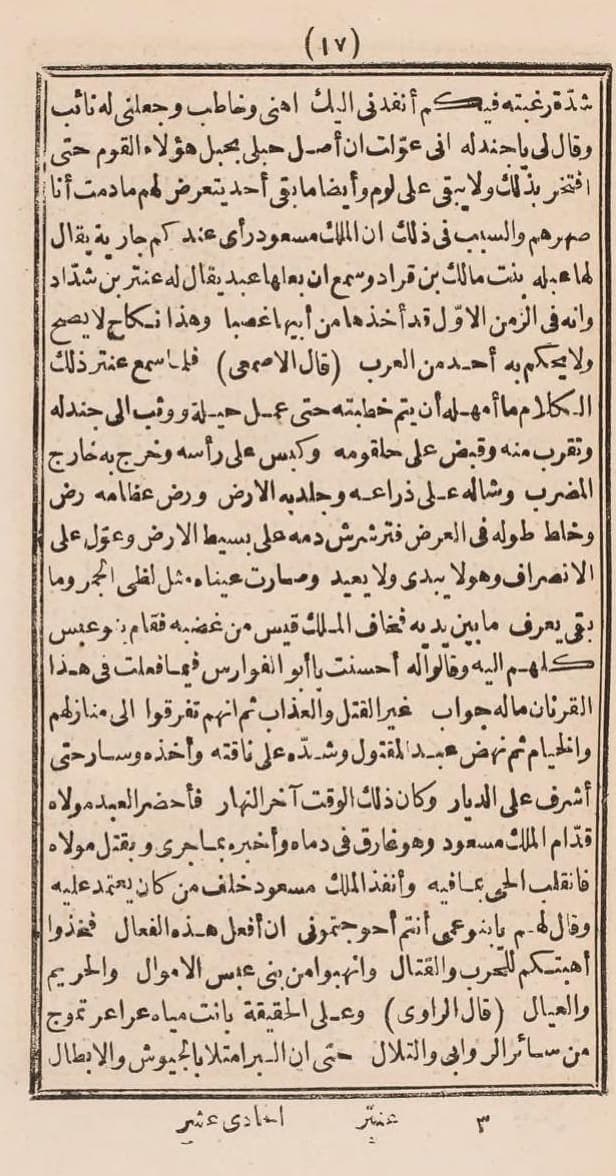
Bibliothèque universitaire des langues et civilisations (BULAC), Paris, RES MON 8 185, 1869 · Source · Public domain
Evidano Transcription
( ١٧ )
شدة رغبته فيكم أنفذني اليك اهنى وخاطب وجعلني له نائب
وقال لي يا جندله اني عوّلت ان أصل حبلي بحبل هؤلاء القوم حتى
أفتخر بذلك ولا يبقى علي لوم وأيضا ما بقى أحد يتعرض لهم ما دمت أنا
صهرهم والسبب في ذلك ان الملك مسعود رأى عندكم جارية يقال
لها عبله بنت مالك بن قراد وسمع ان بعلها عبد يقال له عنتر بن شداد
وانه في الزمن الاول قد أخذها من أبيها غصبا وهذا نكاح لا يصح
ولا يحكم به أحد من العرب (قال الاصمعي) فلما سمع عنتر ذلك
الكلام ما أمهله أن يتم خطبته حتى عمل حيلة ووثب الى جندله
وتقرب منه وقبض على حلقومه وكبس على رأسه وخرج به خارج
المضرب وشاله على ذراعه وجلد به الارض ورض عظامه رض
وخاط طوله في العرض فترشرش دمه على بسيط الارض وعوّل على
الانصراف وهو لا يبدي ولا يعيد وصارت عيناه مثل لظى الجمر وما
بقى يعرف ما بين يديه فخاف الملك قيس من غضبه فقام بنو عبس
كلهم اليه وقالوا له أحسنت يا أبو الفوارس فيما فعلت في هذا
القرنان ماله جواب غير القتل والعذاب ثم انهم تفرقوا الى منازلهم
والخيام ثم نهض عبد المقتول وشدّه على ناقته وأخذه وسار حتى
أشرف على الديار وكان ذلك الوقت آخر النهار فأحضر العبد مولاه
قدّام الملك مسعود وهو غارق في دماه وأخبره بما جرى وبقتل مولاه
فانقلب الحي بما فيه وأنفذ الملك مسعود خلف من كان يعتمد عليه
وقال لهم يا بني عمي أنتم أحوجتموني ان أفعل هذه الفعال فخذوا
أهبت
Generated by Evidano’s advanced model; not yet checked against a published edition.
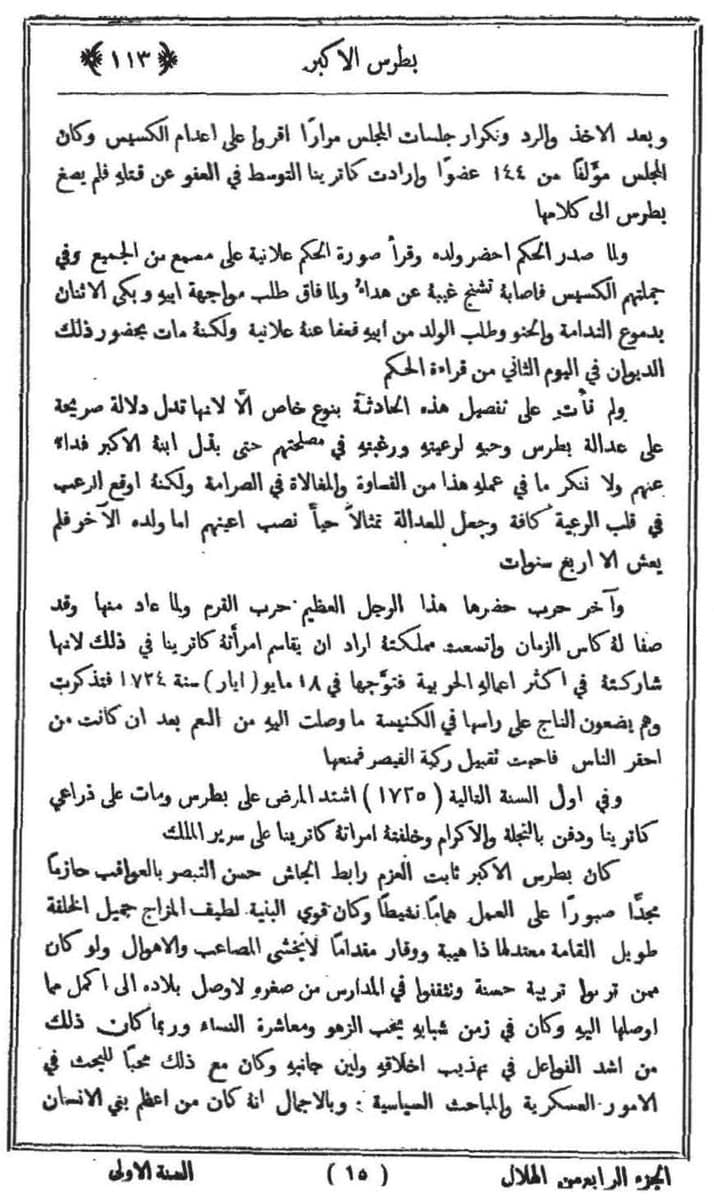
Evidano Transcription
بطرس الاكبر * ١١٣ *
وبعد الاخذ والرد وتكرار جلسات المجلس مراراً اقروا على اعدام الكسيس وكان
المجلس مؤلفاً من ١٤٤ عضواً وارادت كاترينا التوسط في العفو عن قتله فلم يصغ
بطرس الى كلامها
ولما صدر الحكم احضر ولده وقرأ صورة الحكم علانية على مسمع من الجميع وفي
جملتهم الكسيس فاصابه تشنج غيبه عن هداه ولما فاق طلب مواجهة ابيه وبكى الاثنان
بدموع الندامة والحنو وطلب الولد من ابيه فعفا عنه علانية ولكنه مات بحضور ذلك
الديوان في اليوم الثاني من قراءة الحكم
ولم نأت على تفصيل هذه الحادثة بنوع خاص الا لانها تدل دلالة صريحة
على عدالة بطرس وحبه لرعيته ورغبته في مصلحتهم حتى بذل ابنه الاكبر فداء
عنهم ولا ننكر ما في عمله هذا من القساوة والمغالاة في الصرامة ولكنه اوقع الرعب
في قلب الرعية كافة وجعل للعدالة تمثالاً حياً نصب اعينهم اما ولده الآخر فلم
يعش الا اربع سنوات
وآخر حرب حضرها هذا الرجل العظيم حرب القرم ولما عاد منها وقد
صفا له كاس الزمان واتسعت مملكته اراد ان يقاسم امرأته كاترينا في ذلك لانها
شاركته في اكثر اعماله الحربية فتوجها في ١٨ مايو ( ايار ) سنة ١٧٢٤ فتذكرت
وهم يضعون التاج على راسها في الكنيسة ما وصلت اليه من العز بعد ان كانت من
احقر الناس فاحنت لتقبيل ركبة القيصر فمنعها
وفي اول السنة التالية ( ١٧٢٥ ) اشتد المرض على بطرس ومات على ذراعي
كاترينا ودفن بالتجلة والاكرام وخلفته امرأته كاترينا على سرير الملك
كان بطرس الاكبر ثابت العزم رابط الجاش حسن التبصر بالعواقب حازماً
مجدّاً صبوراً على العمل هماماً نشيطاً وكان قوي البنية لطيف المزاج جميل الخلقة
طويل القامة معتدلها ذا هيبة ووقار مقداماً لا يخشى المصاعب والاهوال ولو كان
ممن تربوا تربية حسنة وتثقفوا في المدارس من صغره لاوصل بلاده الى اكمل مما
اوصلها اليه وكان في زمن شبابه يحب الزهو ومعاشرة النساء وربما كان ذلك
من اشد الفواعل في تهذيب اخلاقه ولين جانبه وكان مع ذلك محباً للبحث في
الامور العسكرية والمباحث السياسية : وبالاجمال انه كان من اعظم بني الانسان
الجزء الرابع من الهلال ( ١٥ ) السنة الاولى
Generated by Evidano’s advanced model; not yet checked against a published edition.
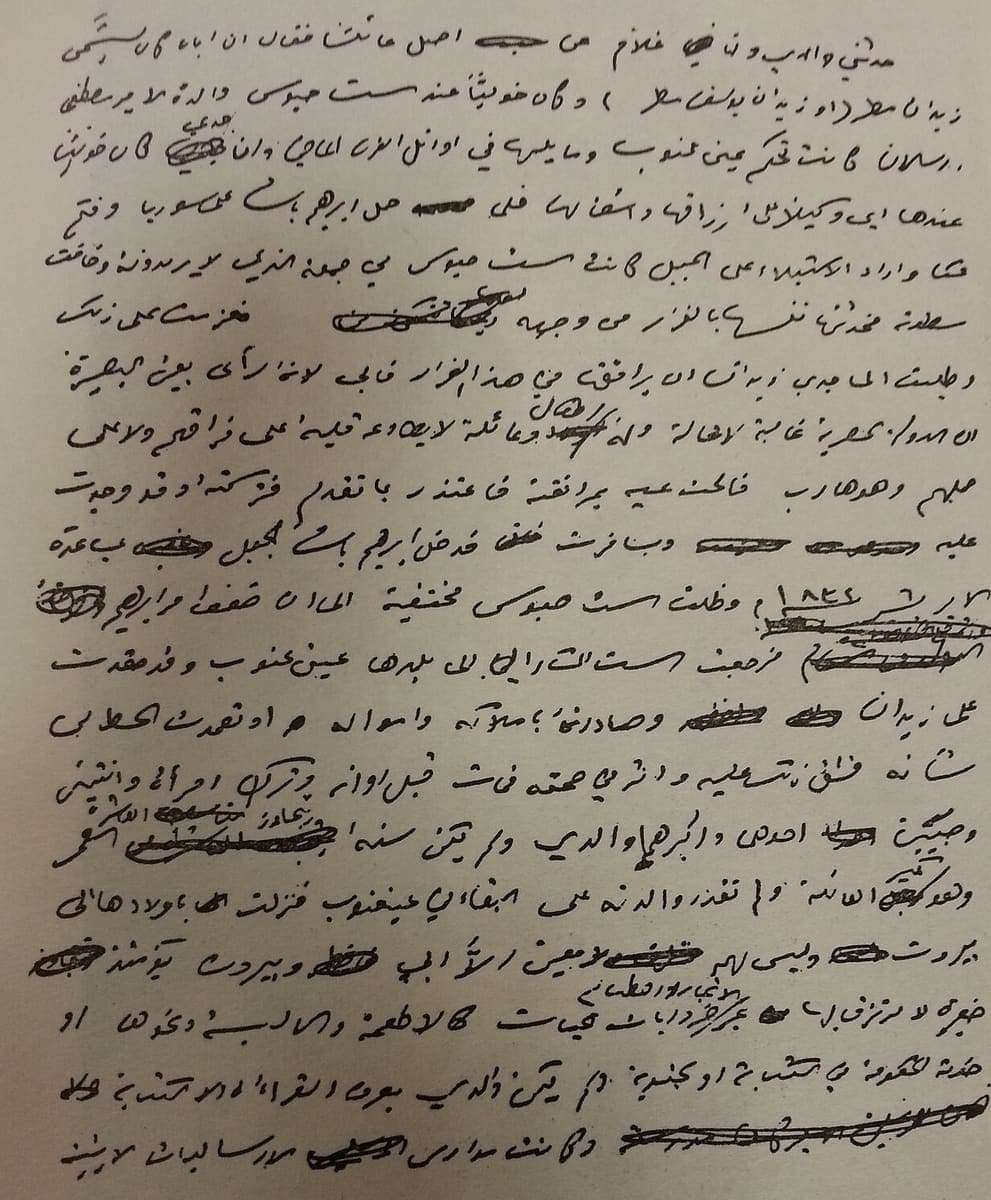
Evidano Transcription
حدثني والدي وانا فتى غلام من [cancelled: illegible] اهل عائلتنا[?] فقال ان اباه كان يسمى
زيدان مطر (او زيدان يوسف مطر) وكان خوليًا[?] عند ست حبوس والدة الامير مصطفى
ارسلان كانت تحكم عين عنوب وما يليها في اوائل القرن الماضي وان [cancelled: illegible] \جدي/ كان خوليًا[?]
عندها اي وكيلاً على زراعتها واشغالها فلما [cancelled: illegible] حل ابراهيم باشا بسوريا وفتح
عكا واراد الاستيلاء على الجبل كانت ست حبوس في جملة الذين يردونه وخافت
سطوته فحدثتها نفسها بالفرار من وجهه [cancelled: illegible] [illegible]/ فعزمت على ذلك
وطلبت الى جدي زيدان ان يرافقها في هذا الفرار فابى لانه رأى بعين بصيرة
ان الاحوال محفوفة بغاية الاهانة وله [cancelled: illegible] \اطفال/ وعائلة لا يطاوعه قلبه على فراقهم ولامها
عليها وهو هارب فالحت عليه بمرافقتها فاعتذر بما تقدم فتركته وقد وجدت
عليه [cancelled: illegible] [cancelled: illegible] وسافرت [cancelled: خلف] فدخل ابراهيم باشا الجبل [cancelled: illegible] بعدة
[illegible] سنين ١٨٤٢م وظلت ست حبوس مختفية الى ان ضعف امر ابراهيم [cancelled: illegible]
[cancelled: illegible] فرجعت الست الى بلدها عين عنوب وقد حقدت
على زيدان [cancelled: illegible] وصادرته باملاكه وامواله مما [illegible]
شأنه[?] فشق ذلك عليه واثر في صحته فمات قبل اوانه وترك امرأته وابنتين
وصبيين [cancelled: illegible] احدهما[?] واكبرهما والدي ولم يكن سنه [cancelled: illegible] [illegible]
[illegible] العاشرة[?] ولم تقدر والدته على البقاء في عين عنوب فنزلت هي باولادها الى
بيروت [cancelled: illegible] وليس لهم [remaining lines illegible]
Generated by Evidano’s advanced model; not yet checked against a published edition.
What Arabic looks like in these three centuries
Manuscript copying went on unchanged well into the nineteenth century. A scholar’s copy is written in a plain naskh, ruled to a fixed block, with headwords and key phrases picked out in red, a catchword at the foot, and a colophon giving the copyist and the date. Alongside it stands the everyday hand. Ruqʿah, codified in the Ottoman chancery and taught in schools across the Arab provinces, is small, tightly joined and written with a very short pen movement: the teeth of sīn flatten to a straight line, the loops of medial hāʾ and ʿayn close up, and the two dots of tāʾ or yāʾ become a single dash or disappear. Notes, letters, registers, marginal comments and drafts are written in it or in something less tidy still.
Print arrives in Arabic-speaking countries in force in the nineteenth century. The Būlāq press at Cairo, founded in the 1820s, printed the government gazette al-Waqāʾiʿ al-Miṣriyya as well as editions of the classics; presses in Beirut, Istanbul and Malta followed, and by the 1890s there were magazines like al-Hilāl and al-Muqtaṭaf with running heads, framed columns and page numbers. Early printed pages keep habits inherited from the manuscript: a rule around the text block, a catchword or quire signature at the foot, partial vocalisation of difficult words, and the same rubrication done with a heavier type. Government printing was often bilingual, with Ottoman Turkish and Arabic in parallel columns on the same sheet.
What makes this material awkward is the mixture. Eastern Arabic numerals run left to right inside a line that runs right to left, and a date, a page number or a quantity therefore reverses direction in the middle of a sentence. European personal and place names appear in Latin letters or in an Arabic transcription that varies from page to page. Drafts are covered in deletions, insertions written above the line and words crossed through so heavily that only the shape below the ink survives. Registers and forms put all of this into ruled boxes, where a heading may be printed and the entry written by hand.
Why ordinary OCR struggles here
Ruqʿah drops the information the reader needs
In a fast hand the dots move, merge or go missing, short vowels are absent, and final ه, ة, ي and ى all end in a similar hook. What separates them is the direction the pen was travelling and the grammar of the sentence, not the shape on the page, which is exactly what shape-based recognition cannot see.
Numerals that run the other way
A line of Arabic runs right to left; the digits inside it run left to right. Dates, page references, sums of money and years of the hijrī and Gregorian calendars therefore break the reading order several times in a paragraph, and a transcription that gets the order wrong turns ١٢٤٤ into a different number.
Two languages, one alphabet
An official gazette may set Ottoman Turkish beside Arabic in the same script, and a scholarly page may quote Persian. The letters are the same and the languages are not, so the columns have to be separated before either can be read; merged, they produce a text that is neither.
Drafts, deletions and insertions
An author’s working page is a record of second thoughts: words struck through, replacements squeezed above the line, whole passages ruled out. A useful transcription shows what was deleted and what replaced it rather than silently printing the final state or, worse, reading the cancelled words as part of the sentence.
Who works with this material
Newspaper and periodical digitisation projects
Runs of al-Hilāl, al-Muqtaṭaf, al-Ahrām and dozens of provincial papers exist as page images with no usable text. Getting the columns, the running heads and the figures right is what makes a run searchable by name, place and date.
Archivists working with Ottoman provincial records
Court registers, endowment deeds and petitions from the Arab provinces are written in a fast hand and often mix Arabic with Ottoman Turkish formulae. A transcription that keeps the two apart and preserves the dates is the basis for any index of parties, places and sums.
Editors of modern Arabic literary papers
Authors’ drafts, letters and notebooks from the nahḍa onwards survive in private and institutional collections. What an editor needs is not a clean reading text but a record of the deletions and insertions, since those are the evidence for how a piece was written.
Family and local historians
Identity papers, land certificates, school records and letters from the late Ottoman and mandate periods are the everyday sources for tracing a family. They are short, formulaic and written in a hand few people now read fluently, which is exactly where a first transcription helps most.
Getting the best transcription
Say whether the page is set or written
A printed page and a ruqʿah note need different instructions. For print, ask for the columns, running heads and footlines to be labelled; for handwriting, warn the model that pointing is unreliable and that words may be reduced to a skeleton.
Fix the treatment of numerals
Decide whether Arabic-Indic figures should be kept as ١٢٣ or converted to 123, and whether hijrī dates should be left as written. State it once: numbers are where reading order goes wrong, and a consistent rule makes the errors easy to spot.
Ask for deletions to be shown
On a draft, request that struck-through words are transcribed and marked as deleted, and that insertions above the line are placed where they belong with a note that they were added. That turns a messy page into something an editor can actually collate.
Separate the languages before reading
On a bilingual gazette or a register with Ottoman formulae, ask for each column or passage to be identified by language first and transcribed second. Test on a single sheet before running a whole volume, because a column that is misassigned once will be misassigned everywhere.
Further reading on this hand
The palaeography guides the in-app selector points to for this domain, if you want to check a transcription against the standard references.
- Arabic Paleography
This Hill Museum & Manuscript Library (HMML) course spans Arabic manuscript writing from the ninth through the twentieth century. Its later modules contrast carefully executed Naskh with increasingly casual hands found in colophons, notes, and modern-era manuscripts. The examples demonstrate positional letterforms, variable pointing, ligatures, vocalization, abbreviations, and changes in formality within a codex. That chronological range makes the course useful for Ottoman-era Arabic materials combining formal copying with rapid documentary annotation.
Frequently asked questions
- Can it read ruqʿah when the dots are missing?
- Often, because the missing dots are recoverable from the word and the phrase rather than the shape. Readings that depend on context alone can be flagged, so you can check the names and numbers, which are the places where context gives no help.
- How are Arabic-Indic numerals handled?
- They are transcribed in the order they appear on the page, not in the order the surrounding right-to-left text runs, and you can choose whether to keep the original figures or convert them. Dates can be left in the hijrī form the document uses.
- What about a page that is half Ottoman Turkish?
- Each column or passage can be labelled with its language and transcribed separately. The two share an alphabet but not a vocabulary, and keeping them apart also lets a Turkish specialist take over the Ottoman half without untangling it from the Arabic first.
- Is printed nineteenth-century Arabic easier than manuscript?
- Not always. Early type is uneven, ligatures are cast as single sorts, the ink bleeds through thin paper, and the frames and footlines confuse column detection. It helps to say what the page furniture is so that a quire signature is not read as the last line of the text.
- Can crossed-out words be recovered from a draft?
- Sometimes. Where a single stroke runs through the word the letters below are usually still readable and can be transcribed with a note; where the ink is scribbled solid the passage is marked as deleted and illegible rather than guessed at.
Related scripts and pages
Transcribe your Ottoman-era Arabic pages
Upload a manuscript leaf, a gazette or a draft, choose Ottoman-Era Arabic Naskh and Ruqʿah Documents, and set the rule for numerals first.