
Bosnian
Read Bosnian through four scripts, not one
Few languages have recorded themselves in as many alphabets as Bosnian: a local Cyrillic minuscule called bosančica, an Arabic script fitted with extra letters for sounds Arabic never had, the administrative hands of four centuries of Ottoman rule, and today’s Latin alphabet. A single Franciscan monastery archive can hold documents in all four. Evidano reads each on its own terms and shows the source page beside every line it produces.
Sample pages
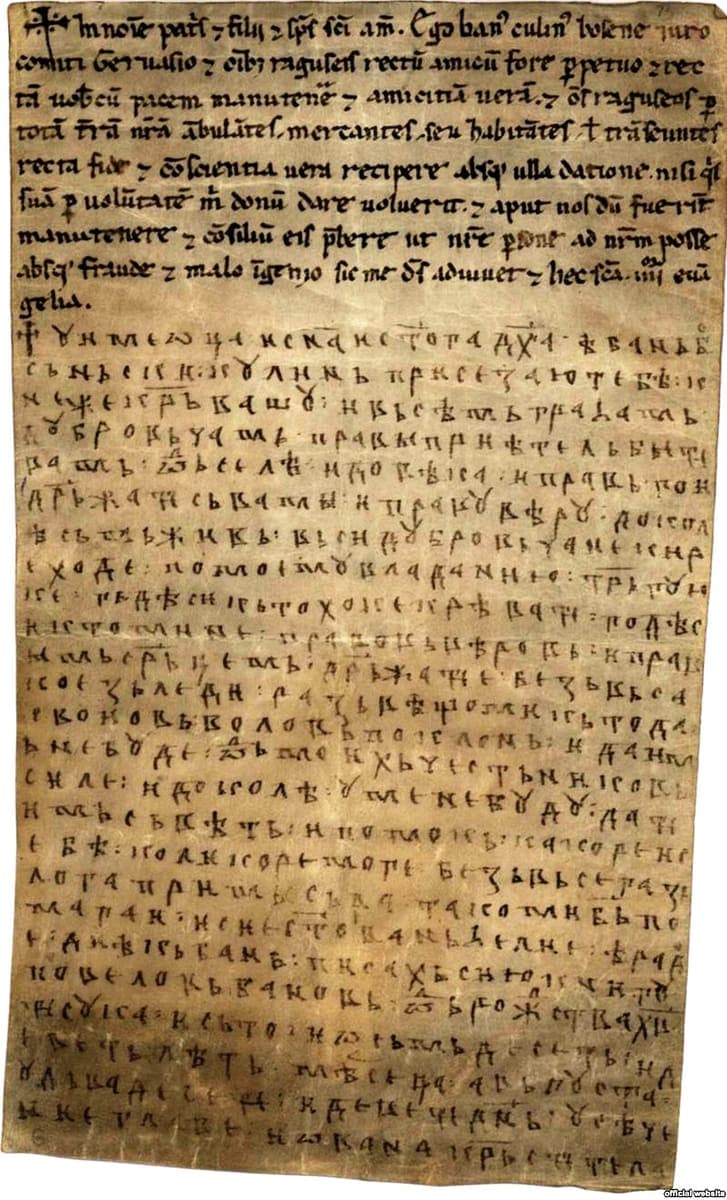
Evidano Transcription
A diplomatic Latin-letter transliteration of the bosančica portion of the charter, from an unsigned Bosnian Wikisource edition credited to the standard reading; the separate Latin text at the head of the document, addressed to Count Krvaš of Dubrovnik, is not included here.
U ime oca i s(i)na i s(ve)toga d(u)ha. Ja ban' bos'n'ski Kulin' prisezaju tebě kneže Kr'vašu i v'sěm' građam' Dubrov'čam' pravi prijatelj' biti vam' od' selě i do věka i pravi goj dr'žati s'vami pravu věru dokolě s'm' živ.
V'si Dubrov'čane kire hode po mojemu vladanju tr'gujuće, gdě si kto hoće krěvati godě si kto mine pravov' věrov' i pravim' sr'dcem' dr'žati je bez v'sakoje z'ledi raz'vě što mi k'to da svojov' voljov' poklon'. I da im' ne bude od' moih' čest'nikov sile.
Tako mi b(og') pomagaj i sie s(ve)t(o) evan'đelie. Ja Radoje dijak ban' pisah' siju knjigu poveljov' banov' od' roždstva H(risto)va tisuća i s'to i os'm'deset i devet' lět', měseca av'gusta u d'vadesete i deveti d'n'.
Source: Povelja Kulina bana, Bosnian Wikisource (CC BY-SA 4.0).
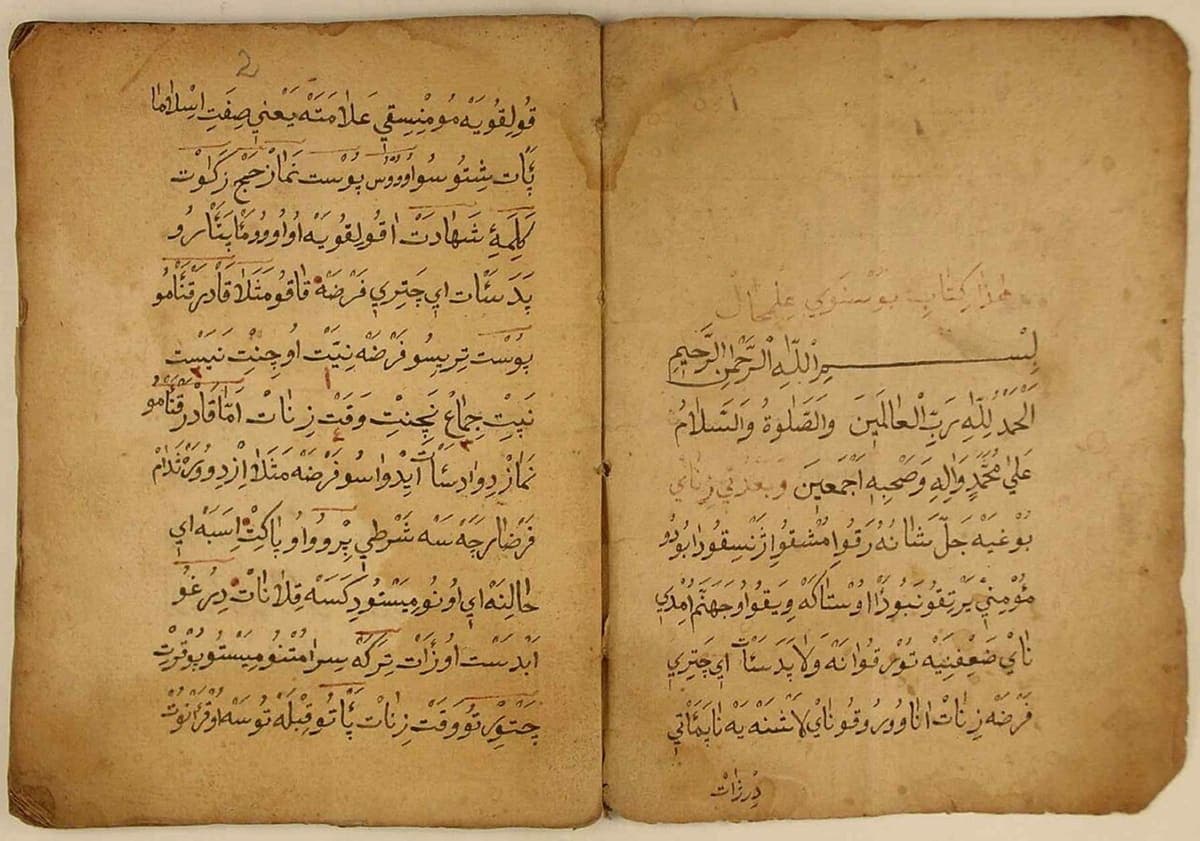
World Digital Library, composed before 1821; this copy 1831 · Source · Public domain
Evidano Transcription
2
قولقويه مومنسقي علامته يعني صفت اسلاما
پات شتو سو اوووس پوست نماز حج زكوت
كلمهٔ شهادت اقولقويه اوا وووما پتارو[?]
پدسات اي چتري فرضه قاقو مثلا قادر قنامو
پوست تريسو فرضه نيت اوچنت نيست
نيت جماع نچنت وقت زنات اما قادر قنامو
نماز دوادسا ايدواسو فرضه مثلا ازدوور[?] ندام[?]
فرضا رچه سه شرطي پروواو پاكت[?] اسبه اي
حالنه اي اونو ميستو دكسه قلانات درغو
ابدست اوزات تركه سرامتنو ميستو پوقرت
چتور تو وقت زنات پاتو قبله تو سه اوقرانوت
هذا كتاب بوسنوي علمحال
بسم الله الرحمن الرحيم
الحمد لله رب العالمين والصلوة والسلام
علي محمد واله وصحبه اجمعين وبعدي زناي[?]
بوغيه جل شانه رقوا مشقوا ژنسقو دا بودو
مؤمني يرتقو نبودا اوستاكه ويقوا وجهنم امدي
ناي ضعفنيه تور قوانه ولا بدستا اي چتري
فرضه زنات اناوور وقو ناي لاشنه يه ناپماتي
درزات
Generated by Evidano’s advanced model; not yet checked against a published edition.
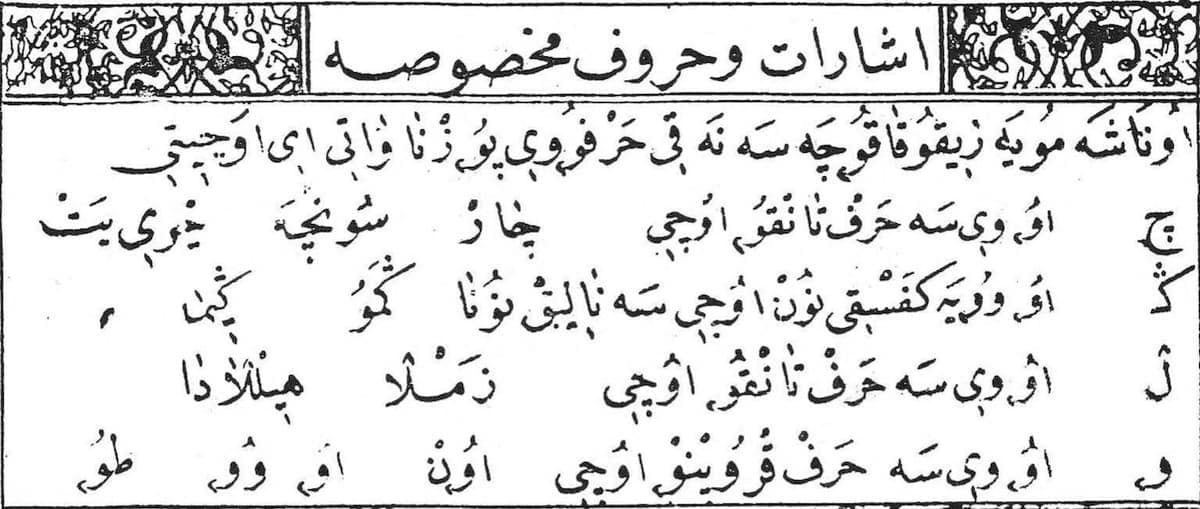
Evidano Transcription
اشارات وحروف مخصوصه
اوناشه مويه زيقو قاقو چه سه نه قي حرفووي پوزناواتي اي اوچيتي
چ اووي سه حرف تانقو اوچي چار سونچه چوويت[?]
ڭ اوويه كفسقي نون اوچي سه ناليق نونا ڭمو ڭما
ڵ اووي سه حرف تانقو اوچي زمڵا هيڵادا
و اووي سه حرف قروينو[?] اوچي اون او وو طو
Generated by Evidano’s advanced model; not yet checked against a published edition.
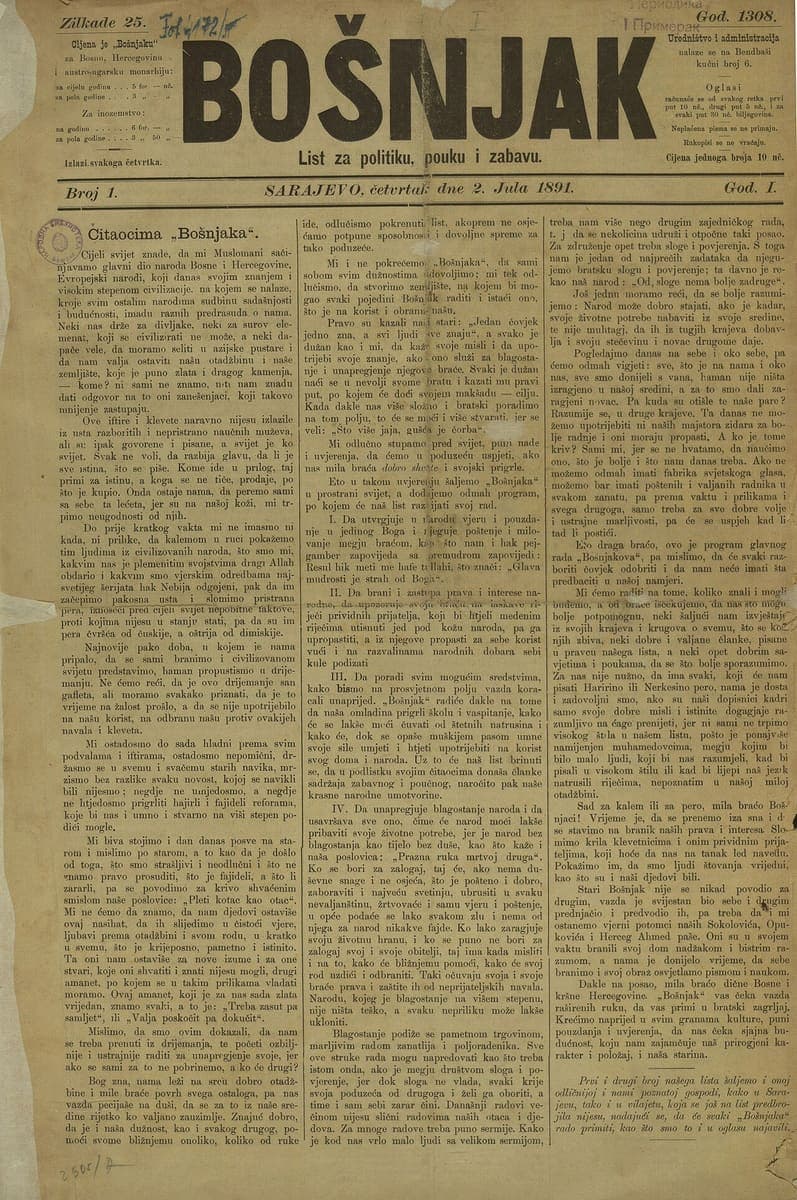
National Library of Serbia, digital newspaper collection, 2 July 1891 · Source · Public domain
Evidano Transcription
Zilkade 25. Fol 172/1
Cijena „Bošnjaku“
za Bosnu, Hercegovinu
i austro-ugarsku monarhiju:
za cijelu godinu . . . 5 for. — nč.
za pola godine . . . 2 „ 50 „
Za inozemstvo:
za godinu . . . . . . 6 for. — „
za pola godine . . . . 3 „ 50 „
Izlazi svakoga četvrtka.
BOŠNJAK
List za politiku, pouku i zabavu.
Периодика
I Примерак
God. 1308.
Uredništvo i administracija
nalaze se na Bendbaši
kućni broj 6.
Oglasi
računaju se od svakog retka prvi
put 10 nč., drugi put 5 nč., i za
svaki put 30 nč. biljegovine.
Neplaćena pisma se ne primaju.
Rukopisi se ne vraćaju.
Cijena jednoga broja 10 nč.
Full width
Broj 1. SARAJEVO, četvrtak dne 2. Jula 1891. God. I.
Čitaocima „Bošnjaka“.
Cijeli svijet znade, da mi Muslomani sači-
njavamo glavni dio naroda Bosne i Hercegovine.
Evropejski narodi, koji danas svojim znanjem i
visokim stepenom civilizacije, na kojem se nalaze,
kroje svim ostalim narodima sudbinu sadašnjosti
i budućnosti, imadu raznih predrasuda o nama.
Neki nas drže za divljake, neki za surov ele-
menat, koji se civilizirati ne može, a neki da-
pače vele, da moramo seliti u azijske pustare i
da nam valja ostaviti našu otadžbinu i naše
zemljište, koje je puno zlata i dragog kamenja,
— kome? ni sami ne znamo, niti nam znadu
dati odgovor na to oni zanešenjaci, koji takovo
mnijenje zastupaju.
Ove iftire i klevete naravno nijesu izlazile
iz usta razboritih i nepristrano naučnih muževa,
ali su ipak govorene i pisane, a svijet je ko
svijet. Svak ne voli, da razbija glavu, da li je
sve istina, što se piše. Kome ide u prilog, taj
primi za istinu, a koga se ne tiče, prodaje, po
što je kupio. Onda ostaje nama, da peremo sami
sa sebe ta lečeta, jer su na našoj koži, mi tr-
pimo neugodnosti od njih.
Do prije kratkog vakta mi ne imasmo ni
kada, ni prilike, da kalemom u ruci pokažemo
tim ljudima iz civilizovanih naroda, što smo mi,
kakvim nas je plemenitim svojstvima dragi Allah
obdario i kakvim smo vjerskim odredbama naj-
svetijeg šerijata hak Nebija odgojeni, pak da im
začepimo pakosna usta i slomimo pristrana
pera, iznoseći pred cijeli svijet nepobitne faktove,
proti kojima nijesu u stanju stati, pa da su im
pera čvršća od ćuskije, a oštrija od dimiskije.
Najnovije pako doba, u kojem je nama
pripalo, da se sami branimo i civilizovanom
svijetu predstavimo, haman propustismo u drije-
manju. Ne ćemo reći, da je ovo drijemanje san
gafleta, ali moramo svakako priznati, da je to
vrijeme na žalost prošlo, a da se nije upotrijebilo
na našu korist, na odbranu našu protiv ovakijeh
navala i kleveta.
Mi ostadosmo do sada hladni prema svim
podvalama i iftirama, ostadosmo nepomični, dr-
žasmo se u svemu i svačemu starih navika, mr-
zismo bez razlike svaku novost, kojoj se navikli
bili nijesmo; negdje ne umjedosmo, a negdje
ne htjedosmo prigrliti hajirli i fajideli reforama,
koje bi nas i umno i stvarno na viši stepen po-
dići mogle.
Mi biva stojimo i dan danas posve na sta-
rom i mislimo po starom, a to kao da je došlo
od toga, što smo strašljivi i neodlučni i što ne
znamo pravo prosuditi, što je fajideli, a što li
zararli, pa se povodimo za krivo shvaćenim
smislom naše poslovice: „Pleti kotac kao otac“.
Mi ne ćemo da znamo, da nam djedovi ostaviše
ovaj nasihat, da ih slijedimo u čistoći vjere,
ljubavi prema otadžbini i svom rodu, u kratko
u svemu, što je krijeposno, pametno i istinito.
Ta oni nam ostaviše za nove izume i za one
stvari, koje oni shvatiti i znati nijesu mogli, drugi
amanet, po kojem se u takim prilikama vladati
moramo. Ovaj amanet, koji je za nas sada zlata
vrijedan, znamo svaki, a to je: „Treba zasut pa
samljet“, ili „Valja poskočit pa dokučit“.
Mislimo, da smo ovim dokazali, da nam
se treba prenuti iz drijemanja, te početi ozbilj-
nije i ustrajnije raditi za unapregjenje svoje, jer
ako se sami za to ne pobrinemo, a ko će drugi?
Bog zna, nama leži na srcu dobro otadž-
bine i mile braće povrh svega ostaloga, pa nas
vazda pecijaše na duši, da se za to iz naše sre-
dine rijetko ko valjano zauzimlje. Znajući dobro,
da je i naša dužnost, kao i svakog drugog, po-
moći svome bližnjemu onoliko, koliko od ruke
2505/2
ide, odlučismo pokrenuti list, akoprem ne osje-
ćamo potpune sposobnosti i dovoljne spreme za
tako poduzeće.
Mi i ne pokrećemo „Bošnjaka“, da sami
sobom svim dužnostima udovoljimo; mi tek od-
lučismo, da stvorimo zemljište, na kojem bi mo-
gao svaki pojedini Bošnjak raditi i istaći ono,
što je na korist i obranu našu.
Pravo su kazali naši stari: „Jedan čovjek
jedno zna, a svi ljudi sve znaju“, a svako je
dužan kao i mi, da kaže svoje misli i da upo-
trijebi svoje znanje, ako ono služi za blagosta-
nje i unapregjenje njegove braće. Svaki je dužan
naći se u nevolji svome bratu i kazati mu pravi
put, po kojem će doći svojem maksadu — cilju.
Kada dakle nas više složno i bratski poradimo
na tom polju, to će se moći i više stvarati, jer se
veli: „Što više jaja, gušća je čorba“.
Mi odlučno stupamo pred svijet, puni nade
i uvjerenja, da ćemo u poduzeću uspjeti, ako
nas mila braća dobro shvate i svojski prigrle.
Eto u takom uvjerenju šaljemo „Bošnjaka“
u prostrani svijet, a dodajemo odmah program,
po kojem će naš list razvijati svoj rad.
I. Da utvrgjuje u narodu vjeru i pouzda-
nje u jedinog Boga i njeguje poštenje i milo-
vanje megju braćom, kao što nam i hak pej-
gamber zapovijeda sa premuđrom zapovijedi:
Resul hik meti me hafe tullahi, što znači: „Glava
mudrosti je strah od Boga“.
II. Da brani i zastupa prava i interese na-
rodne, da upozoruje svoju braću na laskave ri-
ječi prividnih prijatelja, koji bi htjeli medenim
riječima utisnuti jed pod kožu naroda, pa ga
upropastiti, a iz njegove propasti za sebe korist
vući i na razvalinama narodnih dobara sebi
kule podizati
III. Da poradi svim mogućim sredstvima,
kako bismo na prosvjetnom polju vazda kora-
cali unaprijed. „Bošnjak“ radiće dakle na tome
da naša omladina prigrli školu i vaspitanje, kako
će se lakše moći čuvati od štetnih natrusina i
kako će, dok se opaše muškijem pasom umne
svoje sile umjeti i htjeti upotrijebiti na korist
svog doma i naroda. Uz to će naš list brinuti
se, da u podlistku svojim čitaocima donaša članke
sadržaja zabavnog i poučnog, naročito pak naše
krasne narodne umotvorine.
IV. Da unapregjuje blagostanje naroda i da
usavršava sve ono, čime će narod moći lakše
pribaviti svoje životne potrebe, jer je narod bez
blagostanja kao tijelo bez duše, kao što kaže i
naša poslovica: „Prazna ruka mrtvoj druga“.
Ko se bori za zalogaj, taj će, ako nema du-
ševne snage i ne osjeća, što je pošteno i dobro,
zaboraviti i najveću svetinju, ubrusiti u svaku
nevaljanštinu, žrtvovaće i samu vjeru i poštenje,
u opće podaće se lako svakom zlu i nema od
njega za narod nikakve fajde. Ko lako zaragjuje
svoju životnu hranu, i ko se puno ne bori za
zalogaj svoj i svoje obitelji, taj ima kada misliti
i na to, kako će bližnjemu pomoći, kako će svoj
rod uzdići i odbraniti. Taki očuvaju svoja i svojo
braće prava i zaštite ih od neprijateljskih navala.
Narodu, kojeg je blagostanje na višem stepenu,
nije ništa teško, a svaku nepriliku može lakše
ukloniti.
Blagostanje podiže se pametnom trgovinom,
marljivim radom zanatlija i poljoradenika. Sve
ove struke rada mogu napredovati kao što treba
istom onda, ako je megju društvom sloga i po-
vjerenje, jer dok sloga ne vlada, svaki krije
svoja poduzeća od drugoga i želi ga oboriti, a
time i sam sebi zarar čini. Današnji radovi ve-
ćinom nijesu slični radovima naših otaca i dje-
dova. Za mnoge radove treba puno sermije. Kako
je kod nas vrlo malo ljudi sa velikom sermijom,
treba nam više nego drugim zajedničkog rada,
t. j. da se nekolicina udruži i otpočne taki posao.
Za združenje opet treba sloge i povjerenja. S toga
nam je jedan od najprečih zadataka da njegu-
jemo bratsku slogu i povjerenje; ta davno je re-
kao naš narod: „Od sloge nema bolje zadruge“.
Još jednu moramo reći, da se bolje razumi-
jemo: Narod može dobro stajati, ako je kadar,
svoje životne potrebe nabaviti iz svoje sredine,
te nije muhtagj, da ih iz tugjih krajeva dobav-
lja i svoju stečevinu i novac drugome daje.
Pogledajmo danas na sebe i oko sebe, pa
ćemo odmah vidjeti: sve, što je na nama i oko
nas, sve smo donijeli s vana, haman nije ništa
izragjeno u našoj sredini, a za to smo dali za-
ragjeni novac. Pa kuda su otišle te naše pare?
Razumije se, u druge krajeve. Ta danas ne mo-
žemo upotrijebiti ni naših majstora zidara za bo-
lje radnje i oni moraju propasti. A ko je tome
kriv? Sami mi, jer se ne hvatamo, da naučimo
ono, što je bolje i što nam danas treba. Ako ne
možemo odmah imati fabrika svjetskoga glasa,
možemo bar imati poštenih i valjanih radnika u
svakom zanatu, pa prema vaktu i prilikama i
svega drugoga, samo treba za sve dobre volje
i ustrajne marljivosti, pa će se uspjeh kad li
tad li postići.
Eto draga braćo, ovo je program glavnog
rada „Bošnjakova“, pa mislimo, da će svaki raz-
boriti čovjek odobriti i da nam neće imati šta
predbaciti u našoj namjeri.
Mi ćemo raditi na tome, koliko znali i mogli
budemo, a od braće isčekujemo, da nas što mogu
bolje potpomognu, neki šaljući nam izvještaje
iz svojih krajeva i krugova o svemu, što se kod
njih zbiva, neki dobre i valjane članke, pisane
u pravcu našega lista, a neki opet dobrim sa-
vjetima i poukama, da se što bolje sporazumimo.
Za nas nije nužno, da ima svaki, koji će nam
pisati Haririno ili Nerkesino pero, nama je dosta
i zadovoljni smo, ako su naši dopisnici kadri
samo svoje dobre misli i istinite dogagjaje ra-
zumljivo na ćage prenijeti, jer ni sami ne trpimo
visokog štila u našem listu, pošto je ponajviše
namijenjen muhamedovcima, megju kojim bi
bilo malo ljudi, koji bi nas razumjeli, kad bi
pisali u visokom štilu ili kad bi lijepi naš jezik
natrusili riječima, nepoznatim u našoj miloj
otadžbini.
Sad za kalem ili za pero, mila braćo Boš-
njaci! Vrijeme je, da se prenemo iza sna i da
se stavimo na branik naših prava i interesa. Slo-
mimo krila klevetnicima i onim prividnim prija-
teljima, koji hoće da nas na tanak led navedu.
Pokažimo im, da smo ljudi štovanja vrijedni,
kao što su i naši djedovi bili.
Stari Bošnjak nije se nikad povodio za
drugim, vazda je svijestan bio sebe i drugim
prednjačio i predvodio ih, pa treba da i mi
ostanemo vjerni potomci naših Sokolovića, Opu-
kovića i Herceg Ahmed paše. Oni su u svojem
vaktu branili svoj dom nadžakom i bistrim ra-
zumom, a nama je donijelo vrijeme, da sebe
branimo i svoj obraz osvjetlamo pismom i naukom.
Dakle na posao, mila braćo dične Bosne i
kršne Hercegovine. „Bošnjak“ vas čeka vazda
raširenih ruku, da vas primi u bratski zagrljaj.
Krećimo naprijed u svim granama kulture, puni
pouzdanja i uvjerenja, da nas čeka sjajna bu-
dućnost, koju nam zajamčuje naš prirogjeni ka-
rakter i položaj, i naša starina.
Prvi i drugi broj našega lista šaljemo i onoj
odličnijoj i nami poznatoj gospodi, kako u Sara-
jevu, tako i u vilajetu, koja se još na list predbro-
jila nijesu, nadajući se, da će svaki „Bošnjaka“
rado primiti, kao što smo to i u oglasu najavili.
Generated by Evidano’s advanced model; not yet checked against a published edition.
What Bosnian writing has looked like
Bosančica, a rounded Cyrillic minuscule that diverged early from the Cyrillic used further east, is the script of the oldest surviving state document from any South Slavic land: Ban Kulin’s 1189 charter guaranteeing safe trade to the merchants of Dubrovnik, drafted with a Latin version for the Ragusans above a Bosnian Cyrillic version below. The same script fills medieval land charters, merchants’ correspondence, and the carved epitaphs on stećci, the distinctive standing tombstones scattered across the Bosnian highlands, and it went on serving notaries and Franciscan friars for centuries after most of the rest of the Slavic Cyrillic world had standardised its letterforms differently.
After the Ottoman conquest of 1463, Bosnian Muslims adapted the Arabic script to their own language, adding letters and diacritic marks for consonants and vowel qualities Arabic itself does not distinguish. This adapted script, Arebica, carried devotional poetry and popular verse for four centuries: the executed poet Ilhamija’s handbook of religious duties, printed in 1831, and the alhamijado love poetry of Umihana Čuvidina are both written in it. A reformed, more phonetic Arebica was fixed for print in the early twentieth century by the reisu-l-ulema Džemaludin Čaušević, shortly before the script fell out of everyday use.
Ottoman administrative Bosnia ran in Ottoman Turkish, written in its own family of Arabic-script hands: the formal naskh of an ahdname, the flowing cursive of an imperial dīvānī document, and the abbreviated, almost illegible siyāqat used for tax registers and court records. The Latin alphabet Bosnia uses for the language today, fitted with the same č, ć, đ, š and ž devised for Croatian, only became the everyday standard after the Austro-Hungarian occupation of 1878 pushed Ottoman administration and its scripts into history within a single generation.
Why ordinary OCR struggles here
Four scripts with almost nothing in common
Bosančica, Arebica, Ottoman Turkish and Latin share no letterforms at all. A system has to identify which of the four it is looking at before it can read a single character, and getting the script wrong on a mixed archive shelf means failing completely rather than making a small error.
Bosančica is not Serbian or Russian Cyrillic
Bosnian Cyrillic shapes several letters differently from the Cyrillic used further east, and a system trained mainly on Serbian or Russian manuscripts corrects these Bosnian forms toward the wrong tradition rather than reading them as written.
Arebica’s invented letters have no Arabic equivalent
Arebica adds diacritic marks to ordinary Arabic letters to represent Slavic consonants and vowel distinctions the Arabic alphabet was never built for. A model trained only on Arabic or Ottoman Turkish either drops these marks or reads the base letter as if it were a normal Arabic sound.
Ottoman administrative hands compress words past recognition
A dīvānī document elongates and interlocks its letters for visual effect, and a siyāqat tax register abbreviates so heavily that even trained Ottomanists need the register’s own conventions to read it. Neither hand behaves like the printed or handwritten Arabic most systems are trained on.
Who works with this material
Medieval and Ottoman-era historians
Charters, ahdnames and court sicils are the primary sources for Bosnia’s medieval and Ottoman centuries. A transcription that keeps bosančica or Ottoman Turkish letterforms as written, rather than guessing at a more familiar script, gives a historian a text to check against published charter collections.
Alhamijado and Arebica literary scholars
Bosniak studies departments and literary historians working on Ilhamija, Umihana Čuvidina and the wider alhamijado tradition need Arebica’s invented letters read as the distinct sounds they represent, not silently collapsed into ordinary Arabic.
Franciscan and monastery archivists
Monasteries such as Fojnica hold ahdnames, land records and correspondence spanning bosančica, Ottoman Turkish and Latin script in the same collection. Cataloguing them well means a first-pass reading of each script on its own terms before conservation or digitisation decisions are made.
Genealogists and local historians
Family and property history in Bosnia often runs through Ottoman-era sicil entries before it reaches Austro-Hungarian civil registers in Latin script. Both stages of that record need to be read accurately for a family tree or a land claim to hold together.
Getting the best transcription
Say which of the four scripts you are uploading
State whether the page is bosančica, Arebica, Ottoman Turkish or Latin, since a single monastery box can hold all four and the script is the first thing that has to be identified correctly.
Flag bosančica as Bosnian Cyrillic specifically
For Cyrillic manuscripts, note that the hand is Bosnian bosančica rather than Serbian or Russian Cyrillic, so distinct letterforms are not corrected toward the wrong tradition.
Describe Arebica’s extra letters
For Arabic-script Bosnian, mention that some letters carry marks for sounds Arabic itself does not have, so the model treats them as the Slavic consonants they represent rather than as unusual Arabic spelling.
Name the Ottoman document type
Tell the model whether an Ottoman Turkish page is a formal ahdname or firman, a flowing dīvānī grant, or an abbreviated siyāqat register, since the three hands need very different handling and a wrong guess wastes the first pass.
Frequently asked questions
- Can Evidano read bosančica, Bosnian Cyrillic?
- Yes, bosančica is read as its own tradition, with letterforms kept distinct from the Serbian and Russian Cyrillic conventions a general model expects.
- Does it read Arebica, the Arabic script used for Bosnian?
- Yes, including the extra diacritic marks Bosnian Muslims added to represent Slavic sounds Arabic does not have, so those letters are read as themselves rather than as ordinary Arabic.
- Can it handle Ottoman Turkish documents from Bosnia’s archives?
- Yes, formal chancery hands such as an ahdname or firman are read directly; heavily abbreviated siyāqat fiscal registers are harder and benefit from being told in advance what kind of document they are.
- Can it read the inscriptions on stećak tombstones?
- A clear photograph of a carved bosančica inscription can be read the same way as a manuscript page, though weathered stone benefits from a raking-light photograph that makes shallow carving easier to see.
- How does it treat a bilingual document like the Charter of Ban Kulin?
- Each script is transcribed as its own block rather than merged into one stream, so a Latin passage and a bosančica passage on the same sheet come back as two clearly separated readings.
- Does it get modern Bosnian diacritics right?
- Yes, č, ć, đ, š and ž are recognised as distinct letters in printed and handwritten Latin-script Bosnian, which matters most for names and place names in forms and civil records.
Related scripts and pages
Turn your Bosnian sources into text
Upload a bosančica charter, an Arebica manuscript, an Ottoman document or a modern Bosnian page, and check the reading against the image before you export.