
Croatian
Read Croatian across three alphabets
Croatian is the only Slavic language regularly written in three unrelated scripts: angular Glagolitic, a local variety of Cyrillic called bosančica, and the Latin alphabet Ljudevit Gaj fitted with diacritics in the 1830s. A monastery archive can shelve all three side by side, and each carries its own confusable letterforms and abbreviation habits. Evidano reads whichever script the source uses and shows the page beside every line it transcribes.
Sample pages
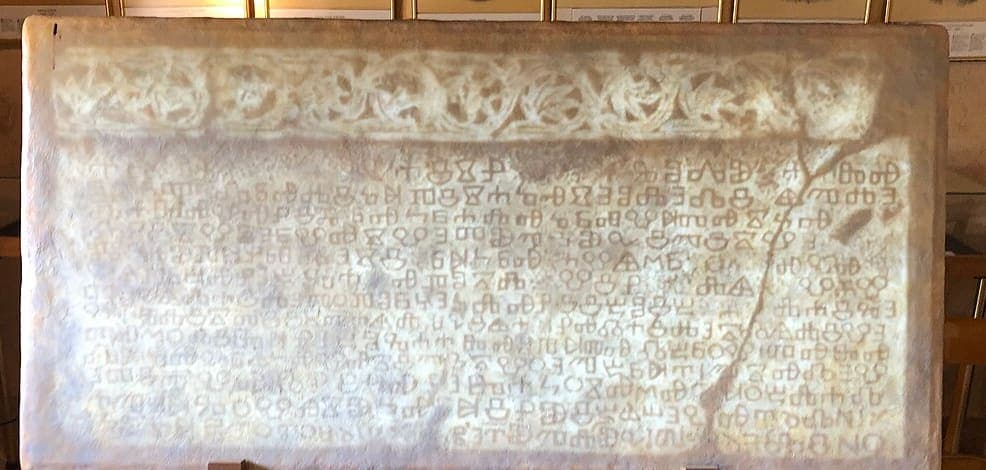
Church of St Lucy, Jurandvor, Krk (cast shown); original held by the Croatian Academy of Sciences and Arts, Zagreb, inscribed c. 1100; photographed 2021 · Source · CC BY-SA 4.0 · Sibinia
Evidano Transcription
[supplied: AZЪ VЪ IME O]TCA I S[I]NA [supplied: I] S[VE]TAGO DUHA AZЪ
OPAT[Ъ] DRЪŽIHA PISAHЪ SE O LEDI[supplied: N]Ě JUŽE
DA ZЪVЪNIM[I]RЪ KRALЪ HRЪVATЪSKЪÏ [supplied: VЪ]
DNI SVOĘ VЪ SVETUJU LUCIJU I S[supplied: VEDO]
MI ŽUPANЪ DESIMRA KRЪ[supplied: BA]VĚ MRA[supplied: TIN]Ъ VЪ L[I]
CĚ PR[I]BЪNEBŽA [supplied: S]Ъ POSL[Ъ] VIN[O]DOLĚ [supplied: ĚK][O]VЪ V[Ъ] O
TOCĚ DA IŽE TO POREČE KLЪNI I BO[G] I BÏ AP[OSTO]LA I G E
VA[N]G[E]LISTI I S[VE]TAĚ LUCIĚ AM[E]NЪ DA IŽE SDĚ ŽI
VETЪ MOLI ZA NE BOGA AZЪ OPATЪ D[O]BROVITЪ ZЪ
DAH CRЪKЪVЪ SIJU I SVOEJU BRATIJU SЪ DEV
ETIJU VЪ DNI KЪNEZA KOSЪMЪTA OBLAD
AJUĆAGO VЪSU KЪRAINU I BĚŠE VЪ TЪ DNI M
IKULA VЪ OTOČЪCI [supplied: SЪ S]VETUJU LUCIJU VЪ EDINO
Generated by Evidano’s advanced model; not yet checked against a published edition.
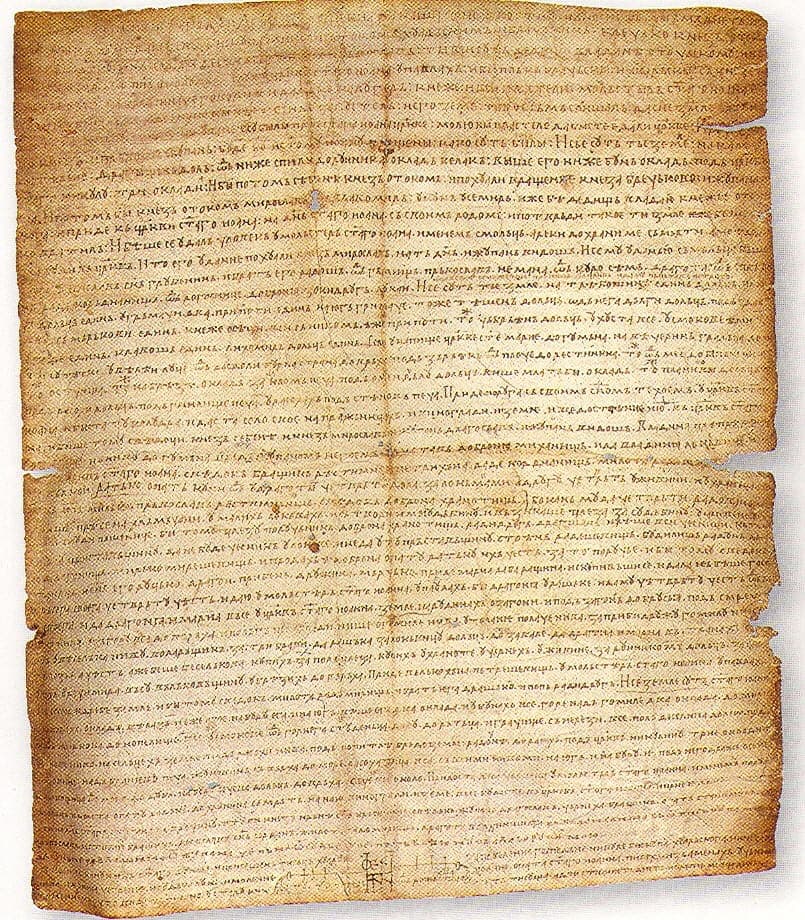
Evidano Transcription
The charter’s dating clause and its first recorded land grant, from the top of the sheet; transliterated into Latin letters and lightly normalised by an unsigned Croatian Wikisource editor, with square brackets marking letters supplied where the parchment is damaged. The document continues in the same hand across the rest of the sheet.
V jime Otca i Sina i Svetago Duha! Lito ot roždenija Gospoda našego Isuhrstovo tisućno i sto i osamdeset i [četvrto].
Bi v dni kraja Beli, biskupa Mikuli otokom hvarskim i bračkim Brečko knez, otok[om] Prvoš župan, sudja Desin, brašćik Prvoslav. Ti vsi sut didići vladanju otočskomu. I v [ti] dni bi Radko pop i koludar služe Crkvi svetago Joana u Pavļah. I bi plk bračski i hvarski s knezem Brečkom na Bolu.
I nače govoriti Radko kalujer: "Kneže i vsi vlasteli! Molstir svetago Joana je[st] velik bil prežde, kako vi věste, na je zapustil, i jego zemje. Tako jesam slišal da sije zemļe ježe vi [dr]žite po Koncu, kneže i župane, jesu bili prije Svetago Joana crkve. Moļu vi, vlastele, da biste je dali Crkvi."
Source: Povaljska listina, Croatian Wikisource (CC BY-SA 4.0).

Papers Past, National Library of New Zealand, 26 June 1899 · Source · Public domain
Evidano Transcription
GOD. I.—BROJ 4.
Kad budemo imati 600
Predbrojnika za cielu godinu,
onda “Bratska Sloga” hoce
izlaziti svake sedmice.
Dakle braco Hrvati podu-
prite do ovo budete dostignuti.
Nase Okolnosti.
Svaki citatelj “Bratske Sloge” bilo u
ovoj zemlji, kao isto na ostale krajeve
svieta izvan Nove Zelandije hoce odma
na pocetku uviditi nase tezke zauzete
okolnosti, da budemo stati na braniku, i
na korist svega Hrvatskog naroda u
Novoj Zelandiji.
Ako nasi hrvatski citaoci budu
pomnjivo razmatrali prvi, drugi, i treci
broj Bratske Sloge, hoce na prvi trenutak
oka uviditi kako prva hrvatska novina u
ovoj dalekoj strani svieta jest bila
utemeljena. Sdruge strane na nikakvom
kraju izobrazenog svieta, nije bilo tako
od potrebe da novina za svomu narodu
koristovati bude se utemeljila kao u ovoj
zemlji. Svakomu nasem domorodcu jest
vrlo dobro poznato kukavno stanje u
staroj domovini.
Nemozemo se sada baviti, ali sa
vremenom u buduce jesmo odlucili pred-
staviti pred oci, kako u staroj domovini
nije nam dopusteno da budemo slobodni,
nego vazda stajati u tamnosti. Takodjer
hocemo se baviti kako jest nasem hrvatz-
kom narodu kad dodje u tudjinu u
nepoznate prija krajeve. Na sve strane
svieta jest svakomu vrlo dobro poznato
kako nas hrvatski narod jest drzan u ovoj
zemlji. A zasto? To opet nije krivnja
nikoga drugoga, nego opet nas istih.
Kad upravo jesmo uvidili da od nazad
mnogo godina u staroj domovini nije
slobodno da tezackom radniku bude dato
slobode da bolje zive, tada ovaj nas
hrvatski narod kad je usilovan da ostavlja
svoju domovinu, imao bi priskrbiti sabi
svoje buduce stanje gdje je dosao; jer u
istinu pak makar bilo na kojenudrago
kraju svieta nas hrvatski posteni narod
moze ako hoce, i ako znade pribaviti,
mnogo bolje stanje nego ga je igda u
svojoj domovini imao.
Nase misli jesu vazda kako da sto bolje
okoristujemo nasem narodu, i otvorimo
pute do razvitka da jednom prestanu sve
one tuge i nevolje u kojem se sada nalaze.
Sa ovom svrhom BRATSKA SLOGA jest
utemeljena; ali zalibose uz maleni broj
protivnika i nakaza ljudskih to nam
podniposto nedopustaju, jer kako oni u
tamnosti zive, tako isto oni bi zudili da
i ostali narod zive. “Ovako nemoze biti,
niti je Svemogucem Bogu milo.” Nas
mora da se proslavi, mora da bude imena
u tudjini imao, jer to po naravi zasluzuje
bolje, nego ikakvi ostali narod od druge
narodnosti.
Istina je svakomu poznata da prosti
tezacki radnik nema nikakve prigode u
staroj domovini da dodje do onog stepena
kao neka ostale “velike osobe” koje
uzivaju zemaljski raj u Austriji na
tezackom trudu i radniku.
Da za siromaha covika u staroj domo-
vina ima prigode i slobode kao u tudjini
doista nebi bilo nigda od potrebe nasem
hrvatskom narodu da trazi koricu hljeba
izvan svoje domovine, i da ostavlja za
sobom ono sto mu je najmilije, i najdraze
na ovom svietu t. j. svoju obitelj.
Ako u staroj domovini prigode i slobode
da bolje zive, za siromaha covika nema,
to ipak ima kod ostalih strana svieta
samo ako kogod pute otvore; jer kroz
veoma kratko vrieme nasem domorodnu
hrvatu jest moguce sa njegovim radom i
marljivoscu da dodje do onog stepena sto
[cut off]
Generated by Evidano’s advanced model; not yet checked against a published edition.
What Croatian writing has looked like
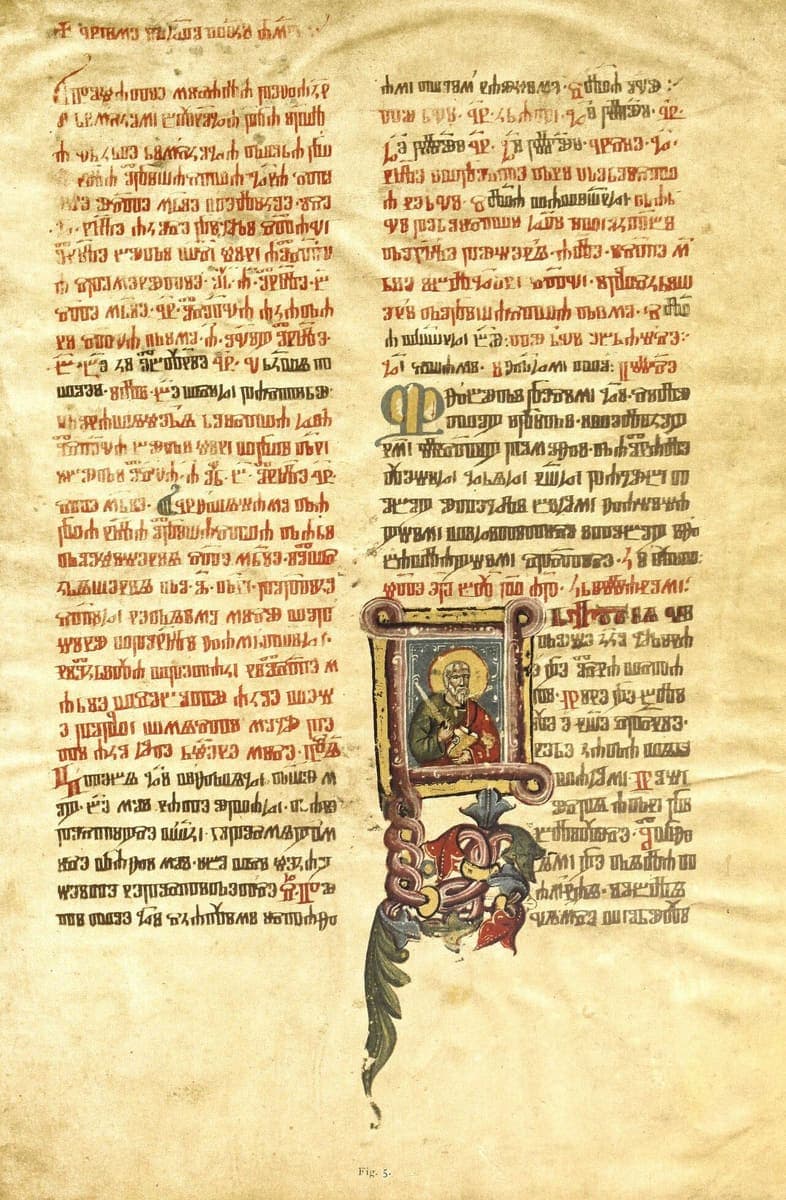
Glagolitic reached the Croatian coast with the ninth-century Slavic mission of Cyril and Methodius and, unusually, never died out there the way it did almost everywhere else. Croatian scribes reshaped the alphabet’s rounded original letters into a boxier, more rectilinear form now called Croatian or angular Glagolitic, distinct enough from the Bulgarian and Moravian round hand that palaeographers treat it as a separate family. Village priests along the Adriatic and on the Kvarner islands went on copying and printing missals, breviaries and psalters in this script for the Church Slavonic liturgy for close to a thousand years, some parishes still saying Mass from Glagolitic books into the twentieth century. The Baška tablet, carved in stone around 1100 for a Benedictine priory on Krk, is the script’s oldest securely dated Croatian monument; Hrvoje’s Missal of 1404 shows the same letters three centuries later, fully developed into a formal two-column book hand with red rubrics and painted initials.
Alongside Glagolitic, Dalmatian towns and islands kept legal and notarial business in a local Cyrillic minuscule known as bosančica, a script Croatia shares with Bosnia but shapes with its own letterforms, distinct from the Cyrillic used in Serbian or Russian manuscripts of the same centuries. The Charter of Povlja, copied onto parchment in 1250 for a Benedictine priory on the island of Brač, is the fullest surviving example: dense, continuous minuscule recording land grants in a mixture of local Croatian speech and Church Slavonic formulas, with no word spacing to mark where one clause ends and the next begins. Bosančica went on serving notaries, town councils and the Poljica community’s own statutes for centuries after Glagolitic and Latin had taken over most other writing.
The Latin alphabet Croatian uses today only took its current shape in the 1830s. Earlier printed Croatian had no agreed way to spell the sounds now written č, ć, đ, š and ž: Kajkavian books from the north followed conventions borrowed from Hungarian spelling, while Dalmatian and Dubrovnik printers used digraphs shaped by Italian orthography, so the same sound could appear as cs, ch, sc or s depending on where a book was printed. Ljudevit Gaj’s reform, worked out with reference to Czech diacritics and finished with Đuro Daničić’s đ, replaced this patchwork with the five accented letters used across Croatian, Bosnian, Serbian and Montenegrin Latin script today.
Why ordinary OCR struggles here
Three alphabets with nothing in common
Glagolitic letters resemble no other script in daily use, bosančica shapes several Cyrillic letters differently from the Serbian or Russian tradition a generic model was trained on, and Latin-script Croatian needs its own diacritics recognised correctly. A system built for one script simply fails on the page beside it on the same archive shelf.
Angular Glagolitic letters that differ only slightly
Croatian square Glagolitic reduces many letters to boxy shapes distinguished by a single internal stroke, a small loop, or which corner is cut off. Two letters that a fluent reader tells apart instantly can look almost identical to a system with no training on this specific hand.
Continuous script with no word breaks
Charters like the one from Povlja run bosančica letters together across the line with minimal spacing, so a reading has to work out where a word ends from grammar and vocabulary, not from gaps on the parchment. The same is true of much Glagolitic liturgical copying.
Pre-reform spelling and confusable diacritics
Latin-script Croatian before the 1830s used regional digraph systems that generic OCR reads as ordinary, unaccented Latin, missing the sound they were built to represent. After the reform, č and ć, or š and ž, sit one keystroke apart and are easy for a careless system to swap even in clean modern print.
Who works with this material
Editors of Glagolitic liturgical heritage
Slavicists and staff at institutions such as Zagreb’s Staroslavenski institut cataloguing missals, breviaries and psalters need a first-pass reading that respects the angular Croatian hand rather than guessing at Latin lookalikes, so it can be checked folio by folio against earlier facsimiles.
Legal historians of medieval Dalmatia
Charters, notarial registers and the Poljica community’s own statutes survive mostly in bosančica. A transcription that keeps the script’s own letterforms and flags uncertain readings gives a historian a working text to compare against published charter collections.
Genealogists and parish-record researchers
Croatian civil and church registers, forms and correspondence from the nineteenth and twentieth centuries need accurate diacritics to make names and places searchable; a misread š for s or đ for d silently breaks a family-history search.
Diaspora archives and heritage societies
Croatian-language newspapers and letters produced by emigrant communities, from nineteenth-century Auckland or Valparaíso to twentieth-century North America, are held by local historical societies that rarely have the language skills to transcribe them in house.
Getting the best transcription
Name the script before you upload
Say whether the page is Glagolitic, bosančica Cyrillic or Latin, since a single Croatian archive box can hold all three and a script guess is the first thing that has to go right.
Choose how Glagolitic should come out
Decide whether you want the Glagolitic letters themselves in the output or a Latin transliteration, and whether Church Slavonic abbreviation marks should be expanded or left as written, then keep that rule for every folio.
Flag bosančica as Croatian, not Serbian
For Cyrillic charters and notarial hands, note explicitly that the script is Croatian bosančica so letterforms are not corrected toward the Serbian or Russian conventions a general Cyrillic model expects.
Test diacritics on a clean page first
Before running a long modern document, check one printed or typed page to confirm č is not read as c or ć, and š and ž are not swapped, so the error is caught before it repeats across a whole file.
Frequently asked questions
- Can Evidano read Croatian Glagolitic script?
- Yes, both the earlier rounded Glagolitic and the angular Croatian book hand seen in missals and breviaries are recognised, and you can ask for the output as Glagolitic Unicode characters or as a Latin transliteration.
- Does it tell bosančica apart from Serbian or Russian Cyrillic?
- Yes. Croatian bosančica shapes several letters differently from those traditions, and the transcription is read as its own script rather than corrected toward a more common Cyrillic alphabet.
- How are Gaj’s diacritics č, ć, đ, š and ž handled?
- They are recognised as the distinct letters they are, and on pre-1830s Latin-script Croatian you can ask for regional digraph spellings such as cs or ch to be read as the sound they represent rather than left as stray Latin letters.
- Can it recognise stone inscriptions like the Baška tablet?
- Yes, a clear photograph of an inscribed or engraved surface is read the same way as a page, though heavily worn stone benefits from a raking-light photograph that throws the carved strokes into relief.
- What happens with abbreviations and missing word spacing in old charters?
- Abbreviation marks are recognised rather than dropped, and where a charter runs words together without spacing, the transcription proposes word breaks based on the language, which you can then check against the parchment.
- Can it keep a mixed-script page, such as a Glagolitic rubric beside a Latin note, apart?
- Yes, each script on a page can be transcribed as its own labelled block rather than merged into one stream, which matters most on library flyleaves and marginal annotations added in a later century.
Related scripts and pages
Turn your Croatian sources into text
Upload a Glagolitic missal, a bosančica charter or a modern Croatian document, and check the reading against the image before you export.