
Serbian
Serbian read in either official script
Serbian is written every day in two entirely different alphabets, Cyrillic and Latin, both taught in school and both fully official, so the same street name, the same government notice and often the same newspaper appear in both without warning which one a given photograph will show. Reform-era Cyrillic also added five letters — ђ, љ, њ, ћ and џ — that carry sounds no older Cyrillic letter marked cleanly, and everyday Serbian cursive shapes several lowercase letters differently from print. Evidano reads Serbian in whichever script a source uses, keeping the original image beside the reading.
Sample pages
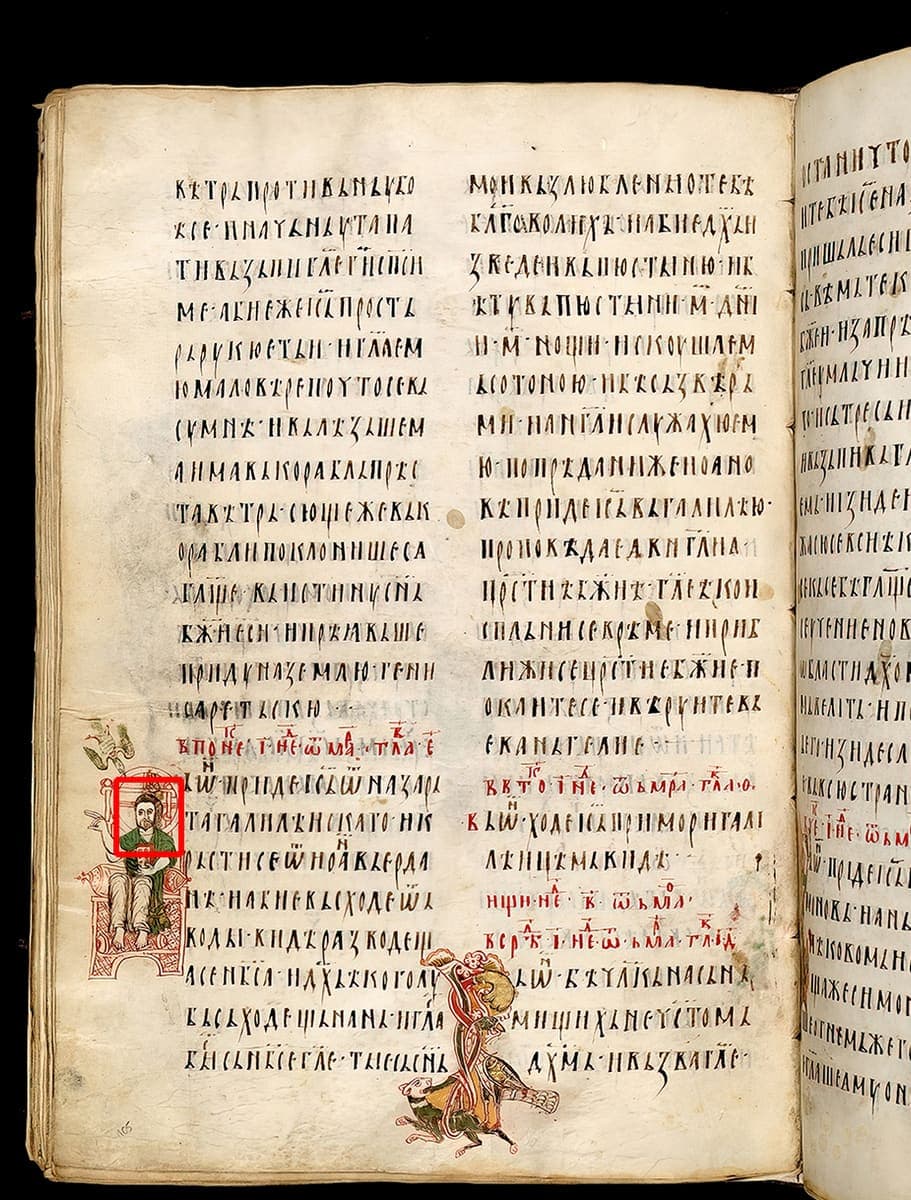
Serbian Academy of Sciences and Arts (SANU) / National Museum, Belgrade, c. 1180 · Source · CC BY-SA 4.0 · Srpska akademija nauka i umetnosti
Evidano Transcription
вѣтрь противьнь ꙗко
же · и начьнь ꙋтапа
ти вьꙁьпи гл[агол]е г[оспод]и с[ъ]п[а]си
ме · абие же ис[ус]ь прость
рь рꙋкꙋ еть и · и гл[агол]а ем
ю маловѣре почто се вь
сꙋмнѣ · и вьлѣꙁьшем
а има вь корабль прѣс
та вѣтрь · сꙋщеже вь к
орабли поклонише са
гл[агол]юще · вь истинꙋ с[ы]нь
б[о]жи еси · и прѣѣхавше
придꙋ на ꙁемлю · гени
саретьскꙋю ·
вь поне[дѣльникь] · г · не[дѣлѧ] · ѿ ма[рка] · гла[ва] · е
Вь ѡ[нъ] · приде ис[ус]ь ѿ наꙁаре
та галилѣискаго · и к
рьсти се ѿ иоа[н]а вь ерда
нѣ · и абие вьсходе ѿ в
оды · видѣ раꙁводещ
а се н[е]б[е]са · и д[ꙋ]хь ꙗко голꙋ
бь сходещь на нь · и гла
сь бы[с] сь н[е]б[е]се гл[агол]е · ты еси с[ы]нь
мои вьꙁлюблени ѡ тебѣ
бл[а]говолихь · и абие д[ꙋ]хь и
ꙁведе и вь пюстиню · и б
ѣ тꙋ вь пюстини · м · дни
и · м · нощии · искоушаем
ь сотоною · и бѣ сь ꙁвѣрь
ми · и аньг[е]ли слꙋжахю ем
ю · по прѣдании же иоано
вѣ · приде ис[ус]ь вь галилѣю ·
проповѣдае еванг[е]лиа[?] ·
ц[а]рствиꙗ б[о]жиꙗ · гл[агол]е ꙗко и
спльни се врѣме · и приб
лижи се ц[а]рствие б[о]жие · п
окаите се · и вѣрꙋите вь
еванг[е]лие ·
вь вто[рникь] · г[?] · не[дѣлѧ] · ѿ м[а]р[к]а · гла[ва] · ѕ[?]
Вь ѡ[нъ] · ходе ис[ус]ь при мори гали
лѣистѣмь · видѣ ·
[rubric, first word illegible] · не[дѣлѧ] · г · ѿ ма[рка] ·
[rubric, first word illegible] · г · не[дѣлѧ] · ѿ ма[рка] · гла[ва] · з[?]
Вь ѡ[нъ] · бѣ ч[е]л[овѣ]кь[?] на сьнь
мищихь нечистомь
д[ꙋ]хмь · и вьꙁьва гл[агол]е ·
[cut off: facing page]
Generated by Evidano’s advanced model; not yet checked against a published edition.
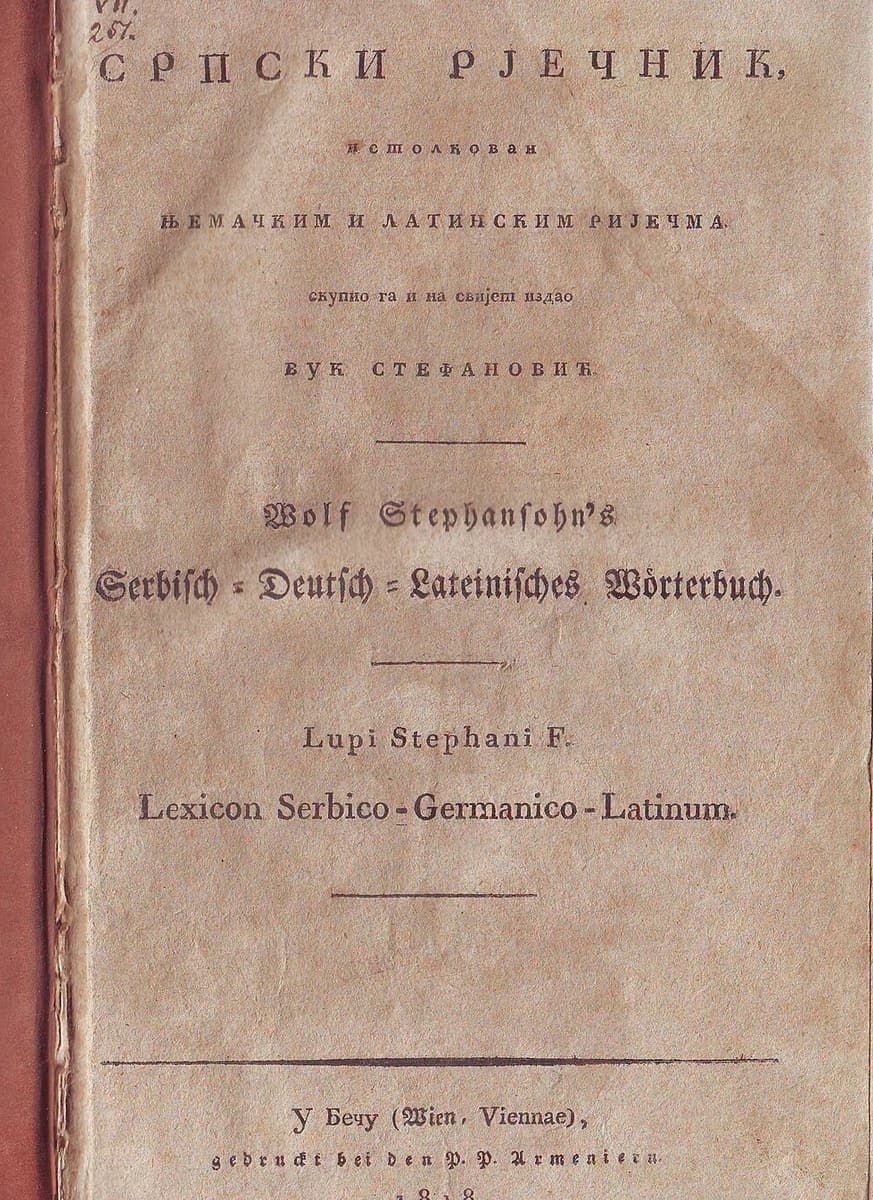
Karlovci Gymnasium Memorial Library, 1818 · Source · Public domain
Evidano Transcription
VII.
257.
С Р П С К И Р Ј Е Ч Н И К,
и с т о л к о в а н
Њ Е М А Ч К И М И Л А Т И Н С К И М Р И Ј Е Ч М А.
скупио га и на свијет издао
В У К С Т Е Ф А Н О В И Ћ.
__________
Wolf Stephansohn's
Serbisch = Deutsch = Lateinisches Wörterbuch.
__________
Lupi Stephani F.
Lexicon Serbico - Germanico - Latinum.
У Бечу (Wien, Viennae),
gedruckt bei den P. P. Armeniern.
1 8 1 8.
Generated by Evidano’s advanced model; not yet checked against a published edition.
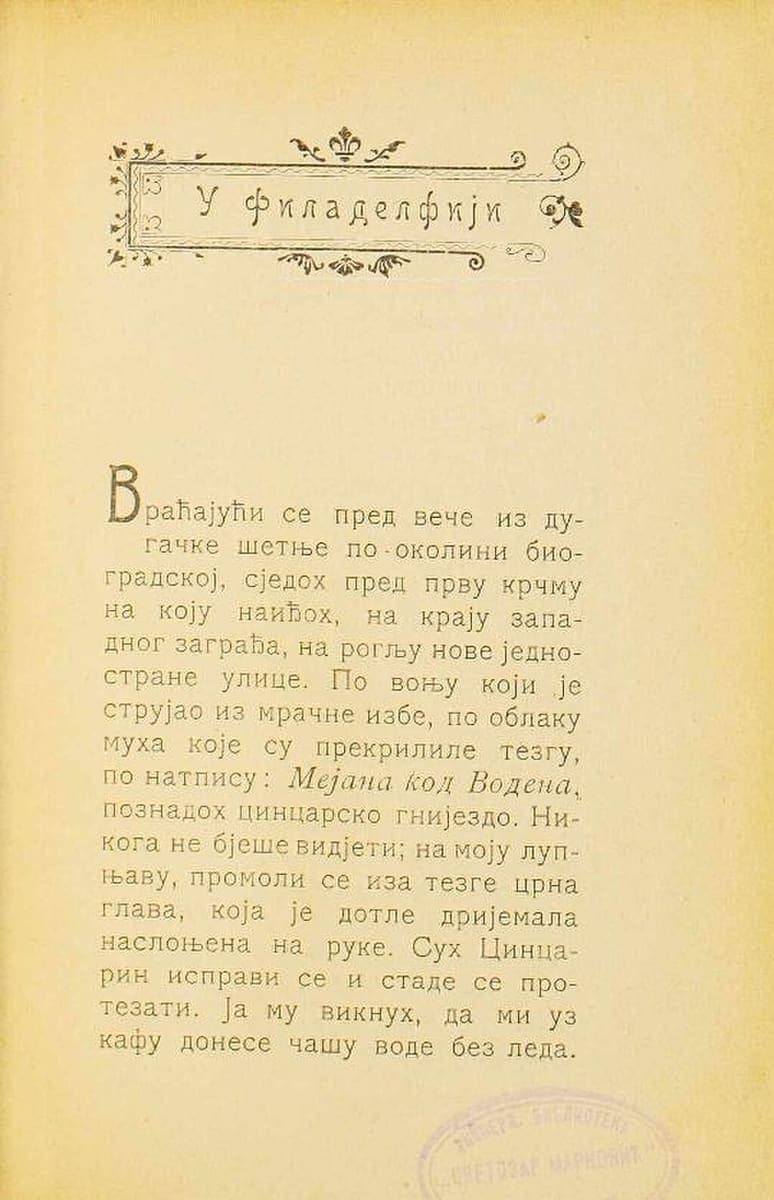
University Library "Svetozar Marković", Belgrade, 1899 · Source · Public domain
Evidano Transcription
The chapter title and opening paragraph of "У Филаделфији", transcribed from the validated proofread text of this exact page on Serbian Wikisource.
У Филаделфији
Враћајући се пред вече из дугачке шетње по околини биоградској, сједох пред прву крчму на коју наиђох, на крају западног заграђа, на рогљу нове једностране улице. По воњу који је струјао из мрачне избе, по облаку муха које су прекрилиле тезгу, по натпису: Мејана код Водена, познадох цинцарско гнијездо. Никога не бјеше видјети; на моју лупњаву промоли се иза тезге црна глава, која је дотле дријемала наслоњена на руке. Сух Цинца исправи се и стаде се протезати. Ја му викнух, да ми уз кафу донесе чашу воде без леда.
Source: Page:Simo Matavulj - Tri pripovijetke.pdf/9, via Serbian Wikisource (Public domain).
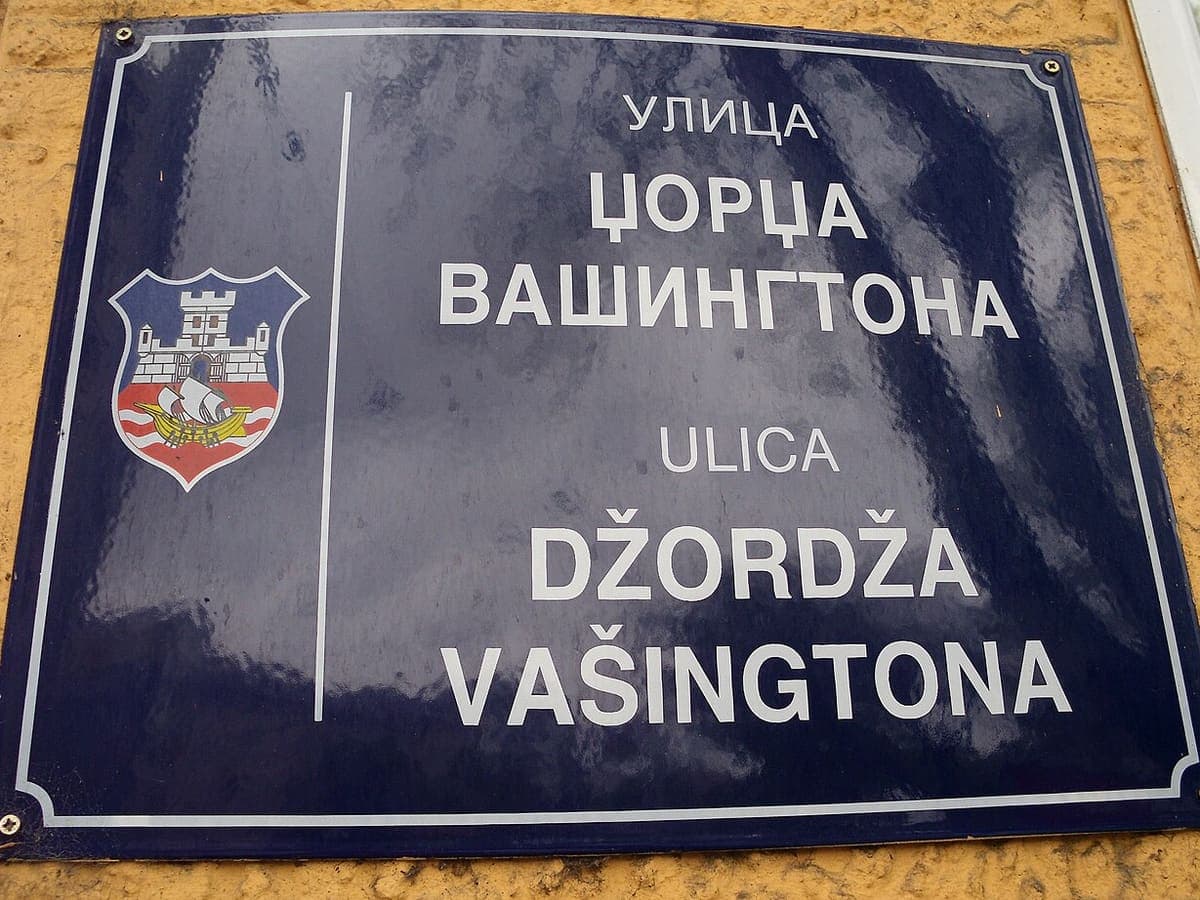
Evidano Transcription
УЛИЦА
ЏОРЏА
ВАШИНГТОНА
ULICA
DŽORDŽA
VAŠINGTONA
Generated by Evidano’s advanced model; not yet checked against a published edition.
What Serbian writing looks like
The oldest substantial Serbian document is the Miroslav Gospel, copied around 1180 for Prince Miroslav of Hum in a Serbian recension of Church Slavonic: an upright, formal Cyrillic ustav hand, red rubricated titles and initials, and a rich programme of marginal miniatures, its script already showing letterforms distinct from the Bulgarian and Russian Church Slavonic traditions that share its Cyrillic ancestor. Serbian continued to be written in variants of Church Slavonic and Slavonic-Serbian, a literary hybrid mixing Church Slavonic with vernacular and Russian elements, well into the eighteenth century, alongside a separate cursive chancery hand used for everyday and administrative writing.
Vuk Stefanović Karadžić reformed Serbian spelling from 1814, publishing his Srpski rječnik dictionary in 1818 on the principle of writing exactly as the language is spoken, one letter per sound. His alphabet dropped several inherited Cyrillic letters that no longer matched any distinct Serbian sound and added five new ones — ђ, љ, њ, ћ and џ — either invented or adapted from existing letters, giving modern Serbian Cyrillic its current thirty letters. A parallel Latin alphabet, gajica, was fixed at almost the same time for the same phonemic principle, using č, ć, š, ž and đ for sounds the Cyrillic alphabet marks with its own single letters; because the two alphabets map one to one, any Serbian text can be transliterated automatically between them, and in practice both appear everywhere, from official documents and street signs to newspapers and personal handwriting. Serbian cursive and italic type also shape several lowercase Cyrillic letters, including г, д, п and т, differently from the Russian cursive tradition, closer to the Serbian hand Vuk’s own generation wrote.
Why ordinary OCR struggles here
Two live, fully official scripts
A Serbian document, sign or publication can appear in Cyrillic, Latin, or both together with no marking to say which to expect, so recognition has to identify the script correctly before it can read a single letter, and a system tuned to only one script will silently fail on the other half of everyday material.
Five reform letters that Church Slavonic never had
ђ, љ, њ, ћ and џ do not exist in the older Church Slavonic and Slavonic-Serbian material that a page might be transcribed alongside, and a system trained mainly on Russian or Church Slavonic Cyrillic either fails to recognise them or maps them onto the nearest older letter, erasing exactly the distinction Vuk’s reform introduced.
Serbian cursive is not Russian cursive
Handwritten and italic-set г, д, п and т take a different shape in the Serbian tradition than in Russian, so a model trained mainly on Russian handwriting misreads ordinary Serbian cursive letter by letter even when the writer’s hand is perfectly clear.
Church Slavonic and Slavonic-Serbian abbreviation and vocabulary
Pre-reform manuscripts and eighteenth-century Slavonic-Serbian texts carry abbreviation marks, obsolete letters and a vocabulary mixing Church Slavonic, Russian and vernacular Serbian forms, none of which a system trained only on modern Serbian recognises correctly.
Who works with this material
Medieval Slavic manuscript scholars
The Miroslav Gospel and related Serbian Church Slavonic manuscripts continue to be studied and re-edited from digitised images. A working transcription of a folio, with rubrics and marginal miniatures kept distinct from the running text, gives a scholar a base for collation before a critical edition is produced.
Historians of the Vuk Karadžić reform
Early editions of Vuk’s dictionary, grammar and folk-song collections survive in library special collections and require careful reading of the reformed alphabet as it looked when it was still new, alongside the older Church Slavonic and Slavonic-Serbian conventions it replaced.
Newspaper and periodical archives
Serbian newspapers from the nineteenth and twentieth centuries are held in libraries as fragile bound volumes or microfilm, mostly undigitised as searchable text. A transcription of a front page or an article gives an archive a usable text without retyping dense, multi-column print by hand.
Bilingual signage and civic records projects
Belgrade and other Serbian cities post official signage in both Cyrillic and Latin script side by side. Documenting or auditing this signage, or processing bilingual civic records more generally, needs both scripts read accurately and matched to each other as the same underlying name.
Getting the best transcription
Say which script, or confirm both
State whether a source is Cyrillic, Latin, or shows the same text in both, since a document with both scripts should usually be transcribed as two matched blocks rather than one merged line.
Flag Vuk’s five added letters explicitly for older material
For Church Slavonic or Slavonic-Serbian text that predates the reform, note that ђ, љ, њ, ћ and џ will not appear and that older letterforms and abbreviations should be read as written rather than corrected toward modern spelling.
Note that Serbian cursive is not Russian cursive
For handwritten material, say explicitly that г, д, п and т should be read in their Serbian forms, so a fast or informal hand is not misread through Russian-trained expectations.
Ask for rubrics and marginalia to be separated from body text
On an illuminated manuscript page, request that red rubrics, marginal miniatures and later library stamps or shelfmarks be identified separately from the running text, so the transcription reflects the reading itself rather than the whole page layout.
Frequently asked questions
- Can it read both Serbian Cyrillic and Serbian Latin script?
- Yes, both are read natively, and where a document gives the same text in both scripts you can ask for them returned as two matched blocks rather than merged into one.
- Does it recognise ђ, љ, њ, ћ and џ correctly?
- Yes, these are treated as the distinct letters Vuk’s reform introduced rather than mapped to older, similar-looking Cyrillic letters, which is the most common way reformed Serbian spelling gets misread by systems trained on other Cyrillic alphabets.
- Can it read the Miroslav Gospel and other Church Slavonic manuscripts?
- Yes, the formal ustav hand of Serbian Church Slavonic manuscripts is read as its own historical hand, and rubricated titles, abbreviation marks and marginal decoration can be identified separately from the main text on request.
- Does it tell Serbian cursive apart from Russian cursive?
- Yes, the Serbian forms of letters such as г, д, п and т are recognised as themselves rather than corrected toward the Russian cursive shapes a generic Cyrillic model is usually trained on.
- Can it automatically convert between Cyrillic and Latin Serbian?
- Because the two alphabets map one to one, a transcription made from either script can be converted to the other on request, alongside the original diplomatic reading of whichever script the source actually used.
Related scripts and pages
Turn your Serbian sources into text
Upload a manuscript, a historic book or newspaper, a modern document or a bilingual sign, and check the Serbian reading against the image in either script.