
Bulgarian
Bulgarian read from Glagolitic to modern print
Bulgaria is where Cyrillic script itself was developed, out of an older alphabet called Glagolitic whose looped, knotted letters share nothing visually with the Cyrillic that followed it. Bulgarian print before 1945 also used two letters, ѣ and ѫ, that a modern spellchecker has never seen, and Bulgarian handwriting shapes its lowercase в, г, д, п and т so differently from Russian cursive that a reader trained on one can genuinely misread the other. Evidano reads Bulgarian across Glagolitic manuscripts, pre-reform print and modern handwriting and signage, keeping the source image next to every line.
Sample pages
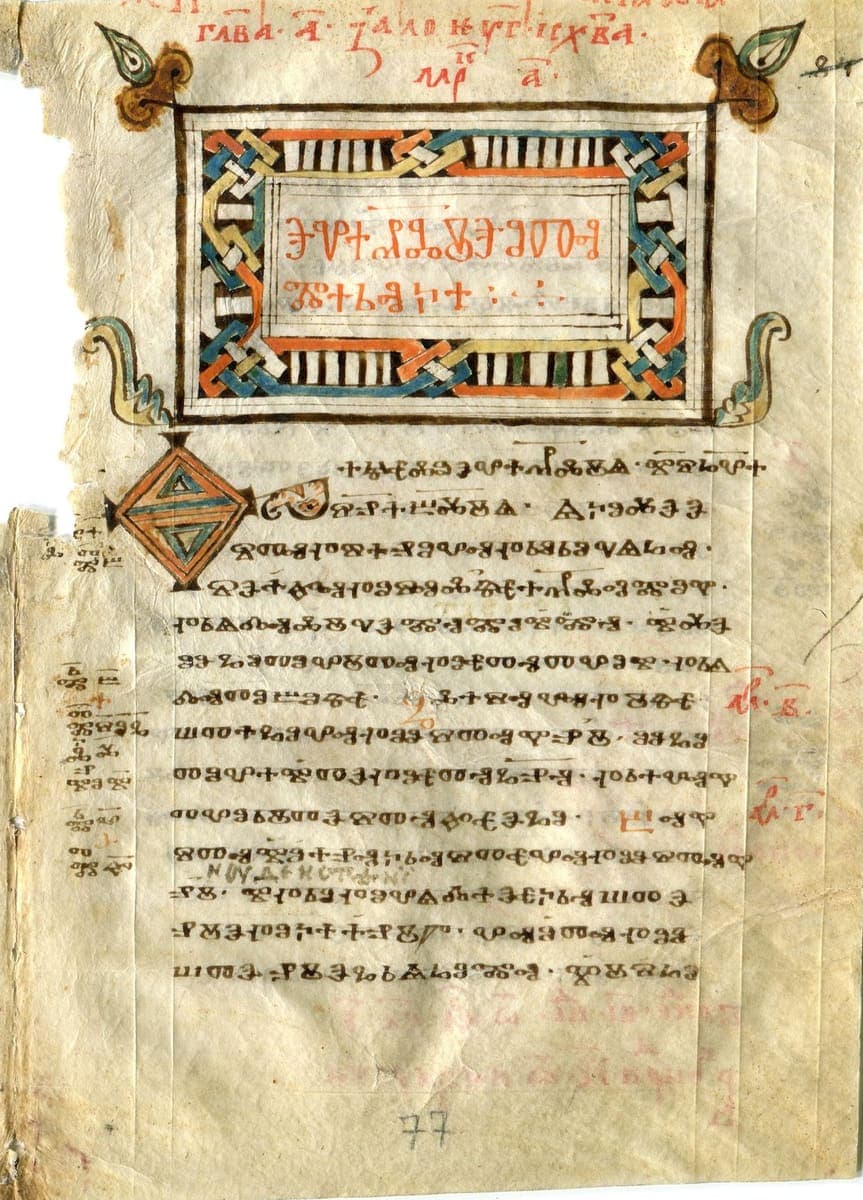
National Library of Russia, St Petersburg, 10th–11th century · Source · Public domain
Evidano Transcription
ꙁачѧло · а҃ · ꙁачѧло еѵ[ан]г[елиꙗ] · і[су]с[а] х[ристо]ва ·
мар[к] а҃
ⰵⱛⰰⱀⰼⰳⰵⰾⰻⰵ
ⱁⱅ ⰿⰰⱃⰽⰰ ·:·
Ⱀⰰⱍⱑⰾⱁ ⰵⰲⰰⱀⰼⰳⰵⰾⰻⱑ ⰻ[ⱄⱆ]ⱄ[ⰰ] ⱈ[ⱃⰻⱄⱅⱁ]ⰲⰰ · ⱄ[ⱏⰹ]ⱀⰰ ⰱ[ⱁ]ⰶ[ⰻ]ⱑ
ⱑⰽⱁ ⰶⰵ ⰵⱄⱅⱏ ⱂⰻⱄⰰⱀⱁ · ⰲⱏ ⰻⱄⰰⰻⰻ
ⱂⱃⱁⱃⱁⱌⱑ · ⱄⰵ ⰰⰸⱏ ⱂⱁⱄⱏⰾⱙ ⰰⱀⰼⰳⰵⰾⱏ ⰿⱁⰻ ·
ⱂⱃⱑⰴⱏ ⰾⰻⱌⰵⰿⱐ ⱅⰲⱁⰻⰿⱐ · ⰻⰶⰵ ⱆⰳⱁⱅⱁⰲⰰⰰⱅⱏ
ⱂⱘⱅⱐ ⱅⰲⱁⰻ ⱂⱃⱑⰴ ⱅⱁⰱⱁⱙ · ⰳⰾⰰⱄⱏ ⰲⱏⱂⰻⱙ
ⱋⰰⰰⰳⱁ ⰲⱏ ⱂⱆⱄⱅⱏⰹⱀⰻ · ⱆⰳⱁⱅⱁⰲⰰⰻⱅⰵ ⱂⱘⱅⱐ ⰳ[ⱁⱄⱂⱁ]ⰴⱐⱀⱐ
ⱂⱃⰰⰲⱏⰹ ⱅⰲⱁⱃⰻⱅⰵ · ⱄⱅⱐⰸⱑ ⰵⰳⱁ · Ⰱⱏⰹⱄⱅⱏ ⰻⱁⰰⱀⱏ
ⰽⱃⱏⱄⱅⱑ ⰲⱏ ⱂⱆⱄⱅⱏⰹⱀⰻ · ⰻ ⱂⱃⱁⱂⱁⰲⱑⰴⰰⱑ
ⰽⱃⱏⱋⰵⱀⰻⰵ ⱂⱁⰽⰰⱑⱀⰻⱑ ⰲⱏ ⱁⱅⱏⱂⱆⱋⰵⱀⰻⰵ
ⰳⱃⱑⱈⱁⰲⱏ · Ⰻ ⰻⱄⱈⱁⰶⰴⰰⱎⰵ ⰽⱏ ⱀⰵⰿⱆ
ⰲⱐⱄⱑ ⰻⱆⰴⰵⰻⱄⰽⰰⱑ ⱄⱅⱃⰰⱀⰰ · ⰻ ⰻⰵⱃⱆⱄⰰⰾⰻⰿⰾⱑⱀⰵ
ⰲⱐⱄⰻ · ⰻ ⰽⱃⱏⱋⰰⰰⱈⱘ ⱄⱑ ⰲⱐⱄⰻ ⰲⱏ ⰻⱁⱃⰴⰰ
ⱀⱐⱄⱅⱑⰻ ⱃⱑⱌⱑ ⱁⱅ ⱀⰵⰳⱁ · ⰻⱄⱂⱁⰲⱑⰴⰰⱙ
ⱋⰵ ⰳⱃⱑⱈⱏⰹ ⱄⰲⱁⱑ · ⰱⱑ ⰶⰵ ⰻⱁⰰⱀⱏ
Generated by Evidano’s advanced model; not yet checked against a published edition.
Evidano Transcription
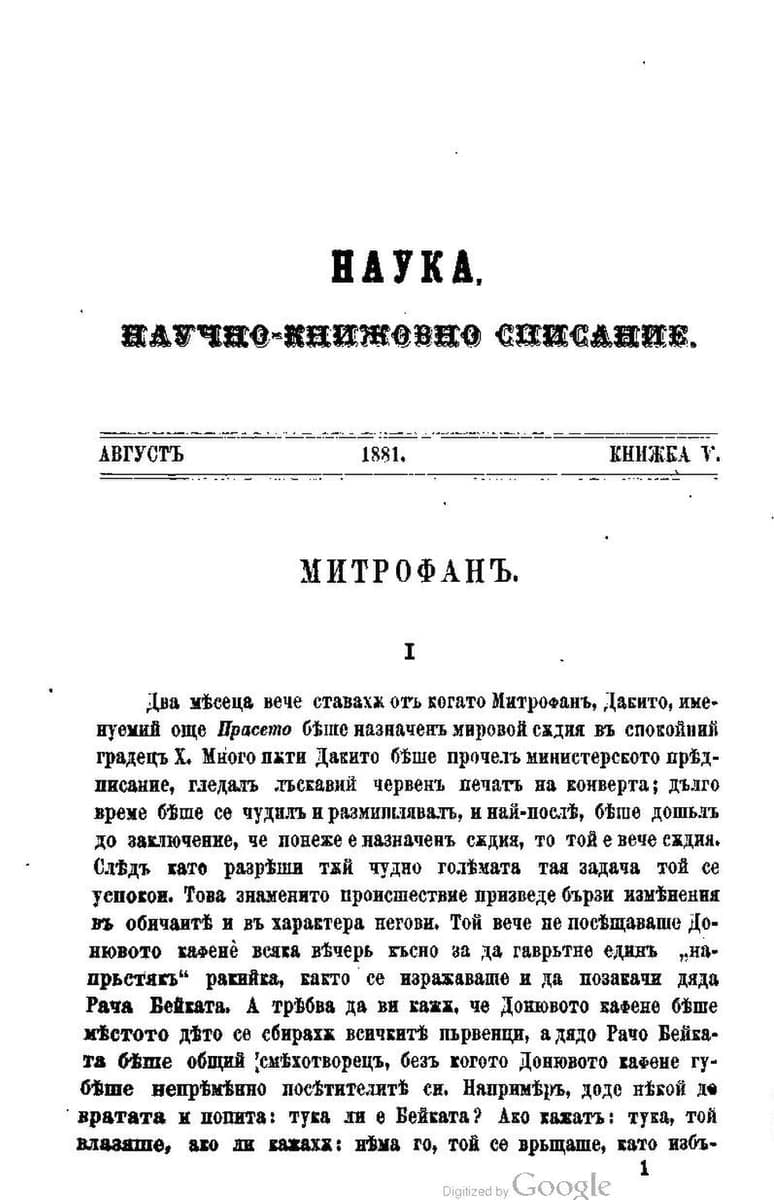
The masthead and the opening paragraph of "Митрофанъ", transcribed from the validated proofread text of this exact page on Bulgarian Wikisource, quoted only as far as the page itself runs; the story continues, mid-sentence, onto the next page. Spelling, including yat, big yus and the final hard sign, is kept exactly as proofread.
НАУКА,
НАУЧНО-КНИЖОВНО СПИСАНИЕ.
АВГУСТЪ 1881. КНИЖКА V.
МИТРОФАНЪ.
I.
Два мѣсеца вече ставахъ oтъ когато Митрофанъ, Дакито, именуемий още Прасето бѣше назначенъ мировой сѫдия въ спокойний градецъ Х. Много пѫти Давито бѣше прочелъ министерското прѣдписание, гледалъ лъскавий червенъ печатъ на конверта; дълго време бѣше се чудилъ и размишлявалъ, и най-послѣ, бѣше дошьлъ до заключение, че понеже е назначенъ сѫдия, то той е вече сѫдия.
Слѣдъ като разрѣши тѫй чудно голѣмата тая задача той се успокои. Това знаменито происшествие призведе бързи измѣнения въ обичаитѣ и въ характера негови. Той вече не посѣщаваше Донювото кафене всяка вѣчерь късно за да гаврьтне единъ „напрьстякъ“ ракийка, както се изражаваше и да позакачи дяда Рача Бейката.
Source: Page:Наука. 1881 г.pdf/414, via Bulgarian Wikisource (Public domain).
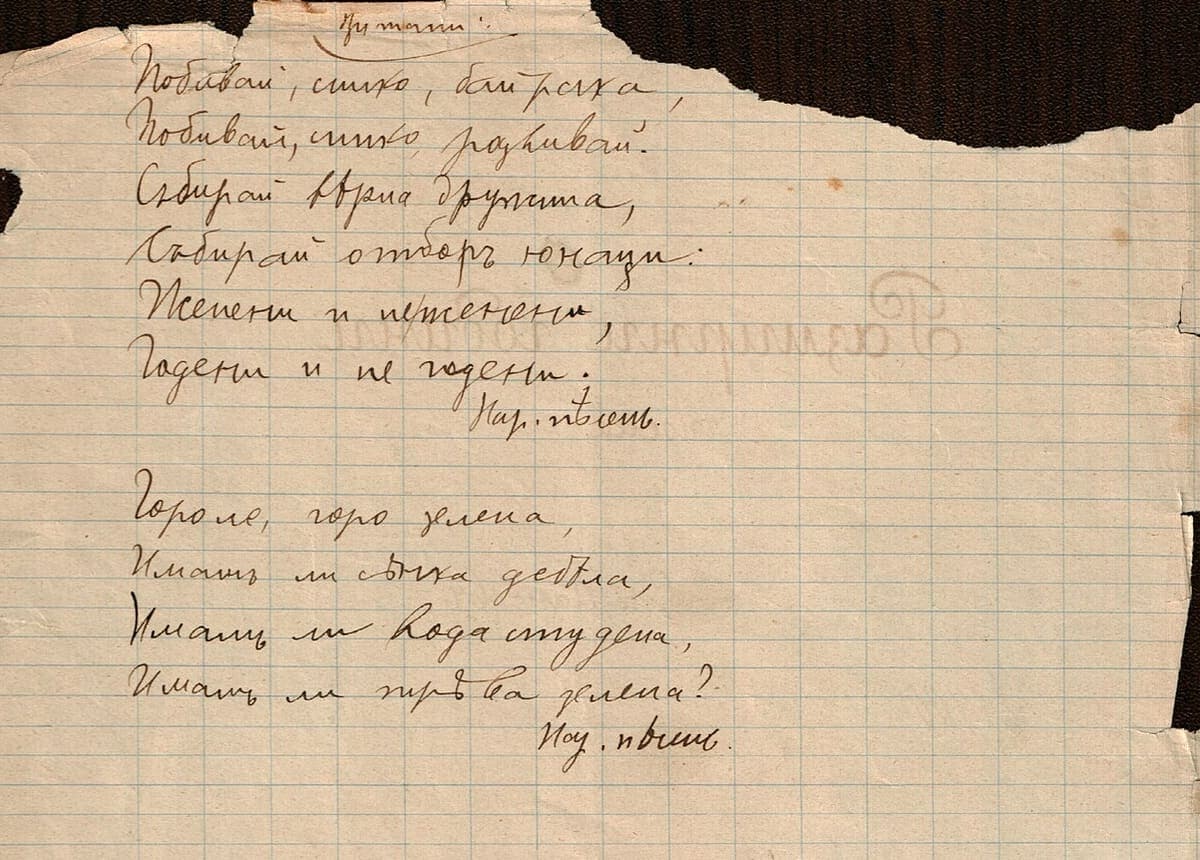
Historical Museum, Botevgrad · Source · Public domain · Digitised for WikiBotevgrad, a partnership between Wikimedians of Bulgaria and the Botevgrad municipality
Evidano Transcription
Цитати
Побивай, синко, байрака,
Побивай, синко, развивай.
Събирай вѣрна дружина,
Събирай отборъ юнаци:
Женени и неженени,
Годени и не годени.
Нар. пѣсень.
Горо ле, горо зелена,
Имашъ ли сѣнка дебела,
Имашъ ли вода студена,
Имашъ ли трѣва зелена?
Нар. пѣсень.
Generated by Evidano’s advanced model; not yet checked against a published edition.

Source · CC BY-SA 3.0 · Apostoloff
Evidano Transcription
Left
КОЗУНАК
МИЛИНКИ
Right
ГЕВРЕЦИ
КИФЛИ
Generated by Evidano’s advanced model; not yet checked against a published edition.
What Bulgarian writing looks like
Glagolitic is the older of the two scripts devised for Old Church Slavonic, created in the ninth century and traditionally credited to Cyril and Methodius; its letters are built from loops, circles and small crosses bearing no resemblance to Greek or Latin, and it survives mainly in liturgical manuscripts such as the Codex Zographensis and Codex Assemanianus, copied in the First Bulgarian Empire around the tenth and eleventh centuries. Cyrillic itself, developed by their students at the Preslav Literary School at the end of the ninth century and named for Cyril, adapted the Greek uncial alphabet and added letters for Slavic sounds Greek lacked; from Bulgaria it spread outward to become the script of Serbian, Russian, Ukrainian and the other Slavic Orthodox languages. Manuscripts of the Second Bulgarian Empire, such as the lavishly illuminated Gospels copied for Tsar Ivan Alexander in 1355–56, show Cyrillic already close to its later print form, with decorated headpieces, gold and coloured initials, and a formal, upright book hand.
Ottoman rule and, later, the Bulgarian National Revival of the eighteenth and nineteenth centuries kept Cyrillic printing alive through church books, primers and an expanding secular and revolutionary press; that pre-1945 print used an alphabet of over thirty letters, including ѣ (yat), covering a vowel that had split into different sounds in different Bulgarian dialects, and ѫ (big yus), an inheritance from Old Church Slavonic nasal vowels. A spelling reform carried out in 1945 under the new communist government dropped both letters along with the final hard sign written after consonants at the end of a word, so anything printed before that date carries letters a modern Bulgarian keyboard cannot type. Bulgarian handwriting and italic print type both follow a distinct national convention rather than the Russian one: lowercase т is written like a Latin m, п like a Latin n, г as a small hook, д with a looped descender, and в with its own closed, rounded shape, so a page set in Bulgarian italics or written in an ordinary cursive hand can look markedly different from the same letters in Russian.
Why ordinary OCR struggles here
Glagolitic shares no letterforms with Cyrillic
An engine trained on any Cyrillic alphabet has nothing to match Glagolitic’s loops, circles and cross-shapes against, since the two scripts, though devised for the same language, are visually unrelated; each Glagolitic letter has to be recognised as its own shape rather than as a stylistic variant of a Cyrillic one.
ѣ and ѫ do not exist in modern Bulgarian text
Pre-1945 print and manuscripts use yat and big yus routinely, in ordinary words, and a system with no model for either letter either drops it, substitutes the modern spelling silently, or misreads it as а completely different letter it resembles at a glance, such as ж or a.
Bulgarian cursive is not Russian cursive
Because т, п, г, д and в take different shapes in the Bulgarian cursive and italic tradition, a recognition model tuned on Russian handwriting misreads fluent Bulgarian writing letter by letter, turning real words into strings that only look like garbled Russian.
Damage, folding and overwriting on archival paper
Revival-era and early twentieth-century Bulgarian newspapers and personal manuscripts usually survive as a single fragile, folded or torn copy, sometimes annotated later by another hand in different ink; the transcription needs to separate the original text from any later addition rather than merging the two.
Who works with this material
Slavist and Old Church Slavonic scholars
Glagolitic and early Cyrillic manuscripts continue to be catalogued, digitised and re-edited by libraries in Sofia, Zagreb, Vienna, St Petersburg and beyond. A working transcription of a Glagolitic folio, with the letters mapped rather than left as an unidentified script, gives a scholar a base text before a diplomatic edition is prepared.
Bulgarian archives and Revival-era historians
Newspapers, primers, church registers and revolutionary-era pamphlets from the National Revival through the interwar years survive mostly as single fragile copies in regional museums and libraries. A transcription that keeps yat and big yus as written, rather than modernising them, preserves exactly the dating evidence a historian relies on.
Family historians and museum collections
Personal letters, diaries and memoirs such as those held by small regional history museums are rarely typed up in full. Reading the cursive hand correctly, with Bulgarian rather than Russian letterforms assumed, is the difference between a usable transcript and a text full of plausible-looking errors.
Publishers reprinting pre-1945 Bulgarian texts
Reissuing a book or document set before the 1945 spelling reform means deciding, once, whether to keep ѣ and ѫ as printed or convert them to modern spelling, and applying that decision consistently rather than correcting page by page.
Getting the best transcription
Name the script and the period
Say whether a page is Glagolitic, pre-1945 Cyrillic print, a manuscript hand, or modern Bulgarian, since the letter inventory and spelling conventions attached to each differ substantially even within the same broad script family.
Decide how to handle ѣ and ѫ
State whether yat and big yus should be kept as printed, for archival accuracy, or converted to modern spelling for a searchable text, and apply the same rule across a whole batch of pre-reform material.
Flag Bulgarian-specific cursive letterforms explicitly
For handwritten or italic-set material, note that Bulgarian т, п, г, д and в follow the national convention rather than the Russian one, so the model does not "correct" a properly formed Bulgarian letter into a different Russian-looking one.
Separate later annotations from the original text
Where a later reader has written over or beside an older document, ask for the two hands to be transcribed and labelled separately, so an added note is not folded into the original wording.
Frequently asked questions
- Can it read Glagolitic manuscripts, not just Cyrillic ones?
- Yes, Glagolitic is read as its own script with its own letterforms rather than as a Cyrillic variant, and you can ask for the output transliterated into Cyrillic or Latin letters alongside the Glagolitic transcription.
- How are ѣ and ѫ handled in pre-1945 text?
- They are transcribed as themselves by default, since they were dropped only in the 1945 reform and their presence dates a document. A modernised-spelling version can be produced as a separate pass on request.
- Does it recognise Bulgarian cursive letterforms rather than Russian ones?
- Yes. Bulgarian т, п, г, д and в are read in their national forms, which differ from Russian cursive, rather than being mapped onto the nearest Russian-style letter, which is the most common way Bulgarian handwriting gets misread by generic Cyrillic tools.
- Can it read Tsar Ivan Alexander-era illuminated Gospel manuscripts?
- Yes, the formal upright Cyrillic book hand of Second Bulgarian Empire manuscripts is read as a distinct historical hand, and decorated initials, rubrics and marginal notes can be flagged separately from the running text on request.
- What happens with a document that has a later handwritten note added to it?
- The original printed or written text and a later annotation in a different hand or ink are transcribed separately when asked, so the added note is not mixed into the document’s original wording.
Related scripts and pages
Turn your Bulgarian sources into text
Upload a manuscript, a pre-reform newspaper, a handwritten page or a photographed sign, and check the Bulgarian reading line by line against the image.