
Russian · c. 1000–1400
Read the ustav hand of early Rus
Ustav draws every letter separately and leaves no gap between words, so a line of a gospel book arrives as one unbroken string. Evidano transcribes the folio as it stands, keeps or expands the titla as you instruct, and reads a letter under a stroke as the number it is rather than as a stray consonant.
Sample pages
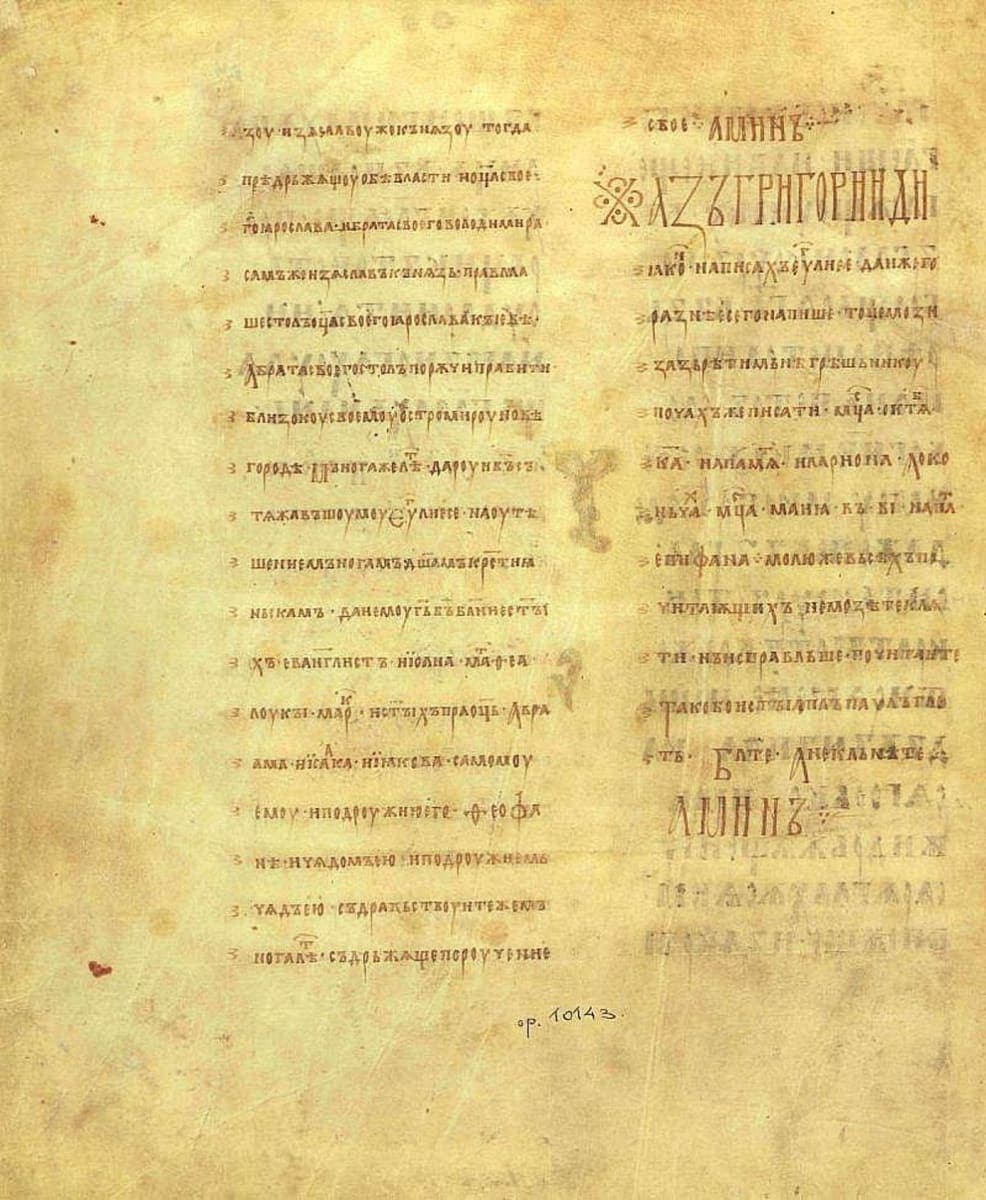
National Library of Russia, St Petersburg, F.п.I.5, f. 294v, 1056–1057 · Source · CC BY-SA 3.0 · Via Wikimedia Commons
Evidano Transcription
The two records visible on the leaf, from “изяславоу же кънязоу тогда предрьжящоу” — the page opens in mid-sentence — to the closing AMEN. A semi-diplomatic text: letters supplied under titla are given in round brackets, the source runs each record as continuous prose, and its two paragraphs are kept as two lines here.
изяславоу же кънязоу тогда предрьжящоу обе власти и о(т)ца своего ярослава. и брата своего володимира. самъ же изяславъ кънязь . правлааше столъ о(т)ца своего ярослава кыеве. А брата своего столъ поручи правити близокоу своемоу остромироу нове городе. Мънога же лет(а) дароуи въсътяжавъшоумоу еу(ан)г(е)лие се. на оутешение мъногамъ д(у)шамъ кр(ь)стияньскамъ. да и емоу г(оспод)ь б(ог)ъ бл(агослове)ние с(вя)тыхъ Еванг(е)листъ. и иоана. матфеа. лоукы. марк(а). и с(вя)тыхъ прао(те)ць. Авраама. и исаака. и иякова. самомоу емоу. и подроужию его. феофане. и чядомъ ею. и подроужиемь чадъ ею. съдравьствоуите же мънога лет(а). съдрьжаще пороучение свое. АМИНЪ.
АЗЪ ГРИГОРИИ ДИякон(ъ). написахъ еу(ан)г(е)лие е. да иже горазнее сего напише. то не мози зазьрети и мьне грешьникоу. почахъ же писати м(е)с(я)ца октяб(ря) .21. на памят(ь). илариона. А оконьчах(ъ). м(е)с(я)ца. маия въ .12. на па(мя)т(ь) епифана .:. молю же вьсехъ почитающихъ не мозете кляти. нъ исправльше. почитаите Тако бо и с(вя)ты(и) ап(осто)лъ паулъ гл(агол)етъ. Бл(агослови)те. А не кленете. .:. АМИНЪ .:.
Source: Остромирово Евангелие, Russian Wikipedia (section “Создание и датировка”) (CC BY-SA 4.0).
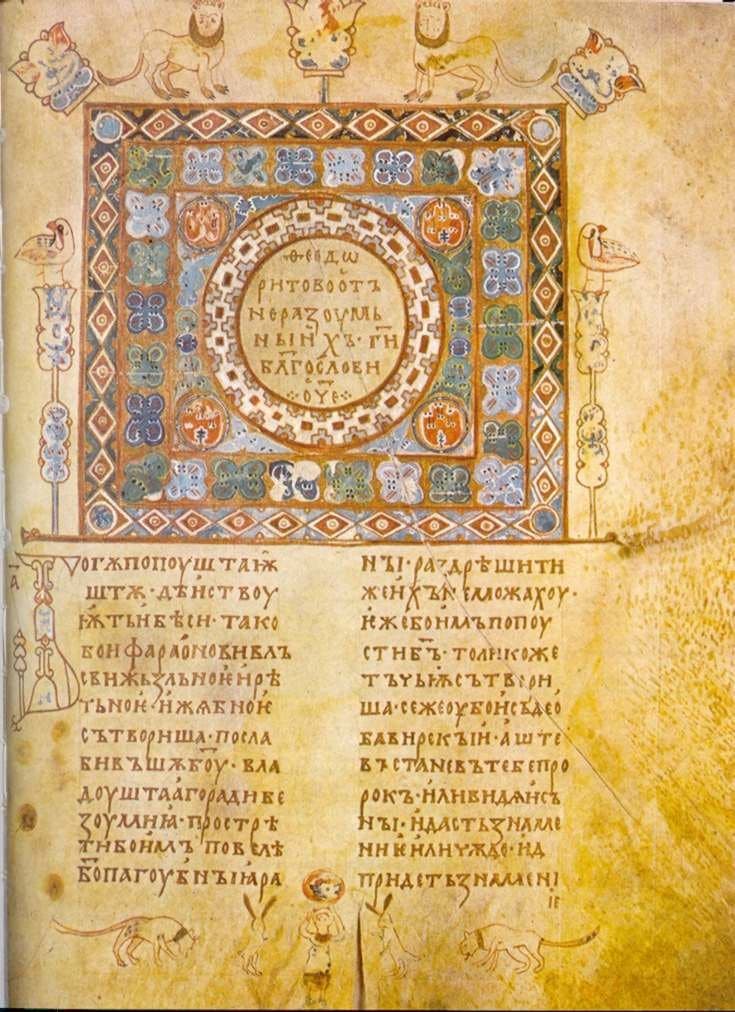
State Historical Museum, Moscow, 1073 · Source · Public domain
Evidano Transcription
ѳеѡдѡ
ритово отъ
неразоумь
ныихъ · г[оспод]и
б[л]агословен
· оуе ·
Богѫ попоуштаѭ
штѫ · дѣиствоу
ѭтъ и бѣси · тако
бо и фараонови влъ
сви жьзльноѥ и рѣ[?]
тьноѥ · и жабноѥ
сътвориша · посла
бивъшѫ б[ог]оу · вла
доуштааго ради бе
зоумнѩ · прострѣ
ти бо имъ повелѣ
бо пагоубнꙑѩ ра
нꙑ · раздрѣшити
же ихъ не можахоу ·
иже бо имъ попоу
сти б[ог]ъ · толико же
тъчьѥже[?] сътвори
ша · се же оубо и съдѣо
бави рекꙑи · аште
въстане въ тебе про
рокъ · или видѧи съ
нꙑ · и дасть знаме
ниѥ или чюдо · и да
придеть знамени
ѥ
Generated by Evidano’s advanced model; not yet checked against a published edition.
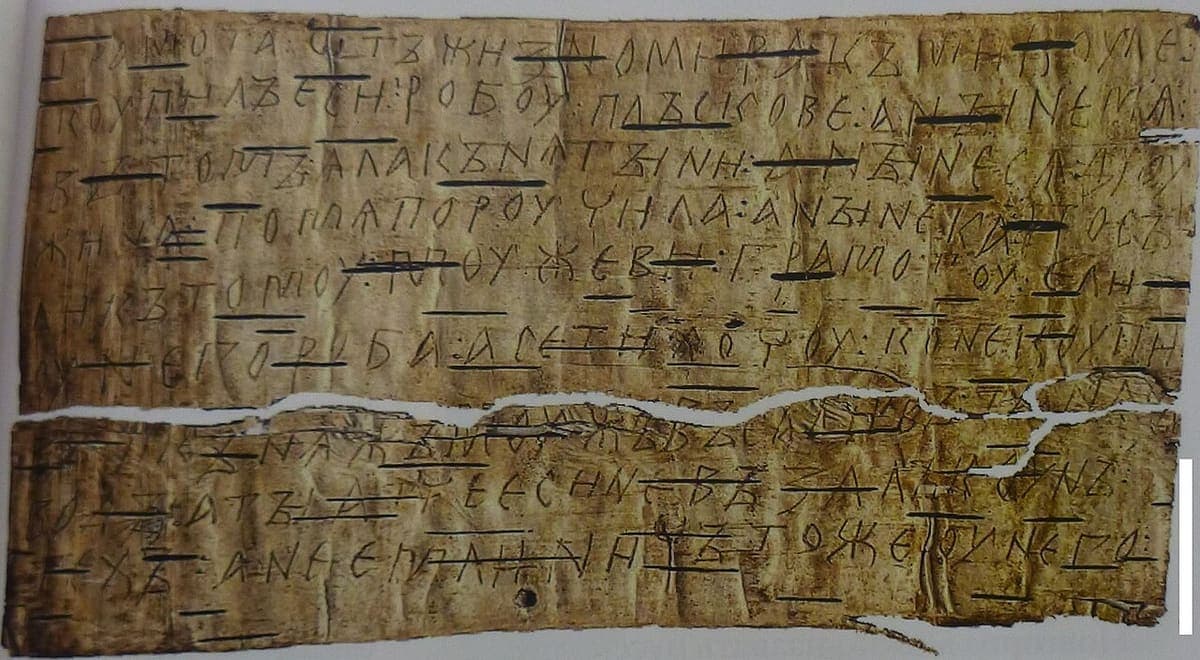
Evidano Transcription
The complete letter. The published reading adds modern word spacing and punctuation to a text written without either; the article’s parenthetical modern-Russian glosses have been left out here. The document uses a single jer, ъ standing for both ъ and ь, and е throughout for yat.
Грамота ꙍтъ Жизномира къ Микѹлє. Кѹпилъ єси робѹ Плъсковє, а нынє мѧ въ томъ ѧла кънѧгыни. А нынє сѧ дрѹжина по мѧ порѹчила. А нынє ка посъли къ томѹ мѹжєви грамотѹ, єли ѹ нєго роба. А сє ти хочѹ конє кѹпивъ, и кнѧжъ мѹжъ всадивъ, та на съводы. А ты атчє єси нє възалъ кѹнъ тєхъ, а нє ємли ничъто жє ѹ нєго.
Source: Берестяные грамоты, Russian Wikipedia, citing грамота № 109 on gramoty.ru (CC BY-SA 4.0).
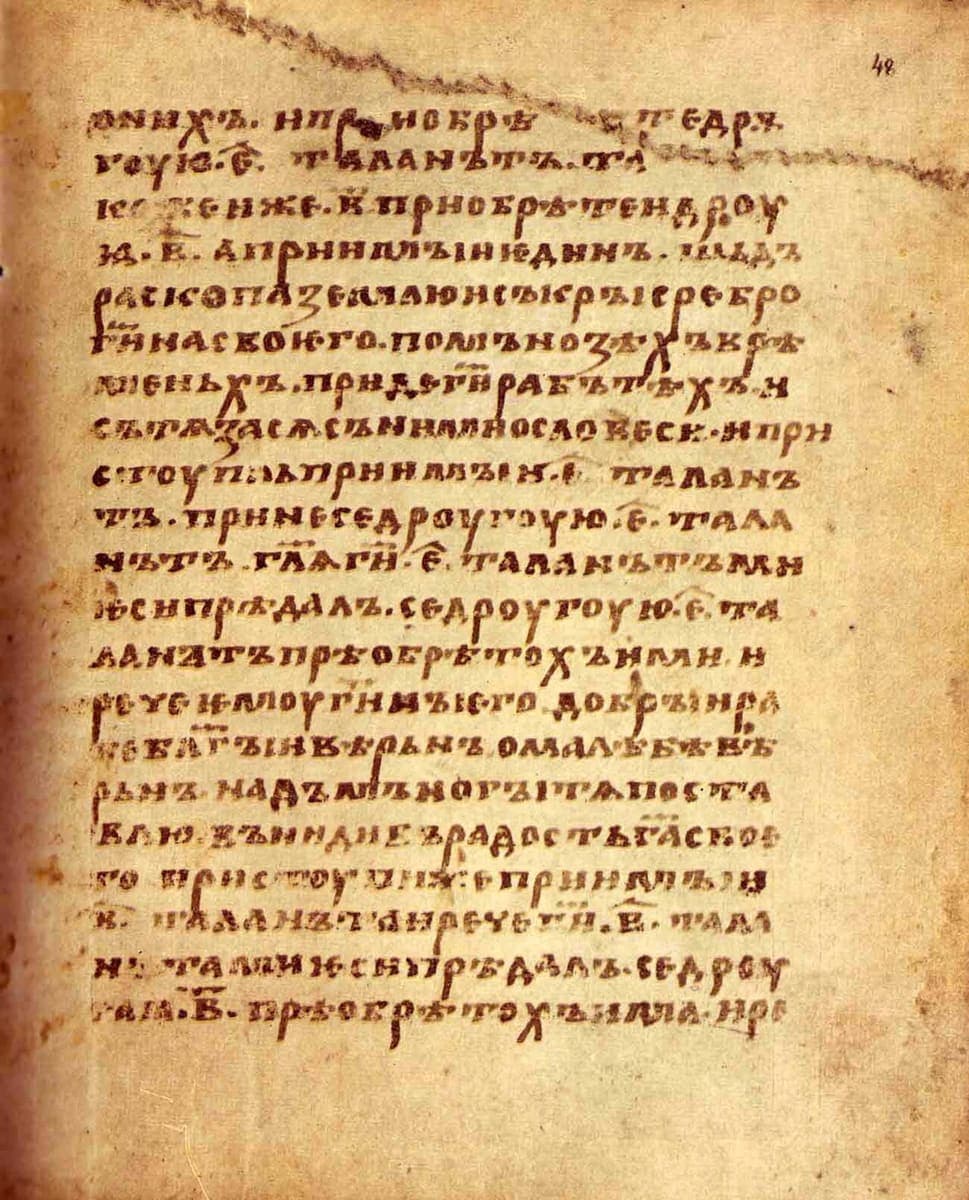
Russian State Library, Moscow, 1092 · Source · Public domain
Evidano Transcription
48
онихъ. и приобрѣ[те][?] дроу
гоую. е҃. таланътъ. та
коже иже. в҃. приобрѣте дроу
ю. в҃. а приимъи единъ. шьдъ
раскопа землю и съкры сребро
г[оспод]ина своего. по мънозѣхъ вре
менѣхъ. приде г[оспод]и[н]ъ рабъ тѣхъ. и
сътяза ся съ ними о словеси. и при
стоупль приимъи. е҃. таланъ
тъ. принесе дроугоую. е҃. тала
нътъ. гл[агол]я. г[оспод]и. е҃. таланътъ ми
еси прѣдалъ. се дроугоую. е҃. та
ланътъ прѣобрѣтохъ ими. и
рече емоу г[оспод]и[н]ъ его. добрѣ ра
бе бл[а]гыи и вѣрьнъ. о малѣ бѣ вѣ
рьнъ. надъ мъногы тя поста
влю. въниди въ радость г[оспод]а свое
го. пристоупи же и приимъи
в҃. таланъта и рече г[оспод]и. в҃. тала
нъта ми еси прѣдалъ. се дроу
гаꙗ. в҃. прѣобрѣтохъ има. и ре
Generated by Evidano’s advanced model; not yet checked against a published edition.
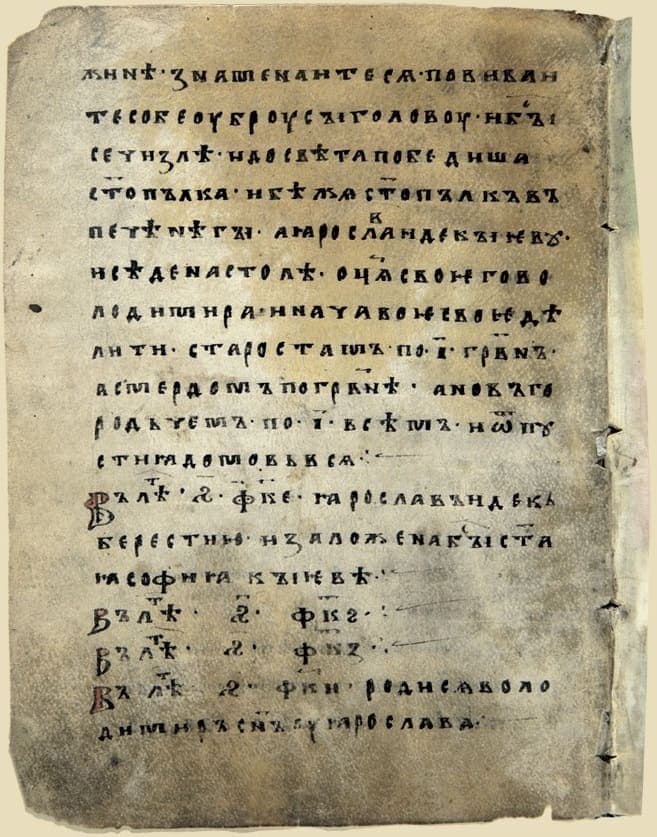
State Historical Museum, Moscow, 13th–14th century · Source · CC BY-SA 4.0 · Nikolay Omonov
Evidano Transcription
мнѣ · знаменаите сѧ · повиваи
те собе оуброусꙑ головоу · и бꙑ
сечи[?] злѣ · и до свѣта побѣдиша
с[вѧ]топълка · и бѣжа с[вѧ]топълкъ въ
печенѣгꙑ · а ꙗрославъ иде к кꙑевоу ·
и сѣде на столѣ · оц[ь]а своего во
лодимира · и нача вои свои дѣ
лити · старостамъ по · і҃ · гр[и]внъ ·
а смердомъ по гр[и]внѣ · а новъго
родьцемъ по · і҃ · всѣмъ · и ѿпу
сти ꙗ домовь вьсѧ ·
Въ лѣт[о] · ҂ѕ҃ · ф҃к҃е · ꙗрославъ иде къ
берестию · и заложена бꙑ ста
ꙗ софиꙗ кꙑевѣ ·
Въ лѣт[о] · ҂ѕ҃ · ф҃к҃ѕ ·
Въ лѣт[о] · ҂ѕ҃ · ф҃к҃з ·
Въ лѣт[о] · ҂ѕ҃ · ф҃к҃и · родисѧ воло
димиръ с[ы]нъ оу ꙗрослава ·
Generated by Evidano’s advanced model; not yet checked against a published edition.
What an ustav page looks like
Ustav is the formal book hand of the earliest East Slavonic manuscripts, modelled on Greek uncial and used from the conversion of Rus until the fourteenth century. Its letters are drawn rather than written: each stands separately and upright between two ruled lines. Little descends below the line, nothing separates one word from the next, and the alphabet is far larger than the modern one — yat (ѣ), the yus letters (ѧ, ѫ and their iotated pairs), omega (ѡ), fita (ѳ), izhitsa (ѵ), zelo (ѕ), the digraph ѹ for u, and iotated ѥ and ꙗ. The nasal vowels the yus letters once stood for had already left East Slavonic speech, so scribes copying South Slavonic exemplars swap ѧ for ꙗ and ѫ for ѹ.
Frequent and sacred words are contracted under a titlo, a stroke that often shelters a letter lifted clear of the line: б҃ъ for богъ, г҃ь for господь, ч҃лвкъ for человѣкъ. The same stroke turns letters into numbers — а҃ is one, і҃ is ten, ф҃ is five hundred — and a ҂ sign multiplies by a thousand, so a chronicle year written ҂ѕ҃ фк҃є is 6525 from the creation of the world, our 1017. Points set at mid height, singly or in clusters, carry the whole burden of punctuation, and headings and initials are laid in cinnabar, which reproduces paler than the black ink.
Large gospel books are ruled in two columns and smaller codices in a single block, the prickings that guided the ruling often still visible at the edge. At a line end the scribe shrinks the last letters, tucks them above the line or joins them into a ligature; lection numbers, liturgical directions and later readers’ notes crowd the margins. The same letterforms travel outside books: the everyday letters scratched into birch bark at Novgorod use a stripped-down ustav with no ink at all. From the late fourteenth century the hand grows narrower and quicker and becomes poluustav.
Why ordinary OCR struggles here
Lines with no word division
A scribe writing scriptio continua expects the reader to know where each word ends. Layout-driven OCR splits the line at random and yields plausible-looking nonsense. Segmentation has to come from the language, which means a model that knows Church Slavonic morphology rather than one that only knows letter shapes.
Titla that swallow whole syllables
Under a single stroke чл҃вкъ stands for человѣкъ and гл҃а for глагола. Reading these is vocabulary, not pattern matching: the same skeleton of consonants expands differently in a rubric and in a chronicle entry, and a silently wrong expansion passes unnoticed unless the transcription records what was supplied.
Letters doing duty as numbers
Dates, chapter and lection numbers and sums of money are written with letters under a titlo and fenced by points. Generic recognition reports them as text, so a year becomes a nonsense word and a register loses its figures. The teens also put the unit before the ten.
Cinnabar, damage and later hands
Red ink flakes, parchment cockles and loses corners, and offsets from the facing leaf print backwards across the page. Later owners add foliation, marginal crosses and sixteenth-century notes in quite different hands. A usable transcription keeps the rubrics, marks the losses and leaves the additions outside the medieval text.
Who works with this material
Editors of early Slavonic texts
Anyone editing a gospel lectionary, a florilegium or a homiliary needs a first pass that preserves the manuscript’s own letters and does not quietly modernise ѧ into я. The earliest codices survive in one or two copies, so every variant must be traceable to a line on a folio.
Church historians and liturgists
Lection headings, saints’ commemorations and calendar rubrics are what make an eleventh-century gospel book datable and localisable. They are also the most heavily abbreviated parts of the page, so they gain most from a transcription that treats rubric as text rather than decoration.
Archaeologists publishing birch bark
Excavation in Novgorod, Staraya Russa and Smolensk still turns up scratched bark every season. Field publication needs a fast, honest first reading with doubtful letters flagged, which the specialist then corrects against the object under raking light.
Libraries and digitisation projects
A catalogue entry needs the incipit, the colophon and any owner’s notes, not the whole codex. Running the first and last folios of each manuscript makes a collection findable by its opening words rather than by shelfmark alone.
Getting the best transcription
Settle the alphabet before you start
Say whether ѣ, ѧ, ѫ, ѡ, ѳ, ѵ and the ѹ digraph should be kept or mapped to modern equivalents. Keeping them suits a linguistic corpus; mapping them helps a search index. Fix the rule once so that a hundred folios come out consistent.
Decide what happens to the titla
Ask for contractions to be left closed, expanded silently, or expanded with the supplied letters in brackets. The bracketed form costs nothing to strip later and shows that г҃ь on the page was read as господь, which is what an apparatus needs.
Handle the numbers explicitly
Tell the model to keep letter-numerals as written and add the Arabic value beside them rather than replacing them. A chronicle year then stays ҂ѕ҃ фк҃є, its conversion to 1017 is visible, and an error in the arithmetic can be caught without returning to the parchment.
Test on a rubricated, damaged folio
Pick a page that mixes red and black ink, has a hole or a stain and carries a later marginal note. If that page comes back with rubric separated, loss marked and the annotation kept out of the main sequence, the clean folios will need almost no correction.
Further reading on this hand
The palaeography guides the in-app selector points to for this domain, if you want to check a transcription against the standard references.
- Cyrillic Hands: A Translation of V. N. Shchepkin's Textbook of Russian Paleography
This scholarly online translation presents Vyacheslav Shchepkin's classic textbook on Russian palaeography. It distinguishes ustav, poluustav, skoropis, and other Cyrillic hands through historical discussion, letter tables, and manuscript specimens. The work addresses changing letterforms, ligatures, abbreviations, superscript signs, numerals, punctuation, and ornamental writing. Its ustav material is directly useful for formal Church Slavonic codices of medieval Rusʹ.
Frequently asked questions
- Can the transcription keep yat, the yus letters and omega as written?
- Yes. The default is a diplomatic reading that reproduces ѣ, ѧ, ѫ, ѡ, ѳ, ѵ, ѕ and the ѹ digraph as they appear, including where the scribe used the historically wrong letter. A normalised version can be produced from the same pass.
- How are titla and superscript letters handled?
- They are treated as abbreviations, not as noise. A word under a titlo is expanded from the sense of the passage, and letters written above the line go back into the word they belong to. You choose whether the result shows the closed form or the expansion, with or without the supplied letters marked.
- Will a date written in Cyrillic numerals come out as a number?
- Letters under a stroke and fenced by points are recognised as numerals and read in the order the system uses, including the teens, where the unit precedes the ten. The year is given as written and, on request, with its common-era equivalent beside it.
- Does this work on birch-bark letters as well as parchment codices?
- It does, though bark is scratched rather than inked and the grain competes with the strokes. A raking-light photograph gives far better results than a flat one, and readings from cracked sheets are proposals for a specialist to confirm.
- What happens to text lost to holes, stains or flaked ink?
- Illegible stretches are marked rather than filled in by guesswork, and partly visible letters are flagged as uncertain. Where a parallel copy supplies the missing words, the editor adds them in brackets afterwards.
Related scripts and pages
Transcribe your ustav folios
Upload a scan, choose Church Slavonic Ustav Manuscripts as the domain, and try the prompt on one folio before running a whole codex.