
Khmer
Khmer documents and manuscripts turned into text
Khmer prose runs on without spaces between words, and half its consonant clusters are written as a small second letter hanging beneath the first rather than beside it. Evidano reads printed gazettes and forms, handwritten entries on official paperwork, roadside signage and palm-leaf satra, and sets the transcription next to the image so every stacked consonant and every word break can be checked.
Sample pages
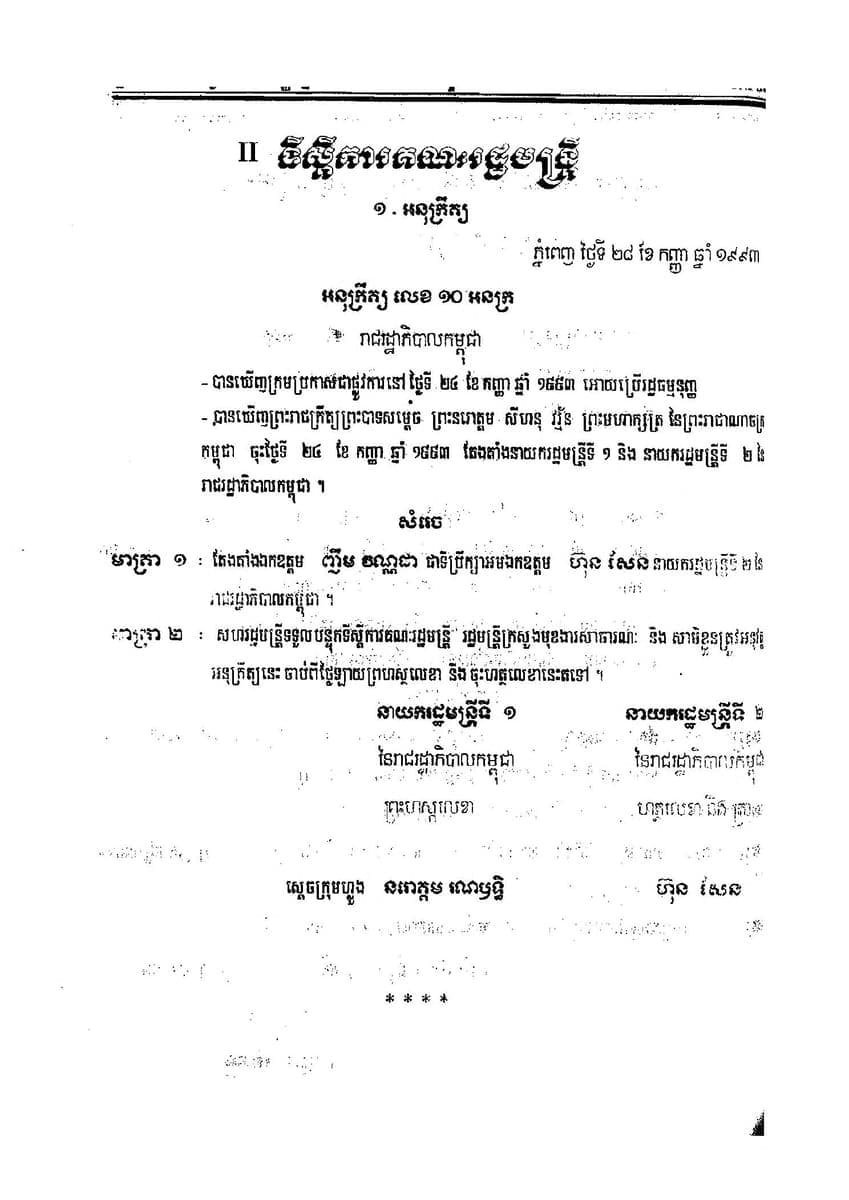
National Institute of Statistics / Internet Archive, 24 September 1993 · Source · Public domain · Digitised copy published under the Cambodian Law on Copyright and Related Rights, art. 10 (official texts not protected by copyright)
Evidano Transcription
II ទីស្តីការគណៈរដ្ឋមន្ត្រី
១ . អនុក្រឹត្យ
ភ្នំពេញ ថ្ងៃទី ២៨ ខែ កញ្ញា ឆ្នាំ ១៩៩៣
អនុក្រឹត្យ លេខ ១០ អនក្រ
រាជរដ្ឋាភិបាលកម្ពុជា
- បានឃើញក្រមប្រកាសជាផ្លូវការនៅ ថ្ងៃទី ២៤ ខែ កញ្ញា ឆ្នាំ ១៩៩៣ អោយប្រើរដ្ឋធម្មនុញ្ញ
- បានឃើញព្រះរាជក្រឹត្យព្រះបាទសម្តេច ព្រះនរោត្តម សីហនុ វរ្ម័ន ព្រះមហាក្សត្រ នៃព្រះរាជាណាចក្រ
កម្ពុជា ចុះថ្ងៃទី ២៤ ខែ កញ្ញា ឆ្នាំ ១៩៩៣ តែងតាំងនាយករដ្ឋមន្ត្រីទី ១ និង នាយករដ្ឋមន្ត្រីទី ២ នៃ
រាជរដ្ឋាភិបាលកម្ពុជា ។
សំរេច
មាត្រា ១ : តែងតាំងឯកឧត្តម ញឹម វណ្ណដា ជាទីប្រឹក្សាអមឯកឧត្តម ហ៊ុន សែន នាយករដ្ឋមន្ត្រីទី ២ នៃ
រាជរដ្ឋាភិបាលកម្ពុជា ។
មាត្រា ២ : សហរដ្ឋមន្ត្រីទទួលបន្ទុកទីស្តីការគណៈរដ្ឋមន្ត្រី រដ្ឋមន្ត្រីក្រសួងមុខងារសាធារណៈ និង សាមីខ្លួនត្រូវអនុវត្ត
អនុក្រឹត្យនេះ ចាប់ពីថ្ងៃឡាយព្រះហស្តលេខា និង ចុះហត្ថលេខានេះតទៅ ។
នាយករដ្ឋមន្ត្រីទី ១
នៃរាជរដ្ឋាភិបាលកម្ពុជា
ព្រះហស្តលេខា
ស្តេចក្រុមហ្លួង នរោត្តម រណឫទ្ធិ
នាយករដ្ឋមន្ត្រីទី ២
នៃរាជរដ្ឋាភិបាលកម្ពុជា
ហត្ថលេខា និង ត្រា
ហ៊ុន សែន
* * * *
Generated by Evidano’s advanced model; not yet checked against a published edition.
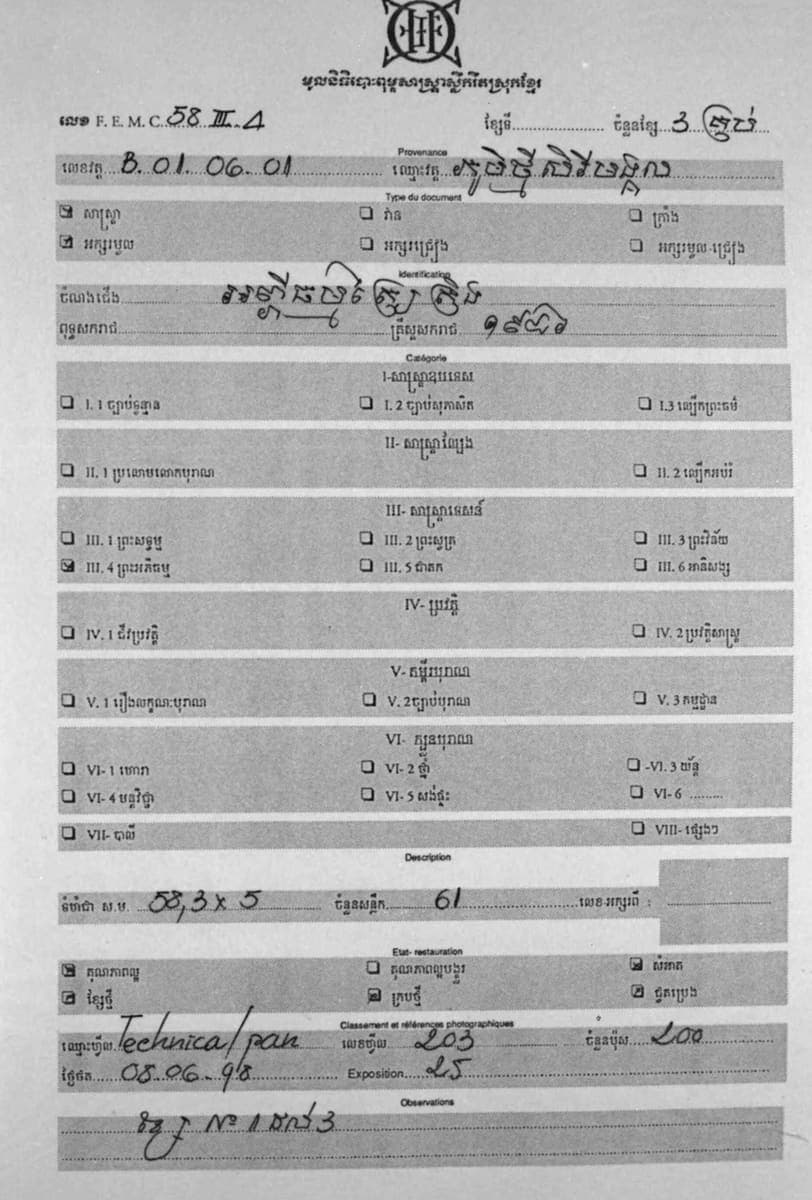
École française d’Extrême-Orient, via Buddhist Digital Resource Center, 1998 · Source · Public domain
Evidano Transcription
មូលនិធិបោះពុម្ពសាស្ត្រាស្លឹករឹតស្រុកខ្មែរ
លេខ F. E. M. C. 58. III. 4 ខ្សែទី................ ចំនួនខ្សែ 3 ច្បាប់
លេខវត្ថុ B. 01. 06. 01 Provenance ឈ្មោះវត្ត វត្តថ្មីសិរីមង្គល
Type du document
[x] សាស្ត្រា [ ] វាន [?] [ ] ក្រាំង
[x] អក្សរមូល [ ] អក្សរជ្រៀង [ ] អក្សរមូល-ជ្រៀង
Identification
ចំណងជើង [illegible]
ពុទ្ធសករាជ................ គ្រឹស្តសករាជ ១៩៨៦
Catégorie
I-សាស្ត្រាឧបទេស
[ ] I. 1 ច្បាប់ទូន្មាន [ ] I. 2 ច្បាប់សុភាសិត [ ] I. 3 ល្បើកព្រះធម៌
II- សាស្ត្រាល្បែង
[ ] II. 1 ប្រលោមលោកបុរាណ [ ] II. 2 ល្បើកអប់រំ
III- សាស្ត្រាទេសន៍
[ ] III. 1 ព្រះសទ្ធម្ម [?] [ ] III. 2 ព្រះសូត្រ [ ] III. 3 ព្រះវិន័យ
[x] III. 4 ព្រះអភិធម្ម [ ] III. 5 ជាតក [ ] III. 6 អានិសង្ស
IV- ប្រវត្តិ
[ ] IV. 1 ជីវប្រវត្តិ [ ] IV. 2 ប្រវត្តិសាស្ត្រ
V- គម្ពីរបុរាណ
[ ] V. 1 រឿងលក្ខណៈបុរាណ [?] [ ] V. 2 ច្បាប់បុរាណ [ ] V. 3 កប្បដ្ឋាន [?]
VI- ក្បួនបុរាណ
[ ] VI- 1 ហោរា [ ] VI- 2 ថ្នាំ [ ] VI. 3 យ័ន្ត
[ ] VI- 4 មន្តវិជ្ជា [ ] VI- 5 សង់ផ្ទះ [ ] VI- 6 ........
[ ] VII- បាលី [ ] VIII- ផ្សេងៗ
Description
ទំហំជា ស.ម. 58,3 x 5 ចំនួនសន្លឹក 61 លេខអក្សរពី :
Etat- restauration
[x] គុណភាពល្អ [ ] គុណភាពល្អបង្គួរ [x] សំអាត
[x] ខ្សែថ្មី [x] ប្រអប់ថ្មី [x] ជូតប្រេង
Classement et références photographiques
ឈ្មោះហ្វីល Technical pan លេខហ្វីល 203 ចំនួនប៉ុស 200
ថ្ងៃថត 08.06.98 Exposition 25
Observations
ខ្សែ № 1 ដល់ 3
Generated by Evidano’s advanced model; not yet checked against a published edition.
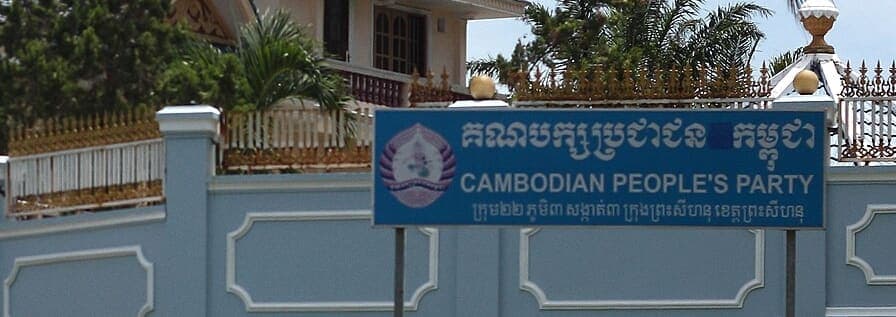
Source · CC BY-SA 4.0 · Basile Morin
Evidano Transcription
គណបក្សប្រជាជន កម្ពុជា
CAMBODIAN PEOPLE'S PARTY
ក្រុម២២ ភូមិ៣ សង្កាត់៣ ក្រុងព្រះសីហនុ ខេត្តព្រះសីហនុ
Generated by Evidano’s advanced model; not yet checked against a published edition.

École française d’Extrême-Orient, via Buddhist Digital Resource Center, 1986 · Source · Public domain
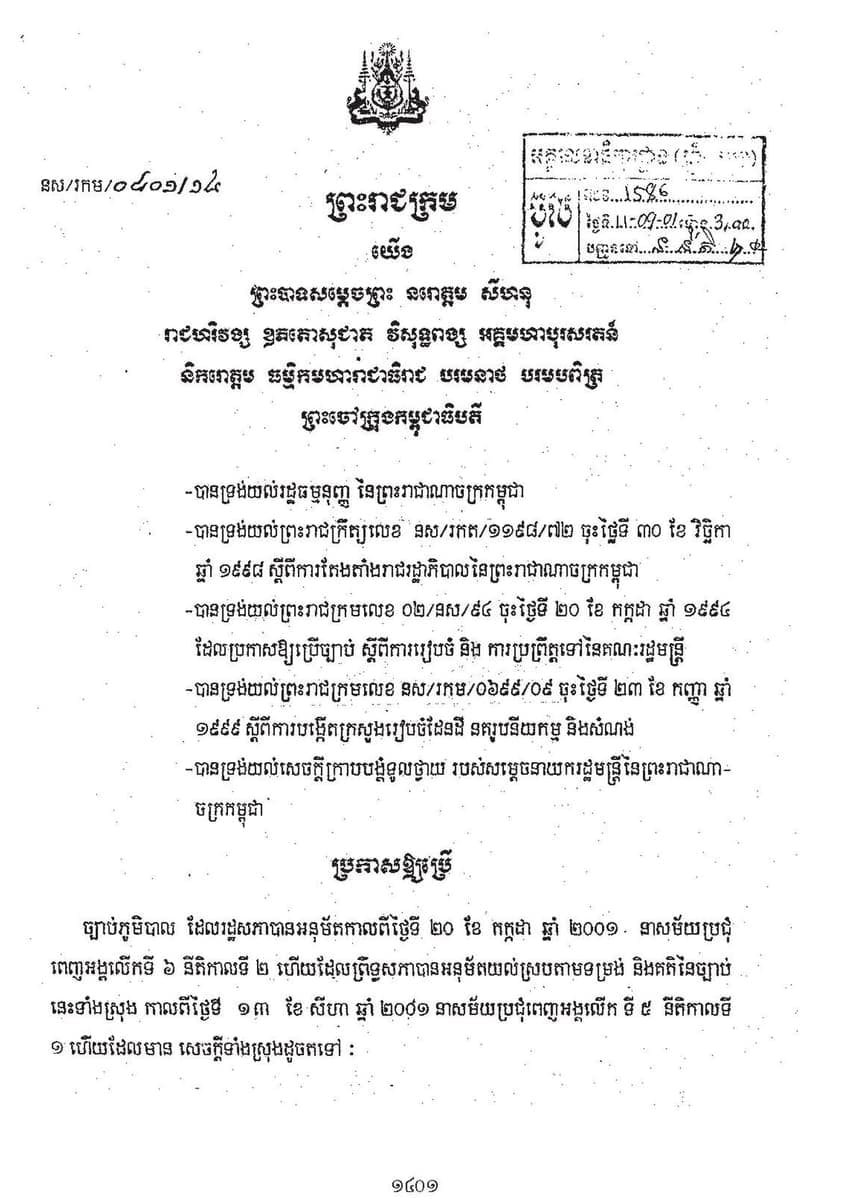
Kingdom of Cambodia; scan hosted on Wikisource, August 2001 · Source · Public domain · Official legislative text of the Kingdom of Cambodia, outside copyright under art. 10 of the Law on Copyright and Related Rights
Evidano Transcription
The printed text of the leaf, in the proofread transcription on the multilingual Wikisource (page quality 3), checked here against the scan. Wiki markup and the royal-arms graphic have been stripped, and the zero-width spaces Wikisource inserts between words have been removed, since the printed page marks no word boundaries at all. The page number at the foot, which Wikisource gives in Arabic figures where the leaf prints ១៤០១, is not included, and neither is the handwritten registration box at the upper right, which the transcription leaves untouched.
ព្រះរាជក្រម
នស/រកម/០៨០១/១៤
យើង
ព្រះបាទសម្តេចព្រះ នរោត្តម សីហនុ
រាជហរិវង្ស ឧភតោសុជាត វិសុទ្ធពង្ស អគ្គមហាបុរសរតន៏
និករោត្តម ធម្មិកមហារាជាធិរាជ បរមនាថ បរមបពិត្រ
ព្រះចៅក្រុងកម្ពុជាធិបតី
-បានទ្រង់យល់រដ្ឋធម្មនុញ្ញនៃព្រះរាជាណាចក្រកម្ពុជា
-បានទ្រង់យល់ព្រះរាជក្រឹត្យលេខ នស/រកត/១១៩៨/៧២ ចុះថ្ងៃទី ៣០ ខែ វិច្ឆិកា ឆ្នាំ ១៩៩៨ ស្ដីពីការតែងតាំងរាជរដ្ឋាភិបាលនៃព្រះរាជាណាចក្រកម្ពុជា
-បានទ្រង់យល់ព្រះរាជក្រមលេខ ០២/នស/៩៤ ចុះថ្ងៃទី ២០ ខែ កក្កដា ឆ្នាំ ១៩៩៤ ដែលប្រកាសអោយប្រើច្បាប់ស្ដីពីការរៀបចំ និង ការប្រព្រឹត្តទៅនៃគណៈរដ្ឋមន្ត្រី
-បានទ្រង់យល់ព្រះរាជក្រមលេខ នស/រកម/០៦៩៩/០៩ ចុះថ្ងៃទី ២៣ ខែ កញ្ញា ឆ្នាំ ១៩៩៩ ស្ដីពីការបង្កើតក្រសួងរៀបចំដែនដី នគរូបនីយកម្ម និង សំណង់
-បានទ្រង់យល់សេចក្ដីក្រាបបង្គំទូលថ្វាយ របស់សម្ដេចនាយករដ្ឋមន្ត្រីនៃព្រះរាជាណាចក្រកម្ពុជា
ប្រកាសឱ្យប្រើ
ច្បាប់ភូមិបាល ដែលរដ្ឋសភាបានអនុម័តកាលពីថ្ងៃទី ២០ ខែ កក្កដា ឆ្នាំ ២០០១ នាសម័យប្រជុំពេញអង្គលើកទី ៦ នីតិកាលទី ២ ហើយដែលព្រឹទ្ធសភាបានអនុម័តយល់ស្របតាមទម្រង់ និង គតិនៃច្បាប់នេះទាំងស្រុង កាលពីថ្ងៃទី ១៣ ខែ សីហា ឆ្នាំ ២០០១ នាសម័យប្រជុំពេញអង្គលើកទី ៥ នីតិកាលទី ១ ហើយដែលមានសេចក្ដីទាំងស្រុងដូចតទៅ:
Source: Page:ច្បាប់ភូមិបាល ឆ្នាំ២០០១ 138.pdf/2, via Wikisource (multilingual) (Public domain).
What Khmer text looks like on the page
Khmer script descends from the Pallava and Grantha letters brought by South Indian traders to the Mekong delta; the earliest dated inscription, from Angkor Borei, is usually placed at 611 CE, and the alphabet has written Old, Middle and Modern Khmer, as well as Pali scripture, ever since. Consonants come in two series, traditionally called the a-series and o-series, which change the vowel a bare consonant carries and everything else is read against; there are no capital letters, and a sentence is closed with a raised double dot (khan, ។) rather than a full stop. Printed type was standardised through the twentieth century and a Unicode block was added in the late 1990s, but the underlying letterforms are the same ones cut for the first Phnom Penh presses.
A consonant cluster is written by dropping the second consonant below the first in a smaller, often looped form called coeng, so a word can grow downward as well as across the line; a handful of coeng shapes bear little resemblance to their full-size letter and have to be learned separately. Vowel signs attach above, below, in front of or after the consonant they belong to, and the ones written before the letter are still read after it, so the visual order on the page is not the reading order. Khmer has its own digits (០–៩), which appear in dates, decree numbers and Gazette pagination alongside the occasional Arabic numeral in a French loanword or a modern form, and a repetition mark (ៗ) that stands in for a whole word repeated.
Two hands dominate everyday material. Aksar chrieng is the cursive, slightly leaning hand used for correspondence, ledgers and the day-to-day copying of legal and narrative texts onto palm leaf (satra); aksar mul is rounder and more formal, built up from thicker curved strokes, and is reserved for titles, temple inscriptions, signage and the openings of Pali religious texts. A single page of official paperwork can mix a printed form in one register, a name and date filled in by hand in another, and a rubber-stamp or seal sitting across both.
Why ordinary OCR struggles here
No spaces between words
Khmer marks the end of a clause or sentence, not the end of a word, so a line of text is one unbroken run of glyphs from margin to margin. Software built for space-delimited scripts either invents word breaks that are not there or refuses to break the line at all; getting the segmentation right means recognising Khmer syllable and word structure, not just finding gaps.
Consonants stacked instead of written in line
A coeng form hangs beneath its base consonant rather than sitting next to it, so a two-consonant cluster occupies one line of vertical space rather than two of horizontal space. Several coeng shapes are visually reduced from their full letter almost beyond recognition, and a tight scan or a fast hand can make a stacked cluster look like a single unfamiliar glyph.
Two working hands, one alphabet
Aksar chrieng cursive and aksar mul’s rounder, formal letters share an underlying alphabet but differ enough in stroke shape and proportion that a model trained on one misreads the other, and a page that mixes a printed heading in aksar mul with a handwritten aksar chrieng note beneath it asks for both at once.
Mixed registers on one document
A gazette page carries printed Khmer body text, Khmer numerals for dates and decree numbers, French or English loanwords in Latin script, and a signature block; a palm-leaf satra shows text incised into the leaf and blackened with lampblack, with the leaf’s own ribs running behind the letters. Reading either well means keeping the different kinds of content apart rather than merging them into one paragraph.
Who works with this material
Pagoda archives and Buddhist-studies projects
Cambodia’s wats hold thousands of satra bundles that survived the twentieth century in fragile condition, and cataloguing projects like the one that produced the FEMC cards need a reading of the title, script and leaf count for each bundle before conservation or microfilming decisions are made.
Legal and government-record teams
Rebuilding a usable index of Royal Gazette decrees, sub-decrees and prakas means reading decree numbers, dates and the officials named in each one, keeping Khmer and Gregorian dates straight and the numbered articles in order rather than run together.
Genealogists and land-title researchers
Family and land records mix a printed form with handwritten names, place names and Khmer numerals, often filled in over several visits in different hands; what matters most is getting the handwritten entries right rather than the boilerplate around them.
NGOs and agencies handling Khmer paperwork
Aid and resettlement programmes process identity documents, applications and correspondence photographed on a phone, frequently with a stamp over the signature line; a transcription that keeps form fields, stamps and handwritten additions separate is more useful than one long paragraph.
Getting the best transcription
Say which hand the page is in
Tell the model whether the text is printed, aksar chrieng cursive, or the rounder aksar mul used for headings and signage. The three differ enough in stroke shape that naming the hand up front avoids letters being read as the wrong series.
Ask for word breaks only where the source marks them
Since Khmer text runs without spaces, ask for a straight read with breaks only at the khan (។) marks the page itself uses, rather than an English-style word-spaced rendering that the model has to guess at.
Flag stacked consonants and Khmer numerals
Ask for coeng consonant stacks to be kept as the cluster they represent rather than split into two separate letters, and for Khmer digits to be transcribed as written, with an Arabic-numeral equivalent added alongside if you need one for indexing.
Start with the mixed-register page
Run a document that combines print, handwriting and a stamp or seal before a batch of uniform printed pages. If that page comes back with the printed labels, the handwritten entries and the stamp kept apart, the rest of the batch needs only a light check.
Frequently asked questions
- Can it split Khmer text into words when the page has no spaces?
- Yes. Word and syllable boundaries are recognised from Khmer structure rather than from gaps on the page, and you can ask for the output either as an unbroken line matching the source or with word breaks added for readability.
- Does it read coeng subscript consonants correctly?
- Coeng clusters are read as the consonant pair they stand for, not as a separate glyph, and reduced coeng shapes that no longer resemble their full-size letter are recognised from context rather than guessed at individually.
- Can it tell aksar chrieng handwriting from aksar mul or printed Khmer?
- Yes. The three are treated as different hands with different letter proportions, and a page that mixes a mul heading with a chrieng note or a line of print is read accordingly rather than forced into one style.
- How are Khmer numerals and dates handled?
- Khmer digits are transcribed as written. If you need dates in a database-friendly form, ask for the Gregorian equivalent alongside the Khmer numerals rather than in place of them.
- Can it read a photograph of a palm-leaf manuscript?
- Incised and blackened text on a curved leaf is read as such, and the leaf’s own ribs are not mistaken for strokes of a letter, though a badly cracked or very worn leaf may still need a specialist’s check.
- Will it keep a stamped or signed form readable?
- A stamp, seal or signature overlapping printed or handwritten text is flagged rather than merged into the surrounding words, so the form’s own content stays legible in the output.
Related scripts and pages
Transcribe your Khmer documents
Upload a scan or a photograph — a gazette page, a form, a signboard or a manuscript leaf — and check the Khmer transcription line by line before you export it.