
Georgian
Georgian read in all three of its alphabets
Mkhedruli has no capital letters, so a personal name looks exactly like the word beside it, and several letters are told apart only by whether a stroke climbs above the body of the line or drops below it. A quick hand rounds those strokes until the gap closes. Evidano transcribes Georgian print, handwriting and signage alongside the Nuskhuri and Asomtavruli hands still used in church books, and keeps the image beside the reading.
Sample pages
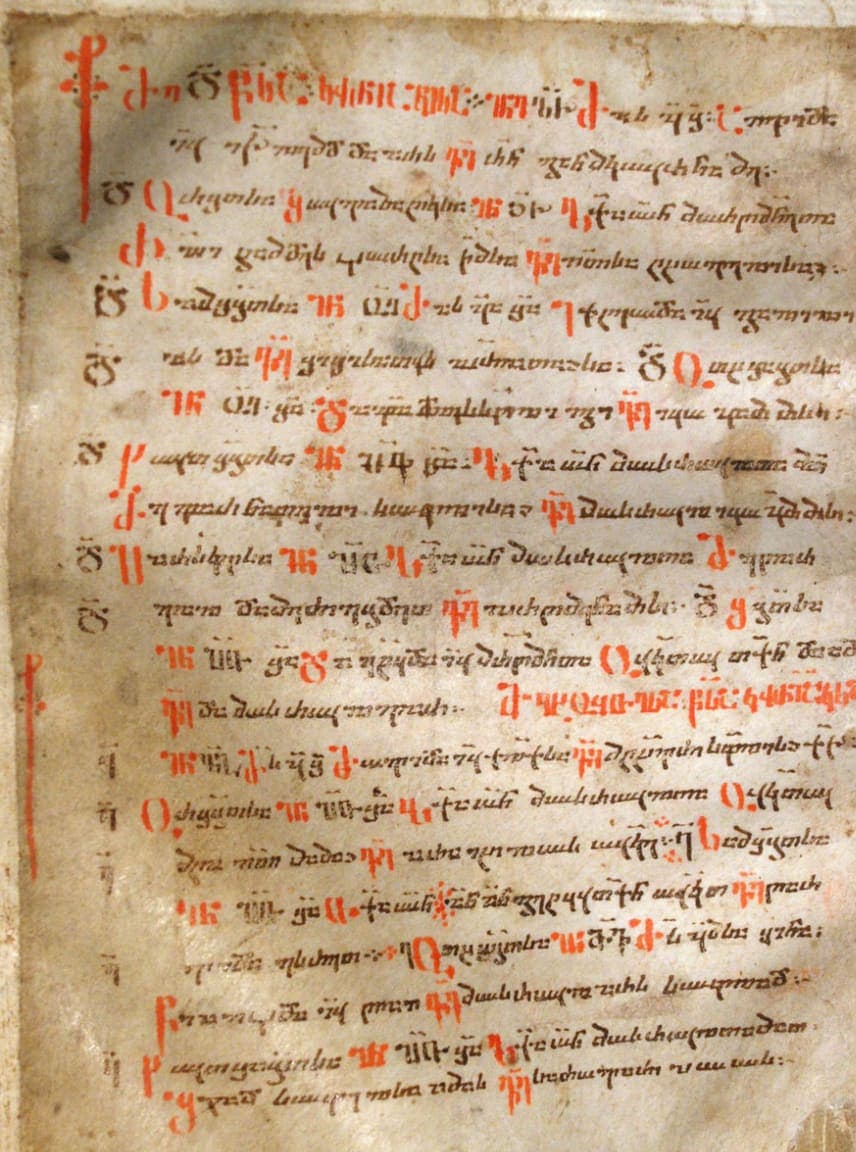
National Archives of Georgia, 11th–12th century · Source · Public domain
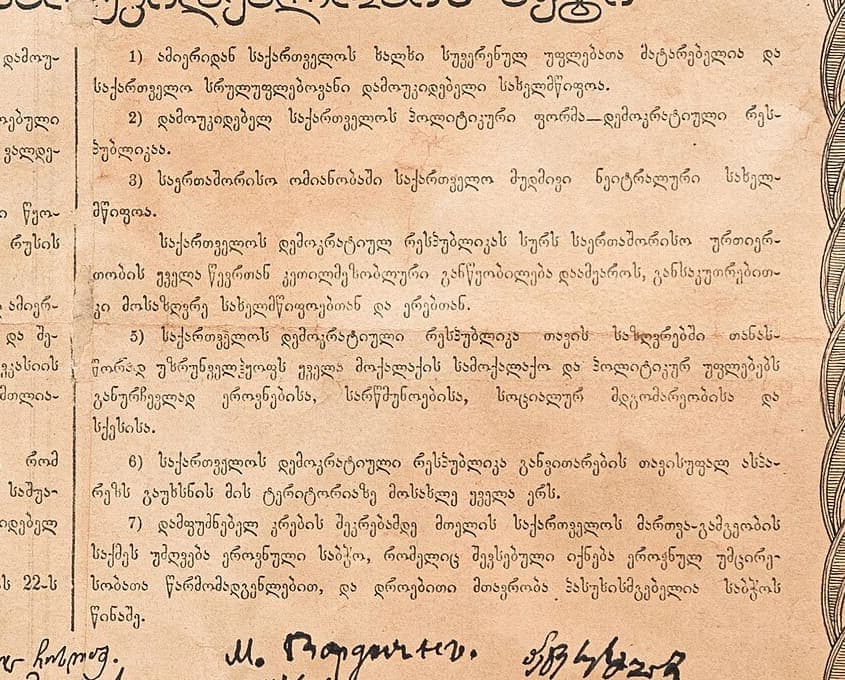
Act of Independence of Georgia, 26 May 1918 · Source · Public domain
Evidano Transcription
The seven articles that fill the column shown, from the Georgian Wikisource text of the Act. The numbering follows that text throughout; on the sheet itself only six numbers are printed — 1) 2) 3), then an unnumbered paragraph, then 5) 6) 7) — so the fourth article carries no number of its own. Two evident typing slips in the Wikisource text have been restored to the printed forms (სუვერენულ in article 1, ასპარეზს in article 6); wording and spelling are otherwise as published there.
1) ამიერიდან საქართველოს ხალხი სუვერენულ უფლებათა მატარებელია და საქართველო სრულუფლებოვანი დამოუკიდებელი სახელმწიფოა.
2) დამოუკიდებელ საქართველოს პოლიტიკური ფორმა დემოკრატიული რესპუბლიკაა.
3) საერთაშორისო ომიანობაში საქართველო მუდმივი ნეიტრალური სახელმწიფოა.
4) საქართველოს დემოკრატიულ რესპუბლიკას სურს საერთაშორისო ურთიერთობის ყველა წევრთან კეთილმეზობლური განწყობილება დაამყაროს, განსაკუთრებით კი მოსაზღვრე სახელმწიფოებთან და ერებთან.
5) საქართველოს დემოკრატიული რესპუბლიკა თავის საზღვრებში თანასწორად უზრუნველყოფს ყველა მოქალაქის სამოქალაქო და პოლიტიკურ უფლებებს განურჩევლად ეროვნებისა, სარწმუნოებისა, სოციალური მდგომარეობისა და სქესისა.
6) საქართველოს დემოკრატიული რესპუბლიკა განვითარების თავისუფალ ასპარეზს გაუხსნის მის ტერიტორიაზე მოსახლე ყველა ერს.
7) დამფუძნებელ კრების შეკრებამდე მთელი საქართველოს მართვა–გამგეობის საქმეს უძღვება ეროვნული საბჭო, რომელიც შევსებული იქნება ეროვნულ უმცირესობათა წარმომადგენლებით და დროებითი მთავრობა პასუხისმგებელია საბჭოს წინაშე.
Source: საქართველოს დამოუკიდებლობის აქტი (1918), via Georgian Wikisource (Public domain).
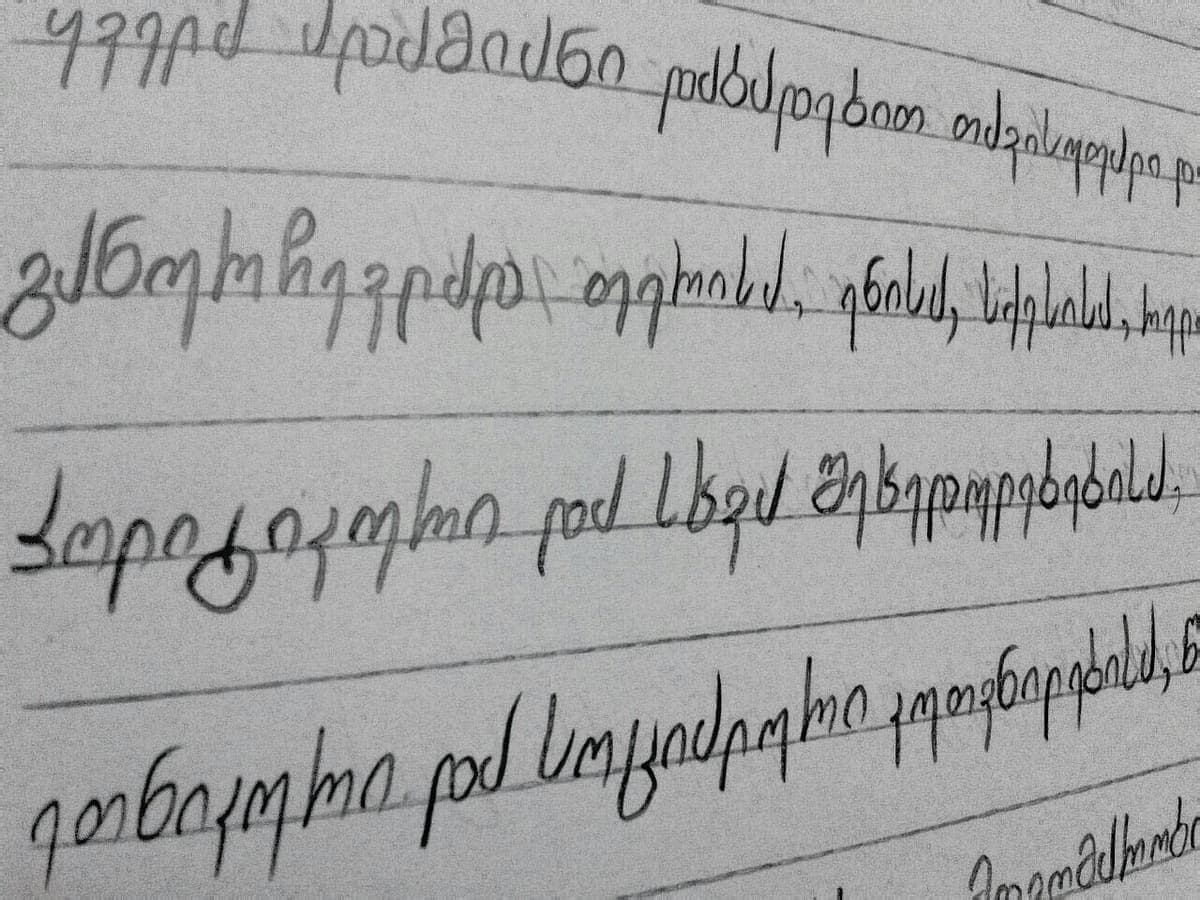
Source · CC BY-SA 3.0 · Ooggs00995
Evidano Transcription
ყველა ადამიანი დაბადებით თავისუფალი და
განურჩევლად ფერისა, ენისა, სქესისა, რელი
პოლიტიკური და სხვა შეხედულებებისა,
ეთნიკური და სოციალური კუთვნილებისა, წ
[illegible]
Generated by Evidano’s advanced model; not yet checked against a published edition.
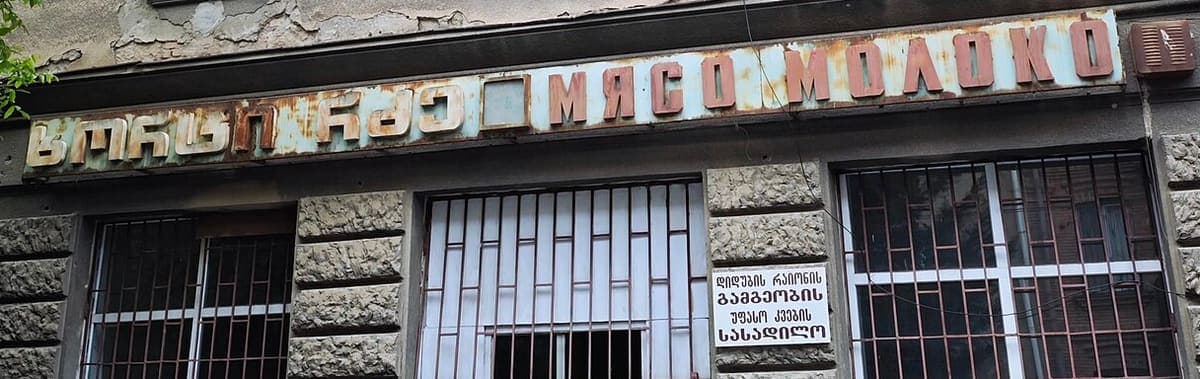
Evidano Transcription
ხორცი რძე МЯСО МОЛОКО
დიდუბის რაიონის
გამგეობის
უფასო კვების
სასადილო
Generated by Evidano’s advanced model; not yet checked against a published edition.
What Georgian looks like on the page
Georgian has been written in three related alphabets. Asomtavruli, attested from the fifth century, is a majuscule of rounded, geometric capitals used for inscriptions, headings and the enlarged initials of manuscripts. From about the ninth century a compact minuscule called Nuskhuri took over the body of church books; its letters lean, carry long ascenders and descenders, and are often written between ruled lines with red Asomtavruli initials at the head of each unit. Together the two are known as Khutsuri, the priestly script, and the Georgian Orthodox Church still sets liturgical text in it. Mkhedruli, the secular or knightly hand, appears from around the tenth century, becomes general for lay writing by the eleventh, and is the alphabet of every modern book, newspaper, form and street sign.
Modern Mkhedruli has thirty-three letters. Five more were in ordinary use until Ilia Chavchavadze’s reform of 1879 removed them — ჱ, ჳ, ჲ, ჴ and ჵ — so any text set before that date, and much church printing since, carries characters that a modern keyboard does not produce. The alphabet is unicameral: there is no upper and lower case, and emphasis is made instead with spacing, with a heavier weight, or by setting a headline in the squared-off Mtavruli forms, which Unicode encodes as a separate set of characters rather than as capitals. Letters occupy four vertical zones: some sit entirely between the baseline and the x-height, some add an ascender, some a descender, and a few both, so the shape of a word depends as much on those projections as on the loops themselves.
Punctuation and numbering changed with the script. Medieval manuscripts separate clauses with groups of one, two, three or six dots rather than commas and full stops, and numbers were written with letters carrying an overbar before Arabic figures took over. Everyday material adds its own mixtures: Soviet-era signs, forms and registers set Georgian above or beside Russian in Cyrillic, tourist signage adds a Latin transliteration, and Svan, Mingrelian and Laz are written with the Mkhedruli alphabet plus extra letters borrowed back from the older ones.
Why ordinary OCR struggles here
One case and four vertical zones
With no capitals, nothing on the line says where a sentence or a proper name starts. What does separate several letters is height: an ascender that rises a little above the body, or a descender that dips below it. Faded pencil, a photocopy or tight line spacing removes exactly that cue, and the resulting misreading is a real Georgian word rather than an obvious error.
Three alphabets, sometimes on one page
A church book puts red Asomtavruli initials and rubrics at the head of Nuskhuri text; a monument photographed by a visitor is Asomtavruli with a modern Mkhedruli plaque under it. Recognition trained on one of the three treats the others as decoration or as noise.
Rounded handwriting that closes the gaps
Everyday Georgian handwriting is fast and round: loops fill in, the tail of one letter becomes the entry stroke of the next, and the difference between a full loop and a half loop disappears. Notebook rules and ballpoint bleed make the same word take a different shape in two consecutive lines.
Georgian next to Cyrillic and Latin
Twentieth-century shop signs, certificates and forms are routinely bilingual, the Georgian and the Russian saying the same thing in two alphabets, and modern road signs add romanised Georgian. Generic OCR set to one language returns half the sign; set to detect, it mixes the two into one unusable line.
Who works with this material
Archives and family historians
Civil registers, court files and personal papers in the National Archives of Georgia run from nineteenth-century chancery Georgian through Soviet forms in two alphabets. An index needs surnames captured exactly, including the endings that mark region and lineage, and needs to record which column of a bilingual form a name came from.
Manuscript scholars and church libraries
Catalogues of the Korneli Kekelidze National Centre of Manuscripts and of the Georgian collections at Sinai and on Athos are still being extended. A first-pass reading of a Nuskhuri page, with the rubrics kept separate and the colophon marked, saves the hours otherwise spent typing before the scholarly work starts.
Kartvelian language projects
Svan, Mingrelian and Laz are recorded in Mkhedruli with additional letters, often in field notebooks and locally printed booklets. Corpus builders need those extra characters preserved rather than folded into the nearest standard Georgian letter.
Heritage and reprint publishers
Reissuing a book printed before 1879 means deciding whether to keep or modernise the five letters removed by the reform. Setting that rule once across a scanned volume is far more reliable than correcting page by page.
Getting the best transcription
Name the alphabet you expect
Say whether the page is Mkhedruli, Nuskhuri, Asomtavruli or a mixture, and what to do with each. On a church page the usual instruction is to transcribe the Nuskhuri body as it stands and mark the red Asomtavruli initials and rubrics separately, so they can be handled as headings later.
Decide about the pre-1879 letters
State whether ჱ, ჳ, ჲ, ჴ and ჵ should be kept where the page has them or converted. Keeping them suits an edition or a catalogue; converting suits a search index, and fixing the rule in the prompt avoids a mixed result across a volume.
Split bilingual material by column
For a Soviet-era form, a certificate or a shop sign, ask for the Georgian and the Russian as separate labelled blocks rather than interleaved. The same instruction handles a modern sign with a Latin transliteration underneath, which otherwise duplicates every line.
Test on the faintest page first
Run a pencil draft or a worn fascia before a clean printed page. If ascenders and descenders survive there, and uncertain letters are flagged rather than guessed, the rest of the batch needs little checking.
Frequently asked questions
- Can it read Nuskhuri and Asomtavruli, or only modern Mkhedruli?
- All three are supported. Nuskhuri is treated as a book hand with its own letterforms rather than as damaged Mkhedruli, and Asomtavruli is read as the majuscule it is. You can ask for the output in the original alphabet or converted to Mkhedruli for searching.
- How are the five letters abolished in 1879 handled?
- They are recognised as themselves. Pages printed before the reform, and church printing that kept them afterwards, are transcribed with those letters in place unless you ask for them to be mapped to modern counterparts, in which case the same mapping runs through the batch.
- Georgian has no capitals, so how are proper names marked?
- They are not marked by the script and are not invented in the output. If you need names tagged, ask for a separate labelled list so the diplomatic text stays untouched and the list can be checked against a gazetteer.
- What happens with the Mtavruli display forms on signs and headlines?
- They are read as the characters they encode. Ask for the Mtavruli code points to be kept, which records how the sign looked, or normalised to ordinary Mkhedruli, which is what most indexes expect.
- Can it keep medieval Georgian punctuation instead of modern stops?
- Yes. The groups of one, two, three and six dots that divide clauses in manuscripts are reproduced where they stand, rather than replaced with commas and full stops the scribe never used.
Related scripts and pages
Turn your Georgian scans into text
Upload a manuscript leaf, a printed page, a notebook or a photograph of a sign, and check the Georgian reading line by line against the image.