
Greek · c. 800–1453
Byzantine minuscule with its ligatures resolved
Minuscule was invented to save parchment, and it shows: letters are joined into clusters that no longer look like their separate selves, a whole ending is replaced by a flourish above the line, and the word καί shrinks to a single stroke. Around the text sit scholia in a smaller hand, glosses between the lines and notes in the margin. Evidano reads the main column, expands the abbreviations where you ask it to, and keeps the annotation as a separate stream instead of folding it into the sentence.
Sample pages
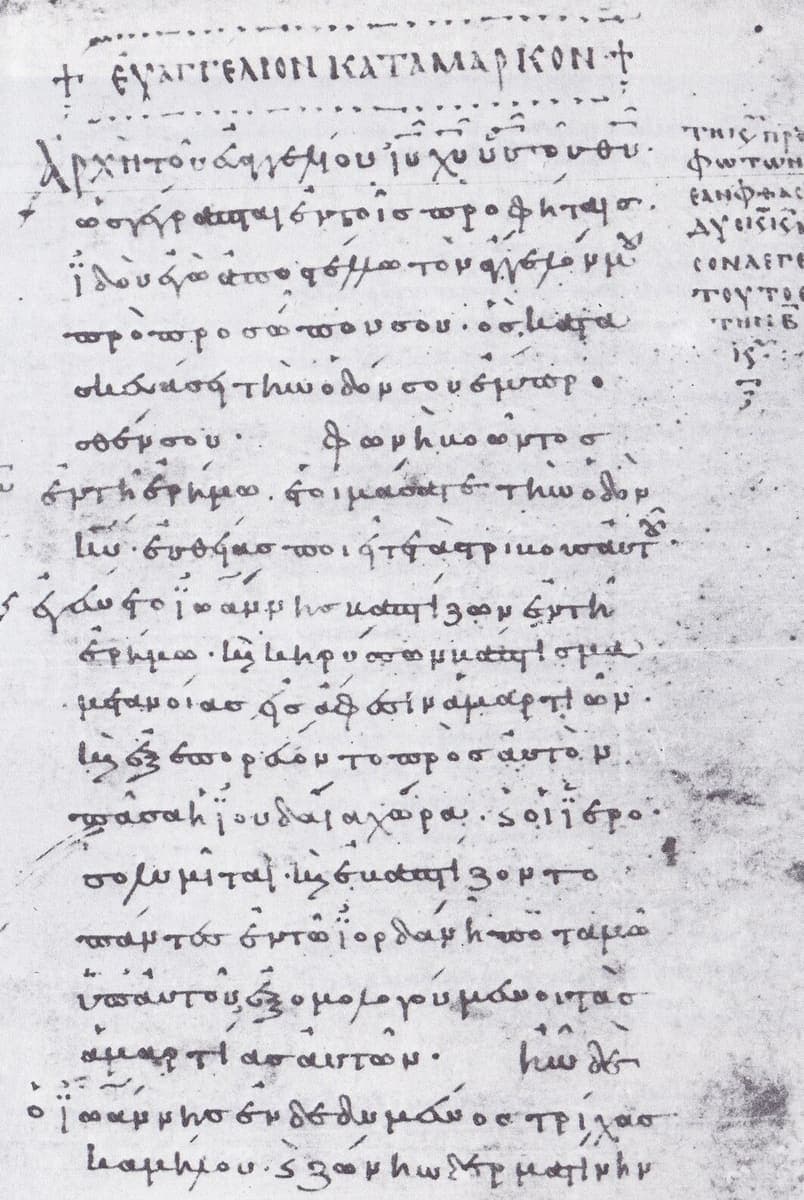
National Library of Russia, St Petersburg, Gr. 219 (Gregory-Aland minuscule 461), 835 · Source · Public domain · Facsimile of the Uspensky Gospels, via Wikimedia Commons
Evidano Transcription
Mark 1:1–6, the passage written on this page, in Eberhard Nestle’s 1904 edition, one verse to a line. The manuscript writes the same words with its own accentuation and contracts the divine names; the parentheses in the first verse mark words that the editor regarded as doubtful.
1 Ἀρχὴ τοῦ εὐαγγελίου Ἰησοῦ Χριστοῦ (Υἱοῦ Θεοῦ).
2 Καθὼς γέγραπται ἐν τῷ Ἡσαΐᾳ τῷ προφήτῃ Ἰδοὺ ἀποστέλλω τὸν ἄγγελόν μου πρὸ προσώπου σου, ὃς κατασκευάσει τὴν ὁδόν σου·
3 φωνὴ βοῶντος ἐν τῇ ἐρήμῳ Ἑτοιμάσατε τὴν ὁδὸν Κυρίου, εὐθείας ποιεῖτε τὰς τρίβους αὐτοῦ,
4 ἐγένετο Ἰωάνης ὁ βαπτίζων ἐν τῇ ἐρήμῳ κηρύσσων βάπτισμα μετανοίας εἰς ἄφεσιν ἁμαρτιῶν.
5 καὶ ἐξεπορεύετο πρὸς αὐτὸν πᾶσα ἡ Ἰουδαία χώρα καὶ οἱ Ἱεροσολυμεῖται πάντες, καὶ ἐβαπτίζοντο ὑπ’ αὐτοῦ ἐν τῷ Ἰορδάνῃ ποταμῷ ἐξομολογούμενοι τὰς ἁμαρτίας αὐτῶν.
6 καὶ ἦν ὁ Ἰωάνης ἐνδεδυμένος τρίχας καμήλου καὶ ζώνην δερματίνην περὶ τὴν ὀσφὺν αὐτοῦ, καὶ ἔσθων ἀκρίδας καὶ μέλι ἄγριον.
Source: Eberhard Nestle, Novum Testamentum Graece (1904), digital text published as CC0 by biblicalhumanities.org (CC0 1.0).
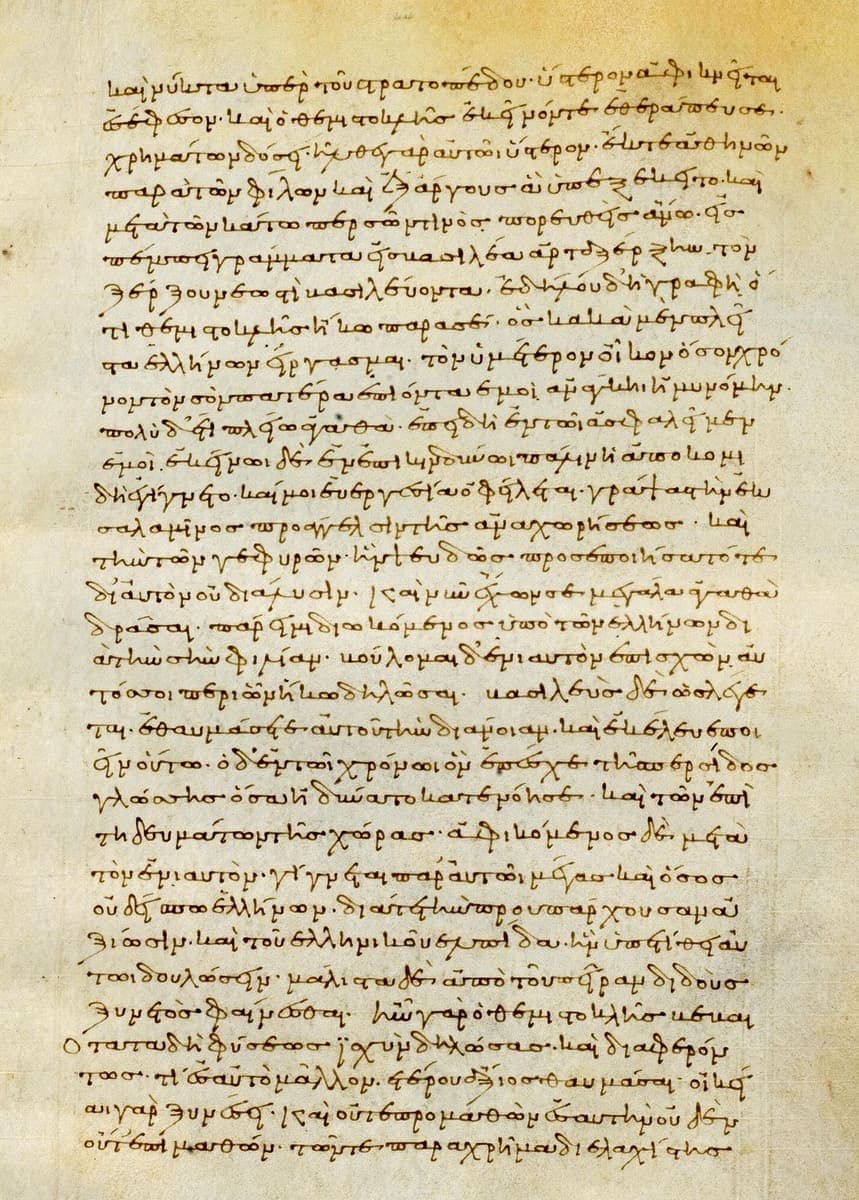
Universitätsbibliothek Heidelberg, Cod. Pal. graec. 252, fol. 50r, late 9th century · Source · Public domain · Universitätsbibliothek Heidelberg, digitised as Public Domain Mark 1.0
Evidano Transcription
The text of this page, Thucydides 1.137.2–1.138.3, from the edition of the Greek text published by the Perseus Digital Library. The page begins in the middle of a sentence at καὶ νύκτα and breaks off at δι’ ἐλαχίστης, where the verso continues; the modern edition adds quotation marks, brackets and paragraphing that the manuscript does not have.
καὶ νύκτα ὑπὲρ τοῦ στρατοπέδου ὕστερον ἀφικνεῖται ἐς Ἔφεσον.
καὶ ὁ Θεμιστοκλῆς ἐκεῖνόν τε ἐθεράπευσε χρημάτων δόσει (ἦλθε γὰρ αὐτῷ ὕστερον ἔκ τε Ἀθηνῶν παρὰ τῶν φίλων καὶ ἐξ Ἄργους ἃ ὑπεξέκειτο) καὶ μετὰ τῶν κάτω Περσῶν τινὸς πορευθεὶς ἄνω ἐσπέμπει γράμματα πρὸς βασιλέα Ἀρταξέρξην τὸν Ξέρξου νεωστὶ βασιλεύοντα.
ἐδήλου δὲ ἡ γραφὴ ὅτι ‘Θεμιστοκλῆς ἥκω παρὰ σέ, ὃς κακὰ μὲν πλεῖστα Ἑλλήνων εἴργασμαι τὸν ὑμέτερον οἶκον, ὅσον χρόνον τὸν σὸν πατέρα ἐπιόντα ἐμοὶ ἀνάγκῃ ἠμυνόμην, πολὺ δ’ ἔτι πλείω ἀγαθά, ἐπειδὴ ἐν τῷ ἀσφαλεῖ μὲν ἐμοί, ἐκείνῳ δὲ ἐν ἐπικινδύνῳ πάλιν ἡ ἀποκομιδὴ ἐγίγνετο.
καί μοι εὐεργεσία ὀφείλεται (γράψας τήν τε ἐκ Σαλαμῖνος προάγγελσιν τῆς ἀναχωρήσεως καὶ τὴν τῶν γεφυρῶν, ἣν ψευδῶς προσεποιήσατο, τότε δι’ αὑτὸν οὐ διάλυσιν), καὶ νῦν ἔχων σε μεγάλα ἀγαθὰ δρᾶσαι πάρειμι διωκόμενος ὑπὸ τῶν Ἑλλήνων διὰ τὴν σὴν φιλίαν.
βούλομαι δ’ ἐνιαυτὸν ἐπισχὼν αὐτός σοι περὶ ὧν ἥκω δηλῶσαι.’
βασιλεὺς δέ, ὡς λέγεται, ἐθαύμασέ τε αὐτοῦ τὴν διάνοιαν καὶ ἐκέλευε ποιεῖν οὕτως.
ὁ δ’ ἐν τῷ χρόνῳ ὃν ἐπέσχε τῆς τε Περσίδος γλώσσης ὅσα ἐδύνατο κατενόησε καὶ τῶν ἐπιτηδευμάτων τῆς χώρας·
ἀφικόμενος δὲ μετὰ τὸν ἐνιαυτὸν γίγνεται παρ’ αὐτῷ μέγας καὶ ὅσος οὐδείς πω Ἑλλήνων διά τε τὴν προϋπάρχουσαν ἀξίωσιν καὶ τοῦ Ἑλληνικοῦ ἐλπίδα, ἣν ὑπετίθει αὐτῷ δουλώσειν, μάλιστα δὲ ἀπὸ τοῦ πεῖραν διδοὺς ξυνετὸς φαίνεσθαι.
ἦν γὰρ ὁ Θεμιστοκλῆς βεβαιότατα δὴ φύσεως ἰσχὺν δηλώσας καὶ διαφερόντως τι ἐς αὐτὸ μᾶλλον ἑτέρου ἄξιος θαυμάσαι·
οἰκείᾳ γὰρ ξυνέσει καὶ οὔτε προμαθὼν ἐς αὐτὴν οὐδὲν οὔτ’ ἐπιμαθών, τῶν τε παραχρῆμα δι’ ἐλαχίστης
Source: Thucydides, Historiae, Greek text from the Perseus Digital Library (canonical-greekLit, tlg0003.tlg001.perseus-grc2) (CC BY-SA 4.0).
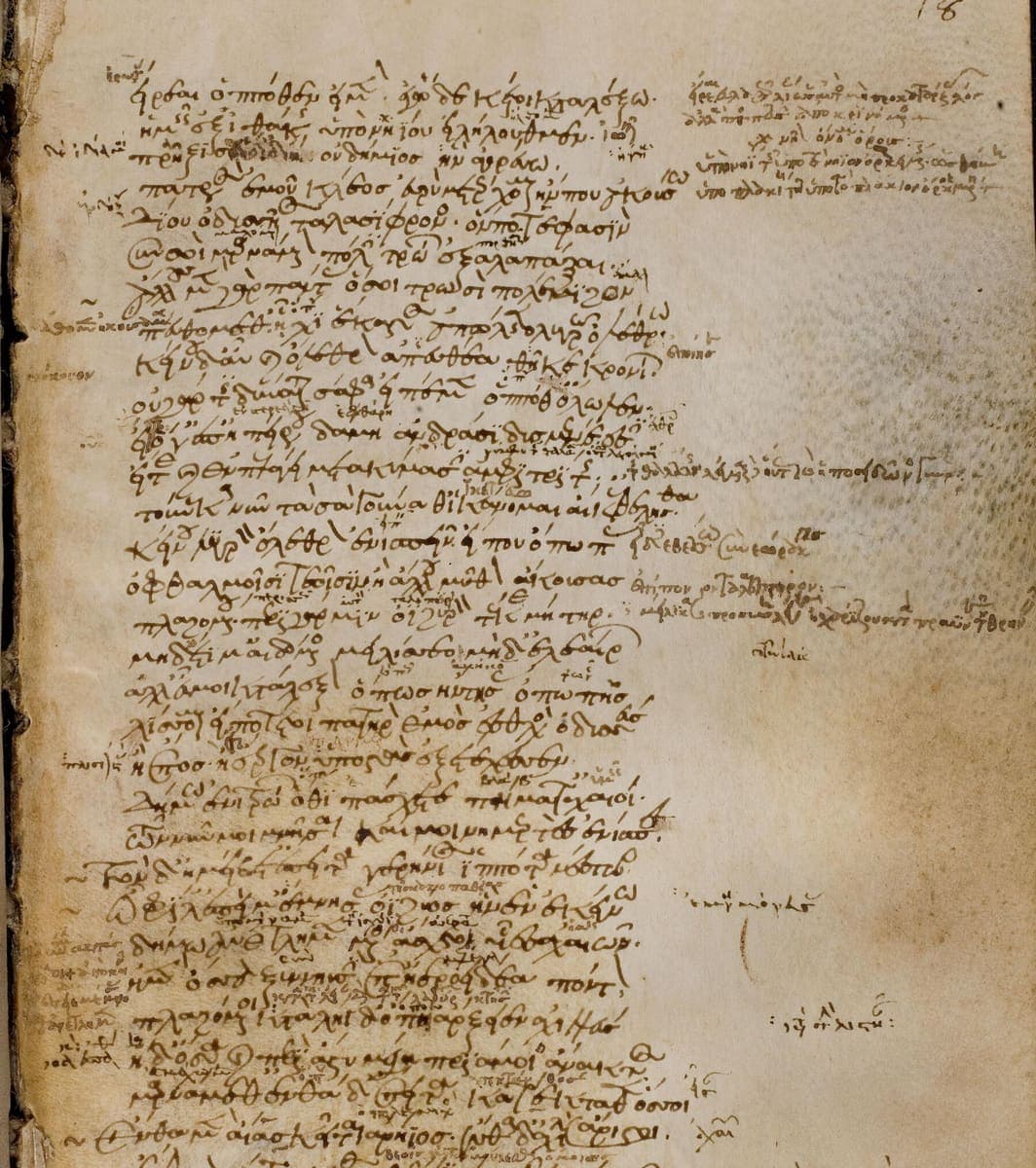
Universitätsbibliothek Heidelberg, Cod. Pal. graec. 45, fol. 18r, 1201–1202 and mid-13th century · Source · Public domain · Universitätsbibliothek Heidelberg, digitised as Public Domain Mark 1.0
Evidano Transcription
[illegible]
[illegible]
[illegible]
[illegible] ἤν που ἀκούσω[?]
δίου [illegible] ταλασίφρονος[?]· ὅν ποτέ φασιν
σὺν σοὶ [illegible] ἐξαλαπάξαι·
[illegible] ὅσοι τρωσὶ πολέμιζον
[illegible]
[illegible] ὄλεθρον ἀπευθέα[?] θῆκε κρονίων·
οὐ γάρ [illegible] ὁππόθ' ὄλωλεν·
[illegible] δάμη ἀνδράσι δυσμενέεσσιν
[illegible] κύμασιν ἀμφιτρίτης[?]
τοὔνεκα νῦν τὰ σὰ γούναθ' ἱκάνομαι, αἴ κ' ἐθέλῃσθα
[illegible] ὄλεθρον ἐνισπεῖν, εἴ που ὄπωπ[illegible]
ὀφθαλμοῖσι τεοῖσιν ἢ [illegible] ἄκουσας
[remaining lines, interlinear glosses and marginal scholia illegible]
Generated by Evidano’s advanced model; not yet checked against a published edition.
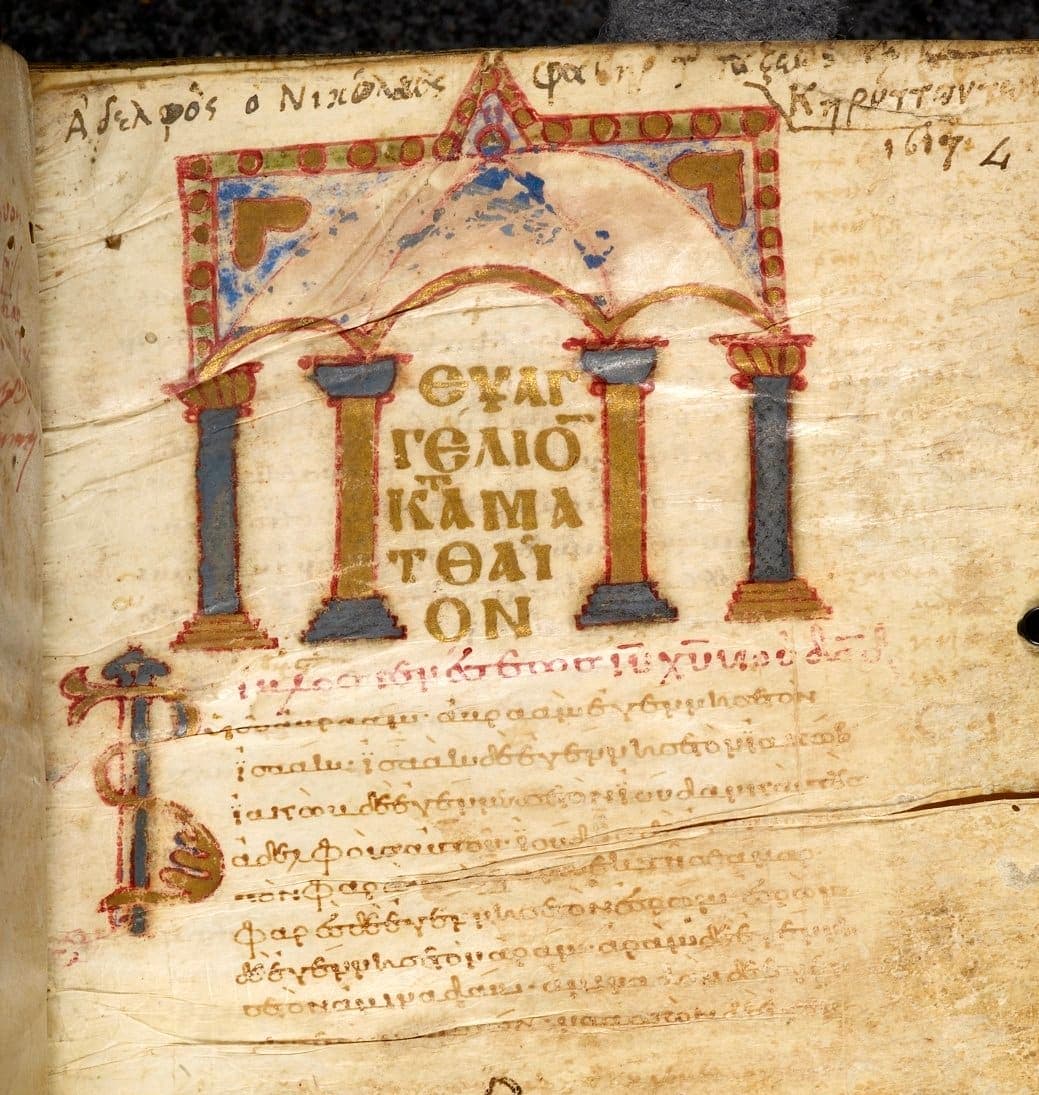
British Library, London, Harley MS 5540, 12th century · Source · Public domain · British Library, via Wikimedia Commons
Evidano Transcription
Matthew 1:1–4, the rubricated opening and the eight lines of genealogy visible on the page, in Nestle’s 1904 text with one verse to a line. The manuscript contracts Ἰησοῦ Χριστοῦ and Δαυείδ under strokes and spells the name Δαυίδ; the writing breaks off in the middle of verse 4.
1 Βίβλος γενέσεως Ἰησοῦ Χριστοῦ υἱοῦ Δαυεὶδ υἱοῦ Ἀβραάμ.
2 Ἀβραὰμ ἐγέννησεν τὸν Ἰσαάκ, Ἰσαὰκ δὲ ἐγέννησεν τὸν Ἰακώβ, Ἰακὼβ δὲ ἐγέννησεν τὸν Ἰούδαν καὶ τοὺς ἀδελφοὺς αὐτοῦ,
3 Ἰούδας δὲ ἐγέννησεν τὸν Φαρὲς καὶ τὸν Ζαρὰ ἐκ τῆς Θάμαρ, Φαρὲς δὲ ἐγέννησεν τὸν Ἐσρώμ, Ἐσρὼμ δὲ ἐγέννησεν τὸν Ἀράμ,
4 Ἀρὰμ δὲ ἐγέννησεν τὸν Ἀμιναδάβ, Ἀμιναδὰβ δὲ ἐγέννησεν τὸν Ναασσών, Ναασσὼν δὲ ἐγέννησεν τὸν Σαλμών,
Source: Eberhard Nestle, Novum Testamentum Graece (1904), digital text published as CC0 by biblicalhumanities.org (CC0 1.0).
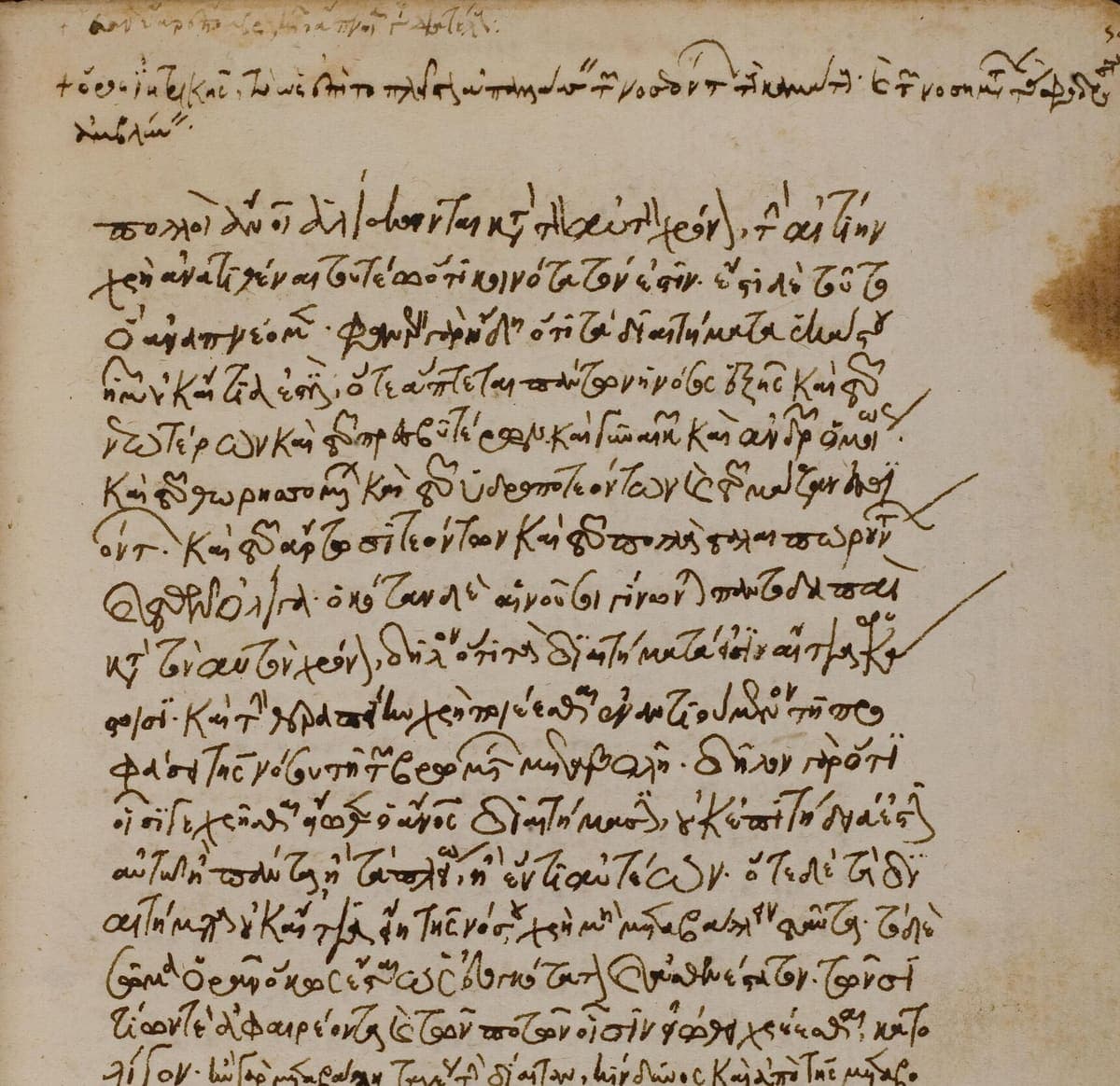
Universitätsbibliothek Heidelberg, Cod. Pal. graec. 129, fol. 50r, mid-14th century · Source · Public domain · Universitätsbibliothek Heidelberg, digitised as Public Domain Mark 1.0
How Greek minuscule changed between 800 and 1453
Minuscule appears in books at the end of the eighth century and takes over quickly; the earliest dated example is a gospel book written in 835. The first hands, the so-called ancient minuscule, are small, round and upright, with few ligatures and letters of even height, and they were used by the scholars of ninth-century Constantinople to copy the classical texts that survive today only through those copies. In the tenth and eleventh centuries the script becomes calligraphic: the tiny, rounded Perlschrift of luxury gospel books, hands with small blobs finishing the strokes, wide margins and disciplined ruling. From the twelfth century the writing grows more cursive and more heavily joined, majuscule forms creep back in for variety, and after 1261 the Palaeologan hands run to extremes — very fine pens, long loops, superscript letters everywhere — beside the disciplined, deliberately archaic style of the Hodegon monastery. A trained reader can place a hand within about fifty years from these habits.
The letters themselves are only half of what is written. Ligatures fuse pairs and triples: epsilon with iota, sigma with tau, omicron with upsilon written as one sign, epsilon-rho, alpha-lambda. Endings are suspended and replaced by a stroke, a hook or a superscript letter, so that -ος, -ον, -ων, -ης and -ας often never appear in full, and a small set of tachygraphic signs stands for whole words: καί, ἐστί, εἶναι, μέν and the case endings of names. The nomina sacra of the older codices continue unchanged. Accents and breathings are now written throughout, along with the circumflex, the iota adscript or subscript, apostrophes, and a punctuation system in which the raised dot, the comma and the semicolon do not mean what they mean in modern print. Numbers remain letters under a stroke, and dates are given by the year from the creation of the world and the indiction.
A Byzantine page is often several texts at once. Commentaries are copied as scholia around a block of Homer, Aristotle or the Gospels, in a smaller and sometimes quite different hand; glosses are squeezed between the lines; later readers add notes, corrections and pointing hands in the margins. Books of the Gospels carry chapter lists, canon tables, lection rubrics and, in liturgical copies, ekphonetic signs for chanting. Titles and initials are written in majuscule, often in gold or vermilion, under a decorated headpiece. At the end of a book the scribe may sign and date a colophon, and it is these colophons — with their era years, indictions and monastic names — that anchor the whole chronology of the script.
Why ordinary OCR struggles here
Ligatures that hide the letters they contain
In a joined hand the pair epsilon-iota is one wave, omicron-upsilon one loop, and sigma-tau a single tall sign. Recognition trained on printed Greek reads these as one letter or invents another, and because the ligature usually sits inside a common ending, the error lands in exactly the place where a reader most needs certainty.
Endings written as flourishes
A twelfth-century scribe rarely writes -ων or -ος in full: a hook above the line does the work, and the same hook can stand for more than one ending depending on the word. A transcription has to expand it from the grammar of the sentence, and say that it has done so, rather than transcribe a mark that no reader can interpret later.
Several streams of text on one page
A page of Homer with scholia carries a wide-spaced main text, interlinear glosses in a tiny hand, and blocks of commentary running down both margins and round the corners, sometimes keyed to the text by symbols. Software that reads the page in raster order interleaves all of them and produces something that is neither the poem nor the commentary.
Marks that look alike and mean different things
A stroke above a letter may be a rough breathing, a circumflex, an abbreviation sign or a numeral marker; a dot may be punctuation, a diaeresis or a hole in the parchment. Deciding between them needs the context of the word, which is why generic recognition drops most of them and returns bare letters.
Who works with this material
Editors of classical texts
Almost everything that survives of ancient Greek literature reaches us through Byzantine copies, and an edition begins with the collation of those manuscripts. What an editor needs is a faithful reading of each witness, with the abbreviations expanded but flagged, so that a variant is not created by a modern misreading of a hook.
Byzantinists working on unedited material
Letters, chronicles, monastic documents, theological treatises and school texts survive in manuscripts that have never been printed. A first transcription that a specialist can correct is worth far more here than anywhere else, because there is no printed text to fall back on.
Cataloguers and manuscript librarians
Identifying a codex means reading its opening words, its rubrics and above all its colophon, where the scribe gives his name, the date in the era of the world and the indiction. Those few lines decide how the volume is catalogued and dated.
Researchers working on scholia and reception
The commentary in the margin is often the point of the book. Scholars studying how Homer or Aristotle was taught need the notes transcribed as their own text, keyed to the line of the poem or treatise that they explain rather than merged into it.
Getting the best transcription
Describe the hand and the period
Say roughly when and where the book was written — a tenth-century calligraphic gospel hand, a thirteenth-century South Italian hand, a Palaeologan scholarly cursive — and name the abbreviations you expect. The same flourish is read differently in a formal book hand and in a fast learned one.
Set the reading order for the page
State how many text blocks there are and which is the main one, and ask for the main text, the interlinear glosses and each block of marginal scholia to be returned separately, with the line they attach to. Ask for reference marks linking a note to its lemma to be reported as well.
Decide what to do with expansions and accents
Ask for suspended endings to be expanded in brackets, for tachygraphic signs such as the compendium for καί to be named, and for accents, breathings and iota adscript to be reproduced as written rather than normalised. If you want a modernised text as well, request it as a second layer.
Start with a colophon or a known passage
Run the last page of a book first: a colophon is short, formulaic and full of numbers, and it shows at once whether the model is handling ligatures and letter numerals. Then compare a page of a printed text with the edition line by line before trusting the unedited parts.
Further reading on this hand
The palaeography guides the in-app selector points to for this domain, if you want to check a transcription against the standard references.
- Greek Paleography
This Fordham University resource introduces Greek palaeography from papyrus and majuscule writing through Byzantine minuscule. It illustrates historical letterforms and explains the proliferation of ligatures, abbreviations, and superscript elements in medieval hands. The guide supplies manuscript examples and transcriptions for comparing individual forms in context. It is especially useful for Byzantine minuscule manuscripts whose compact ligatures can make familiar Greek letters difficult to identify.
Frequently asked questions
- Can it expand ligatures and suspended endings?
- Yes, when the prompt says how. The usual arrangement is to print the expansion in round brackets so that the reader can see the scribe wrote a hook and the transcriber supplied -ων; a plain expanded text is also possible, but then the evidence for the reading disappears.
- How are scholia and interlinear glosses handled?
- They are treated as separate texts. Ask for the main column first, then each marginal block with its position, then the glosses with the word they stand above. Where the scribe has keyed a note to the text with a symbol, that symbol is reported with both parts.
- Does it read colophons and dates?
- Colophons are usually the most rewarding page to run. Dates are written as letters under a stroke in the era of the world, together with an indiction number, and the transcription can give both the letters as written and the arithmetic conversion, which you should check against the indiction.
- What about paper manuscripts and show-through?
- Byzantine paper from the thirteenth century onwards is thin, and the writing on the back often shows through as a mirror image. It helps to say that the image is paper rather than parchment, so that ghost strokes are ignored rather than read as a second layer of text.
- Can a hand be dated from the transcription?
- Not from the text alone, but the features that a transcription records — which ligatures occur, whether majuscule forms are mixed in, how the endings are abbreviated — are the same features a palaeographer uses. They give a range, and a dated colophon or a watermark is what turns that range into a date.
Related scripts and pages
Transcribe your Byzantine manuscripts
Upload a folio, choose Byzantine Greek Minuscule Manuscripts as the domain, and check one page of scholia before you commit a whole codex.