
Hebrew · c. 1600–1950
Spanish in Hebrew letters, written at speed
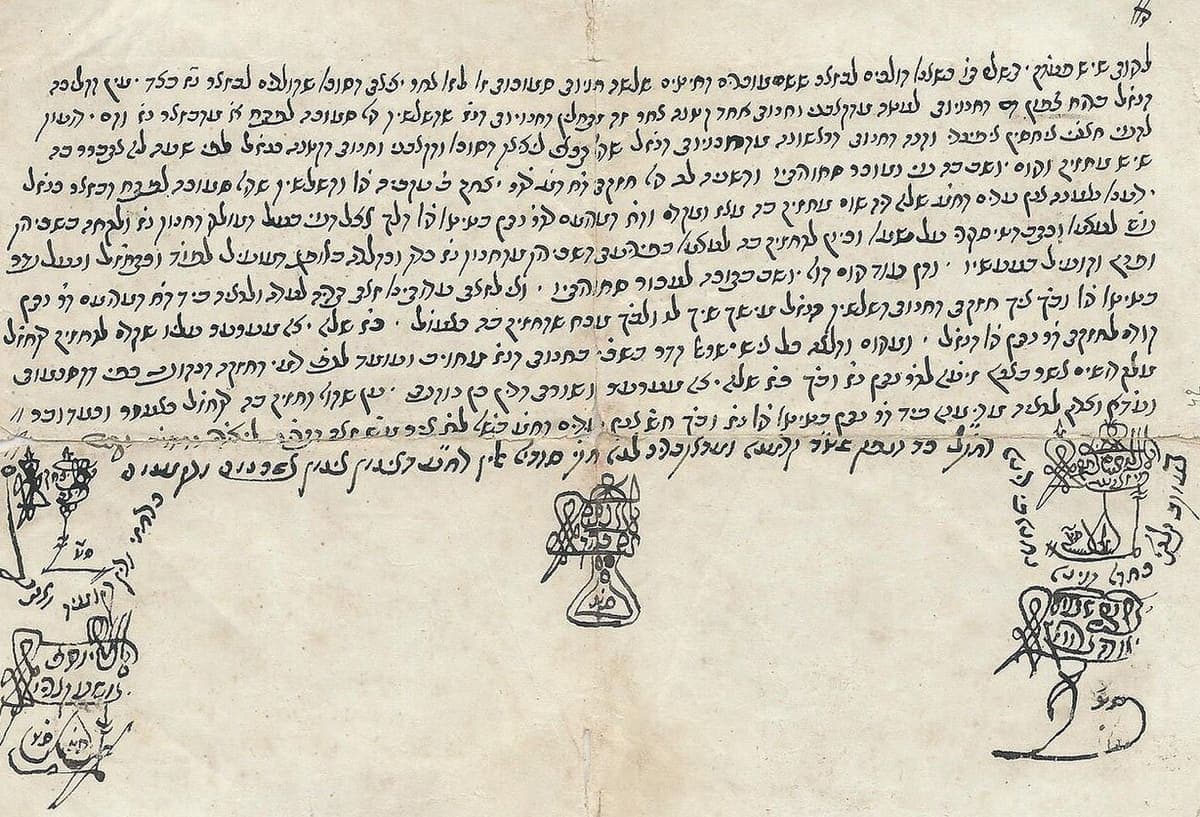
Ladino is a Romance language written in the Hebrew alphabet, and the hand it was written in — Solitreo — is legible to almost nobody today, including fluent readers of Hebrew. Letters join, the vowels are guessed from three consonants doing duty for five sounds, and a Hebrew blessing can appear in the middle of a sentence about the price of cloth. Evidano reads the Solitreo, marks the passages that switch language, and can hand back either Hebrew letters or a Latin transcription.
Sample pages
Evidano Transcription
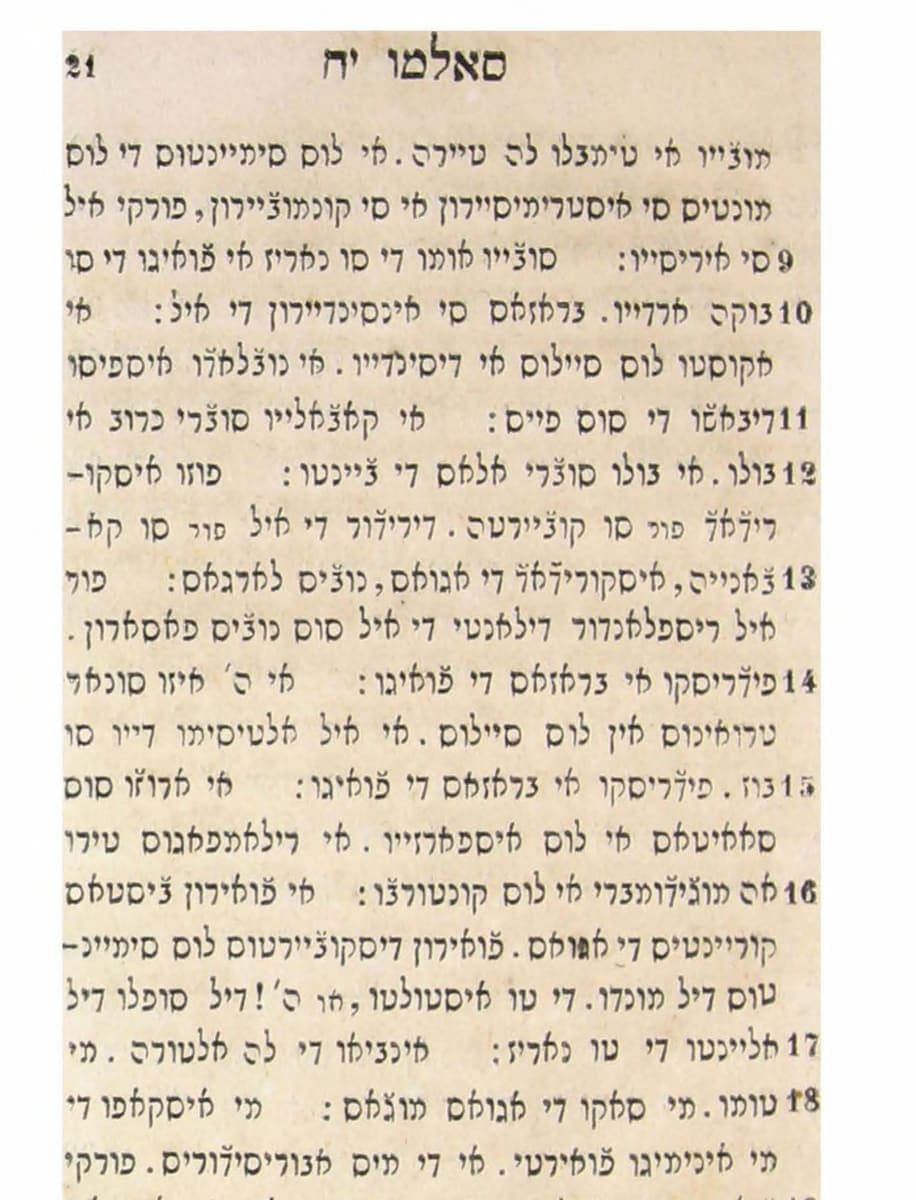
21 סאלמו יח
מובֿייו אי טימבלו לה טיירה. אי לוס סימיינטוס די לוס
מונטיס סי איסטרימיסיירון אי סי קונמובֿיירון, פורקי איל
9 סי איריסייו: סובֿייו אומו די סו נאריז אי פֿואיגו די סו
10 בוקה ארדייו. בראזאס סי אינסינדיירון די איל: אי
אקוסטו לוס סיילוס אי דיסינדייו. אי נובֿלאדו איספיסו
11 דיבאשו די סוס פייס: אי קאבֿאלגייו סובֿרי כרוב אי
12 בולו. אי בולו סובֿרי אלאס די בֿיינטו: פוזו איסקו-
רידאד פור סו קובֿיירטה. דירידור די איל פור סו קא-
13 באנייה, איסקורידאד די אגואס, נובֿיס לארגאס: פור
איל ריספלאנדור דילאנטי די איל סוס נובֿיס פאסארון.
14 פידריסקו אי בראזאס די פֿואיגו: אי ה׳ איזו סונאר
טרואינוס אין לוס סיילוס. אי איל אלטיסימו דייו סו
15 בוז. פידריסקו אי בראזאס די פֿואיגו: אי ארוזֿו סוס
סאאיטאס אי לוס איספארזייו. אי רילאמפאגוס טירו
16 אס מוגֿידומברי אי לוס קונטורבֿו: אי פֿואירון בֿיסטאס
קוריינטיס די אגואס. פֿואירון דיסקובֿיירטוס לוס סימיינ-
טוס דיל מונדו. די טו איסטולטו[?], או ה׳! דיל סופלו דיל
17 אלייינטו די טו נאריז: אינביאו די לה אלטורה. מי
18 טומו. מי סאקו די אגואס מוגֿאס: מי איסקאפו די
מי אינימיגו פֿוארטי. אי די מיס אבוריסידוריס[?]. פורקי
Generated by Evidano’s advanced model; not yet checked against a published edition.
Evidano Transcription
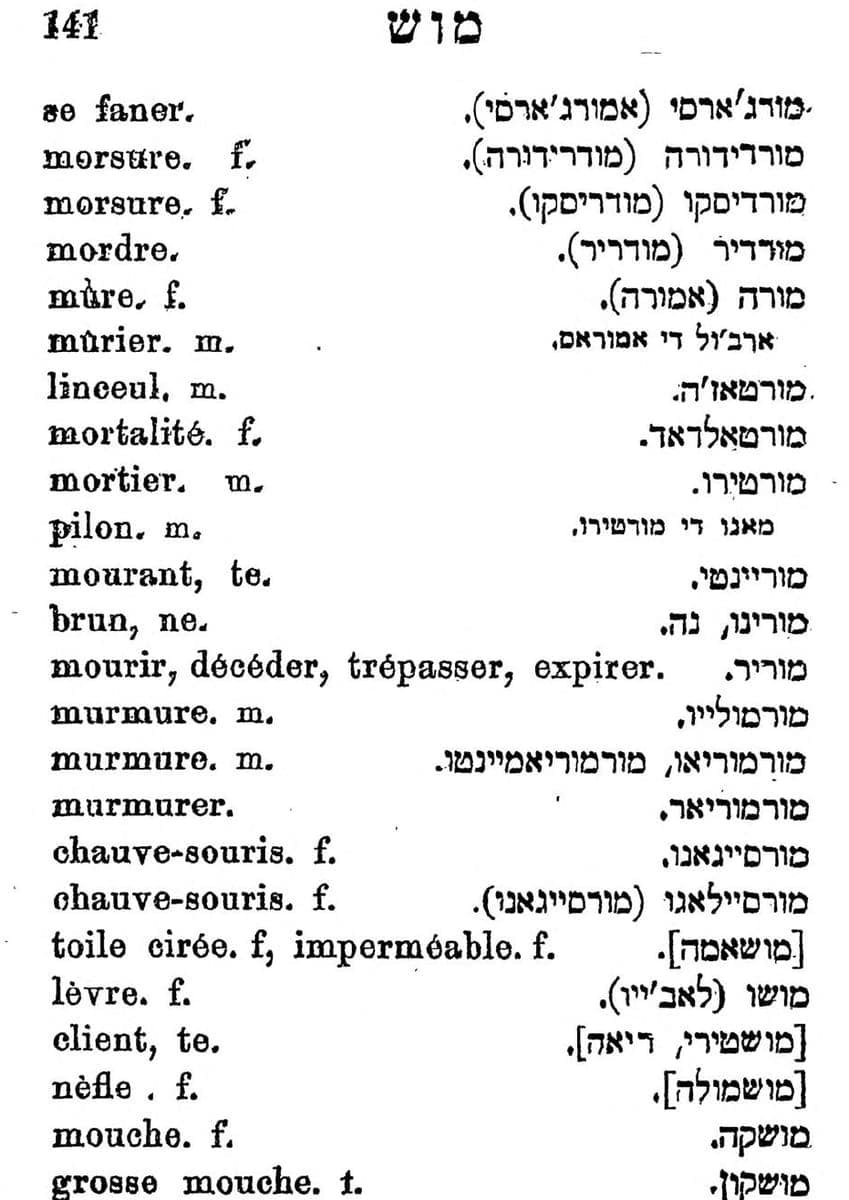
141 מוש
se faner. מורג'ארסי (אמורג'ארסי).
morsure. f. מורדידורה (מודרידורה).
morsure. f. מורדיסקו (מודריסקו).
mordre. מורדיר (מודריר).
mûre. f. מורה (אמורה).
mûrier. m. ארב'ול די אמוראס.
linceul. m. מורטאז'ה.
mortalité. f. מורטאלדאד.
mortier. m. מורטירו.
pilon. m. מאנו די מורטירו.
mourant, te. מוריינטי.
brun, ne. מורינו, נה.
mourir, décéder, trépasser, expirer. מוריר.
murmure. m. מורמולייו.
murmure. m. מורמוריו, מורמוריאמיינטו.
murmurer. מורמוריאר.
chauve-souris. f. מורסייגאנו.
chauve-souris. f. מורסיילאגו (מורסייגאנו).
toile cirée. f, imperméable. f. [מושאמה].
lèvre. f. מושו (לאב'ייו).
client, te. [מושטירי, דיאה].
nèfle . f. [מושמולה].
mouche. f. מושקה.
grosse mouche. f. מושקון.
Generated by Evidano’s advanced model; not yet checked against a published edition.
Evidano Transcription
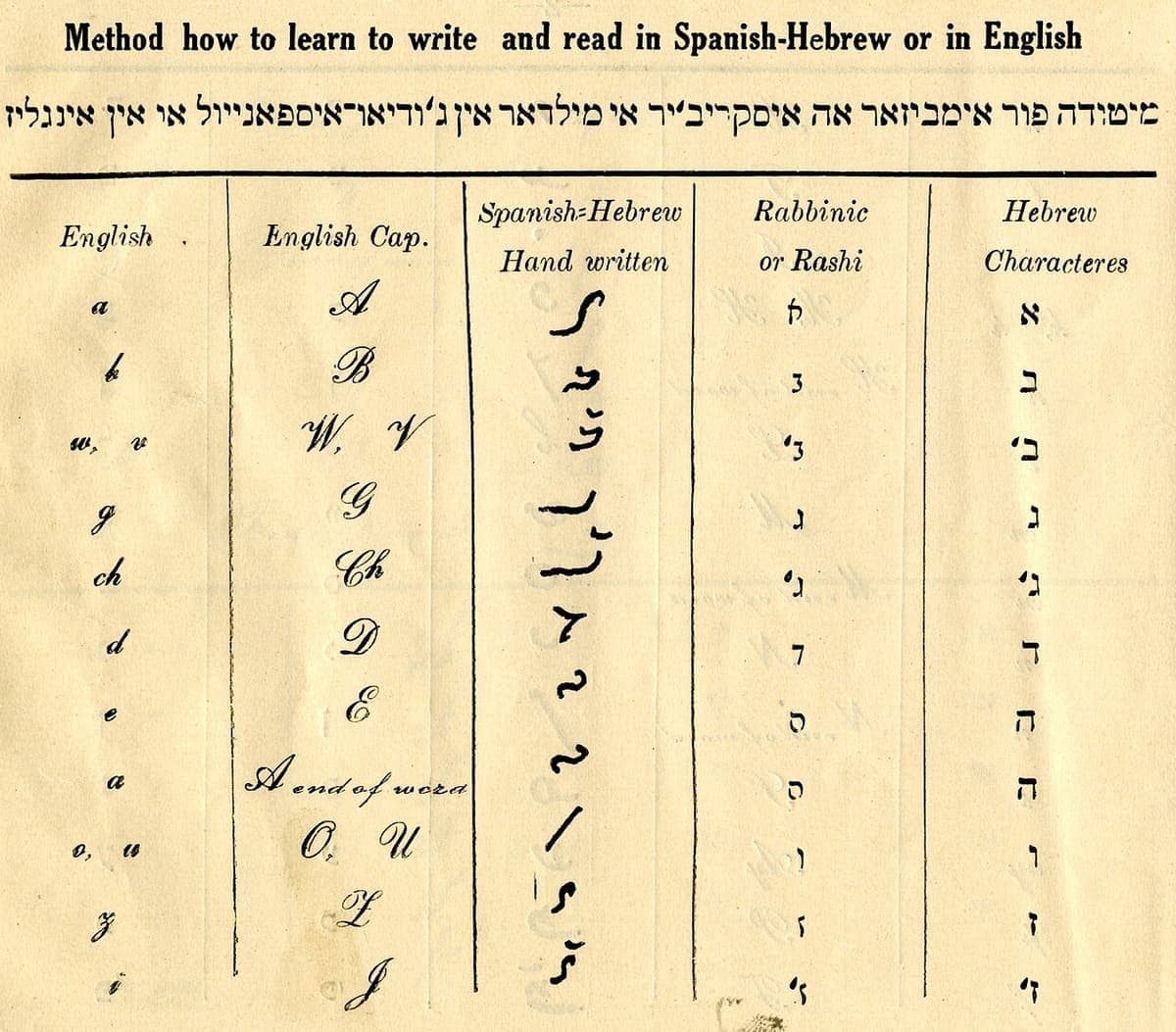
Method how to learn to write and read in Spanish-Hebrew or in English
מיטודה פור אימביזאר אה איסקריב׳יר אי מילדאר אין ג׳ודיאו־איספאנייול או אין אינגליז
| English | English Cap. | Spanish=Hebrew Hand written | Rabbinic or Rashi | Hebrew Characteres |
|---|---|---|---|---|
| a | A | א | א | א |
| b | B | ב | ב | ב |
| w, v | W, V | ב׳ | ב׳ | ב׳ |
| g | G | ג | ג | ג |
| ch | Ch | ג׳ | ג׳ | ג׳ |
| d | D | ד | ד | ד |
| e | E | ה | ה | ה |
| a | A end of word | ה | ה | ה |
| o, u | O, U | ו | ו | ו |
| z | Z | ז | ז | ז |
| i | J | ז׳ | ז׳ | ז׳ |
Generated by Evidano’s advanced model; not yet checked against a published edition.
One language, three ways of writing it
Judeo-Spanish left Iberia in 1492 and settled in Salonica, Istanbul, Izmir, Sarajevo, Sofia and the towns around them, where it stayed the everyday language of Sephardi communities into the twentieth century. It was written in Hebrew characters, and the choice of characters signalled the kind of document. Printers used the small semi-cursive face known as letra de Rashi for books and, from the 1840s, for a lively newspaper press; square letters were kept for titles, headings and quotations from scripture; and everything written by hand — letters, ledgers, contracts, communal minutes — was written in Solitreo, the cursive descendant of the Sephardi documentary hand, whose name comes from the verb for spelling a word out letter by letter.
Spelling a Romance language in this alphabet takes some adapting. Vowels are carried by א, י and ו, so that a single letter has to stand for both /o/ and /u/ and another for both /e/ and /i/; word-initial and word-final positions have their own conventions; and the sounds Hebrew lacks are made by adding a mark — ג׳ for the sound in ǧente, ז׳ for the one in ožo, and a rafe stroke over ב, פ or ד to soften it. Any word taken from Hebrew or Aramaic keeps its Hebrew spelling and is read with its Ladino pronunciation, so one line can follow two different orthographic systems. Numbers may be written with Hebrew letters or with European figures, and by the end of the nineteenth century French and Turkish words, and sometimes whole phrases in Latin script, appear inside the Hebrew-letter text.
The physical record matches that mixture. Family and business correspondence survives folded, with the address written across the outside and post office marks stamped over it; communal registers keep minutes, tax lists and charity accounts in ruled columns; marriage contracts and rabbinic agreements end in a row of signatures wound into elaborate knots of penwork that carry a name inside them. The printed side runs from prayer books and the Me-ʿam Loʿez commentary to grammars, dictionaries and newspapers; and from the 1920s, as Turkey moved to the Latin alphabet, Ladino began to be printed in Latin letters too, so a single family archive can contain three scripts.
Why ordinary OCR struggles here
A hand almost nobody reads any more
Solitreo letters look nothing like their printed equivalents, and they join. Two or three pairs converge — ד with ר, ב with כ, and the loops of ח and ה — and final forms link into the next word, so the first task is finding where words end, not what they say.
A Romance language spelled with consonants
The same string of letters can be several Spanish words depending on which vowels you supply. A system that reaches for a Hebrew dictionary will find a Hebrew word that fits and return it, which is the failure mode that matters here.
The language changes mid-sentence
Hebrew and Aramaic formulae, Turkish and French loanwords, and occasional phrases in Latin script all sit inside Ladino prose. Each needs to be recognised for what it is, because transliterating a Hebrew word as though it were Spanish produces something no dictionary contains.
Letters, stamps and signatures on one sheet
Correspondence carries an address panel, postal marks, a date in two calendars and signatures written as monograms. A transcription that folds all of that into the body of the letter loses precisely the parts a genealogist or an archivist needs.
Who works with this material
Sephardi family historians
Boxes of folded letters, photographs with writing on the back and a few contracts are what most families kept. The names, dates, places and relationships in them are unreachable while the hand is unreadable, and they are exactly what a first pass can recover.
Community archives and museums
Collections in Istanbul, Thessaloniki, Sarajevo, Jerusalem and Seattle hold registers and correspondence with little more than a folder title. Item-level description becomes possible once each sheet yields a date, a sender and a subject.
Historians of the Ottoman Jewish press
The Ladino newspapers of Salonica and Istanbul ran for decades in the small semi-cursive type. Getting them into searchable text is what turns them from a run of microfilm into a source that can be quoted and counted.
Linguists working on Judeo-Spanish
Spelling in Ladino was never standardised, and the variation is the evidence. A transcription that keeps the letters as written, rather than normalising them towards modern Spanish, is the only kind that supports that work.
Getting the best transcription
Say the language before you say the script
State that the document is Judeo-Spanish written in Hebrew characters, and name the likely period and city. Without that, a model reads the letters correctly and then assembles them into Hebrew words, which looks plausible and is wrong.
Choose one output convention and keep it
Decide whether you want Hebrew letters as written, a Latin transcription in one of the established Ladino spellings, or both in parallel. Mixing conventions inside a collection makes the results impossible to search later.
Ask for the Hebrew-origin words to be flagged
Words and formulae taken from Hebrew or Aramaic keep their Hebrew spelling and should not be transliterated as Spanish. Having them marked lets you handle them consistently, and it also gives you a rough index of the religious and legal vocabulary in a corpus.
Treat the outside of a letter as a separate document
Request the address panel, postal marks and any dates on the wrapper as their own block. They carry the route and the year, they are often in a different script from the letter, and they are the fastest way to sort an unordered bundle.
Further reading on this hand
The palaeography guides the in-app selector points to for this domain, if you want to check a transcription against the standard references.
- How to Write Soletreo, the Ladino Alphabet, with David Bunis
This University of Washington Sephardic Studies resource teaches the Solitreo alphabet used to write Ladino by hand. It presents the script through demonstrations by the scholar David Bunis and connects individual cursive forms with their Hebrew-letter values. The lesson shows how letters are formed and joined rather than relying only on modern square Hebrew equivalents. It is directly useful for Ladino correspondence because Solitreo's connected forms are unfamiliar even to many readers of printed Hebrew.
Frequently asked questions
- Is Solitreo just Hebrew cursive?
- It descends from the same Sephardi documentary hand, but it went its own way and is not the cursive taught with modern Hebrew. Someone who writes Hebrew today can rarely read it without training, which is why so much Ladino correspondence sits undescribed in archives.
- Can the output be given in Latin letters?
- Yes. A transcription in Hebrew characters and a Latin transcription can be produced from the same reading, and it is worth keeping both: the Hebrew-letter version records what is on the paper, and the Latin one is what most readers and search systems can use.
- How are the vowels decided?
- From the word, not from the letters. Since א, י and ו each cover more than one vowel, the reading depends on recognising the Spanish word in context, and doubtful cases can be returned with the alternatives rather than silently resolved.
- Does the printed Rashi type of the newspapers work better than handwriting?
- It is more regular, so the letterforms are less of a problem, but nineteenth-century newsprint brings its own: worn type, ink spread, tight leading and columns that break across a fold. The language switching is the same in both.
- What about material printed in Latin script after the 1920s?
- Ladino set in Latin letters, in Turkish or French orthography, is handled as ordinary printed text, and a collection that mixes the two can be run together with each item labelled by script so that the two halves can still be searched as one language.
Related scripts and pages
Read your Ladino letters and registers
Upload a Solitreo letter, a contract or a page of the Ladino press, choose Ladino Solitreo Correspondence and Records, and say which output script you want.