
Japanese · c. 1600–1868
Read handwritten Edo pages without transcribing them twice
Two and a half centuries of Japanese life were recorded in a hand that joins four or five syllables into one falling stroke and spells the same sound with whichever character the writer learned. Evidano returns the columns in order, keeps the clerk’s abbreviations and red corrections visible, and marks what it cannot read instead of inventing a plausible word.
Sample pages
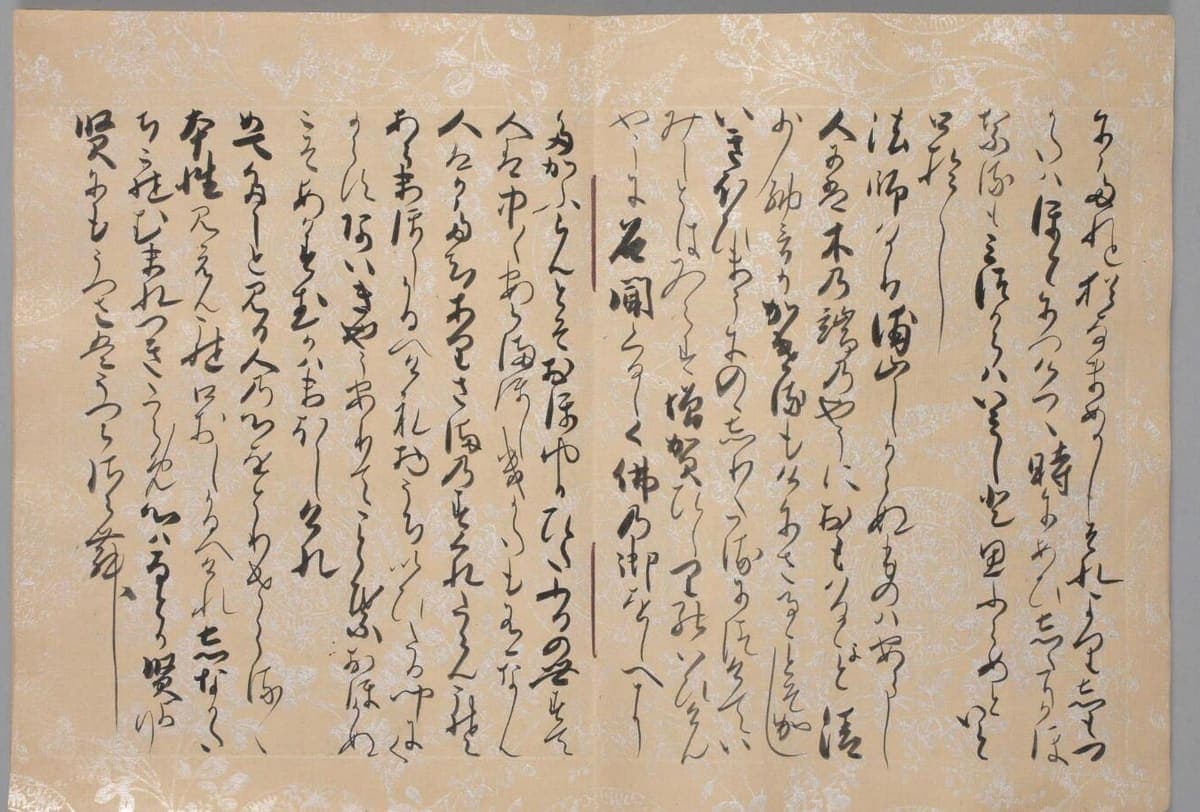
National Institute of Japanese Literature, NIJL 200015445, 1661 · Source · CC BY-SA 4.0 · Dataset of Pre-Modern Japanese Text (NIJL), distributed by CODH
Evidano Transcription
The passage that begins in the third column from the right and runs to the foot of the left-hand page: the later part of section 1 of Tsurezuregusa, in the Kōchū Nihon bungaku taikei text (1925–26) on Japanese Wikisource. The edition’s explanatory glosses and ruby readings have been dropped; its kana iteration mark 〱 is kept. The page opens in mid-sentence and the last two columns begin the sentence 人品容貌こそ生れつきたらめ.
法師ばかり羨しからぬものはあらじ、「人には木の端のやうに思はるゝよ。」と、清少納言が書けるも、げにさることぞかし。
勢猛にのゝしりたるにつけて、いみじとは見えず。増賀聖のいひけむやうに、名聞ぐるしく、佛の御教に違ふらむとぞ覺ゆる。
ひたぶるの世すて人は、なか〱あらまほしき方もありなむ。
人はかたち有樣の勝れたらむこそ、あらまほしかるべけれ。
物うち言ひたる、聞きにくからず、愛敬ありて、詞多からぬこそ、飽かず對はまほしけれ。
めでたしと見る人の、心劣りせらるゝ本性見えむこそ、口をしかるべけれ。
Source: 徒然草 (校註日本文學大系), 第一段, ed. Kokumin Tosho (1925–26), via Japanese Wikisource (Public domain).
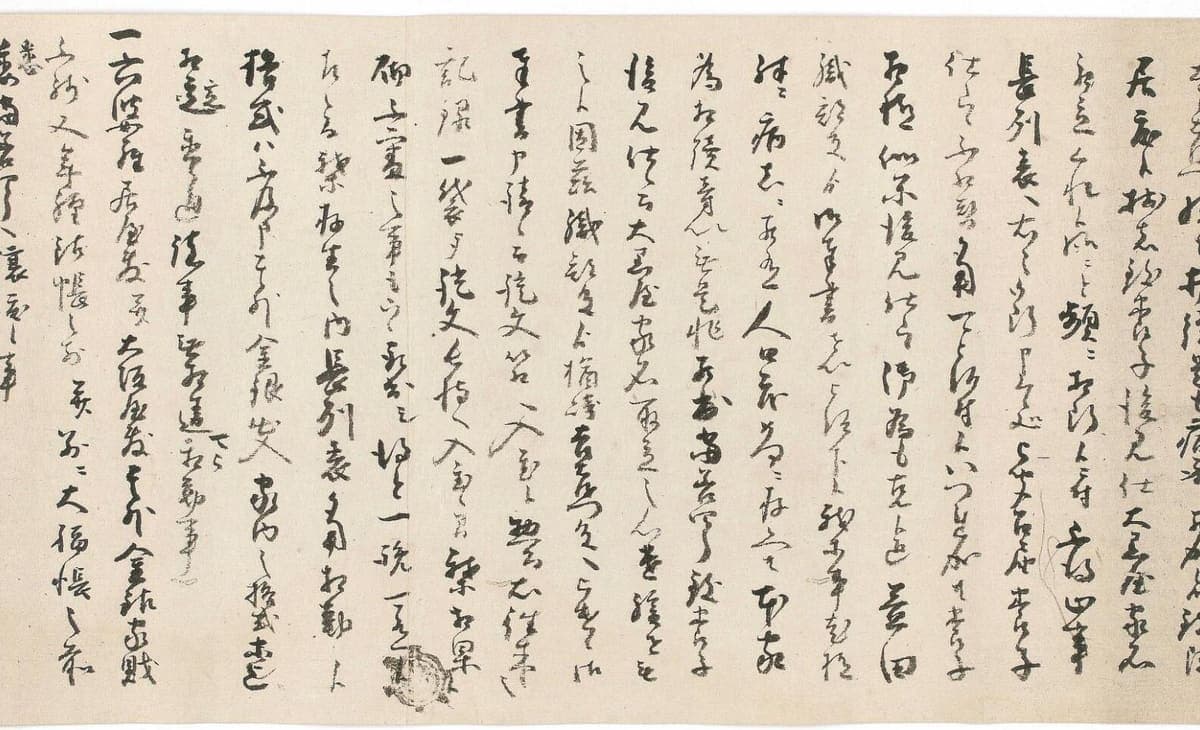
National Institute of Japanese Literature, NIJL 200003080, 1721 · Source · CC BY-SA 4.0 · Dataset of Pre-Modern Japanese Text (NIJL), distributed by CODH
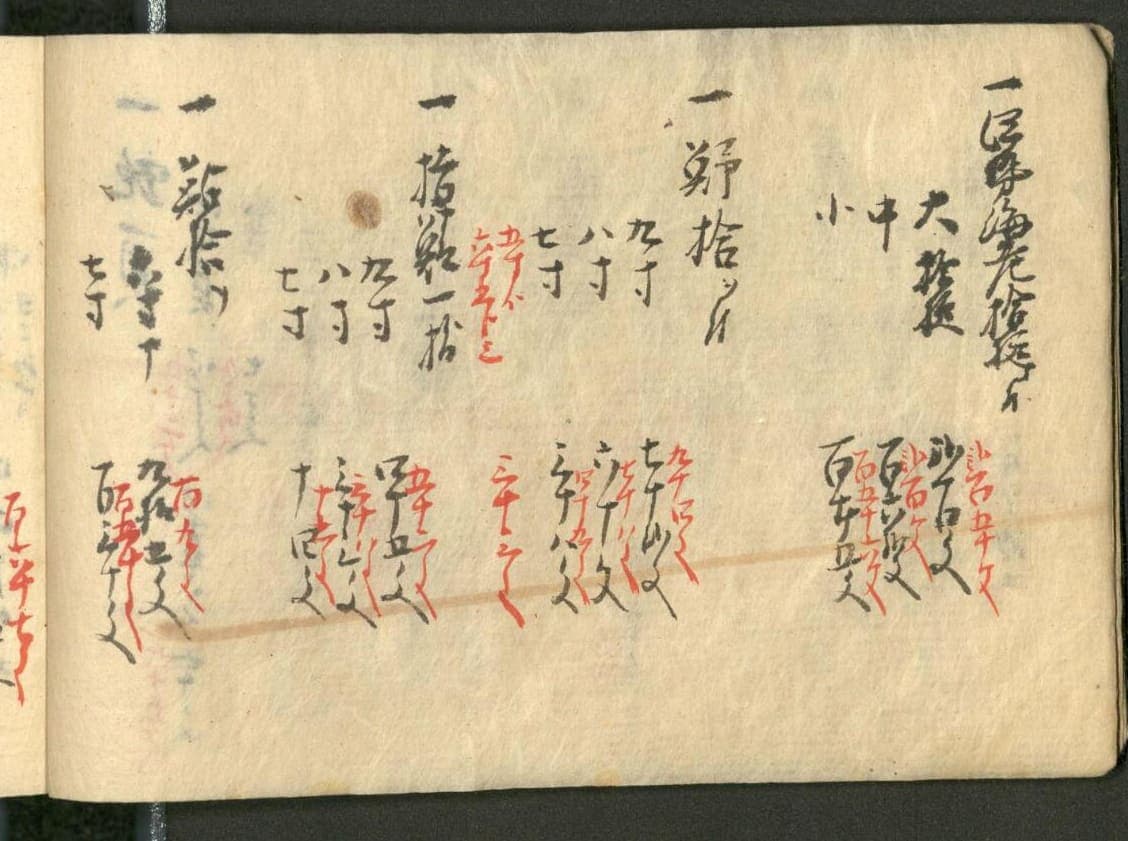
National Institute of Japanese Literature, NIJL 100249362, 1787 · Source · CC BY-SA 4.0 · Dataset of Pre-Modern Japanese Text (NIJL), distributed by CODH
Evidano Transcription
一 [illegible]海老[?]拾[illegible]
大[illegible]
中
小
[prices and vermilion corrections illegible]
一 [illegible]拾[?][illegible]
九寸
八寸
七寸
[prices and vermilion corrections illegible]
一 [illegible]一[illegible]
九寸
八寸
七寸
[prices and vermilion corrections illegible]
一 [illegible]
[illegible]
七寸
[prices and vermilion corrections illegible]
Generated by Evidano’s advanced model; not yet checked against a published edition.
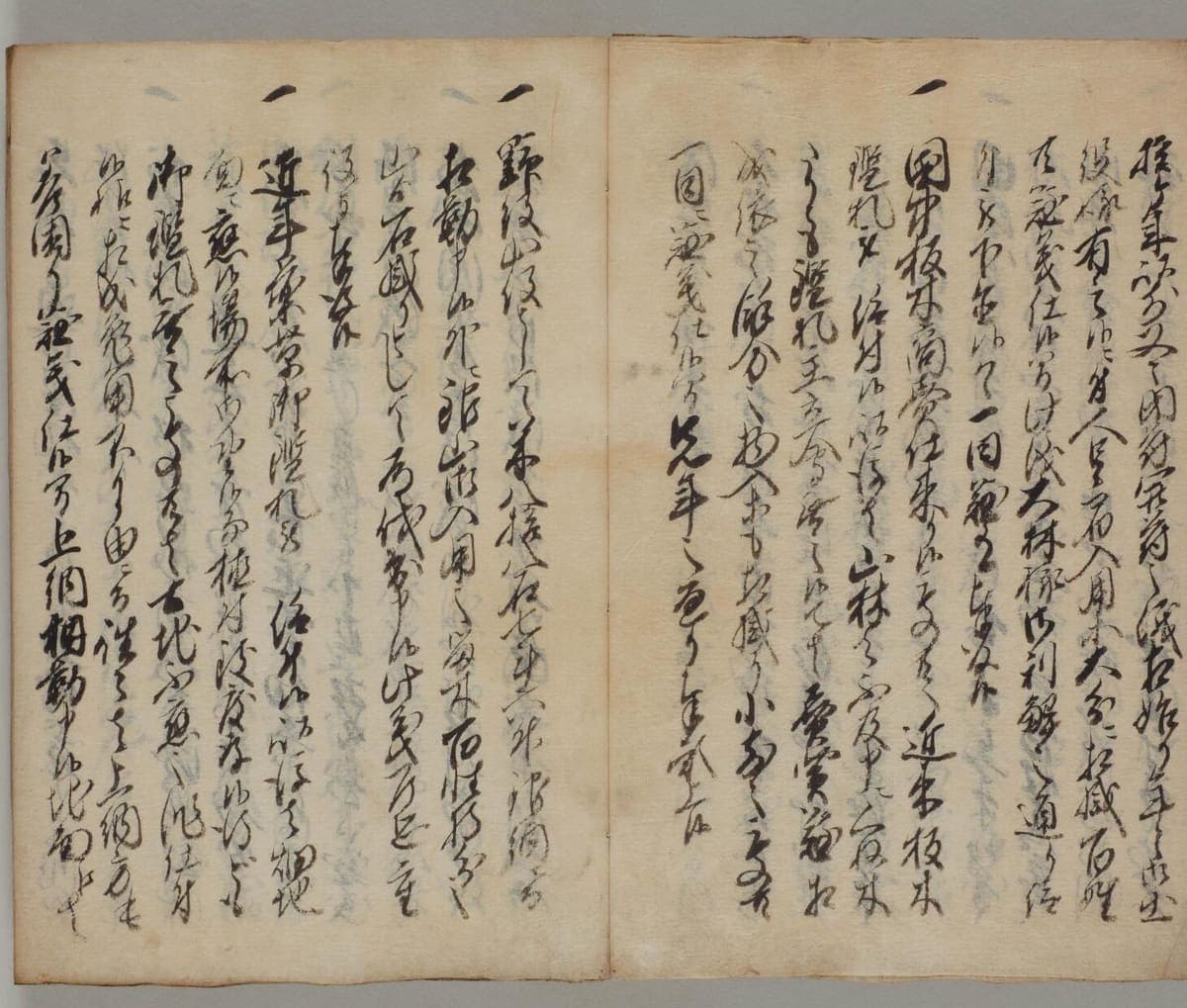
National Institute of Japanese Literature, NIJL 200020803, 1839 · Source · CC BY-SA 4.0 · Dataset of Pre-Modern Japanese Text (NIJL), distributed by CODH
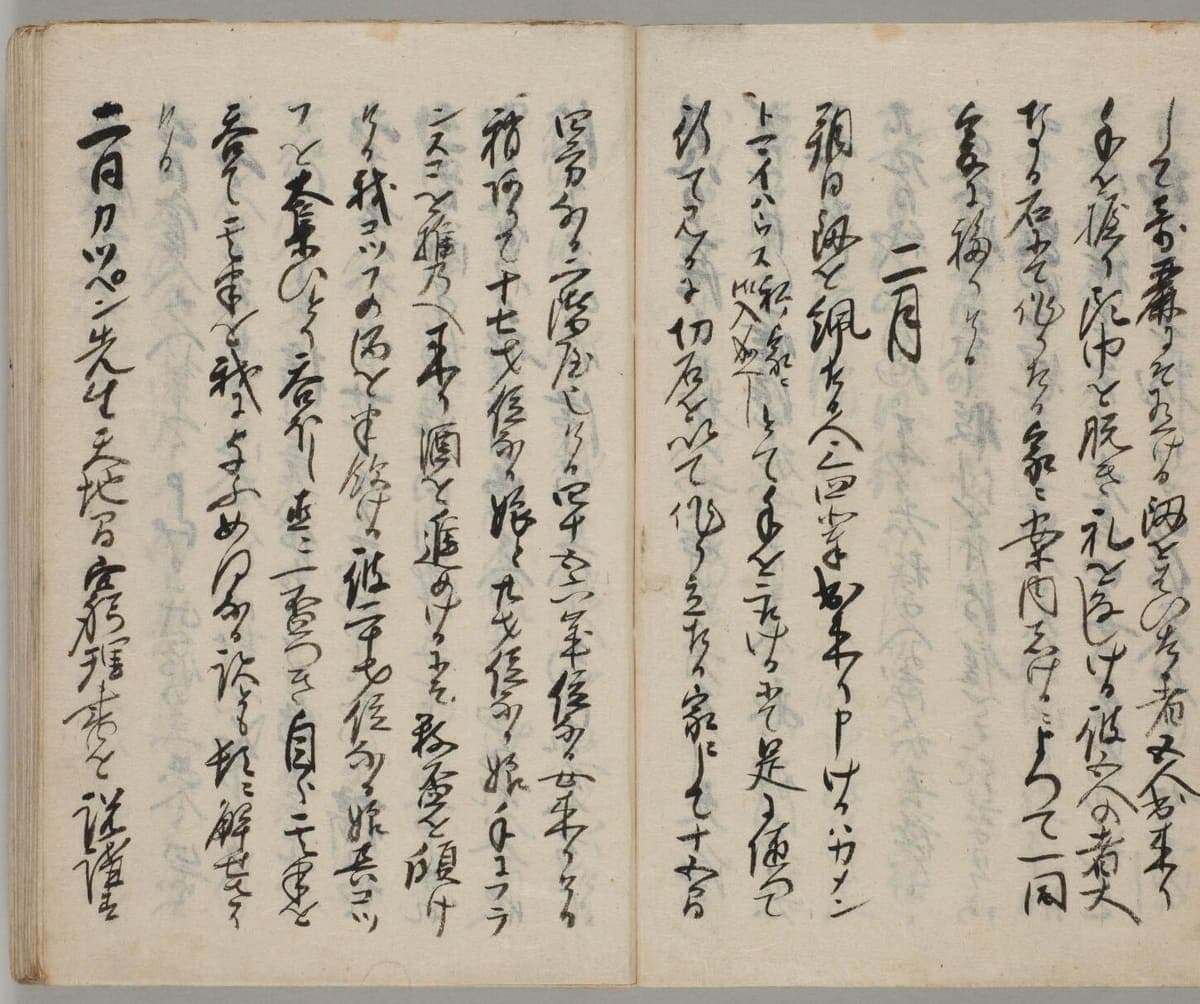
National Institute of Japanese Literature, NIJL 200020030, 1866 · Source · CC BY-SA 4.0 · Dataset of Pre-Modern Japanese Text (NIJL), distributed by CODH
Evidano Transcription
して[illegible]若[?]者又ハ[illegible]
手を握[?]り頭巾を脱き礼を正[?]しける[illegible]
なる石を以て作りたる家に[illegible]によりて一同
[illegible]
二月
朔日海を[illegible]申けるハカメン
トマイハウス[illegible]
行て[illegible]切石を以て作りたる家に[illegible]
[illegible]
[illegible]
[illegible]
[illegible]
フと奪[?]ひとり呑[illegible]自ら[illegible]
呑て[illegible]我ニ[illegible]
[illegible]
二日カツペン先生ニ天地[illegible]
Generated by Evidano’s advanced model; not yet checked against a published edition.
What Tokugawa handwriting looks like on the page
Between 1600 and 1868 almost everything was written by hand and almost nothing was written in the shapes taught in schools today. Kanji are reduced to their sōsho outlines, kana are drawn from a wide repertoire of source characters, and the brush frequently does not lift between syllables, so the visible unit is a connected group rather than a letter. A single writer will use two or three shapes for the same syllable in one paragraph, choosing by the rhythm of the line. Voiced-sound marks are optional, small kana are written full size, and the reader supplies both from the sense.
Documents are written in sōrōbun, the epistolary register whose sentences end in 候. It comes with its own shorthand: ゟ for より, 〆 for しめ, a hooked mark that stands for 候 itself, honorific prefixes reduced to a stroke, and a set of standing phrases — 仰せ付けられ候, 恐れながら, 申し上げ候 — that a trained eye reads as a block. Ledgers and price lists add Chinese numerals with the units 両, 匁, 文 and 石, entries opened by a raised 一, and running totals that a later hand has struck through and rewritten in vermilion.
Format varies with purpose. A testament or a deed is a handscroll several metres long with a small seal at the join; a village petition is a stitched booklet of thin paper; a household diary is a stack of half-sized notebooks in which a busy year is squeezed into interlinear additions and pasted slips. Literary manuscripts sit at the other end of the range: copies of the classics made for pleasure, written on mica-printed paper in a deliberately archaic and highly cursive kana that is often harder to read than a working clerk’s hand.
Why ordinary OCR struggles here
The stroke group is not a character
Where the brush runs on, a syllable has no boundary of its own; it is a bend in a continuous line. Any system that first segments and then classifies will cut in the wrong places, and the errors are not random — whole ligature patterns are misread the same way on every page of a manuscript.
Clerical shorthand and standing formulae
Repetition marks, contracted characters, and the abbreviated 候 look like stray strokes. They are also the most frequent shapes in the corpus, so mistaking one of them systematically damages the whole document rather than one word, and the resulting text still reads as plausible officialese.
Accounts, quantities and units
A price list or a receipt ledger is a column of goods against Chinese numerals with mixed units, often with the quantity written smaller and offset from the item. Getting the alignment right matters more than getting each character right: a figure attached to the wrong line is worse than no figure at all.
Corrections in another colour and another hand
Working documents accumulate red circles, struck-out totals, marginal notes, and slips of paper pasted over passages. A useful transcription separates these layers and dates them where it can, rather than merging a 1787 price with the 1789 correction written on top of it.
Who works with this material
Local archives and village document projects
Municipal archives across Japan hold runs of petitions, tax papers and headmen’s correspondence that no one has read since they were filed. Staff need a first reading good enough to catalogue by year, place and subject, with uncertain passages flagged for the specialist volunteers who follow.
House and family collections
Testaments, division agreements and letters kept in a family storehouse answer questions about descent and property that no register does. Families and their local historians want the names, dates and amounts out first, in a form they can search.
Historians of food, medicine and technique
The largest surviving Edo manuscript genres are practical: recipe collections, banquet menus, cures, and instructions for a craft. Researchers need ingredient lists and quantities transcribed accurately, including the units, and the marginal notes that record what a later cook actually did.
Crowd-transcription and dataset builders
Projects that recruit volunteers to transcribe historical documents move faster when each page arrives with a draft to correct. The same applies to anyone assembling training material from the open kuzushiji collections released by the National Institute of Japanese Literature and CODH.
Getting the best transcription
Feed it a page you have already read
One transcribed page of the same hand, given in the prompt, is the single most effective thing you can supply. It fixes the writer’s preferred kana shapes, the way they abbreviate 候, and their habits with dates, and the gain carries across the rest of the volume.
Decide the abbreviation policy before the run
Say whether ゟ, 〆 and the hooked 候 should be reproduced as written or expanded, and whether repetition marks should be resolved. For an archival catalogue the expanded form is easier to search; for an edition the written form is the one you have to be able to defend.
Ask for red ink as its own layer
Request that vermilion additions, struck-out passages and pasted slips be output separately from the black text, each with the entry it belongs to. That turns a corrected price list into two readable states rather than one unusable conflation.
Keep one output line per written column
Numbered columns let you check a long petition against the page without counting characters. It also makes the raised 一 that opens each clause a reliable landmark when you come to split the document into articles.
Further reading on this hand
The palaeography guides the in-app selector points to for this domain, if you want to check a transcription against the standard references.
- Old Japanese Characters: Kuzushiji
This University of Zurich module teaches the reading of kuzushiji from original Japanese sources. Its exercises include manuscripts and printed works from the long period before standardized modern handwriting. The training develops recognition of hentaigana, connected kana groups, cursive kanji, and writer-specific variation in vertical layouts. It is directly useful for Edo-period diaries, letters, records, and literary manuscripts.
Frequently asked questions
- How does it deal with syllables joined in one stroke?
- By reading the group rather than trying to cut it up first. Where a ligature is ambiguous the reading is marked, and if you supply a page of the same hand with a known transcription the model settles on that writer’s habitual forms instead of the commonest ones in general.
- Can the output keep the kana variant the writer used?
- Yes. You can have modern hiragana, the variant kana as written, or modern hiragana with the source character recorded alongside. The third option suits research on how a particular scribe or region used the older repertoire.
- Is there open training material for this hand?
- There is. The National Institute of Japanese Literature and the Center for Open Data in the Humanities publish large collections of digitised pre-modern books together with character-level kuzushiji annotations, and the Kuzushiji-MNIST project derived from them documents the variant kana in a form anyone can experiment with.
- What about a handscroll several metres long?
- Work in overlapping sections rather than one image. Ask for the columns to be numbered within each section and keep the overlap of two or three columns; the sections then join without the guesswork that comes from a single very wide, very low scan.
- Will it read dates and money amounts correctly?
- Era-name dates and Chinese numerals are transcribed as written, and you can ask for a normalised value in a second field. Because a misplaced figure is more damaging than a misread character, quantities are kept on the line of the entry they belong to and flagged when the alignment on the page is unclear.
Related scripts and pages
Transcribe your Edo manuscripts
Upload a diary, a petition or an account book, choose Edo-Period Kuzushiji Manuscripts, and try one page of each hand before the whole volume.