
Japanese · c. 1868–1900
Read the thirty years when Japanese writing changed twice
Between 1868 and 1900 a clerk might set a decree in metal type, a poet might still have a page cut in a block with the old variant kana, and both would write their own letters in a cursive hand inherited from the Tokugawa office. Evidano handles the three together, keeps the historical spelling rather than modernising it, and separates the printed form from the words written into it by hand.
Sample pages
Source · Public domain · Published by 万温堂 and 魁文堂
Evidano Transcription
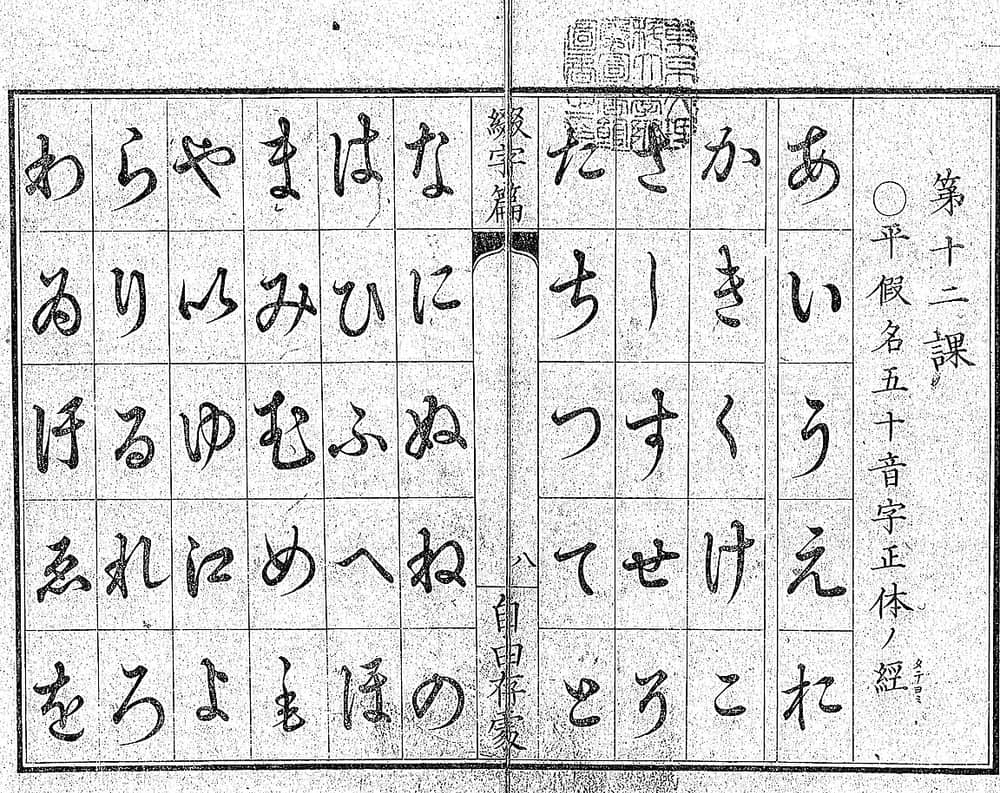
第十二課
〇平假名五十音字正体ノ經 タテヨミ
[illegible]
| わ | ら | や | ま | は | な | 綴字篇 | た | さ | か | あ |
|---|---|---|---|---|---|---|---|---|---|---|
| ゐ | り | い | み | ひ | に | ち | し | き | い | |
| う | る | ゆ | む | ふ | ぬ | つ | す | く | う | |
| ゑ | れ | え | め | へ | ね | 八 | て | せ | け | え |
| を | ろ | よ | も | ほ | の | 自由存稾 | と | そ | こ | お |
Generated by Evidano’s advanced model; not yet checked against a published edition.
National Diet Library, Tokyo, NDL pid 787959, order of 1879; printed 1887–1912 · Source · Public domain · National Diet Library digital collections
Evidano Transcription
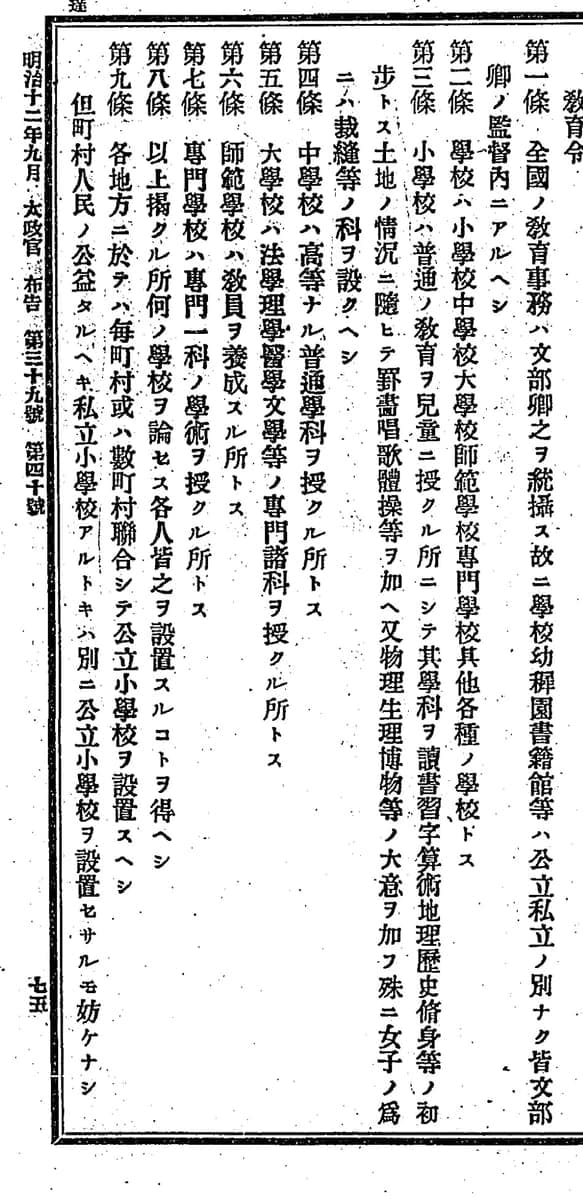
The code itself as it stands in the cropped column: the heading 教育令 and articles 1 to 9 with the proviso to article 9, from the text of the order on Japanese Wikisource, whose base text is this same volume of the Hōrei zensho. That text is given in modern character forms (学, 条) where the page prints the older ones (學, 條); the promulgation clause printed to the right of this column is not included.
教育令
第一条 全国ノ教育事務ハ文部卿之ヲ統摂ス故ニ学校幼穉園書籍館等ハ公立私立ノ別ナク皆文部卿ノ監督内ニアルヘシ
第二条 学校ハ小学校中学校大学校師範学校専門学校其他各種ノ学校トス
第三条 小学校ハ普通ノ教育ヲ児童ニ授クル所ニシテ其学科ヲ読書習字算術地理歴史修身等ノ初歩トス土地ノ情況ニ随ヒテ罫画唱歌体操等ヲ加ヘ又物理生理博物等ノ大意ヲ加フ殊ニ女子ノ為ニハ裁縫等ノ科ヲ設クヘシ
第四条 中学校ハ高等ナル普通学科ヲ授クル所トス
第五条 大学校ハ法学理学医学文学等ノ専門諸科ヲ授クル所トス
第六条 師範学校ハ教員ヲ養成スル所トス
第七条 専門学校ハ専門一科ノ学術ヲ授クル所トス
第八条 以上掲クル所何ノ学校ヲ論セス各人皆之ヲ設置スルコトヲ得ヘシ
第九条 各地方ニ於テハ毎町村或ハ数町村聯合シテ公立小学校ヲ設置スヘシ
 但町村人民ノ公益タルヘキ私立小学校アルトキハ別ニ公立小学校ヲ設置セサルモ妨ケナシ
Source: 教育令 (明治12年太政官布告第40号), via Japanese Wikisource (Public domain).
Evidano Transcription
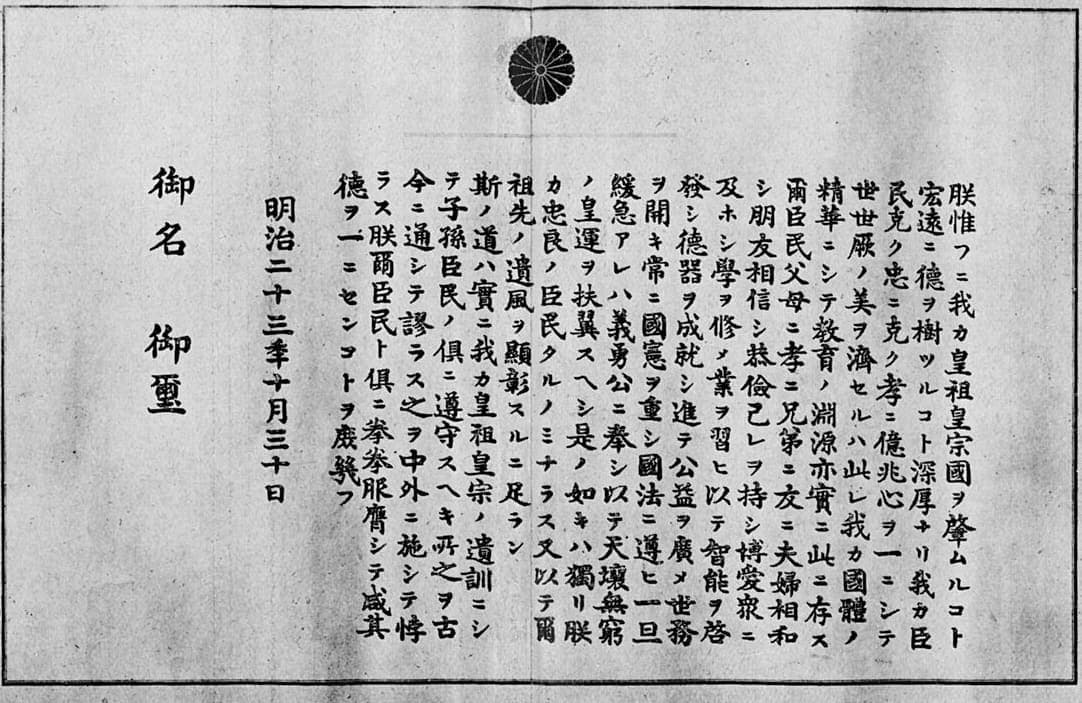
The framed text and the date, from the version on Japanese Wikisource taken from the Official Gazette of 31 October 1890. Its line breaks are the Gazette’s and do not correspond to the nineteen columns of this sheet; the glyph-variant selectors it carries have been removed, and the two words at the left that stand in for the sign-manual and seal are described in the caption rather than transcribed.
朕惟フニ我カ皇祖皇宗國ヲ肇ムルコト宏遠ニ
德ヲ樹ツルコト深厚ナリ我カ臣民克ク忠ニ
克ク孝ニ億兆心ヲ一ニシテ世世厥ノ美ヲ濟セルハ
此レ我カ國體ノ精華ニシテ敎育ノ淵源亦實ニ此ニ存ス
爾臣民父母ニ孝ニ兄弟ニ友ニ夫婦相和シ朋友相信シ
恭儉己レヲ持シ博愛衆ニ及ホシ學ヲ修メ業ヲ習ヒ
以テ智能ヲ啓發シ德器ヲ成就シ進テ公益ヲ廣メ
世務ヲ開キ常ニ國憲ヲ重シ國法ニ遵ヒ
一旦緩急アレハ義勇公ニ奉シ以テ天壤無窮ノ皇運ヲ扶翼スヘシ
是ノ如キハ獨リ朕カ忠良ノ臣民タルノミナラス
又以テ爾祖先ノ遺風ヲ顯彰スルニ足ラン
斯ノ道ハ實ニ我カ皇祖皇宗ノ遺訓ニシテ子孫臣民ノ
俱ニ遵守スヘキ所之ヲ古今ニ通シテ謬ラス
之ヲ中外ニ施シテ悖ラス朕爾臣民ト俱ニ拳々服膺シテ
咸其德ヲ一ニセンコトヲ庶幾フ
明治二十三年十月三十日
Source: 敎育ニ關スル勅語, from Kanpō, 31 October 1890, via Japanese Wikisource (Public domain).
National Institute of Japanese Literature, NIJL 100249780, 1887–89 · Source · CC BY-SA 4.0 · Dataset of Pre-Modern Japanese Text (NIJL), distributed by CODH
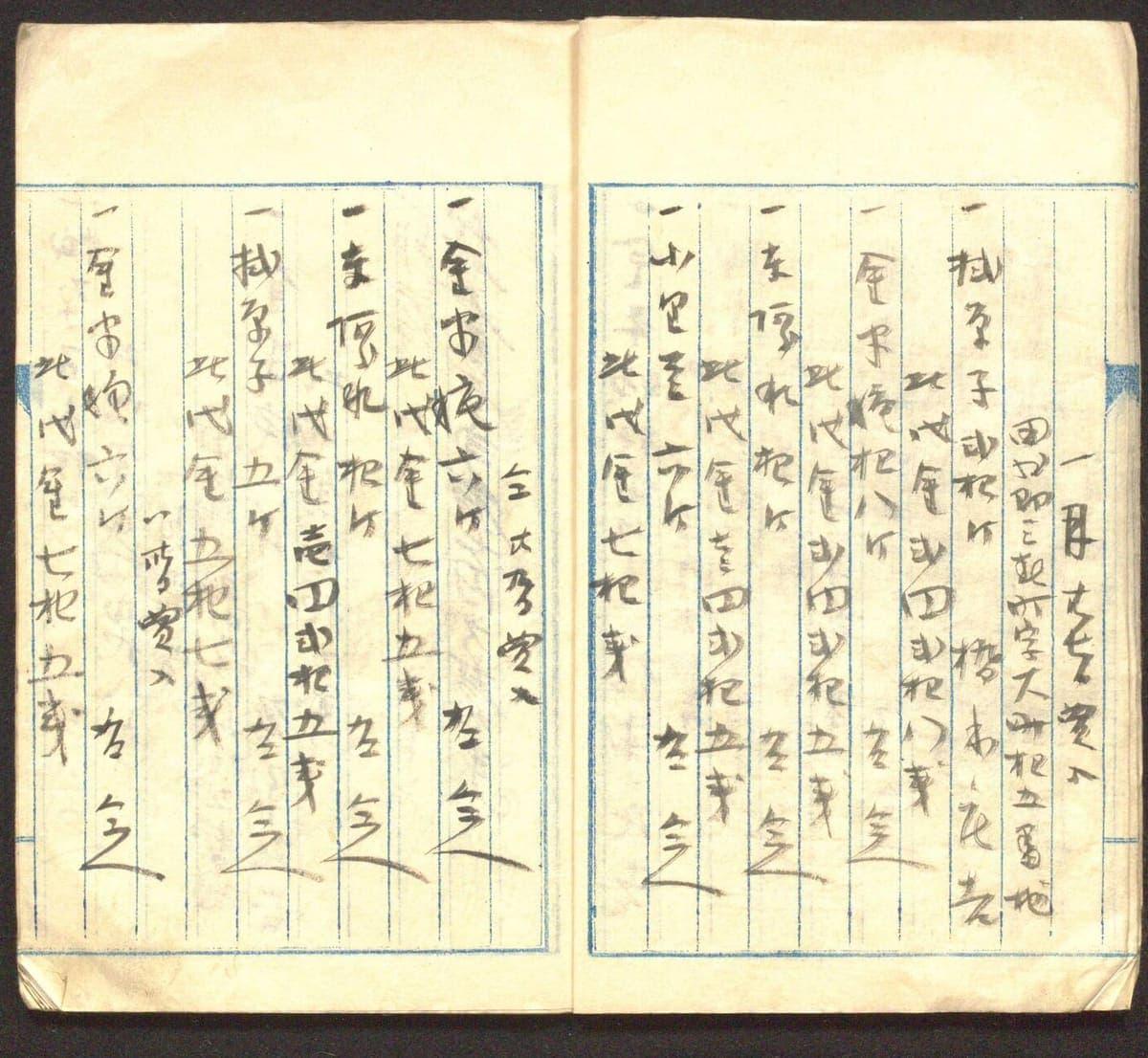
Evidano Transcription
一月十七日[?] 買入
田口助三郎所字大町拾五番地
一 [illegible]子 弐拾ケ [name illegible]
此代金 弐円弐拾八銭 右 仝
一 金半焼 拾八ケ
此代金 弐円弐拾五銭 右 仝
一 [illegible]隠[?]れ 拾ケ
此代金 壱円弐拾五銭 右 仝
一 小[illegible] 六ケ
此代金 七拾銭 右 仝
仝 大町[?] 買入
一 金半焼 六ケ
此代金 七拾五銭 右 仝
一 [illegible]隠[?]れ 拾ケ
此代金 壱円弐拾五銭 右 仝
一 [illegible]子 五ケ
此代金 五拾七銭 右 仝
小町[?] 買入
一 金[?]半焼 六ケ
此代金 七拾五銭 右 仝
Generated by Evidano’s advanced model; not yet checked against a published edition.
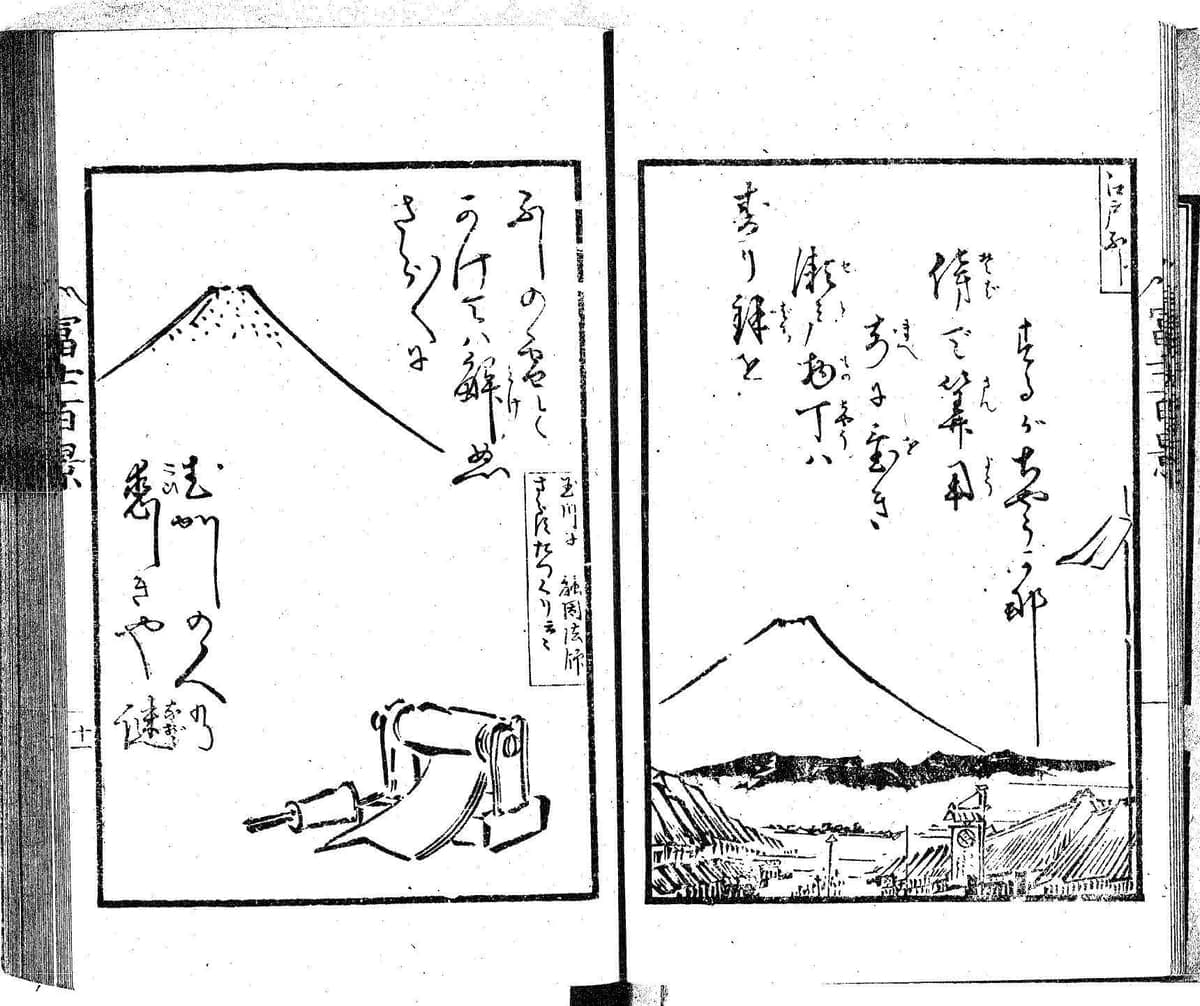
National Institute of Japanese Literature, NIJL 200003940, 1890 · Source · CC BY-SA 4.0 · Dataset of Pre-Modern Japanese Text (NIJL), distributed by CODH
Evidano Transcription
江戸ふし
まるが[illegible]郎
[illegible]で算用(さんよう)
[remaining lines illegible]
富士百景
ふしの[illegible]
[remaining lines illegible]
[illegible]法師
[illegible]
十一
Generated by Evidano’s advanced model; not yet checked against a published edition.
Three writing technologies in one generation
Official Meiji Japanese is written in kanji with katakana, without punctuation, without spaces and with as few okurigana as the sense allows, so 行フ and 行ハシム carry a whole verb in two graphs. Government notices, ordinances and the Official Gazette were set in newly cut metal type, and their layout — a raised circle before the number, a marginal note giving the year and the notice number, articles opened by 第一條 — is a form you learn once and then recognise everywhere. Rescripts and school certificates were printed from the same type in larger sizes, framed and read aloud on ceremonial days.
The old technology did not stop. Kyōka anthologies, guidebooks, almanacs and cheap fiction went on being cut in woodblock into the 1890s, complete with joined cursive kana, variant kana drawn from several source characters, and furigana beside the kanji. Only the school ordinance of 1900 fixed one hiragana shape per syllable, and the primers of the 1870s and 1880s were still teaching tables that include the variant forms alongside the letters for wi, we and the syllables now written yi, ye and wu.
Handwriting stands between the two. Merchants, farmers and officials wrote in the same running hand their fathers had used, but on machine-made paper with printed blue rules, in notebooks with printed covers, and increasingly with Western dates and Arabic numerals appearing beside the Chinese ones. Spelling remained historical throughout the period: けふ for today, ゐる and ゑ in ordinary words, small kana written at full size, and long vowels spelled as the classical language spelled them. A transcription that quietly converts any of this destroys the evidence for when the change actually happened.
Why ordinary OCR struggles here
Three kinds of writing on one desk
A single archive box can hold a typeset ordinance, a block-printed pamphlet and a handwritten receipt from the same month. Each needs a different approach, and a system tuned for clean movable type will treat the other two as noise or as damaged type.
Historical spelling read as error
Anything trained on modern Japanese has strong expectations about kana, and it will normalise けふ to きょう, replace ゐ with い and insert small kana that were never written. The corrections are invisible in the output and they remove exactly what a historian of the language is looking for.
Official style with nothing to segment on
A notice in kanji and katakana has no punctuation, no spaces and minimal inflectional endings, so clause boundaries have to be recovered from the vocabulary of officialdom itself. Get one wrong and a proviso attaches to the wrong article.
Printed forms filled in by hand
Ruled ledgers, receipts, certificates and postal stationery combine a printed frame with handwritten entries, sometimes over a stamp. Reading them as one text produces a jumble; what is wanted is the label, the value written against it, and a note of which is printed and which is written.
Who works with this material
Newspaper and periodical digitisation
Meiji papers and magazines are the densest record of the period and the least searchable. Programmes converting them need the historical spelling preserved, the furigana kept separate from the body, and the ruled columns of an advertisement page distinguished from the news text.
Legal and educational historians
Ordinances, ministry circulars and school regulations were revised every few years, and the difference between two versions is often a single clause. Article-by-article transcription with the numbering intact is what makes those comparisons possible at scale.
Business and household archives
Shop ledgers, receipts and correspondence from the 1870s to the 1890s document the shift to the yen and to printed stationery. Economic historians want the entries as rows — date, item, quantity, amount — rather than as a paragraph of text.
Researchers on the standardisation of kana
Anyone charting how variant kana disappeared from print, or when a publisher stopped writing けふ, needs transcriptions that record what was on the page. Counts of that kind are only as good as the decision not to normalise silently.
Getting the best transcription
State the orthography rule first
Say explicitly that historical kana spelling is to be kept and that small kana are not to be inserted. If you also want a modernised reading, ask for it as a second field so the two never get confused in the same file.
Tell it which technology it is looking at
Naming the source — a typeset gazette, a block-printed anthology, a handwritten ledger — sets expectations for the letterforms and the layout. On a mixed page, say that both are present and ask for each to be labelled in the output.
Split printed frame from written entry
For forms, certificates and ruled account books, ask for the printed labels and the handwritten values as separate fields keyed to one another. That gives a table you can load somewhere, instead of a transcription that has to be unpicked by hand.
Keep era dates and convert separately
Meiji years, months and days should be transcribed as printed. Because the calendar changed in 1873, a conversion made without noticing whether a date is lunar or solar will be wrong by weeks, so ask for the converted date as an extra field and check the early ones.
Further reading on this hand
The palaeography guides the in-app selector points to for this domain, if you want to check a transcription against the standard references.
- Kuzushiji (Japanese Cursive Characters)
This National Diet Library guide addresses historical cursive characters found in Japanese sources produced before modern script standardization. Its hentaigana charts connect obsolete kana forms with modern readings and their original Chinese characters. The guide directs users to dictionaries, digital databases, fonts, and tutorials covering manuscript and printed kuzushiji. It is useful for Meiji documents because traditional forms continued beside emerging modern handwriting and typography.
Frequently asked questions
- Will historical kana spelling be preserved?
- Yes, when you ask for it, and it is worth asking every time. The default for this material keeps ゐ, ゑ, を and classical long-vowel spellings exactly as printed or written, and does not add the small kana that modern orthography would require.
- Can it read official katakana style?
- It can, and the formulae help rather than hinder: the vocabulary of ordinances is limited and highly repetitive, so once the document type is named the clause boundaries fall out reliably even without punctuation.
- Are variant kana still found in Meiji printing?
- Frequently, right through the 1890s in woodblock work and in display lettering. They are read as the syllables they represent, and you can ask for the source character to be recorded so that the survival of a particular shape can be tracked across a run of dated books.
- What happens with a horizontal line of text?
- Horizontal writing appears on signs, title pages and stationery in this period, and before about 1900 a horizontal line may run right to left. The direction is judged from the sense rather than assumed, and a line whose direction is genuinely ambiguous is flagged.
- How are stamps, seals and postal marks treated?
- They are read as separate items with their position noted: a shop’s seal, a registration stamp, a postmark with its date. Keeping them out of the running text matters most on receipts and correspondence, where a stamp often lands squarely on top of a figure.
Related scripts and pages
Transcribe your Meiji sources
Upload a notice, a ledger or a block-printed page, choose Meiji Transitional Cursive and Pre-Standard Kana, and fix the spelling rules before the run.