
Kazakh
Read Kazakh in Cyrillic, Arabic script or any of its Latin drafts
Kazakh has been official Soviet Cyrillic since 1940, was Latin before that, and is now only partway through a Latin transition announced in 2017 and rewritten three times since. Evidano keeps the nine letters Cyrillic added for Kazakh sounds distinct from Russian, and reads whichever Latin draft, or the older Arabic script, a given page happens to use.
Sample pages
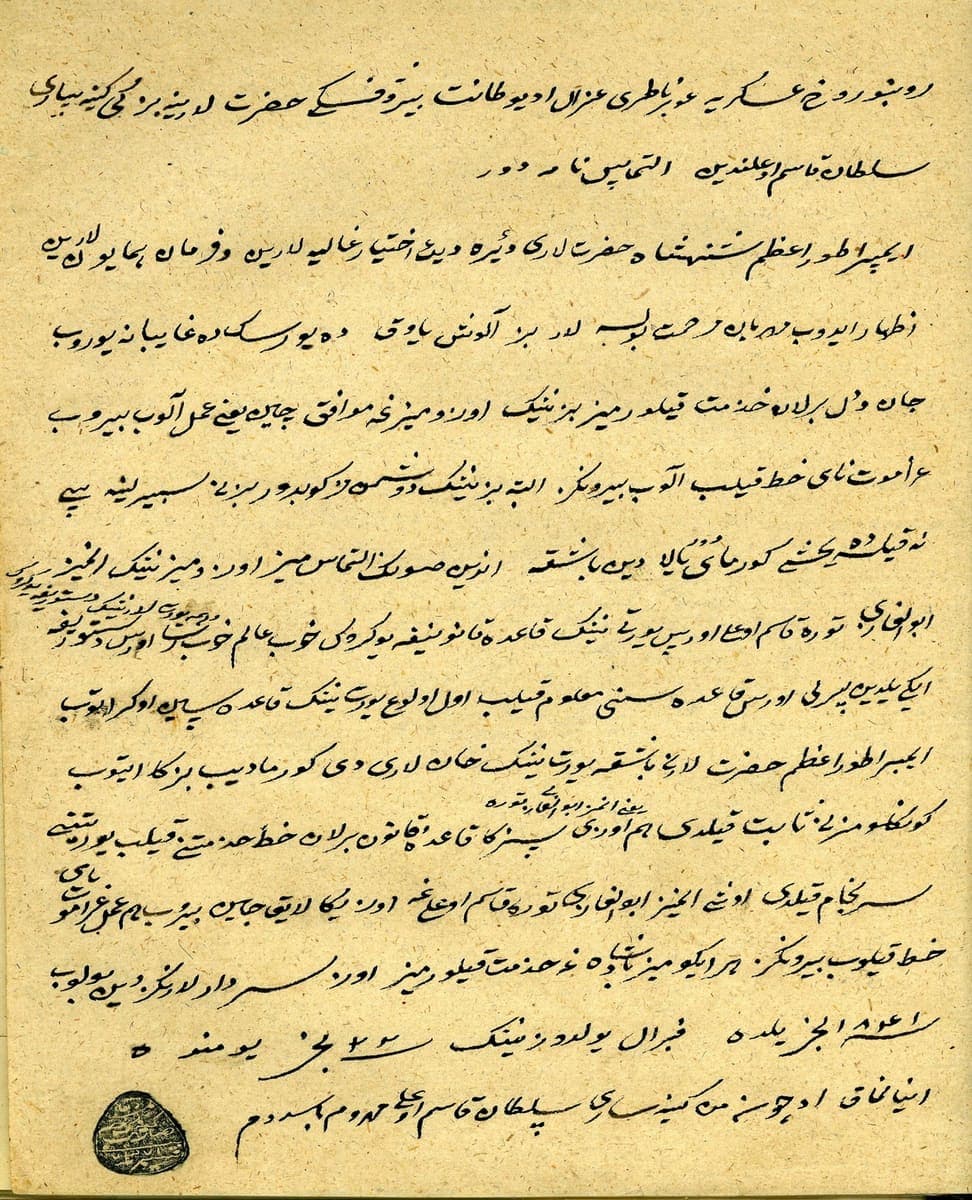
Central State Archive of the Republic of Kazakhstan (ЦГА РК), Fund 4, 22 February 1841 · Source · Public domain
Evidano Transcription
اورنبوروخ[?] عسکریه غوبرناطری غنرال ادیوطانت پیروفسکی حضرت لارینه بز کچی[?] کینه ساری
سلطان قاسم اوغلندین التماس نامه دور
ایمپراطور اعظم شهنشاه حضرت لاری وغیره وغیره اختیار عالیه لارین وفرمان همایون لارین
اظهار ایدوب مهربان مرحمتلی[?] بولوب[?] لار بز آکونش[?] یاوق[?] ده یورسک ده غایبانه یوروب
جان ودل برلان خدمت قیلورمیز بزنینک اوزومیزغه موافق جاین یعنی عمل آلوب بیروب
عنایت نامه خط قیلیب آلوب بیرونکز. البته بزنینک دوشمنمز کوبدور بزنی[?] سبیرلیله[?] [illegible]
نه قیلده[?] یخشی کورمای[?] تالادین[?] باشقه اندین صونک التماس میز اوزومیزنینک اغامیز
ابوالغازی توره قاسم اوغلی اوروس یورتی نینک قاعده قانونیغه بوکرکی[?] خوب عالم خوب اوروس دستوریغه [interlinear addition illegible]
ایکی یلدین برلی اوروس قاعده سنی معلوم قیلیب اول اولوغ یورت نینک قاعده سین اوکراب ایدوب
ایمپراطور اعظم حضرت لاری باشقه یورت نینک خان لاری دی کورمادیب بزکا ایتوب
کونکلومزنی ثابت قیلدی هم اوزی \یعنی اغامیز ابوالغازی توره/ سزکا قاعده قانون برلان خط خدمتنی قیلیب یورتینه
سرانجام قیلدی اونی اغامیز ابوالغازی توره قاسم اوغلیغه اوزینکا[?] لایق جاین بیریب هم عنایت \نامه/
خط قیلوب بیرونکز هر ایکومیز پادشاه غه خدمت قیلورمیز اوز سردارلارنکز دین بولوب
۱۸۴۱[?] انچی یلده فبرال یولدوزینینک ۲۲ نچی یومنده
اینیاناق[?] ادجون[?] من کینه ساری سلطان قاسم اوغلی محروم[?] بلسدم[?]
[seal]
Generated by Evidano’s advanced model; not yet checked against a published edition.
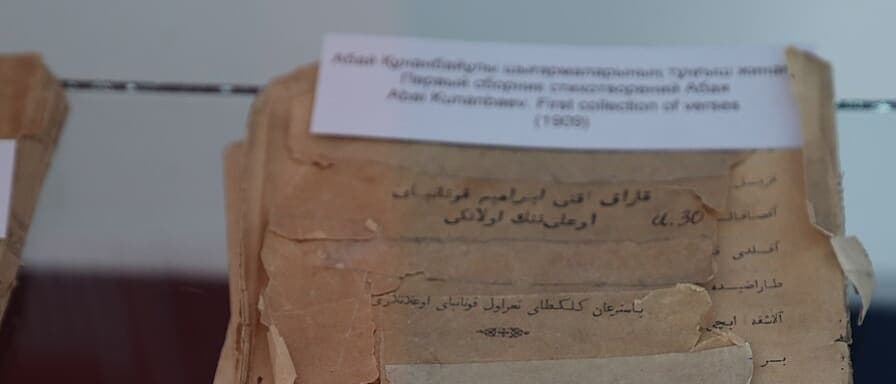
Abai Museum, 1909 · Source · CC BY-SA 4.0 · Photograph by Yakov Fedorov
Evidano Transcription
Абай Құнанбайұлы шығармаларының тұңғыш жина[cut off]
Первый сборник стихотворений Абая
Abai Kunanbaev. First collection of verses
(1909)
قازاق اقنى ابراهيم قونانباى
اوغلىنينك اولانكى ц. 30
باسترغان كلكطاى[?] تعراول[?] قونانباى اوغلانلرى[?]
❖
[cut off] خرسل[?]
[cut off] اصاقال[?]
[cut off] آقلدى[?]
[cut off] طاراضيده
[cut off] آلاشغه[?] ايچي[?]
[cut off] بسر[?]
Generated by Evidano’s advanced model; not yet checked against a published edition.
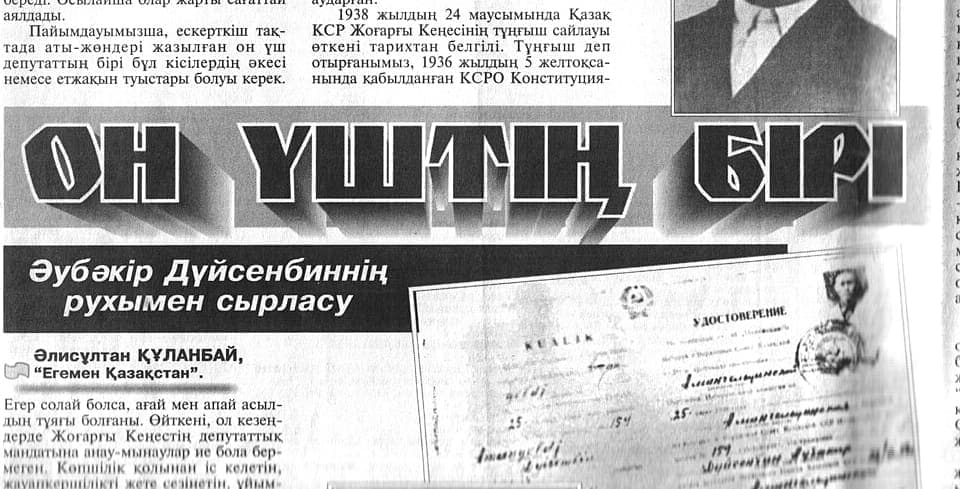
Evidano Transcription
[cut off] береді. Осылайша олар жарты сағаттай
аялдады.
Пайымдауымызша, ескерткіш тақ-
тада аты-жөндері жазылған он үш
депутаттың бірі бұл кісілердің әкесі
немесе етжақын туыстары болуы керек.
[cut off] аударған.
1938 жылдың 24 маусымында Қазақ
КСР Жоғарғы Кеңесінің тұңғыш сайлауы
өткені тарихтан белгілі. Тұңғыш деп
отырғанымыз, 1936 жылдың 5 желтоқса-
нында қабылданған КСРО Конституция-
ОН ҮШТІҢ БІРІ
Әубәкір Дүйсенбиннің
рухымен сырласу
Әлисұлтан ҚҰЛАНБАЙ,
"Егемен Қазақстан".
Егер солай болса, ағай мен апай асыл-
дың тұяғы болғаны. Өйткені, ол кезең-
дерде Жоғарғы Кеңестің депутаттық
мандатына анау-мынаулар ие бола бер-
меген. Көпшілік қолынан іс келетін,
жауапкершілікті жете сезінетін, ұйым- [cut off]
KUALIK [?]
УДОСТОВЕРЕНИЕ
25 154 25 154
[handwritten entries illegible]
Generated by Evidano’s advanced model; not yet checked against a published edition.
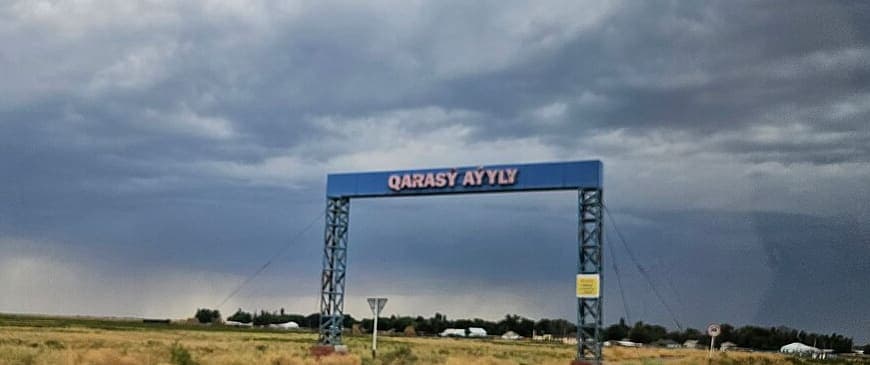
Source · CC BY-SA 4.0 · Photograph by Nurken, Wiki Loves Villages 2026
Evidano Transcription
QARASÝ AÝYLY
Generated by Evidano’s advanced model; not yet checked against a published edition.
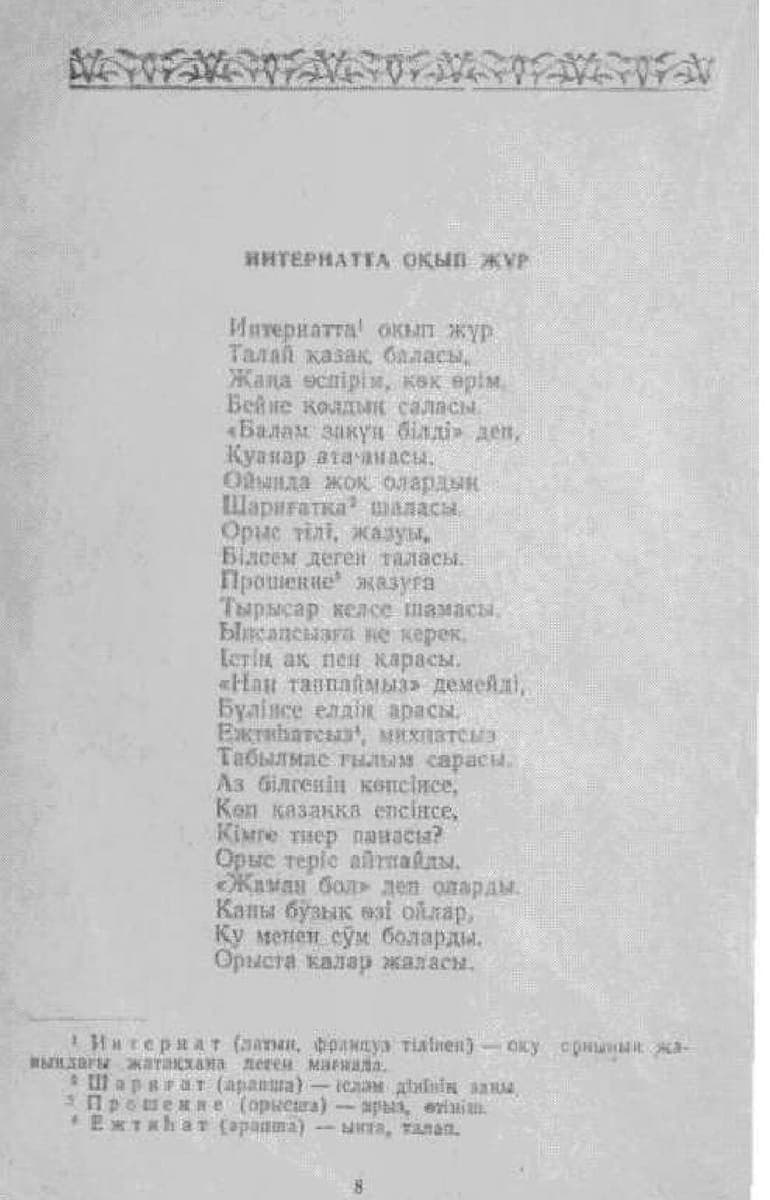
Қазақтың мемлекеттік көркем әдебиет баспасы (Kazakh State Publishing House for Belles-Lettres), 1950 · Source · Public domain
Evidano Transcription
The whole page: the poem’s title, its twenty-six verse lines and the four footnotes printed under the rule at the foot. Taken from the proofread and validated text of this exact page (pagequality level 4) on the multilingual Wikisource. The title is set in capitals on the page and is given here in ordinary casing; the footnote markers, which the Wikisource source holds as ref tags, are placed back beside the words they gloss as the superscript numerals 1–4, and the notes themselves follow at the end in printed order.
Интернатта оқып жүр

Интернатта¹ оқып жүр
Талай қазақ баласы,
Жаңа өспірім, көк өрім,
Бейне қолдың саласы.
«Балам закон білді» деп,
Қуанар ата-анасы,
Ойында жоқ олардың
Шариғатқа² шаласы.
Орыс тілі, жазуы,
Білсем деген таласы.
Прошение³ жазуға
Тырысар келсе шамасы.
Ынсапсызға не керек
Істің ақ пен қарасы.
«Нан таппаймыз» демейді,
Бүлінсе елдің арасы.
Ежтиһатсыз⁴, михнатсыз
Табылмас ғылым сарасы.
Аз білгенін көпсінсе,
Көп қазаққа епсінсе,
Кімге тиер панасы?
Орыс теріс айтпайды,
«Жаман бол» деп оларды.
Қаны бұзық өзі ойлар,
Қу менен сұм боларды,
Орыста қалар жаласы.

¹ Интернат (латын, француз тілінен) — оқу орынын жаныңдағы жатақхана деген мағнада
² Шариғат (арапша) — іслам дінінің заңы
³ Прошение (орысша) — арыз, өтініш
⁴ Ежтиһат (арапша) — ынта, талап
Source: Page:Ғылым таппай мақтанба (Абай Құнанбайұлы 1950).pdf/9, via Wikisource (Public domain).
Arabic script, two Latin alphabets and Cyrillic, all in one century
Kazakh was written in Arabic script for most of its documented history, in personal letters, chancery correspondence and, after the linguist Akhmet Baitursynuly refined its spelling in 1912, in a standardised form still called töte jazu ("straight writing"). An 1841 letter from Kenesary Kasymov, the last khan to lead an armed uprising against Russian rule, to the military governor of Orenburg survives in this older, pre-reform hand: a fluent right-to-left chancery script closed with a wax seal. Töte jazu remains in everyday use today among Kazakh communities in China’s Ili and Altay regions, so a modern Xinjiang Kazakh newspaper and an 1841 khan’s letter share a script, if not a spelling convention.
Kazakhstan adopted a Latin alphabet in 1929 as part of the wider Soviet Latinisation of Turkic languages, then replaced it with Cyrillic in 1940, where it has stayed for print, government and everyday use ever since. The Kazakh Cyrillic alphabet is not simply Russian’s: it keeps all 33 Russian letters and adds nine built for sounds Russian does not have — Әә, Ғғ, Ққ, Ңң, Өө, Ұұ, Үү, Һһ and Іі — bringing the total to 42, more than any other Cyrillic national alphabet.
A presidential decree in 2017 set Kazakhstan back on a Latin path, but the first version, built on apostrophes for its extra sounds, drew immediate criticism for stacking multiple apostrophes inside a single word. A 2018 revision replaced the apostrophes with acute accents, and a further draft in 2021 moved to umlauts and breves closer to Turkish and Azerbaijani practice. None has been declared final, the rollout has been repeatedly pushed back, and in the meantime ordinary signage often uses its own improvised Latin spelling rather than any of the three official drafts.
Why ordinary OCR struggles here
Nine Cyrillic letters that are not Russian
Ә, Ғ, Қ, Ң, Ө, Ұ, Ү, Һ and І look close enough to ordinary Cyrillic letters that a model trained mainly on Russian text collapses them into the nearest Russian equivalent — Қ read as К, Ң as Н, Ұ and Ү both flattened to У — which silently changes which word is on the page.
Three unfinished Latin alphabets to choose between
A document dated after 2017 might use apostrophes, acute accents or umlauts and breves for the same sound, none of them yet official for good, and a street sign may match none of the three, using whatever spelling its sign-maker preferred. Recognising the letters is not enough; the scheme in use has to be identified first.
Right-to-left Arabic script with no fixed spelling before 1912
Documents written before Baitursynuly’s 1912 reform, like Kenesary’s 1841 letter, use Arabic letters adapted to Kazakh sounds without a standard convention, so the same word can be spelled differently from one scribe to the next, and short vowels are not written at all.
Damage on the only surviving copies
Early printed Kazakh books, such as the 1909 first edition of Abai’s verses, exist today as fragile, incomplete museum copies, torn and taped by earlier conservators. Reading them means working around holes, tape and a partial page rather than a clean scan.
Who works with this material
Family and clan historians
A Kazakh family archive can span an Arabic-script letter, a Soviet Cyrillic military record and a modern Latin-alphabet birth certificate. Reconstructing a family’s history means reading all three correctly rather than treating the older scripts as unreadable.
Archivists and museum curators
Institutions holding pre-reform Arabic-script correspondence, early Latin-alphabet Soviet material and fragile first editions like Abai’s 1909 verses need consistent, catalogue-ready text without separate handling for each script or each degree of damage.
Literary and linguistic scholars
Editors of Abai, Shakarim and other founding figures of written Kazakh literature work from Arabic-script originals and early Latin and Cyrillic reprintings, and need a diplomatic first transcription that keeps a specific edition’s spelling rather than silently modernising it.
Government and localisation teams tracking the Latin transition
Agencies and businesses relabelling signage, forms and databases during the ongoing Cyrillic-to-Latin shift need to know which of the 2017, 2018 or 2021 conventions, or none of them, a given piece of existing text follows before it can be converted consistently.
Getting the best transcription
State the script and, for Latin text, the likely date
Tell the model whether a page is in Cyrillic, Arabic script or Latin, and for Latin material, roughly when it was written. A 2017 apostrophe scheme, a 2018 acute-accent one and a 2021 umlaut one all need different handling even though they encode the same sounds.
Decide how to treat Kazakh Cyrillic’s extra letters
Set a rule for whether Әә, Ғғ, Ққ, Ңң, Өө, Ұұ, Үү, Һһ and Іі should be kept exactly as written or transliterated to a Latin scheme of your choosing, and apply the same rule across a whole batch of documents.
For Arabic-script material, ask for vowels to be flagged as supplied
Pre-1912 Kazakh Arabic script omits short vowels and had no fixed spelling convention, so ask for any vowel the model adds to make a word readable to be marked, rather than presented as though it were on the page.
Start with the most damaged page
Run a torn or taped page, like a fragile early Kazakh imprint, before a whole batch. If the model correctly separates the readable text from tape, staining and loss there, cleaner modern pages will need far less checking.
Frequently asked questions
- Can the same tool read Kazakh in Cyrillic, Arabic script and Latin script?
- Yes. Tell it which script a page uses, or let it identify the script itself, and it reads the letterforms and direction that script needs rather than assuming Cyrillic by default.
- How does it handle the nine Kazakh Cyrillic letters that Russian doesn’t have?
- Ә, Ғ, Қ, Ң, Ө, Ұ, Ү, Һ and І are recognised as their own letters rather than folded into the nearest Russian one. You can ask for them to be kept as written or converted to a Latin transliteration of your choosing.
- Which of the 2017, 2018 or 2021 Latin alphabets does it use?
- None by default, since no version is yet the settled standard. Tell it which convention you want output in, or ask it to preserve whatever spelling is already on the page rather than converting it.
- Can it read Kenesary’s letters or other pre-1912 Kazakh Arabic-script documents?
- It can, but the lack of a fixed spelling convention before Baitursynuly’s 1912 reform makes this the hardest of Kazakh’s scripts. Treat the output as a first pass for a reader familiar with nineteenth-century chancery Kazakh to check, particularly for names.
- Does it recognise töte jazu as used by Kazakhs in China today?
- Yes, as the same Arabic-based script family as pre-reform Kazakh, though its 1912 spelling reform is more consistent than the older chancery hand. Tell it the material is töte jazu so it applies that spelling convention rather than an unreformed one.
Related scripts and pages
Transcribe your Kazakh documents
Upload a Cyrillic newspaper, an Arabic-script letter or signage in any Latin scheme, and check which script the model has identified before running the rest.