
Lithuanian
Lithuanian read across the years it was banned
Between 1864 and 1904 printing Lithuanian in its own Latin alphabet was a crime in the Russian Empire, so the era’s Lithuanian material is either an imposed Cyrillic spelling almost no one read by choice, or a Latin-script book smuggled in from Prussia at real risk. Evidano reads both, plus the ą, ę, į, ų, ū, ė, č, š and ž of modern Lithuanian, without guessing which script or which decade it is looking at.
Sample pages
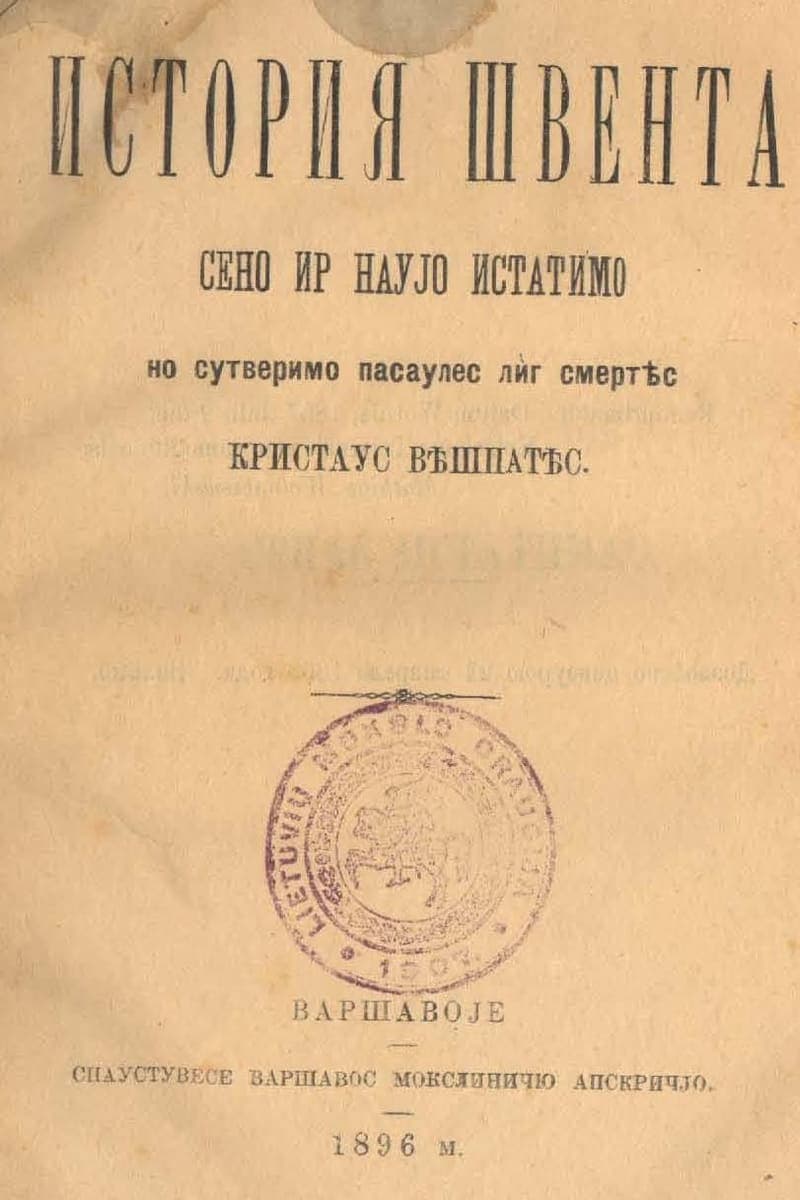
Evidano Transcription
ИСТОРИЯ ШВЕНТА
СЕНО ИР НАУЈО ИСТАТИМО
но сутверимо пасаулес лиг смертѣс
КРИСТАУС ВѢШПАТѢС.
[stamp: LIETUVIŲ MOKSLO DRAUGIJA 1907]
ВАРШАВОЈЕ
СПАУСТУВЕСЕ ВАРШАВОС МОКСЛИНИЧЮ АПСКРИЧЈО.
1896 м.
Generated by Evidano’s advanced model; not yet checked against a published edition.
Source · Public domain · Scan from Lietuviškos spaudos draudimas 1864–1904 metais
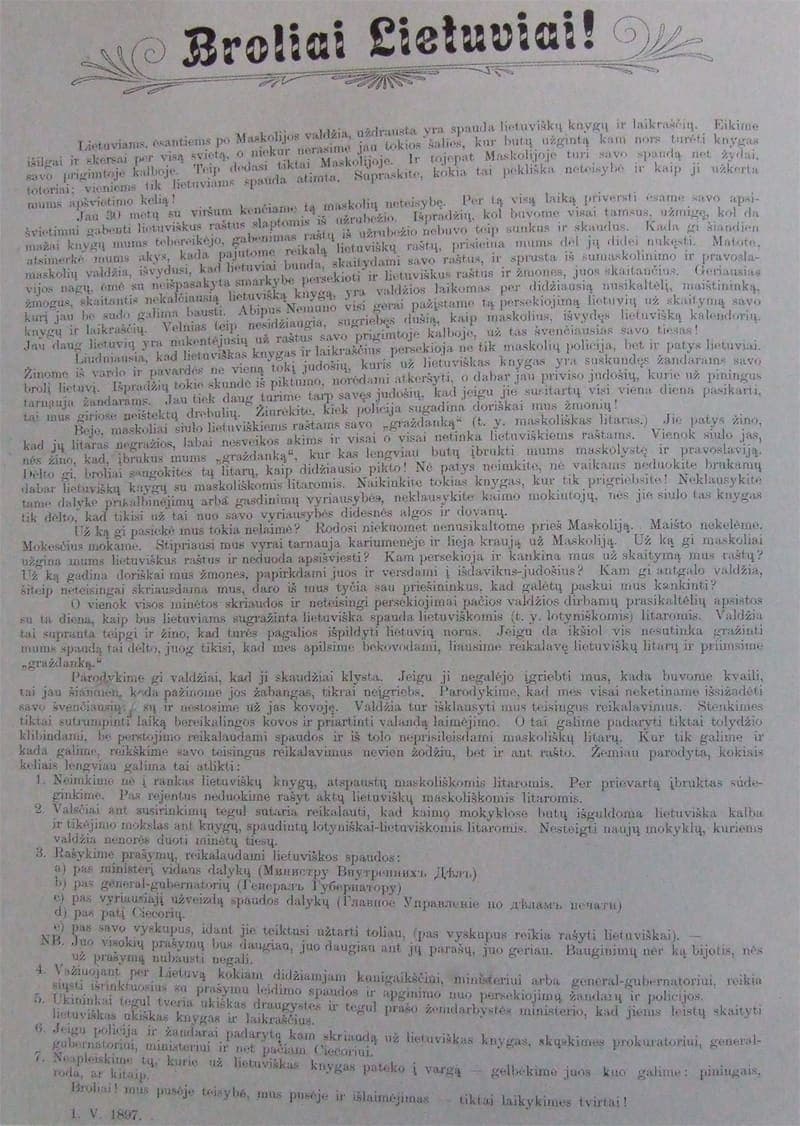
Evidano Transcription
Broliai Lietuviai!
Lietuviams, esantiems po Maskolijos valdžia, uždrausta yra spauda lietuviškų knygų ir laikraščių. Eikime
išilgai ir skersai per visą svietą, o niekur nerasime jau tokios šalies, kur butų užgintą kam nors turėti knygas
savo prigimtoje kalboje. Teip dedasi tiktai Maskolijoje. Ir tojepat Maskolijoje turi savo spaudą net žydai,
totoriai; vieniems tik lietuviams spauda atimta. Supraskite, kokia tai pekliška neteisybė ir kaip ji užkerta
mums apšvietimo kelią!
Jau 30 metų su viršum kenčiame tą maskolių neteisybę. Per tą visą laiką priversti esame savo apsi-
švietimui gabenti lietuviškus raštus slaptomis iš užrubežio. Išpradžių, kol buvome visai tamsus, užmigę, kol da
mažai knygų mums tebereikėjo, gabenimas raštų iš užrubežio nebuvo teip sunkus ir skaudus. Kada gi šiandien
atsimerkė mums akys, kada pajutome reikalą lietuviškų raštų, prisieina mums del jų didei nukęsti. Matote,
maskolių valdžia, išvydusi, kad lietuviai bunda, skaitydami savo raštus, ir sprusta iš sumaskolinimo ir pravosla-
vijos nagų, ėmė su neišpasakyta smarkybe persekioti ir lietuviškus raštus ir žmones, juos skaitančius. Geriausias
žmogus, skaitantis nekalčiausią lietuvišką knygą, yra valdžios laikomas per didžiausią nusikaltėlį, maištininką,
kurį jau be sudo galima bausti. Abipus Nemuno visi gerai pažįstame tą persekiojimą lietuvių už skaitymą savo
knygų ir laikraščių. Velnias teip nesidžiaugia, sugriebęs dušią, kaip maskolius, išvydęs lietuvišką kalendorių.
Jau daug lietuvių yra nukentėjusių už raštus savo prigimtoje kalboje, už tas švenčiausias savo tiesas!
Liudniausia, kad lietuviškas knygas ir laikraščius persekioja ne tik maskolių policija, bet ir patys lietuviai.
Žinome iš vardo ir pavardės ne vieną tokį judošių, kuris už lietuviškas knygas yra suskundęs žandarams savo
brolį lietuvį. Išpradžių tokie skundė iš piktumo, norėdami atkeršyti, o dabar jau priviso judošių, kurie už piningus
tarnauja žandarams. Jau tiek daug turime tarp savęs judošių, kad jeigu jie susitartų visi vieną dieną pasikarti,
tai mus giriose neištektų drebulių. Žiurėkite, kiek policija sugadina doriškai mus žmonių!
Beje, maskoliai siulo lietuviškiems raštams savo „graždanką“ (t. y. maskoliškas litaras.) Jie patys žino,
kad jų litaras negražios, labai nesveikos akims ir visai o visai netinka lietuviškiems raštams. Vienok siulo jas,
nės žino, kad, įbrukus mums „graždanką“, kur kas lengviau butų įbrukti mums maskolystę ir pravoslaviją.
Delto gi, broliai saugokites tų litarų, kaip didžiausio pikto! Nė patys neimkite, nė vaikams neduokite brukamų
dabar lietuviškų knygų su maskoliškomis litaromis. Naikinkite tokias knygas, kur tik prigriebsite! Neklausykite
tame dalyke prikalbinėjimų arba gasdinimų vyriausybės, neklausykite kaimo mokintojų, nes jie siulo tas knygas
tik delto, kad tikisi už tai nuo savo vyriausybės didesnės algos ir dovanų.
Už ką gi pasiekė mus tokia nelaimė? Rodosi niekuomet nenusikaltome prieš Maskoliją. Maišto nekelėme.
Mokesčius mokame. Stipriausi mus vyrai tarnauja kariumenėje ir lieja kraują už Maskoliją. Už ką gi maskoliai
užgina mums lietuviškus raštus ir neduoda apsišviesti? Kam persekioja ir kankina mus už skaitymą mus raštų?
Už ką gadina doriškai mus žmones, papirkdami juos ir versdami į išdavikus-judošius? Kam gi antgalo valdžia,
šiteip neteisingai skriausdama mus, daro iš mus tyčia sau priešininkus, kad galėtų paskui mus kankinti?
O vienok visos minėtos skriaudos ir neteisingi persekiojimai pačios valdžios dirbamų prasikaltėlių apsistos
su ta diena, kaip bus lietuviams sugrąžinta lietuviška spauda lietuviškomis (t. y. lotyniškomis) litaromis. Valdžia
tai supranta teipgi ir žino, kad turės pagalios išpildyti lietuvių norus. Jeigu da ikšiol vis nesutinka grąžinti
mums spaudą tai dėlto, juog tikisi, kad mes apilsime bekovodami, liausime reikalavę lietuviškų litarų ir priimsime
„graždanką.“
Parodykime gi valdžiai, kad ji skaudžiai klysta. Jeigu ji negalėjo įgriebti mus, kada buvome kvaili,
tai jau šiandien, kada pažinome jos žabangas, tikrai neįgriebs. Parodykime, kad mes visai neketiname išsižadėti
savo švenčiausių tiesų ir nestosime už jas kovoję. Valdžia tur išklausyti mus teisingus reikalavimus. Stenkimes
tiktai sutrumpinti laiką bereikalingos kovos ir priartinti valandą laimėjimo. O tai galime padaryti tiktai tolydžio
klibindami, be perstojimo reikalaudami spaudos ir iš tolo neprisileisdami maskoliškų litarų. Kur tik galime ir
kada galime, reikškime savo teisingus reikalavimus nevien žodžiu, bet ir ant rašto. Žemiau parodyta, kokiais
keliais lengviau galima tai atlikti:
- Neimkime nė į rankas lietuviškų knygų, atspaustų maskoliškomis litaromis. Per prievartą įbruktas sude-
ginkime. Pas rejentus neduokime rašyt aktų lietuviškų maskoliškomis litaromis. - Valsčiai ant susirinkimų tegul sutaria reikalauti, kad kaimo mokyklose butų išguldoma lietuviška kalba
ir tikėjimo mokslas ant knygų, spaudintų lotyniškai-lietuviškomis litaromis. Nesteigti naujų mokyklų, kuriems
valdžia nenorės duoti minėtų tiesų. - Rašykime prašymų, reikalaudami lietuviškos spaudos:
a) pas ministerį vidaus dalykų (Министру Внутреннихъ Дѣлъ)
b) pas general-gubernatorių (Генералъ Губернатору)
c) pas vyriausiąjį užveizdą spaudos dalykų (Главное Управленіе по дѣламъ печати)
d) pas patį Ciecorių.
e) pas savo vyskupus, idant jie teiktusi užtarti toliau, (pas vyskupus reikia rašyti lietuviškai). —
NB. Juo visokių prašymų bus daugiau, juo daugiau ant jų parašų, juo geriau. Bauginimų ner ką bijotis, nės
už prašymą nubausti negali. - Važiuojant per Lietuvą kokiam didžiamjam kunigaikščiui, ministeriui arba general-gubernatoriui, reikia
siųsti išrinktuosius su prašymu leidimo spaudos ir apginimo nuo persekiojimų žandarų ir policijos. - Ukininkai tegul tveria ukiškas draugystes ir tegul prašo žemdarbystės ministerio, kad jiems leistų skaityti
lietuviškas ukiškas knygas ir laikraščius. - Jeigu policija ir žandarai padarytų kam skriaudą už lietuviškas knygas, skųskimes prokuratoriui, general-
gubernatoriui, ministeriui ir net pačiam Ciecoriui. - Neapleiskime tų, kurie už lietuviškas knygas pateko į vargą — gelbėkime juos kuo galime: piningais,
roda, ar kitaip.
Broliai! mus pusėje teisybė, mus pusėje ir išlaimėjimas — tiktai laikykimės tvirtai!
- V. 1897.
Generated by Evidano’s advanced model; not yet checked against a published edition.
Publications Office of the European Union, 23 August 2019 · Source · Public domain
Evidano Transcription
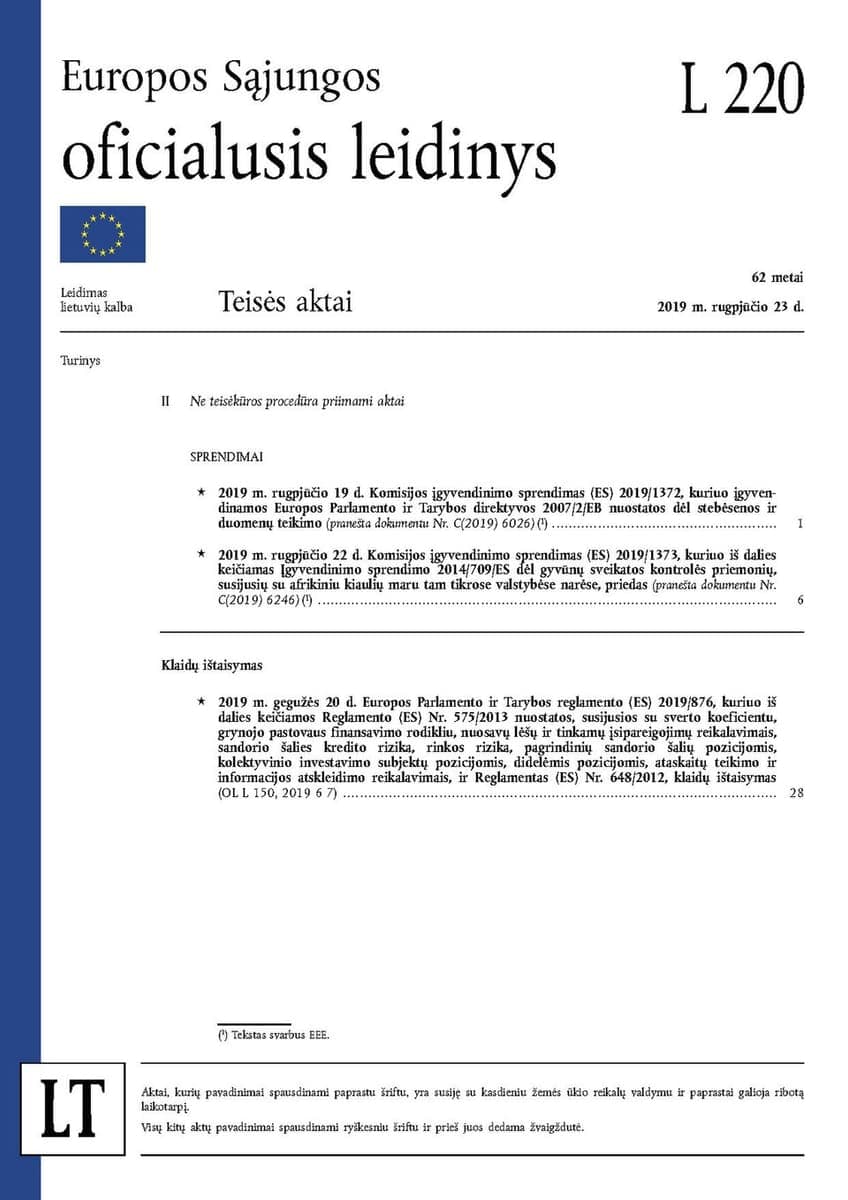
The cover and table of contents shown, checked word for word against the same issue’s official text on EUR-Lex; the dot-leaders before each page number are omitted here.
Europos Sąjungos oficialusis leidinys
L 220
Leidimas lietuvių kalba | Teisės aktai | 62 metai | 2019 m. rugpjūčio 23 d.
Turinys
II Ne teisėkūros procedūra priimami aktai
SPRENDIMAI
2019 m. rugpjūčio 19 d. Komisijos įgyvendinimo sprendimas (ES) 2019/1372, kuriuo įgyvendinamos Europos Parlamento ir Tarybos direktyvos 2007/2/EB nuostatos dėl stebėsenos ir duomenų teikimo (pranešta dokumentu Nr. C(2019) 6026) (¹) 1
2019 m. rugpjūčio 22 d. Komisijos įgyvendinimo sprendimas (ES) 2019/1373, kuriuo iš dalies keičiamas Įgyvendinimo sprendimo 2014/709/ES dėl gyvūnų sveikatos kontrolės priemonių, susijusių su afrikiniu kiaulių maru tam tikrose valstybėse narėse, priedas (pranešta dokumentu Nr. C(2019) 6246) (¹) 6
Klaidų ištaisymas
2019 m. gegužės 20 d. Europos Parlamento ir Tarybos reglamento (ES) 2019/876 klaidų ištaisymas (OL L 150, 2019 6 7) 28
(¹) Tekstas svarbus EEE.
Source: Official Journal of the European Union, L 220, 23 August 2019 (LT), via EUR-Lex (Public domain).
Source · CC BY-SA 4.0 · Photograph by Jodkovska
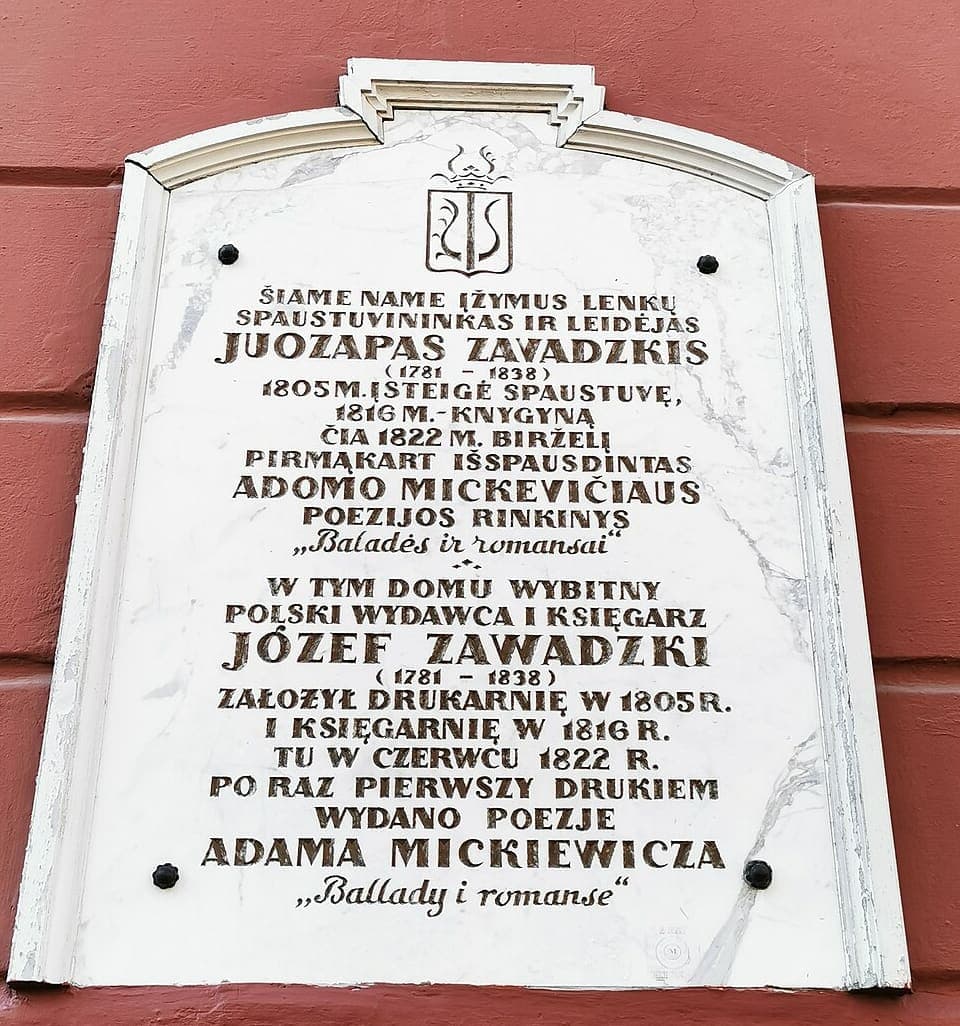
Evidano Transcription
ŠIAME NAME ĮŽYMUS LENKŲ
SPAUSTUVININKAS IR LEIDĖJAS
JUOZAPAS ZAVADZKIS
(1781 - 1838)
1805 M. ĮSTEIGĖ SPAUSTUVĘ,
1816 M. - KNYGYNĄ
ČIA 1822 M. BIRŽELĮ
PIRMĄKART IŠSPAUSDINTAS
ADOMO MICKEVIČIAUS
POEZIJOS RINKINYS
„Baladės ir romansai“
W TYM DOMU WYBITNY
POLSKI WYDAWCA I KSIĘGARZ
JÓZEF ZAWADZKI
(1781 - 1838)
ZAŁOŻYŁ DRUKARNIĘ W 1805 R.
I KSIĘGARNIĘ W 1816 R.
TU W CZERWCU 1822 R.
PO RAZ PIERWSZY DRUKIEM
WYDANO POEZJE
ADAMA MICKIEWICZA
„Ballady i romanse“
Generated by Evidano’s advanced model; not yet checked against a published edition.
A language banned, smuggled, and eventually spelled its own way
After the failed 1863 uprising, the Russian imperial authorities under Governor-General Mikhail Muravyov banned the printing of Lithuanian in its own Latin-based alphabet from 1864, and pushed a Cyrillic transliteration, graždanka, as the only legal way to print the language; almost nobody used it by choice. Lithuanian print did not stop, it moved across the border: books and newspapers such as Aušra and Varpas were set in ordinary Latin type in East Prussia, at Tilžė (Tilsit) and Ragainė, and carried back over the frontier by book smugglers, knygnešiai, who risked exile or prison for it. The ban was lifted in 1904, and the Latin alphabet, refined over the following years chiefly by the philologist Jonas Jablonskis, became the standard the modern language still uses.
That standard alphabet marks sounds Russian Cyrillic and plain Latin script both lack. Four vowels, ą, ę, į and ų, carry an ogonek marking a vowel historically nasal and still distinct in length and quality; ū carries a macron for the same reason on u, and ė marks a close vowel kept apart from e. Three consonants, č, š and ž, take a caron for sounds English spells ch, sh and the s in pleasure. A model trained on unmarked text drops all seven marks or confuses them with the similar-looking diacritics of Polish or Latvian; the graždanka Cyrillic of the ban years solved the same problem with its own invented digraphs and borrowed Russian letters, none of which map cleanly onto later print.
The ban’s material record survives in several forms at once. A Cyrillic catechism printed at Warsaw or Vilnius under the ban sits alongside a Latin-script pamphlet smuggled in from Tilžė the very same year, and either can turn up next to a printer’s memorial plaque, a modern government form, or a family Bible that moved between scripts as its owners did. All of it is Lithuanian; none of it is spelled quite the same way twice.
Why ordinary OCR struggles here
Two scripts for one language in one period
Between 1864 and 1904 the same Lithuanian text might exist in an imposed Cyrillic edition, a smuggled Latin one, or both, and a model has to recognise Cyrillic letterforms standing for Lithuanian sounds Russian does not have, rather than reading them as Russian or assuming the Latin edition is the only real one.
Seven diacritics a generic model drops
ą, ę, į, ų, ū, ė, č, š and ž all carry marks a Latin-trained OCR system was not built to expect, and dropping even one changes the word: the version without the mark is not a variant spelling, it is usually a different word or an ungrammatical one.
An invented Cyrillic with no fixed convention
Graždanka was never standardised the way Russian Cyrillic was; different presses in Warsaw, Vilnius and elsewhere used slightly different letters and digraphs for the same Lithuanian sound. Reading it means recognising the specific press’s convention, not applying one fixed alphabet.
Smuggled print made to survive, not to impress
Books and pamphlets printed in Tilžė for smuggling across the border were often cheaply set and tightly packed to save space in a smuggler’s pack, then read hard by owners who kept them hidden. Worn, cropped and heavily handled copies are the rule, not the exception.
Who works with this material
Historians of the press ban and book smugglers
Research on the knygnešiai and the underground press draws on both the Cyrillic editions the state approved and the Latin ones it seized, and needs each transcribed as printed so the two campaigns can be compared rather than blurred into one text.
Genealogists and parish researchers
Lithuanian church and civil records from the ban years and after mix Cyrillic, Latin and Polish by decade and by parish. A transcription that keeps each register’s own script and spelling intact is what lets a family name be traced across the change.
Editors of nineteenth-century Lithuanian texts
Reprinting an Aušra article, a smuggled pamphlet or a graždanka catechism means transcribing exactly what that press set, not the modern standard spelling Jablonskis later fixed, since the choice of script and spelling is itself part of the historical record.
Heritage and museum digitisation
Museums holding smuggled books, confiscation lists and printers' memorabilia need transcriptions that keep title pages, ownership stamps and marginal notes distinct from the text itself, so provenance and content are not collapsed into one paragraph.
Getting the best transcription
Name the script and the decade
Say whether the page is Cyrillic graždanka, Latin-script smuggled print, or modern standard Lithuanian, and give an approximate date. That one step keeps a Cyrillic page from being read as Russian and an 1897 Latin pamphlet from being corrected to modern spelling.
List the seven diacritics explicitly
Name ą, ę, į, ų, ū, ė, č, š and ž in the prompt and ask for a second check on any word where one might be missing. This is the single change most likely to fix a modern Lithuanian transcription.
Ask for stamps and later additions to be kept separate
Ownership stamps, marginal notes and library labels sit on the same page as the printed text; ask for them to be reported separately so they are not merged into the book’s own words.
Test on the hardest scan in the batch first
Start with whichever item is smallest, most cheaply printed or most heavily annotated, typically a smuggled pamphlet rather than a modern form. If that comes back clean, the rest of the batch usually needs only a spot check.
Frequently asked questions
- Can it read Lithuanian printed in the Cyrillic graždanka?
- Yes, it recognises the Cyrillic letters and digraphs as standing for Lithuanian sounds rather than reading them as Russian, though because different presses used slightly different conventions, the output should be checked against the specific edition.
- Will a smuggled 1890s pamphlet be corrected to modern spelling?
- Not by default. Latin-script material from the ban years is transcribed in the spelling it was actually printed in; a modernised version can be requested separately if you need one for searching.
- Are ą, ę, į, ų, ū, ė, č, š and ž all kept?
- Yes, each is treated as its own letter rather than a variant of the base vowel or consonant, on modern print and on nineteenth-century material alike.
- Can it tell a knygnešiai-era Latin pamphlet from a modern one?
- The date and printing details you give in the prompt do that work; the model reads the letterforms and spelling actually on the page, so naming the approximate period helps it avoid silently modernising an old spelling or the reverse.
- How are ownership stamps and library marks on old books handled?
- They can be reported as a separate note rather than folded into the printed text, which keeps a book’s provenance information from contaminating the transcription of its actual contents.
Related scripts and pages
Transcribe your Lithuanian documents
Upload a press-ban-era pamphlet, a modern form or a photographed plaque, say which script and period to expect, and check the first page before running the rest.