
Malay
Read Malay in whichever script it was written
Malay was written in Jawi, the Arabic-derived script, for centuries before Rumi, the Latin alphabet, took over most everyday use, and Jawi still stands beside Rumi on Brunei road signs and in Kelantan shopfronts today. Evidano reads the unpointed consonants and the extra letters invented for Malay sounds, keeps the right-to-left line order intact, and can set a Rumi transliteration beside the Jawi text so both can be checked together.
Sample pages
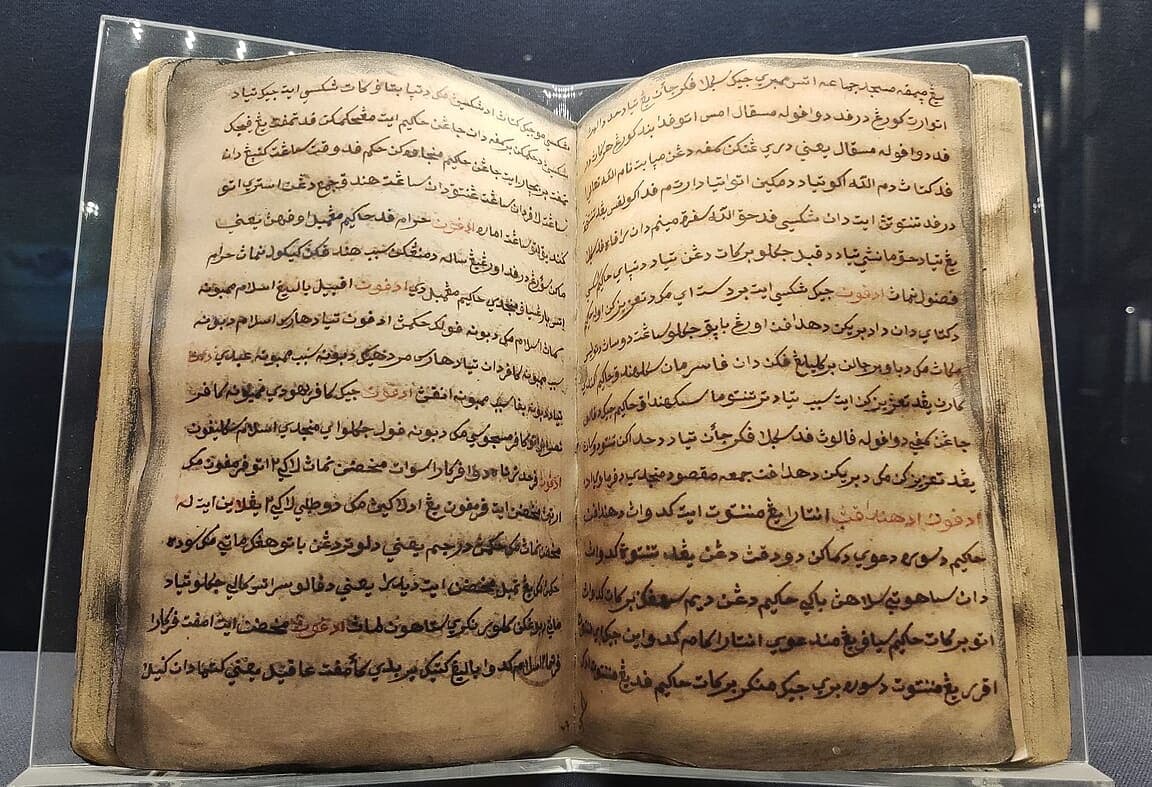
Source · CC BY-SA 4.0 · Wee Hong
Evidano Transcription
يغ ممبينه مسجد جماعة اتس ممبري جيك سگلا فكرجأن يغ تياد حد [illegible]
اتوارت كورغ درفد دوا فوله مثقال امس اتو فد بند كورغ [illegible]
فد دوا فوله مثقال يعني دريغنكن كفد[?] دغن مپابت نام الله تعالى
فد كتاث دم الله اكو تياد دمكين اتو تياد ارتث[?] فد اكو لفس [illegible]
درفد تنتوتث ايت دان شكسي فد حق الله سفرة مينم دان [illegible]
يغ تياد حق مانشي تياد دقبل جكلو بركات دغن تياد دتپاي حاكم [illegible]
فضول نمان[?] ادفون جيك شكسي ايت بردستا اي مك دتعزيركن اوله [illegible]
دكتاي دان [?] دهدافن اورغ باپق جكلو ساغت دوسان [illegible]
[?] مك دباو برجالن بركليليغ فكن دان فاسر مان [illegible]
[?] يغد تعزيركن ايت سبب تياد ترتنتو ما[?] سكهندق حاكم [illegible]
جاغن كمفي دوا فوله فالوث فد سگلا فكرجأن تياد دحدكن [illegible]
يغد تعزيركن مك دبريكن دهدافن جمعة مقصود منجديكن [illegible]
ادفون [?] انتارا يغ مننتوت ايت كدواث دهدافن
حاكم دسوره دعوي دكماكن[?] دودقث دغن يغد تنتوت كدواث
دان ساهوتث سلاهن باكي حاكم دغن ديم [?] بركات كدواث
اتو بركات حاكم سياف يغ مندعوي انتارا كامو[?] كدوا اين جيك [illegible]
اقر يغ مننتوت دسوره بري جيك منكر بركات حاكم فديغ مننتوت [illegible]
[left page illegible]
Generated by Evidano’s advanced model; not yet checked against a published edition.
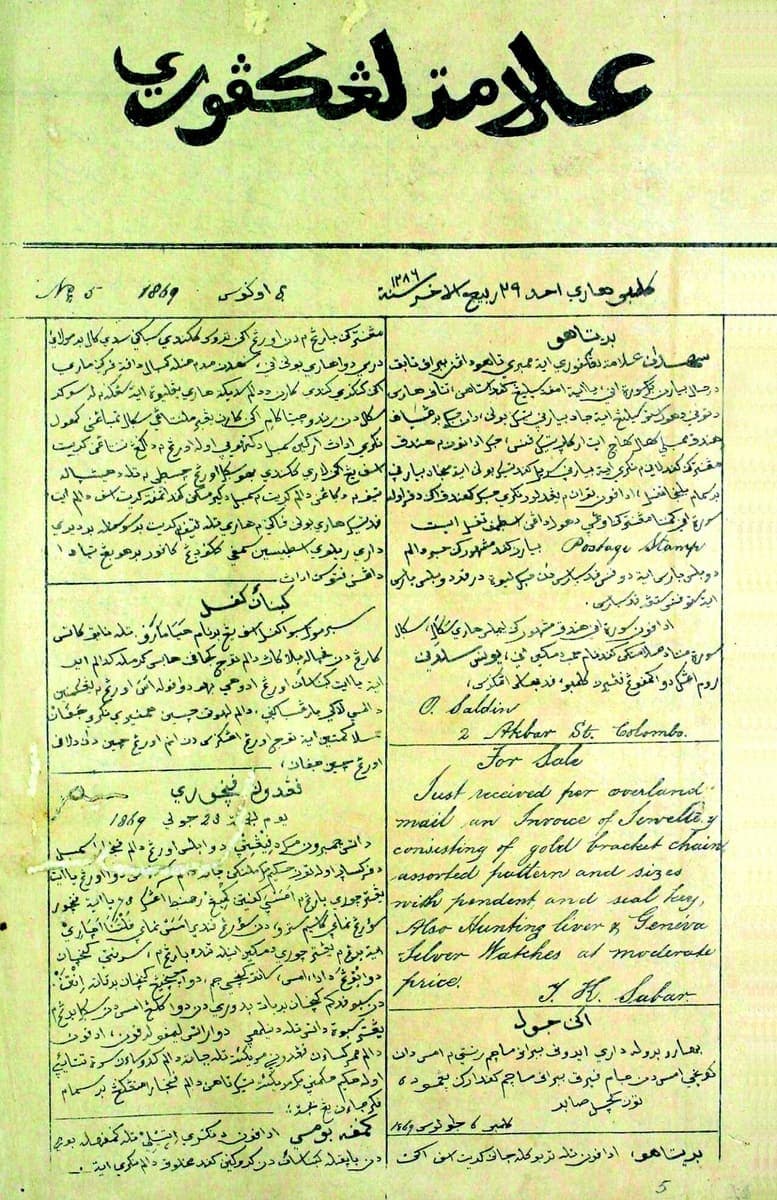
Department of National Archives, Colombo, 8 August 1869 · Source · Public domain · Baba Ounus Saldin
Evidano Transcription
علامت لڠكڤوري
كلمبو هاري احد ٢٩ ربيع الاخر سنة ١٢٨٦ ٨[?] اوكوس 1869 No ٥ [?]
[illegible]
كمڤه بومي [illegible]
بريتاهو
[illegible]
O. Saldin
2 Akbar St. Colombo.
For Sale
Just received per overland
mail an Invoice of Jewellery[?]
consisting of gold bracket chain[?]
assorted pattern and sizes
with pendent and seal key,
Also Hunting liver & Geneva
Silver Watches at moderate
price.
J. K. Sabar
اكن جول
بهارو بروله داري ايروف ببراڤ ماچم رنتي[?] امس دان
كونچي امس دن جام فيرق ببراڤ ماچم [illegible]
نور [?] صابر
كلمبو ٦ [?] 1869
بريتاهو، ادافون تله تربوكله [illegible]
5
Generated by Evidano’s advanced model; not yet checked against a published edition.
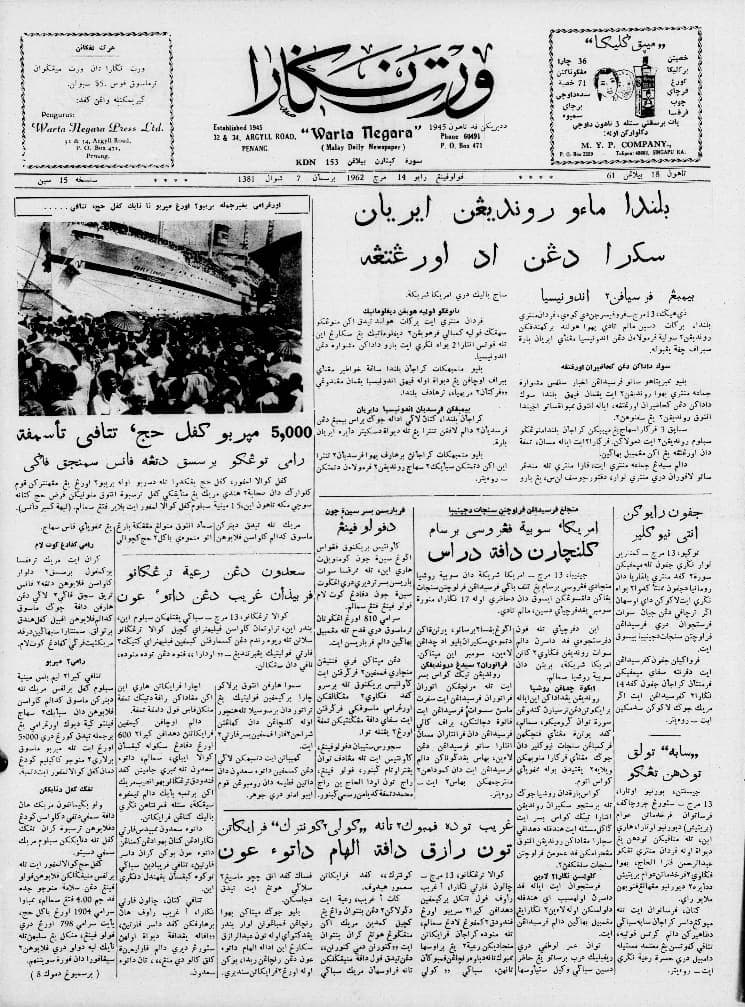
National University of Singapore Library, 14 March 1962 · Source · CC BY-SA 4.0 · Warta Negara Press Ltd., scanned by NUS Library
Evidano Transcription
The masthead, subscription notice and permit line, and the lead article "Belanda mahu rundingan Irian segera dengan ada orang tengah" in the top right column; the paper’s five remaining articles are omitted here. Transcribed from Malay Wikisource, which carries this text at its "not yet proofread" quality flag rather than "validated" — checked here against the image and found to match the visible headlines and masthead.
هرݢ لڠکانن
ورت نݢارا دان ورت ميڠݢوان ترماسوق فوس $5. سىبولن.
کيريمکنله واڠڽ کفد:
Pengurus: Warta Negara Press Ltd., 32 & 34 Argyll Road, P. O. Box 471, Penang.
"Warta Negara" (Malay Daily Newspaper) — Established 1945, 32 & 34, Argyll Road, Penang. Phone 60491.
سورة کبنارن بنلاڠن 153 KDN
تاهون 18 بيلاڠن 61 — فولو فينڠ رابو 14 مرچ 1962 برسمان 7 شوال 1381 — سنسخه 15 سين
بلندا ماءو رونديڠن اريان سکرا دڠن اد اورڠتڠه
بيمبڠ فرسيافن٢ اندونيسيا
ذي هيݢ:13 مرچ—فروفيسر جن دي کوءي، فردان منتري بلندا، برکات دسين مالم تادي بهوا هولند برکهندقکن رونديڠن٢ سولية فرمولاءن دڠن اندونيسيا مڠناي يريان بارة سبراف چڤة يڠبوله.
سوک داداکن دڠن کحاضيران اورڠتڠه
بليو ممبريتاهو ساتو فرسيداڠن اخبار سلفس مشوارة جماعه منتري بهوا رونديڠن٢ ايت يڠمان فيهق بلندا سوک داداکن دڠن کحاضيران اورڠتڠه، اياله انتوق ممبواة ساتو اجيندا انتوق رونديڠن٢ يڠ سفنوهڽ٢.
سباڽق 3 ڤرکارا سهاج يڠ مڽببکن کراجأن بلندا منوڠݢو سبلوم رونديڠن٢ ايت دمولاکن. فرکارا٢ ايت اياله مساڽ، تمفة دان اورڠتڠه يڠ اکن مڠمبيل بهاݢين.
Source: Page:Wartanegara1958.png, via Malay Wikisource (CC BY-SA 4.0).
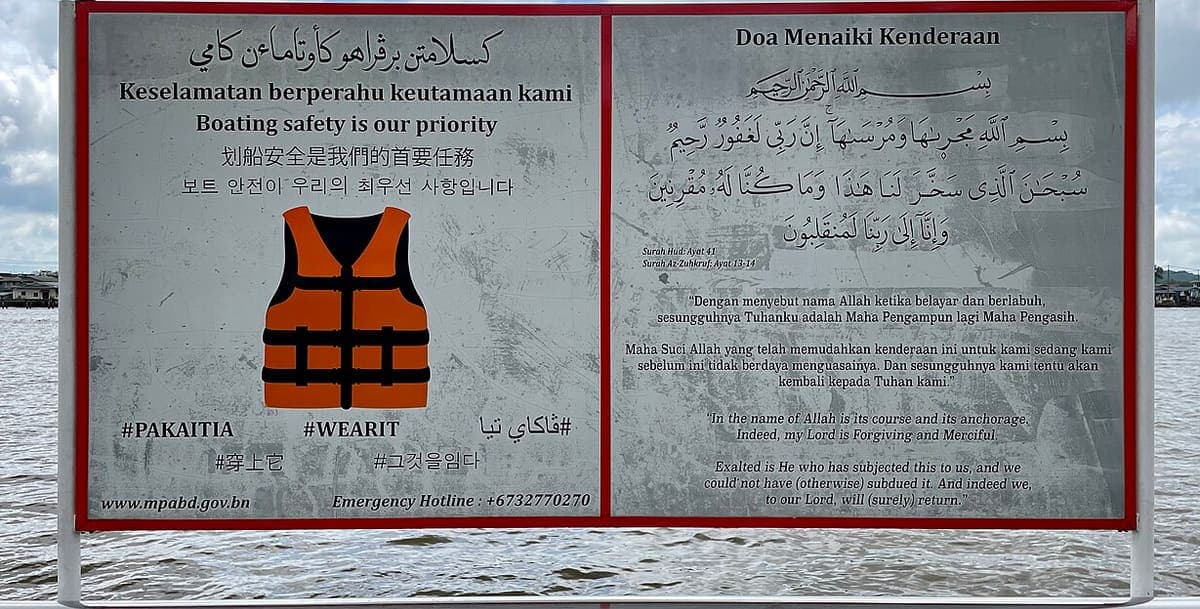
Source · CC BY-SA 4.0 · DeltaSquad833
Evidano Transcription
كسلامتن برڤراهو كأوتاماءن كامي
Keselamatan berperahu keutamaan kami
Boating safety is our priority
划船安全是我們的首要任務
보트 안전이 우리의 최우선 사항입니다
#PAKAITIA #WEARIT #ڤاكاي تيا
#穿上它 #그것을입다
www.mpabd.gov.bn Emergency Hotline : +6732770270
Doa Menaiki Kenderaan
بِسْــــــــــــــــــــــمِ اللهِ الرَّحْمَنِ الرَّحِيْمِ
بِسْمِ اللَّهِ مَجْر۪ىٰهَا وَمُرْسَىٰهَآ ۚ إِنَّ رَبِّى لَغَفُورٌۭ رَّحِيمٌۭ
سُبْحَـٰنَ ٱلَّذِى سَخَّرَ لَنَا هَـٰذَا وَمَا كُنَّا لَهُۥ مُقْرِنِينَ
وَإِنَّآ إِلَىٰ رَبِّنَا لَمُنقَلِبُونَ
Surah Hud: Ayat 41
Surah Az-Zukhruf: Ayat 13-14
"Dengan menyebut nama Allah ketika belayar dan berlabuh,
sesungguhnya Tuhanku adalah Maha Pengampun lagi Maha Pengasih.
Maha Suci Allah yang telah memudahkan kenderaan ini untuk kami sedang kami
sebelum ini tidak berdaya menguasainya. Dan sesungguhnya kami tentu akan
kembali kepada Tuhan kami."
"In the name of Allah is its course and its anchorage.
Indeed, my Lord is Forgiving and Merciful.
Exalted is He who has subjected this to us, and we
could not (otherwise) subdued it. And indeed we,
to our Lord, will (surely) return."
Generated by Evidano’s advanced model; not yet checked against a published edition.
Two scripts, one language, and a spelling reform in between
Jawi reached the Malay world with Islam and was in use by the early fourteenth century, the period of the Terengganu Inscription Stone; it takes the 28 Arabic letters and adds six more for sounds Arabic does not have — ca (چ), nga (ڠ), pa (ڤ), ga (ݢ), va (ۏ) and nya (ڽ), each formed by adding a dot or a stroke to a related Arabic shape. Like Arabic, it is an abjad: short vowels are normally left unwritten, and only long vowels are shown, with alif, wau and ya standing in for ā, ū and ī. There is no capitalisation and no vowel pointing in ordinary use, so a string of consonants can carry more than one reading and has to be resolved from the word and the sentence around it. Jawi carried the whole of classical Malay literature — hikayat prose romances, syair narrative verse, undang-undang legal codes and kitab religious commentary with interlinear glosses — and continued as the script of the Malay press well into the twentieth century.
Rumi spelling was pushed by British colonial schooling from the later nineteenth century and was fixed for administrative use in R. J. Wilkinson’s 1904 dictionary, which wrote ch for today’s c, sh for sy, and marked long vowels with a macron. Malaysia kept its own Rumi conventions after independence until 1972, when it agreed a joint spelling with Indonesia, the Ejaan Rumi Bersama, that levelled most of the remaining differences between the two national spellings. Jawi did not retire when Rumi arrived: newspapers, government gazettes and religious rulings kept appearing in Jawi throughout the colonial period and after, so a single run of a Malay paper can cross the 1972 reform without changing script at all, only spelling.
Jawi is still one of two official scripts in Brunei, appears on Malaysian currency and mosque noticeboards, and is required alongside Rumi on shop and street signs in Kelantan and Terengganu. A government archive from any of these places can mix Rumi minutes, Jawi religious correspondence and English colonial paperwork in the same file, and a modern public sign can carry Jawi, Rumi and two or three other scripts on one board.
Why ordinary OCR struggles here
Vowels the reader has to supply
Jawi leaves most short vowels unwritten, so the same consonant skeleton can read as more than one Malay word. A model trained mainly on Arabic will fill the gap with an Arabic root instead of a Malay one, producing a fluent-looking misreading rather than a visible error.
Letters invented for sounds Arabic does not have
Ca, nga, pa, ga and nya are each one dot or stroke away from an ordinary Arabic letter — pa from ba, nga from ain or ghain, ca from jim, ga from kaf. Recognisers tuned to Persian or Urdu, which add some of the same sounds differently, often resolve these marks the wrong way.
Lithographed type that imitates handwriting
Early Jawi newspapers and books were often printed from hand-lettered lithographic plates rather than cut type, so the letterforms shift from line to line the way a scribe’s hand does. Naskh-trained Arabic OCR expects a regular typeface and struggles with this calligraphic printing.
Several scripts and languages on one sheet
A single page or noticeboard can carry Jawi Malay, Rumi Malay, English, Arabic religious formulae and, on modern signage, Chinese or Korean, running in different directions in the same layout. Each stretch needs to be read in its own script and language rather than merged into one string.
Who works with this material
Malay manuscript and Jawi philology projects
Digitisation programmes at the British Library, the National Library of Malaysia and private endowments hold hikayat, syair and kitab manuscripts by the thousand. A first transcription that keeps Jawi orthography, including the copyist’s own spelling of loanwords, lets a catalogue be built before an editor reaches the shelf.
Adat and Islamic legal historians
Reading undang-undang codes, fatwa registers and Sharia-court records means keeping the fasal or section numbering intact and rendering legal terms as the code gives them, not modernised into present-day usage that would blur which era a ruling belongs to.
Malay press and diaspora historians
Runs of Jawi periodicals — from the Ceylon Malay press of Alamat Langkapuri to mid-century papers like Warta Negara — need transcribing at volume to build a searchable archive, and to compare Jawi and Rumi contemporaries reporting the same events.
Government translators and heritage bodies
Agencies in Brunei, Kelantan and Terengganu maintaining bilingual Jawi-Rumi signage need the two lines checked against each other and against house spelling rules, so a sign that pairs the wrong Jawi with its Rumi gloss gets caught before it is installed.
Getting the best transcription
Name the script as Jawi Malay, not Arabic
Telling the model the text is Jawi Malay keeps its vocabulary guesses in Malay and reads ca, nga, pa, ga and nya as the letters they are, instead of folding them back into the nearest Arabic root or borrowing Persian or Urdu conventions for the same shapes.
Ask for a Rumi line only if you need one
A parallel Rumi transliteration is useful for search, but request it as a second column rather than a replacement, so the Jawi transcription remains the record of what the page actually shows.
Start a lithographed newspaper on its masthead
The masthead and the largest headline are set in the most regular letterforms on the page. Confirm the model has settled on the right hand there before moving to the smaller, more variable body columns of a lithographed paper such as Alamat Langkapuri or Warta Negara.
Mark each script on a mixed sign
For a noticeboard carrying Jawi, Rumi and other languages, say so and ask for each stretch labelled by script and language, so a Jawi line, its Rumi gloss and an English or Chinese caption stay separate rather than run together.
Frequently asked questions
- Does Jawi need vowel points before it can be read?
- No. Jawi is normally written without vowel pointing, and the reading is worked out from the consonant skeleton and the sentence around it, the way a fluent reader does, using alif, wau and ya only where the text itself marks a long vowel.
- Can it tell the six added Jawi letters apart from their Arabic look-alikes?
- Yes. Ca (چ), nga (ڠ), pa (ڤ), ga (ݢ) and nya (ڽ) are read as the Malay letters they are, rather than being folded back into jim, ain, ba, kaf or nun.
- Will Jawi be converted into Rumi automatically?
- Only if you ask for it. The default is a transcription in the script on the page; a Rumi transliteration can be produced as a separate line alongside the Jawi text.
- How is a sign with Jawi, Rumi, English and other scripts handled?
- Each stretch is read in its own script and language and kept apart, so a Jawi line, its Rumi gloss and a caption in a third language are reported separately rather than blended into one string.
- Can it read the older Wilkinson-style Rumi spelling used before 1972?
- Yes, ch, sh and macron vowels are reproduced as printed rather than silently converted to the modern spelling agreed in the 1972 reform; a modernised line can be requested as a separate output.
- Does it cope with lithographed Jawi newspapers where the type looks handwritten?
- It does, though a first pass on the masthead and the largest headline is the fastest way to confirm the model has settled on the right hand before it works through the smaller body columns.
Related scripts and pages
Transcribe your Malay material
Upload a Jawi manuscript, a lithographed newspaper page, a legal code or a photograph of bilingual signage, and check the Malay reading line by line before you export it.