
Nepali
Nepali letters, government papers and Kathmandu Valley manuscripts turned into text
Modern Nepali is set in Devanagari, where a headline stroke ties every syllable of a word together and consonants stack vertically into combined shapes a keyboard has no key for. Nepal’s older manuscript tradition used two further alphabets, Ranjana and Prachalit, that share almost none of Devanagari’s letterforms. Evidano reads Nepali across that whole range — Kathmandu Valley manuscripts, printed newspapers, and the government letters and notices that make up most everyday transcription work — and sets its output beside the image so every stacked conjunct and every Bikram Sambat date can be checked.
Sample pages
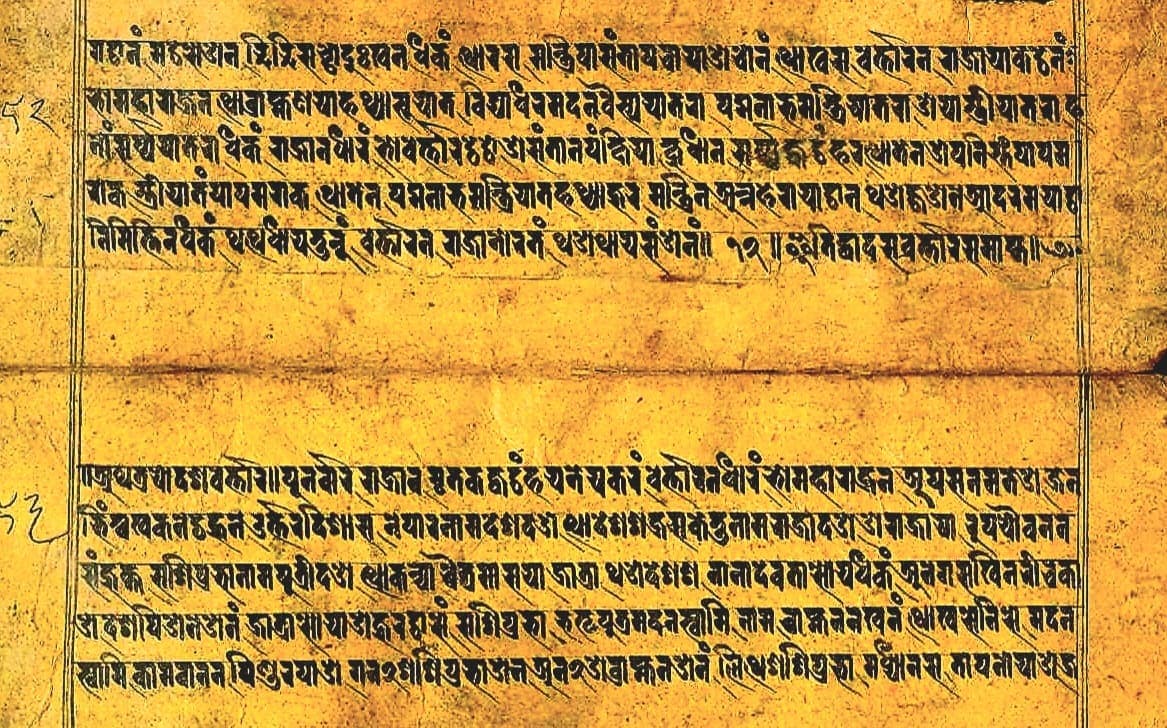
Asa Archives, Kathmandu, 1695 (Nepal Sambat 815) · Source · Public domain
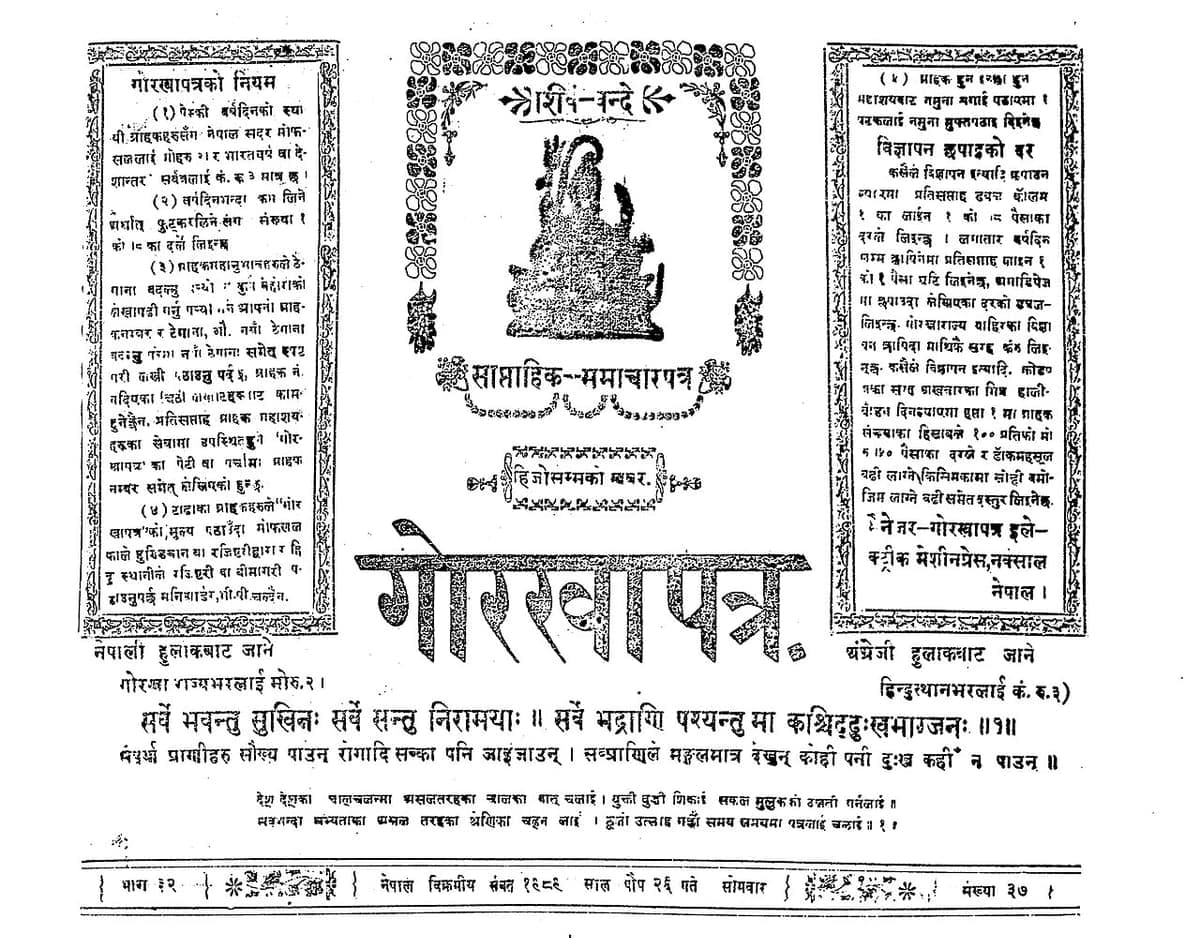
Evidano Transcription
गोरखापत्रको नियम
(१) पेश्की वर्षदिनको स्था
यी ग्राहकहरुसँग नेपाल सदर मोफ-
सललाई मोरु २ र भारतवर्ष वा दे-
शान्तर सर्वत्रलाई कं. रु ३ मात्र छ ।
(२) वर्षदिनभन्दा कम लिने
अर्थात फुटकरलिने संग[?] संख्या १
को ।= का दरले लिइन्छ
(३) ग्राहक महानुभावहरुले ठे-
गाना बदल्नु पर्यो वा कुनै[?] व्यहोराको
लेखापढी गर्नु पर्यो भने आफ्नो ग्राह-
कनम्बर र ठेगाना, [?] नयाँ ठेगाना
बदल्नु परेमा नयाँ ठेगाना समेत स्पष्ट
गरी लेखी पठाउनु पर्दछ, ग्राहक नं.
नदिएका चिठी पत्राहरुबाट काम
हुनेछैन, प्रतिसप्ताह ग्राहक महाशय-
हरुका सेवामा उपस्थितहुने 'गोर-
खापत्र' का पेटी वा पर्चामा ग्राहक
नम्बर समेत लेखिएको हुन्छ.
(४) टाढाका ग्राहकहरुले 'गोर
खापत्र'को मुल्य पठाउँदा मोफसल
वाले हुण्डिद्वारा या रजिष्टरीद्वारा र हि
न्दु स्थानीले रजिष्टरी वा बीमागरी प-
ठाउनुपर्छ मनिआर्डर, भी.पी.चल्दैन.
नेपाली हुलाकबाट जाने
गोरखा राज्यभरलाई मोरु.२।
श्रीशिव-वन्दे
साप्ताहिक--समाचारपत्र
हिजोसम्मको खबर.
गोरखापत्र.
(५) ग्राहक हुन इच्छा हुने
महाशयबाट नमुना मगाई पठाएमा १
पत्रकलाई नमुना मुफतपठाइ दिइनेछ
विज्ञापन छपाइको दर
कसैले विज्ञापन इत्यादि छपाउन
ल्याएमा प्रतिसप्ताह डबल कोलम
१ का लाईन १ को ।= पैसाका
दरले लिइन्छ । लगातार बर्षदिन
सम्म छापिनेमा प्रतिसप्ताह लाइन १
को १ पैसा घटि लिइनेछ, अगाडिपेज
मा छपाउदा लेखिएका दरको डबल-
लिइन्छ. गोरखाराज्य बाहिरका विज्ञा
पन छापिएमा माथिकै दरले कं. रु. लिइ-
न्छ. कसैले विज्ञापन इत्यादि. [illegible]
[illegible] भित्र हाली-
बाड्न दिनल्याएमा पाता १ मा ग्राहक
संख्याका हिसाबले १०० प्रतिको मो
रु [?] पैसाका दरले र डाकमहसूल
बढी लाग्ने किसिमकामा सोही बमो-
जिम लाग्ने बढी समेत दस्तुर लिइनेछ.
मैनेजर-गोरखापत्र इले-
क्ट्रीक मेशीनप्रेस,नक्साल
नेपाल ।
अंग्रेजी हुलाकबाट जाने
हिन्दुस्थानभरलाई कं. रु.३)
सर्वे भवन्तु सुखिनः सर्वे सन्तु निरामयाः ॥ सर्वे भद्राणि पश्यन्तु मा कश्चिद्दुःखभाग्जनः ॥१॥
संपूर्ण प्राणीहरु सौख्य पाउन रोगादि सन्का पनि जाइजाउन् । सब्प्राणिले मङ्गलमात्र देखुन् कोही पनी दुःख कहीं न पाउन ॥
देश देशका चालचलनमा असलतरहका चालका बात् चलाई । युक्ती बुझी सिकाई सकल मुलुकको उन्नती गर्नलाई ॥
सबभन्दा सभ्यताका असल तरहका अंशिका चहुन लाई । ठूलो उत्साह गर्छौं समय समयमा पत्रलाई चलाई ॥ १ ॥
{ भाग ३२ } { नेपाल विक्रमीय संवत १९८९ साल पौष २६[?] गते सोमवार } { संख्या ३७ }
Generated by Evidano’s advanced model; not yet checked against a published edition.
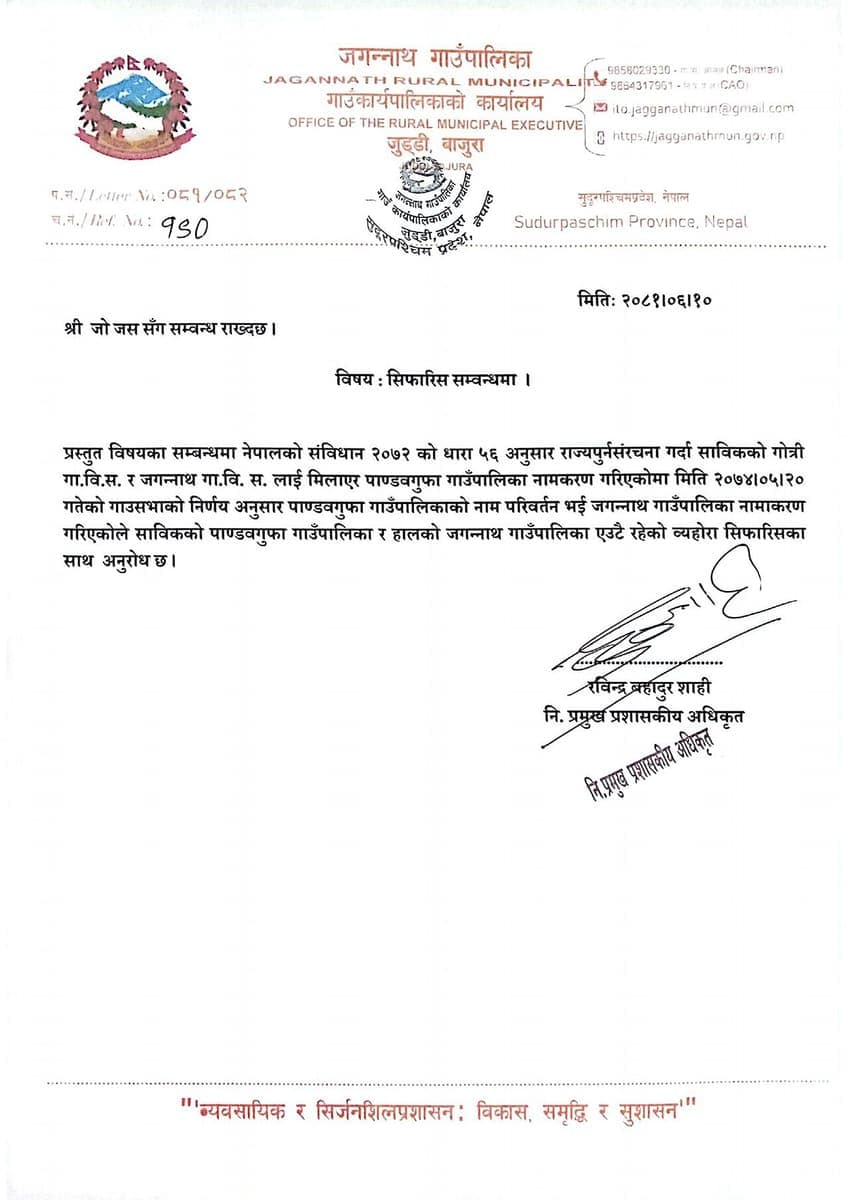
Office of the Rural Municipal Executive, Jagannath Rural Municipality, Bikram Sambat 2081.06.10 (2024) · Source · CC BY-SA 4.0 · Jagannathmun
Evidano Transcription
जगन्नाथ गाउँपालिका
JAGANNATH RURAL MUNICIPALITY
गाउँकार्यपालिकाको कार्यालय
OFFICE OF THE RURAL MUNICIPAL EXECUTIVE
जुड्डी, बाजुरा
9858029330 - [illegible] (Chairman)
9864317961 - [illegible] (CAO)
ito.jagganathmun@gmail.com
https://jagganathmun.gov.np
प.स. / Letter No. : ०८१/०८२
च.नं. / Ref. No. : १३० [?]
सुदूरपश्चिमप्रदेश, नेपाल
Sudurpaschim Province, Nepal
[stamp]
मिति: २०८१।०६।१०
श्री जो जस सँग सम्वन्ध राख्दछ ।
विषय : सिफारिस सम्वन्धमा ।
प्रस्तुत विषयका सम्बन्धमा नेपालको संविधान २०७२ को धारा ५६ अनुसार राज्यपुर्नसंरचना गर्दा साविकको गोत्री
गा.वि.स. र जगन्नाथ गा.वि. स. लाई मिलाएर पाण्डवगुफा गाउँपालिका नामकरण गरिएकोमा मिति २०७४।०५।२०
गतेको गाउसभाको निर्णय अनुसार पाण्डवगुफा गाउँपालिकाको नाम परिवर्तन भई जगन्नाथ गाउँपालिका नामाकरण
गरिएकोले साविकको पाण्डवगुफा गाउँपालिका र हालको जगन्नाथ गाउँपालिका एउटै रहेको व्यहोरा सिफारिसका
साथ अनुरोध छ ।
[signature]
रविन्द्र बहादुर शाही
नि. प्रमुख प्रशासकीय अधिकृत
[stamp: नि. प्रमुख प्रशासकीय अधिकृत]
"व्यवसायिक र सिर्जनशिलप्रशासन : विकास, समृद्धि र सुशासन"
Generated by Evidano’s advanced model; not yet checked against a published edition.
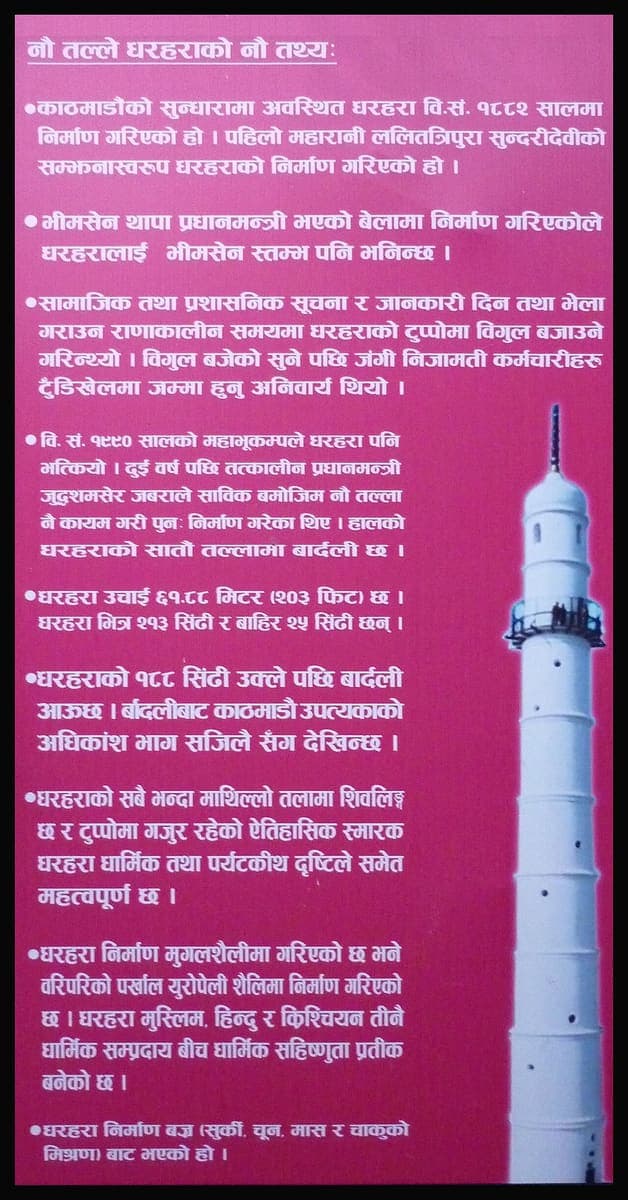
Evidano Transcription
नौ तल्ले धरहराको नौ तथ्य:
●काठमाडौको सुन्धारामा अवस्थित धरहरा वि.सं. १८८२ सालमा
निर्माण गरिएको हो । पहिलो महारानी ललितत्रिपुरा सुन्दरीदेवीको
सम्झनास्वरुप धरहराको निर्माण गरिएको हो ।
●भीमसेन थापा प्रधानमन्त्री भएको बेलामा निर्माण गरिएकोले
धरहरालाई भीमसेन स्तम्भ पनि भनिन्छ ।
●सामाजिक तथा प्रशासनिक सूचना र जानकारी दिन तथा भेला
गराउन राणाकालीन समयमा धरहराको टुप्पोमा विगुल बजाउने
गरिन्थ्यो । विगुल बजेको सुने पछि जंगी निजामती कर्मचारीहरु
टुँडिखेलमा जम्मा हुनु अनिवार्य थियो ।
●वि. सं. १९९० सालको महाभूकम्पले धरहरा पनि
भत्कियो । दुई वर्ष पछि तत्कालीन प्रधानमन्त्री
जुद्धशमसेर जबराले साविक बमोजिम नौ तल्ला
नै कायम गरी पुनः निर्माण गरेका थिए । हालको
धरहराको सातौं तल्लामा बार्दली छ ।
●धरहरा उचाई ६१.८८ मिटर (२०३ फिट) छ ।
धरहरा भित्र २१३ सिंढी र बाहिर २५ सिंढी छन् ।
●धरहराको १८८ सिंढी उक्ले पछि बार्दली
आऊछ । बाँदलीबाट काठमाडौ उपत्यकाको
अधिकांश भाग सजिलै सँग देखिन्छ ।
●धरहराको सबै भन्दा माथिल्लो तलामा शिवलिङ्ग
छ र टुप्पोमा गजुर रहेको ऐतिहासिक स्मारक
धरहरा धार्मिक तथा पर्यटकीथ दृष्टिले समेत
महत्वपूर्ण छ ।
●धरहरा निर्माण मुगलशैलीमा गरिएको छ भने
वरिपरिको पर्खाल युरोपेली शैलिमा निर्माण गरिएको
छ । धरहरा मुस्लिम, हिन्दु र क्रिश्चियन तीनै
धार्मिक सम्प्रदाय बीच धार्मिक सहिष्णुता प्रतीक
बनेको छ ।
●धरहरा निर्माण बज्र (सुर्की, चून, मास र चाकुको
मिश्रण) बाट भएको हो ।
Generated by Evidano’s advanced model; not yet checked against a published edition.
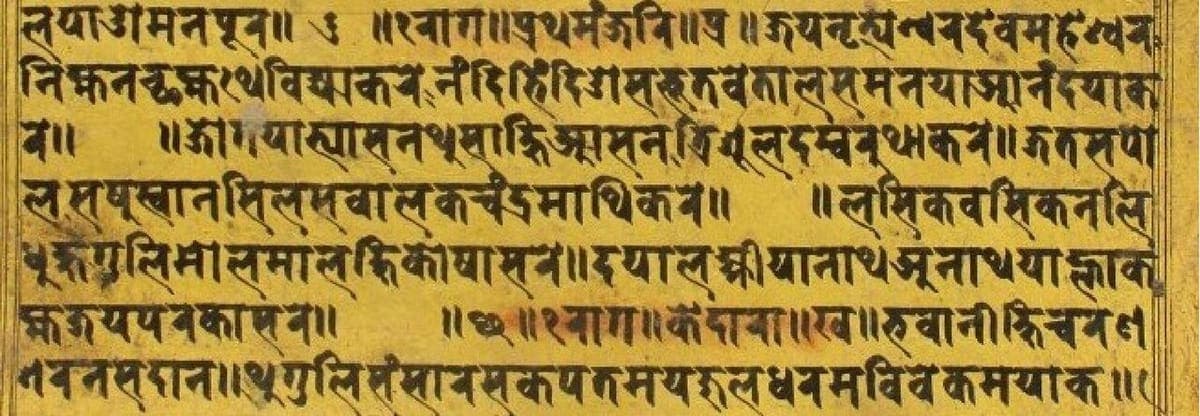
Endangered Archives Programme, uploaded by Archive Nepal for Wikisource Loves Manuscripts, 18th century · Source · Public domain
Evidano Transcription
All seven lines of this page, transcribed and marked proofread (quality level 3 of 4) on the multilingual Wikisource against this same scan, and checked line for line against the image above. The Wikisource text sets the Prachalit letters in Devanagari rather than reproducing the original letterforms, and keeps the manuscript’s line breaks, its double dandas and its raga headings.
लयाओ मन पूर ॥ ६ ॥ १ राग ॥ प्रथमं जरि ॥ प्र ॥ जय नृत्यश्वर देव महेश्वर
निम्हन छम्ह थे विज्याक रे नंदि भिंदि ओ स भुत वेतालस मनया आनंद याक
रे ॥ जोतया स्यासन थुसा क्षि आसन त्रिशुल दम्वरु थाक रे ।। जतस पो
लस षु स्वान सिलस वालक चंद्रमा थिक रे ।। ।। लसिक वसिक नलि
धु जुगुलि मोल मालक्षि कोषास रे ।। दया लक्ष्मीया नाथ अनाथया ल्हाक
म्ह जय परकास रे ॥ ॥ ६ ॥ १ राग ॥ केदारा ।। ख ॥ भुवानी क्षि चरण
शवनस दान ॥ थुगुलि संसारस कपत मय जुल धरम विवेक मयाक ॥
Source: Page:AN-PM-13.pdf/40, multilingual Wikisource (CC BY-SA 4.0).
What Nepali text looks like on the page
Nepali is written in Devanagari, an abugida in which every consonant carries an inherent vowel unless a different vowel sign is attached, and a horizontal headline, the shirorekha, runs along the top of a word and joins its syllables into one visual unit. Consonants that fall together without a vowel between them are not written side by side but combined into a single conjunct glyph, some barely resembling their parts — क्ष, ज्ञ and त्र are common examples — and Nepali keeps Devanagari’s retroflex-versus-dental distinctions, ट against त and ड against द, that Sanskrit needed and Nepali inherited. Official Nepali documents commonly date themselves by the Bikram Sambat calendar, written with Devanagari numerals and running some fifty-six or fifty-seven years ahead of the Gregorian year.
Before Devanagari became the standard printed alphabet, the Kathmandu Valley had its own writing traditions for Newar and for the Sanskrit texts its scribes copied. Ranjana is an ornate, angular script cut for monumental and decorative use — temple inscriptions, mantra banners, manuscript titles — and it is still used that way today, even though almost nobody reads it as a running text. Prachalit, sometimes simply called the Newar script, is its faster cursive relative and is what most working manuscripts from the valley are actually written in: centuries of Buddhist and Hindu texts in Newar and Sanskrit survive in Prachalit hands that look nothing like modern printed Devanagari, despite sharing the same distant Brahmic root.
Most Nepali transcription work today is neither Ranjana nor Prachalit, though: it is government correspondence, land and citizenship paperwork, and public notices. A municipal letter typically carries a printed letterhead with a crest, a letter number and a reference number, a body paragraph in ordinary printed Devanagari, and a handwritten signature pressed against a rubber-stamped seal, all on one page. Older Nepali newspapers add their own habit, a heavier, more angular metal type than any font in use today, often printed with a Bikram Sambat dateline running along the foot of the page.
Why ordinary OCR struggles here
Conjuncts built from more than one letter
A cluster of consonants with no vowel between them is written as a single combined glyph rather than as separate letters side by side, and some of the commonest conjuncts barely resemble the consonants that make them up. A system trained to recognise individual letters either misreads the conjunct as one unfamiliar character or splits it into the wrong pieces.
Two other alphabets with no shared letterforms
Ranjana and Prachalit do not look like modern Devanagari at all, so a model trained only on printed Nepali does not merely misread a Kathmandu Valley manuscript — it may not recognise that the marks on the page are letters in a related script rather than an unrelated decoration.
Bikram Sambat dates and Devanagari numerals
Official documents date themselves in the Bikram Sambat era using Devanagari numerals, in a year that runs roughly fifty-six to fifty-seven years ahead of the Gregorian calendar with no fixed offset across the whole year. Read carelessly, a date like २०८१।०६।१० can be transcribed as the wrong digits entirely or left unconverted where a reader expected the Gregorian equivalent.
Letterhead, stamp and signature on one page
A government letter mixes crisp printed letterhead type, a rubber-stamped seal, and a handwritten signature squeezed into the same block of the page. A model expecting one hand or one typeface throughout a document has to separate three different kinds of mark rather than transcribe them as if they were a single continuous text.
Who works with this material
Newar and Kathmandu Valley manuscript scholars
Reading Prachalit and Ranjana copies of Newar and Sanskrit texts means recognising each cursive or angular stroke on its own terms rather than mapping it onto modern Devanagari, and keeping colophons and verse numbers distinct from the running text.
Municipal and civil-registration staff
Renaming notices, recommendation letters and certificates like the ones rural and municipal offices issue every day need their letter numbers, reference numbers and body text read correctly before they can be filed, indexed or acted on.
Land and family historians
Land records and family papers reaching back generations date themselves in Bikram Sambat and use administrative vocabulary that has since changed; getting the era, the numerals and the old terms right is what lets a record be placed correctly in a family or a property history.
Press historians and archivists
Citing an old issue of Gorkhapatra or another historic Nepali paper accurately means transcribing dense period type, including the paper’s own Bikram Sambat dateline, rather than paraphrasing it from a modern summary.
Getting the best transcription
Say which alphabet the page is in
Tell the model whether it is looking at modern Devanagari, Ranjana or Prachalit, so a manuscript hand is read on its own terms rather than forced into the nearest Devanagari letter shapes.
Ask for conjuncts to be kept whole
Specify that a stacked consonant cluster should be transcribed as the single combined syllable it represents, not split into a guessed sequence of component letters.
Decide how Bikram Sambat dates should come out
Say whether a date should stay as written in Bikram Sambat, be converted to the Gregorian equivalent, or be given as both, since a silent conversion is where an off-by-one-year error is easiest to introduce.
Start with the busiest part of the batch
Run a letterhead with a stamp and signature, or the densest paragraph of a manuscript leaf, before the rest of a batch. If the model separates print, stamp and handwriting correctly there, the plainer pages need only a light check.
Frequently asked questions
- Can it read Devanagari’s stacked conjunct consonants correctly?
- Yes. Conjuncts such as क्ष, ज्ञ and त्र are recognised as the single combined syllables they represent rather than split into a guessed sequence of separate letters.
- Does it know Ranjana and Prachalit are different alphabets from printed Nepali?
- Yes, when you say which one the page uses. Ranjana’s angular monumental letterforms and Prachalit’s cursive manuscript hand are each read on their own terms rather than mapped onto modern Devanagari shapes.
- Can it read a Kathmandu Valley manuscript, not just modern print?
- Yes. Prachalit and Ranjana manuscripts are transcribed as the scripts they are, including verse numbers, colophons and the abbreviations a scribe used to save space at the end of a line.
- How does it handle Bikram Sambat dates and Devanagari numerals?
- Devanagari numerals are read as the digits they are, and a Bikram Sambat date is kept as written, converted to the Gregorian calendar, or given as both, according to what you ask for.
- Can it separate a letterhead, a stamp and a handwritten signature on one page?
- Yes. Printed letterhead text, a rubber-stamped seal and a handwritten signature are treated as separate elements rather than merged into one block, so each can be reviewed on its own.
Related scripts and pages
Transcribe your Nepali documents
Upload a government letter, a printed page or a Kathmandu Valley manuscript, and check the Nepali line by line before you export it.