
Spanish · c. 1550–1800
Read the paperwork of the Spanish Indies
A viceroy writes byrrey and serbyr, a parish priest fits a caste term and three baptisms into six lines, and an accountant runs pesos, reales and tomines into the same abbreviation. Evidano transcribes letters, cabildo books, registers and mission papers from the Spanish Indies without modernising the spelling, keeps the address and the docket separate from the text, and marks the words it is unsure of instead of turning an indigenous place name into the nearest Castilian one.
Sample pages
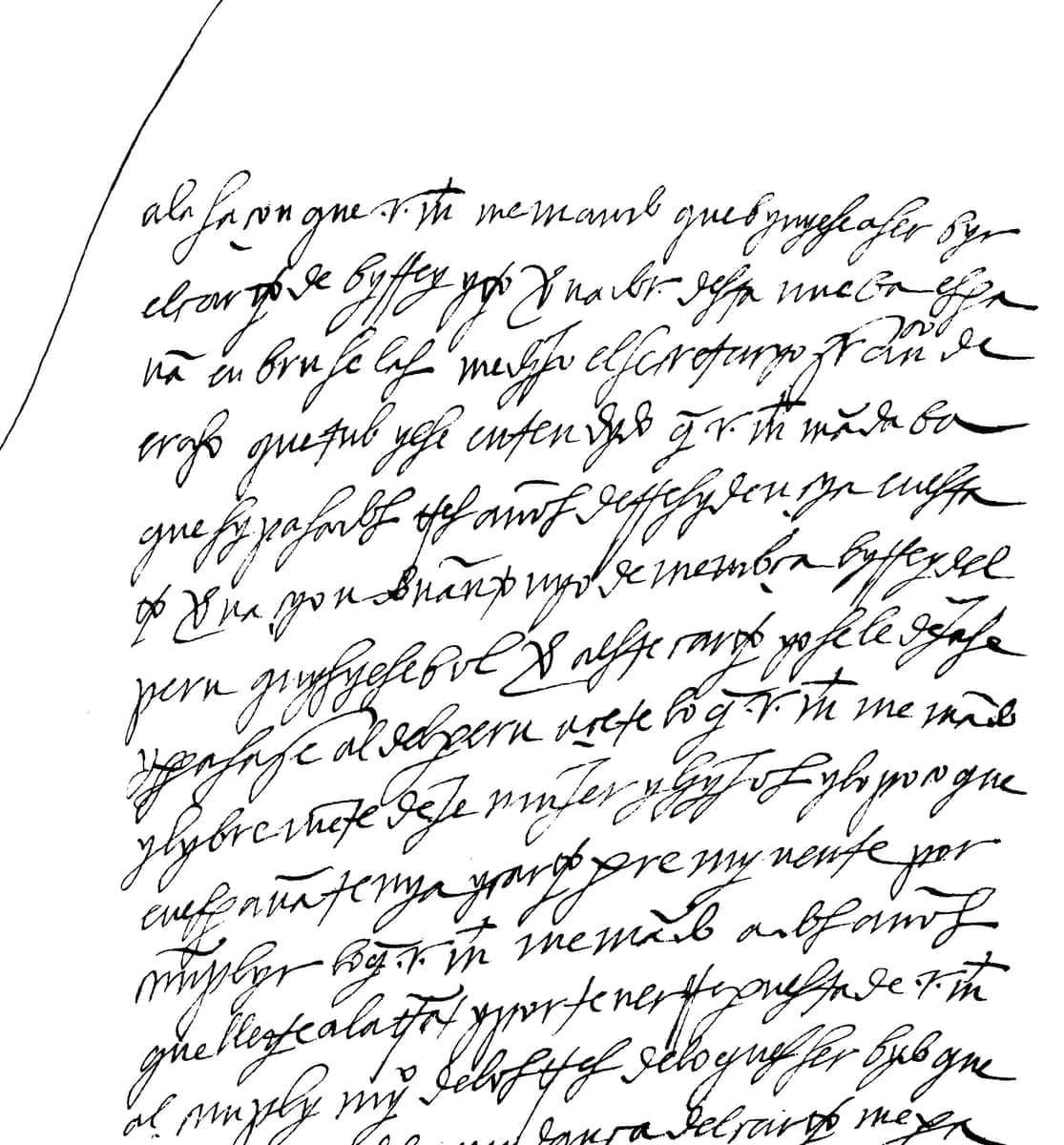
Source · Public domain · Photolithographic facsimile in Cartas de Indias (Madrid, 1877), plate S, via Internet Archive
Evidano Transcription
The salutation and the thirteen lines the plate shows, from the transcription printed in the same volume (p. 260). The editors keep the viceroy’s spelling and add only modern punctuation and capitals; the cedillas that the digitised text turns into figures have been restored from the plate, and the letter runs on past the page reproduced here.
Sacra Catholica Çesarea Magestad:
Ala saçon que V. M. me mandó que bynyese a serbyr el cargo de byrrey y governador desta Nueba España, en Bruselas, me dijo el secretaryo Françisco de Eraso que tubyese entendydo que V. M. mandaba que, sy pasados tres años de resydençya en esta governaçyon, don Antonyo de Mendoça, byrrey del Perú, quysyese bolver a este cargo, yo se le dejase y pasase al del Perú: açeté lo que V. M. me mandó, y lybremente dejé mujer y hyjos, y lo poco que en España tenya, y cargo premynente, por cunplyr lo que V. M. me mandó. A dos años que llegé a la tierra, y por tener repuesta de V. M., al cunplymyento de los tres, de lo ques serbydo que haga çerca de la mudança del cargo, me paresçyó acordarlo a V. M., para que con tienpo se me dé abyso de su Real boluntad.
Source: Cartas de Indias (Ministerio de Fomento, Madrid, 1877), p. 260, via Internet Archive (Public domain).
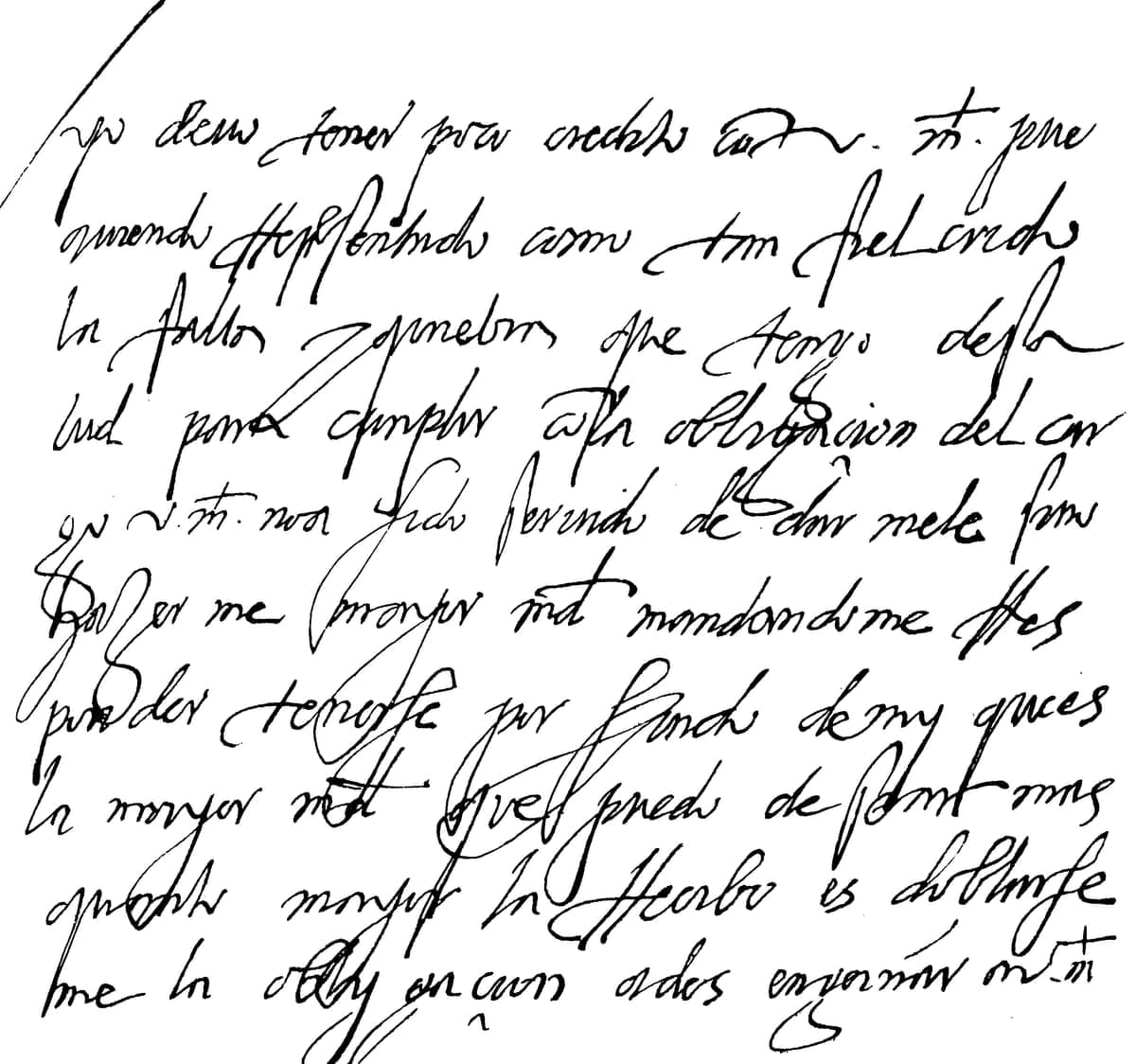
Source · Public domain · Photolithographic facsimile in Cartas de Indias (Madrid, 1877), plate T, via Internet Archive
Evidano Transcription
The salutation and the ten lines of the page shown, from the transcription in the same volume (p. 335), with the cedillas restored from the plate. The editors head the letter 9 October 1576, though the letter itself is dated postrero de otubre de 76 — the sort of discrepancy a transcription is meant to expose rather than settle.
Catholica Real Magestad:
Yo deuo tener poco crédito con V. M., pues auiendo representado, como tan fiel criado, la falta y quiebra que tengo de salud para cunplir con la obligaçion del cargo, V. M. no a sido seruido de dármele, sino hazerme mayor merçed, mandándome responder tenerse por seruido de my, que es la mayor merçed que puedo desear; mas, quanto mayor la recibo, es doblárseme la oblygaçion a desengañar a V. M., que si no es con la voluntad, no tengo fuerças para más.
Source: Cartas de Indias (Ministerio de Fomento, Madrid, 1877), p. 335, via Internet Archive (Public domain).
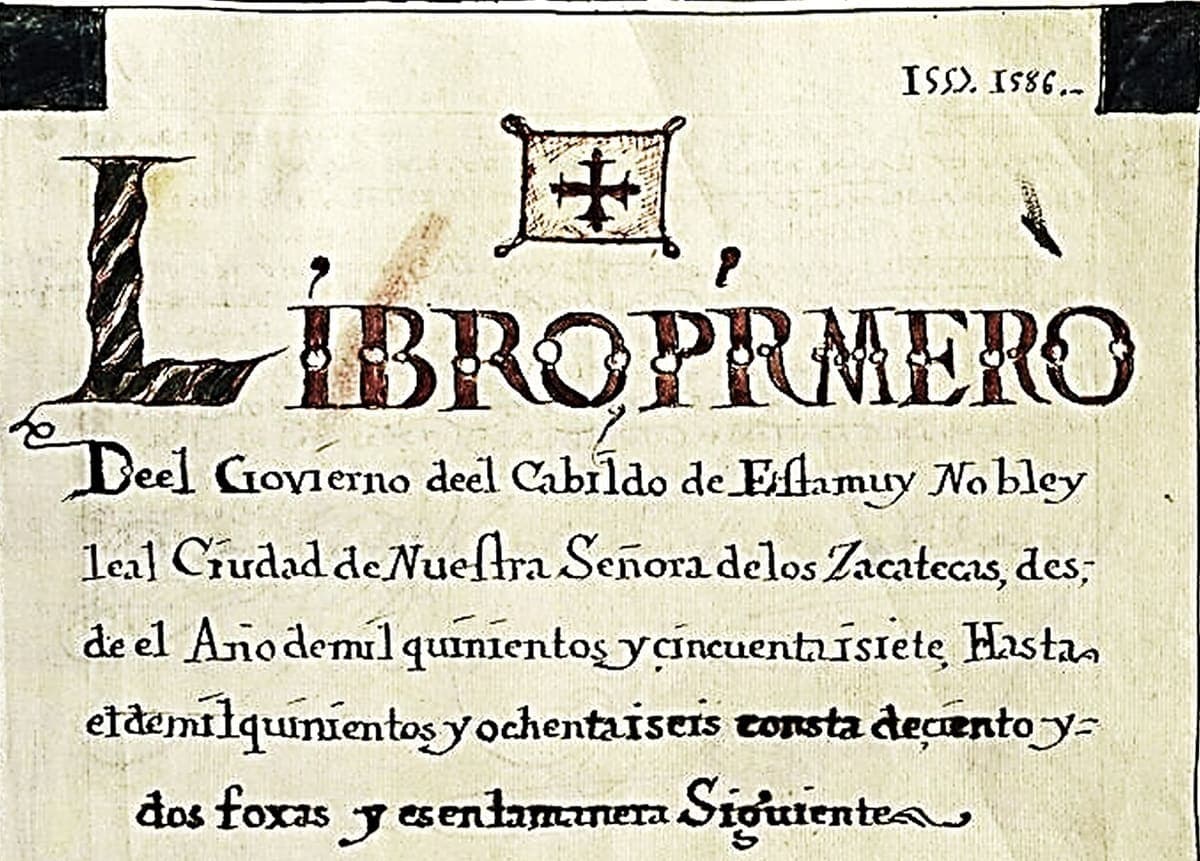
Archivo Histórico del Estado de Zacatecas, Book 1557–1586; title page eighteenth-century · Source · Public domain
Evidano Transcription
- 1586.-
L IBRO PR[I]MERO
De el Govierno de el Cabildo de Esta muy Noble y
leal Ciudad de Nuestra Señora de los Zacatecas, des-
de el Año de mil quinientos y cincuenta i siete, Hasta
el de mil quinientos y ochenta i seis consta de ciento y =
dos foxas y es en la manera Siguiente
Generated by Evidano’s advanced model; not yet checked against a published edition.
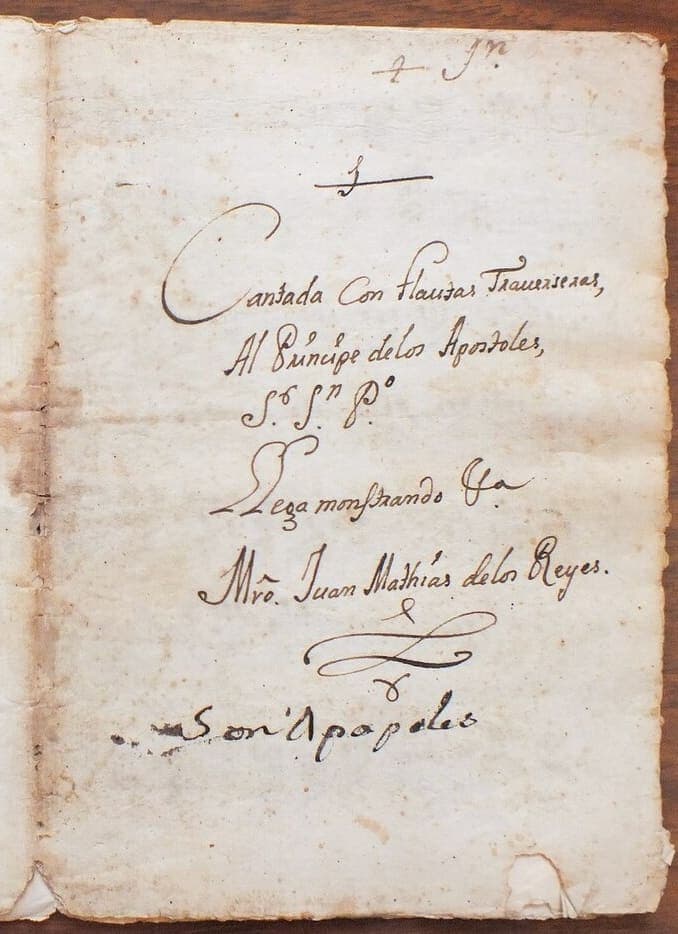
Evidano Transcription
4 Jn
1
Cantada Con flautas Trauerseras,
Al Principe delos Apostoles,
S[eño]r S[a]n P[edr]o
Llega monstrando Ya
M[aest]ro. Juan Mathias delos Reyes.
Son 4 papeles
Generated by Evidano’s advanced model; not yet checked against a published edition.
What colonial writing looks like, and why it varies so much
From the middle of the sixteenth century the offices of Mexico City, Lima, Santa Fe, Guatemala and Manila reproduced peninsular practice at a distance of months. The same escribano training, the same formularies and the same abbreviations crossed the Atlantic, so a will drawn in Zacatecas looks like a will drawn in Valladolid — but the hands drift. Humanistic round and italic writing, taught in the colegios and used for anything meant to be read by a superior, sits beside the looped cortesana and the tangled procesal that clerks had learned at home, and a single file may pass from one to another as it travels from a village alcalde to a viceroy’s secretary. Because ships were lost, important letters were sent again as duplicado and triplicado, so many texts survive as several scribal copies, in different hands, of one original.
The spelling is not modern Spanish and should not be made to look like it. b and v change places (byrrey, serbyr, boluntad), y stands where a modern text has i (dyas, myll, resydençya), ç survives before a, o and u, x holds the old palatal sound in dixo and México, and h comes and goes. Contractions are those of the peninsula plus a colonial layer: V. M. and V. Md. for Vuestra Magestad, S. C. R. M. at the head of a letter to the king, dho and dha, mrs for maravedís, ps and rs for pesos and reales, tos for testigos, and superscript endings on names and ordinals. Titles, religious formulae and the flourished rúbrica after a signature are as fixed as the vocabulary.
The genres are administrative before they are anything else. A viceregal letter carries the address on the outer fold and, on its arrival in Spain, a docket noting when the Council of the Indies read it; cabildo books are foliated and headed in the margin; parish and mission registers set an entry against a name and a status or caste term; tribute lists, mining accounts and freight receipts run in columns of pesos and reales; bilingual doctrinas and vocabularies place an indigenous language beside its Spanish equivalent. Nineteenth-century collections photolithographed some of these documents, which is occasionally the only surviving witness to a hand.
Why ordinary OCR struggles here
Spelling that a spellchecker will destroy
An engine tuned on modern Spanish quietly repairs byrrey to virrey and myll to mil. That is not a small tidying: the spelling of a colonial document is evidence of who wrote it and where they learned to write, and once normalised it cannot be recovered from the transcription.
Names no dictionary contains
Nahuatl, Quechua, Maya, Aymara, Tagalog and Visayan personal and place names run through these documents, often written differently on successive lines by the same scribe. Language models pull them towards Castilian words that look similar, which corrupts exactly the terms researchers search for.
The sheet holds more than the letter
The outer fold carries the address, the arrival docket adds a summary and a date in another hand, and archivists have since numbered the leaves. Merged into one block of prose they make the document look confused; kept apart they date its journey from the Indies to the Council.
Ink, damp and second-hand witnesses
Iron-gall ink eats through paper, tropical damp stains it, and text from the reverse shows through. Where the original has been lost, what survives is a nineteenth-century lithographic facsimile whose clean black strokes hide exactly the kind of ambiguity a transcriber has to record.
Who works with this material
Archives and libraries of the Americas
Colonial series are consulted from every continent, and most requests begin with a name or a place rather than a shelfmark. Searchable text of the first folios of each file lets an archivist answer a question without shipping images across the world.
Family historians in registers of baptism and marriage
Parish and mission books record parents, godparents, origins and status in a few crowded lines. Transcribing them exactly, including the caste terms that a modern reader may find uncomfortable, is what makes the entries usable as evidence rather than as summary.
Historians of language and evangelisation
Doctrinas, confesionarios and vocabularies set Nahuatl, Quechua, Maya or Tagalog beside Spanish. Both columns have to survive the transcription, with the indigenous words unaltered, or the manuscript loses the thing that makes it a linguistic source.
Editors of documentary collections
Anyone continuing the work of the nineteenth-century collections needs a first transcription that keeps the original spelling, marks expansions and records the dockets and endorsements, so their edition can be checked line by line against the file.
Getting the best transcription
State the region, the decade and the languages
A file from Manila in 1750 and one from Michoacán in 1580 differ in vocabulary before they differ in letterforms. Naming the audiencia and the period, and any indigenous language you expect on the page, does more for accuracy than any other instruction.
Forbid modernisation explicitly
Ask for the spelling to stand as written — b for v, y for i, ç, x — with expansions of contractions marked, and say that no word is to be corrected towards modern Spanish. Then check one paragraph closely before trusting the batch.
Ask for the fold, the docket and the margins
Request the address on the outer fold, the arrival note of the Council, the marginal summaries and the archival numbering as separate labelled blocks. In a register, ask for one block per entry so that names and dates stay attached to the right baptism or burial.
Give it the names you already know
Supply the parish, the encomienda, the mine or the ship, and the surnames you expect to meet. Recurring names steady everything around them, and a list of known forms is the quickest way to stop one person appearing under three spellings in an index.
Further reading on this hand
The palaeography guides the in-app selector points to for this domain, if you want to check a transcription against the standard references.
- Paleography
This University of Arizona Press chapter introduces the palaeography of Spanish documents from northern New Spain. It draws examples from actual colonial records and includes tables of recurring abbreviations encountered in those sources. The discussion addresses historical handwriting, letter identification, abbreviated names and formulas, and the practical reading of archival documents. It is particularly useful for colonial Spanish records because its examples come from the same administrative and regional documentary tradition.
Frequently asked questions
- Will the colonial spelling be modernised?
- Not unless you ask for it. The default keeps what the scribe wrote, including b for v, y for i and the cedilla, and marks any letters supplied when a contraction is expanded. A modernised version can be produced alongside the diplomatic text if you need one for reading.
- How are Nahuatl, Quechua or Tagalog words handled?
- They are transcribed as they stand and flagged as belonging to another language, not corrected towards Spanish. If you say which language to expect, the transcription keeps its spelling variants intact, which matters when the same village is spelled three ways in one file.
- Can it work from a nineteenth-century facsimile of a lost document?
- Yes, and lithographic plates are often easier than the original because the strokes are clean. The caption should always say that the image is a facsimile, since the plate has already made editorial decisions about faint or damaged passages.
- Are caste and status terms transcribed as written?
- They are. Words like español, mestizo, indio, mulato or esclavo are part of the record and are kept exactly as the scribe wrote them, in the position where they stand. Changing or omitting them would falsify the register.
- What about the address and the docket on a folded letter?
- They are transcribed as separate blocks with their position noted — the sobrescrito on the outer fold, the Council’s note of the day the letter was seen, and any later archival marks. Together they show how long the letter took to cross the Atlantic.
Related scripts and pages
Transcribe your colonial Spanish documents
Upload a viceregal letter, a cabildo book or a parish register, choose Spanish Colonial Humanistic and Mixed Hands, and check the names and spellings on one folio first.