
Telugu
Telugu pages, signs and manuscripts turned into text
Telugu letters are built from loops rather than straight strokes, a habit that goes back to writing on palm leaf, where a straight line risked splitting the leaf along its grain. Evidano reads printed Telugu books, government signage and civic notices, and older palm-leaf manuscripts, and sets the transcription beside the image so every subscript conjunct and reshaped vowel can be checked.
Sample pages
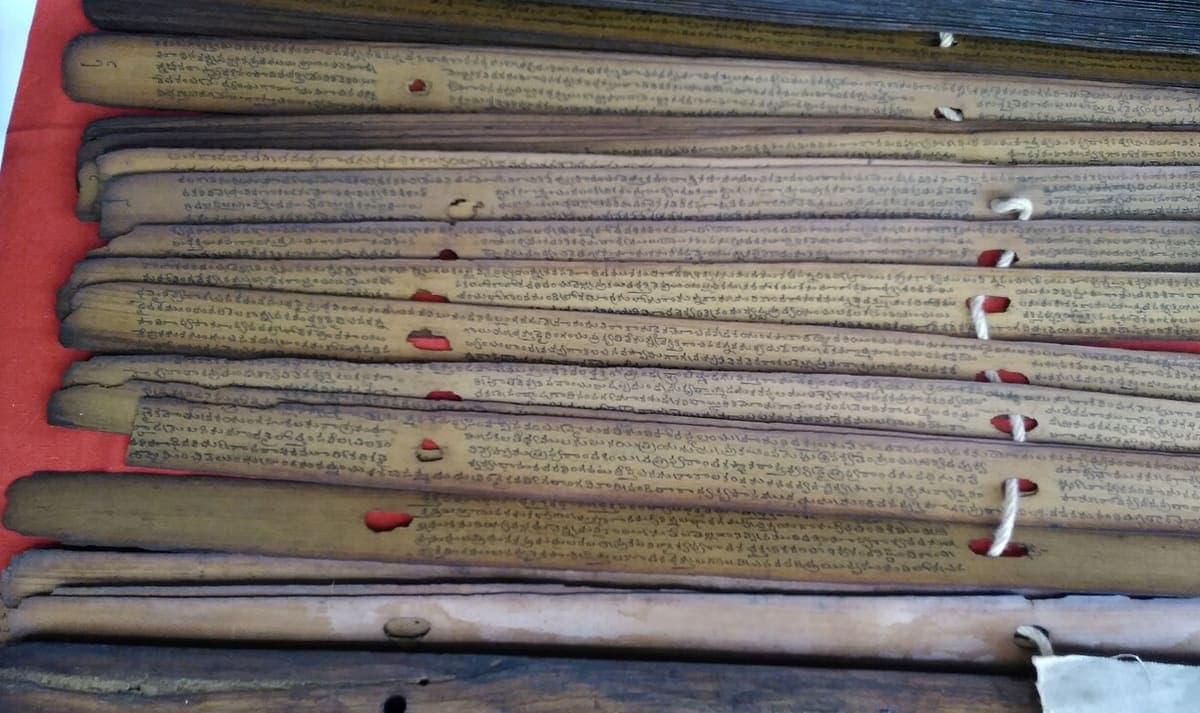
Source · CC BY-SA 4.0 · విశ్వనాధ్.బి.కె.
Evidano Transcription
[palm-leaf text illegible]
బసవ పురాణము
రచయిత : పాల్కురికి [?] సోమనాథుడు
విషయం : పురాణము
Generated by Evidano’s advanced model; not yet checked against a published edition.
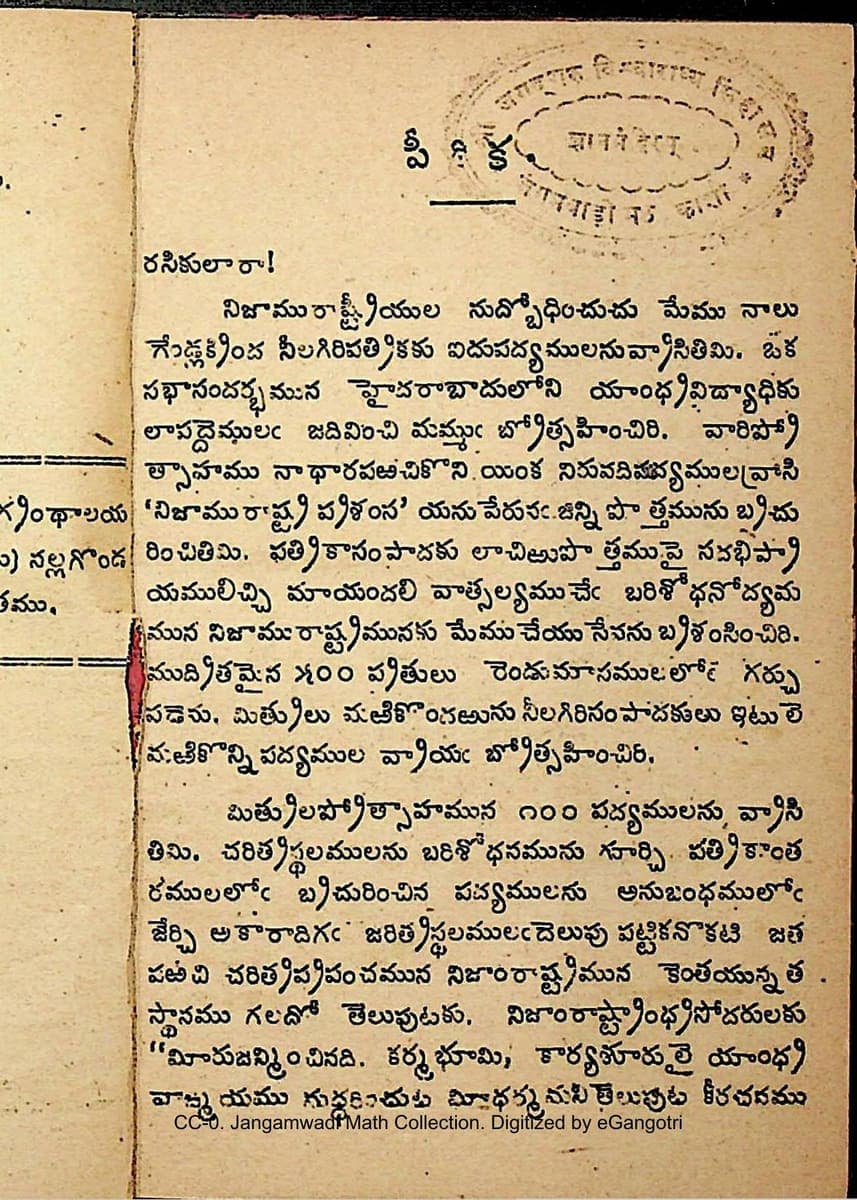
Jangamwadi Math collection, digitised by eGangotri, via Internet Archive, 1926 · Source · CC0 1.0 · Sheshadri Ramana Kavi
Evidano Transcription
The first paragraphs of the preface shown on this page, as proofread on Telugu Wikisource against this same scan (proofread once, quality level 1 of 4 — not yet checked by a second proofreader). Wiki markup and the page-running-head template are removed; paragraph breaks follow the source.
పీఠిక
రసికులారా!
నిజాము రాష్ట్రీయుల నుద్బోధించుచు మేము నాలుగేండ్లక్రింద నీలగిరిపత్రికకు ఐదుపద్యములను వాసితిమి. ఒక సభాసందర్భమున హైదరాబాదులోని యాంధ్రవిద్యాధికులాపద్దెములఁ జదివించి మమ్ముఁ బ్రోత్సహించిరి. వారి ప్రోత్సాహము నాధారపఱచికొని యింక నిరువది పద్యముల వ్రాసి గ్రంథాలయ 'నిజాము రాష్ట్ర ప్రశంస' యను పేరునఁ జిన్ని పొత్తమును బ్రచురించితిమి. పత్రికాసంపాదకు లాచిఱుపొత్తము పై సదభిప్రాయములిచ్చి మాయందలి వాత్సల్యము చేఁ బరిశోధనోద్యమమున నిజాము రాష్ట్రమునకు మేము చేయు సేవను బ్రశంసించిరి. ముద్రితమైన 500 ప్రతులు రెండు మాసములలో గర్చుపడెను. మిత్రులు మఱికొందఱును నీలగిరిసంపాదకులు ఇటులె మఱికొన్ని పద్యముల వ్రాయఁ బ్రోత్సహించిరి,
మిత్రులప్రోత్సాహమున ౧౦౦ పద్యములను వ్రాసితిమి.
Source: పుట:Nizam Rashtra Prashamsa ( Telugu) By Sheshadri Ramana Kavi, 1926.djvu/7, Telugu Wikisource (CC0 1.0).
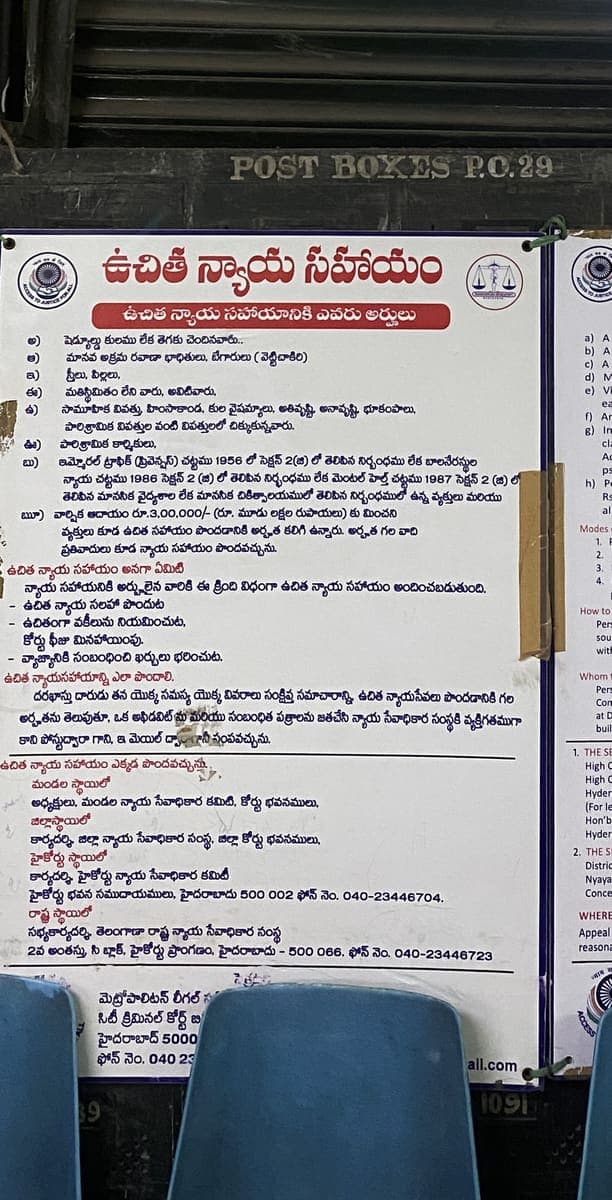
Source · CC BY-SA 4.0 · Mouryan
Evidano Transcription
POST BOXES P.C.29
ఉచిత న్యాయ సహాయం
ఉచిత న్యాయ సహాయానికి ఎవరు అర్హులు
అ) షెడ్యూల్డు కులము లేక తెగకు చెందినవారు..
ఆ) మానవ అక్రమ రవాణా భాధితులు, బేగారులు ( వెట్టిచాకిరి)
ఇ) స్త్రీలు, పిల్లలు,
ఈ) మతిస్థిమితం లేని వారు, అవిటివారు,
ఉ) సామూహిక విపత్తు, హింసాకాండ, కుల వైషమ్యాలు, అతివృష్టి, అనావృష్టి, భూకంపాలు,
పారిశ్రామిక విపత్తుల వంటి విపత్తులలో చిక్కుకున్నవారు.
ఊ) పారిశ్రామిక కార్మికులు,
ఋ) ఇమ్మోరల్ ట్రాఫిక్ (ప్రివెన్షన్) చట్టము 1956 లో సెక్షన్ 2(జ) లో తెలిపిన నిర్బంధము లేక బాలనేరస్థుల
న్యాయ చట్టము 1986 సెక్షన్ 2 (జ) లో తెలిపిన నిర్బంధము లేక మెంటల్ హెల్త్ చట్టము 1987 సెక్షన్ 2 (జ) లో
తెలిపిన మానసిక వైద్యశాల లేక మానసిక చికిత్సాలయములో తెలిపిన నిర్బంధములో ఉన్న వ్యక్తులు మరియు
ౠ) వార్షిక ఆదాయం రూ.3,00,000/- (రూ. మూడు లక్షల రుపాయలు) కు మించని
వ్యక్తులు కూడ ఉచిత సహాయం పొందడానికి అర్హత కలిగి ఉన్నారు. అర్హత గల వాది
ప్రతివాదులు కూడ న్యాయ సహాయం పొందవచ్చును.
ఉచిత న్యాయ సహాయం అనగా ఏమిటి
న్యాయ సహాయనికి అర్హులైన వారికి ఈ క్రింది విధంగా ఉచిత న్యాయ సహాయం అందించబడుతుంది.
- ఉచిత న్యాయ సలహా పొందుట
- ఉచితంగా వకీలును నియమించుట,
కోర్టు ఫీజు మినహాయింపు. - వ్యాజ్యానికి సంబంధించి ఖర్చులు భరించుట.
ఉచిత న్యాయసహాయాన్ని ఎలా పొందాలి.
దరఖాస్తు దారుడు తన యొక్క సమస్య యొక్క వివరాలు సంక్షిప్త సమాచారాన్ని, ఉచిత న్యాయసేవలు పొందడానికి గల
అర్హతను తెలుపుతూ, ఒక అఫిడవిట్ ను మరియు సంబంధిత పత్రాలను జతచేసి న్యాయ సేవాధికార సంస్థకి వ్యక్తిగతముగా
కాని పోస్టుద్వారా గాని, ఇ మెయిల్ ద్వా[illegible]నీ పంపవచ్చును.
ఉచిత న్యాయ సహాయం ఎక్కడ పొందవచ్చును.
మండల స్థాయిలో
అధ్యక్షులు, మండల న్యాయ సేవాధికార కమిటీ, కోర్టు భవనములు,
జిల్లాస్థాయిలో
కార్యదర్శి, జిల్లా న్యాయ సేవాధికార సంస్థ, జిల్లా కోర్టు భవనములు,
హైకోర్టు స్థాయిలో
కార్యదర్శి, హైకోర్టు న్యాయ సేవాధికార కమిటీ
హైకోర్టు భవన సముదాయములు, హైదరాబాదు 500 002 ఫోన్ నెం. 040-23446704.
రాష్ట్ర స్థాయిలో
సభ్యకార్యదర్శి, తెలంగాణా రాష్ట్ర న్యాయ సేవాధికార సంస్థ
2వ అంతస్తు, సి బ్లాక్, హైకోర్టు ప్రాంగణం, హైదరాబాదు - 500 066. ఫోన్ నెం. 040-23446723
మెట్రోపాలిటన్ లీగల్ స[cut off]
సిటీ క్రిమినల్ కోర్ట్ బ[cut off]
హైదరాబాద్ 5000[cut off]
ఫోన్ నెం. 040 23[cut off]
[cut off]all.com
[English panel at right edge cut off]
Generated by Evidano’s advanced model; not yet checked against a published edition.
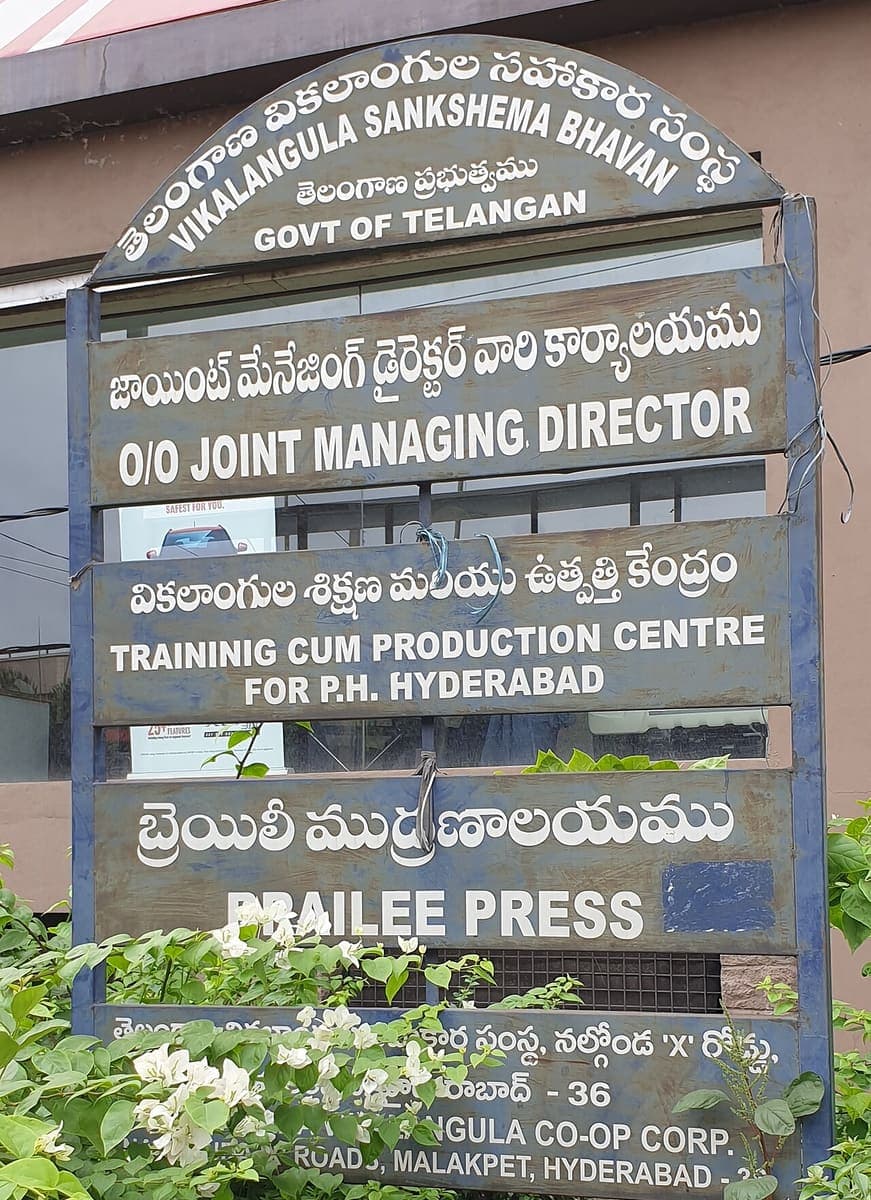
Source · CC BY-SA 4.0 · Rajasekhar1961
Evidano Transcription
తెలంగాణ వికలాంగుల సహకార సంస్థ
VIKALANGULA SANKSHEMA BHAVAN
తెలంగాణ ప్రభుత్వము
GOVT OF TELANGAN
జాయింట్ మేనేజింగ్ డైరెక్టర్ వారి కార్యాలయము
O/O JOINT MANAGING DIRECTOR
వికలాంగుల శిక్షణ మరియు ఉత్పత్తి కేంద్రం
TRAININIG CUM PRODUCTION CENTRE
FOR P.H. HYDERABAD
బ్రెయిలీ ముద్రణాలయము
BRAILEE PRESS
తెలం[illegible]కార సంస్థ[?], నల్గొండ 'X' రో[illegible],
[illegible]బాద్ - 36
[illegible]NGULA CO-OP CORP.
[illegible] ROADS, MALAKPET, HYDERABAD - 3[illegible]
Generated by Evidano’s advanced model; not yet checked against a published edition.
What Telugu text looks like on the page
Telugu and Kannada share a common ancestor script that split into two recognisably separate traditions by around the thirteenth century; Telugu literary writing is usually dated from Nannaya’s eleventh-century translation of the Mahabharatam. Both scripts owe their rounded, looping letterforms to the palm leaf: a stylus dragged in a straight line along the leaf’s fibres tends to split it, so scribes favoured curves, and print later inherited the same shapes. Devotional and narrative literature such as the Basava Purana and the Andhra Mahabhagavatam survive today mostly in palm-leaf bundles copied by generations of temple and monastery scribes.
The script is an abugida with a large resulting glyph set. Consonant clusters are written with a vattu, a reduced form of the second consonant attached below the main letter rather than beside it, so க்ஷ-type combinations such as క్ష, స్త్ర and ద్ర are built downward rather than across the line. Several vowel signs do not simply add a stroke to a consonant but reshape its lower curve entirely, so the same base consonant can look markedly different depending on which vowel it carries. Telugu also has its own numerals, now rare outside older printing, and classical verse is marked with abbreviations for its metre — సీ for sīsa, తే.గీ. for tēṭagīti and others — set into the line rather than kept as a separate heading.
Everyday material spans this whole range: a temple’s palm-leaf holdings sit alongside a small-press book from the early twentieth century, whose type can already look slightly different from a modern font, and government notices and signage that mix formal Telugu with English department names, addresses and phone numbers on the same board.
Why ordinary OCR struggles here
Conjuncts that hang below the letter
A vattu consonant cluster is built downward from the main letter rather than written beside it, and several vattu shapes bear little resemblance to the full-size consonant they represent. Reading the cluster right means recognising the pair as a unit, not two unrelated marks.
A vowel sign that changes the consonant’s shape
Some Telugu vowel signs do not simply attach a stroke to a consonant; they reshape its lower curve outright, so the same consonant looks different from one vowel to the next. A model has to learn a family of related shapes as one letter rather than treat each as a separate glyph.
A very large glyph inventory
Combining roughly sixty base letters with vattu conjuncts and vowel reshaping produces thousands of possible visual forms, most of them rare. Metal-type Telugu printing needed hundreds of separate sorts for exactly this reason, and recognition faces the same long tail of uncommon combinations.
Verse metre markers mistaken for stray text
Classical poetry is printed with short abbreviations such as సీ or తే.గీ. marking the metre of the lines that follow, set into the body of the page rather than as a heading. Generic OCR can read these as garbled words or drop them, losing information about the poem’s structure.
Who works with this material
Temple and matha manuscript projects
Purana and devotional literature such as the Basava Purana survives largely in palm-leaf bundles held by temples and mathas, and cataloguing them starts with a reliable reading of each leaf’s title, extent and condition.
Historians of Hyderabad State and Telugu small-press printing
Early twentieth-century books from presses like Osmania Press carry ownership stamps, dedication verses and metre markers that a researcher needs read accurately to place a copy within a text’s publishing history.
Civic and welfare administration
Government notices, cooperative-society signage and welfare-scheme boards mix formal Telugu with English department names and contact details, and an index needs the numbered eligibility points and addresses kept intact.
Genealogists and land-record researchers
Family papers and revenue records combine printed forms with handwritten Telugu entries, and getting names, village names and dates right matters more than the boilerplate wording around them.
Getting the best transcription
Say what kind of material the page is
Tell the model whether it is looking at a palm-leaf manuscript, an early-twentieth-century press edition, or modern print or signage, since letterforms and layout conventions differ across the three.
Ask for vattu conjuncts to be kept as one cluster
Request that a subscript vattu consonant be transcribed as the cluster it forms with the letter above it, rather than split into two unrelated characters.
Preserve verse structure and metre markers
For classical poetry, ask for metre abbreviations such as సీ or తే.గీ. and the poem’s own line breaks to be kept, rather than reflowed into an ordinary prose paragraph.
Start with the hardest image in a batch
Run a manuscript or a multi-panel sign before a run of uniform print. If the model correctly separates the panels or leaves and reads the conjuncts, the rest of the batch usually needs only a light check.
Frequently asked questions
- Can it read vattu conjunct consonants correctly?
- Yes. A vattu form attached below a consonant is read as the cluster it represents, including the reduced shapes that no longer closely resemble their full-size letter.
- Does it know that some vowel signs reshape the consonant rather than just adding a mark?
- Yes. The related family of shapes a single consonant can take with different vowel signs is recognised as that one consonant, not as separate, unrelated letters.
- Can it read an old palm-leaf Telugu manuscript?
- Incised, blackened text on palm leaf is read as such, including several leaves photographed together, though a badly cracked or very worn leaf may still need a specialist’s check.
- Will classical verse metre markers and line breaks be kept?
- Yes, when you ask for them. Metre abbreviations and a poem’s own line divisions can be preserved rather than reflowed into prose paragraphs.
- Can it read Telugu numerals?
- Yes, along with the standard Arabic numerals used in most modern Telugu printing; both are transcribed as written.
- Can it handle a bilingual Telugu-English sign or government notice?
- Yes. Telugu and English panels or lines are transcribed in place and kept distinguishable from each other rather than merged into one block of text.
Related scripts and pages
Transcribe your Telugu documents
Upload a scan or a photograph — a printed page, a government notice, a sign or a manuscript leaf — and check the Telugu transcription line by line before you export it.