
French · Image to Text
A thousand years of French writing, hand by hand
French has been written since 842, and nearly every century since has found a new way of doing it. Pick the domain that matches your material — a Carolingian book, a Gothic romance, a fifteenth-century register, a notary’s minute — and the transcription follows the conventions of that hand.
Choose the hand or document type
 Old French in Caroline and Proto-Gothic Manuscriptsc. 900–1200Transcribe the earliest French: the Strasbourg Oaths, Eulalie, the Clermont Passion and the Oxford Roland in Caroline and proto-Gothic book hands.
 French Gothic Textualis Manuscriptsc. 1200–1400Transcribe French textualis: an architect’s notebook, the Bible historiale, Machaut and the Roman de la Rose, with checked readings where editions exist.
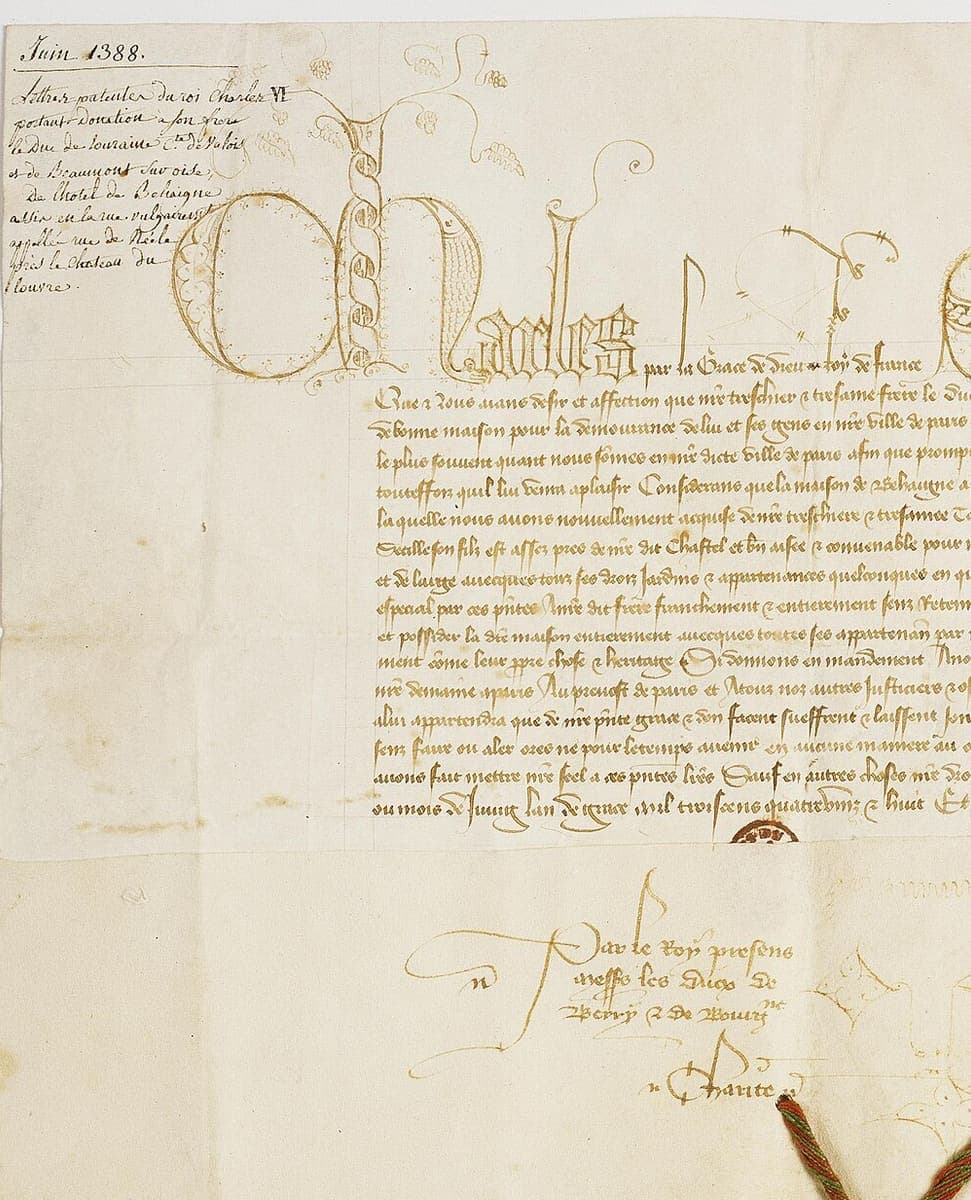 French Bâtarde and Cursive Documentary Handsc. 1350–1500Transcribe lettre bâtarde and chancery cursive: royal letters patent, a Parlement register, a letter of Jeanne d’Arc and a 1474 censier.
 French Renaissance Secretary and Humanistic Handsc. 1500–1650Transcribe French secretary, italic and hybrid hands: Henri IV’s autograph letters, the Edict of Nantes, Montaigne’s marginalia and a notary’s will.
 French Notarial and Administrative Handsc. 1650–1800Transcribe French minutes, registers and royal letters of 1650–1800: Molière’s marriage contract, a lettre de rémission, a parish act, 1789.
Transcribing French across the centuries
The earliest French survives by accident, a few dozen lines of Romance tucked into Latin books. From about 1200 the language acquires libraries of its own, and from the fourteenth century the written record of government as well — a shift the ordinance of Villers-Cotterêts confirmed in 1539. What is left is enormous and unevenly described: charters and registers in the Archives nationales and every departmental archive, notarial minutes by the shelf-kilometre, parish registers in unbroken series.
The hands change faster than the language. Caroline minuscule gives way to a narrow, biting textualis; the pen then stops being lifted and produces bâtarde and the looped cursives of the chancery; the sixteenth century mixes a fast secretary hand with imported italic in a single sentence; and the offices of the ancien régime settle into a sloping cursive whose abbreviations, ruled line-fillers and marginal registrations matter as much as its wording.
The people who read these pages are editors of Old French texts, art historians cataloguing illuminated books, archivists writing item-level descriptions, genealogists working through notarial and parish series, and historians of law and the household economy. Each domain page sets out what its hand looks like, why generic OCR fails on it, and how to brief and check a transcription.
Not sure which hand you have?
Upload a page, pick the closest domain, and test the prompt on one page before running the rest. You can switch domains at any time.