
English · Image to Text
Every kind of English page, from vellum to a phone screen
English has been written for thirteen centuries, and almost nothing about the page has stayed still: the alphabet gained and lost letters, the hand changed four times over, and the sheet became a form, a receipt, a whiteboard and a screenshot. Evidano takes each of these on its own terms rather than treating them all as printing.
Choose the hand or document type
 Handwritten ContentTurn handwritten letters, diaries, field notebooks and meeting notes into text, with margin additions, arrows and crossings-out kept in reading order.
 Forms and QuestionnairesRead completed forms, applications and questionnaires so every answer stays tied to its printed field, with ticks, blanks and skipped questions marked.
 Scanned DocumentsRead scanned reports, memos and typescripts in the right order, with stamps, marginalia, running heads and scan artefacts handled as what they are.
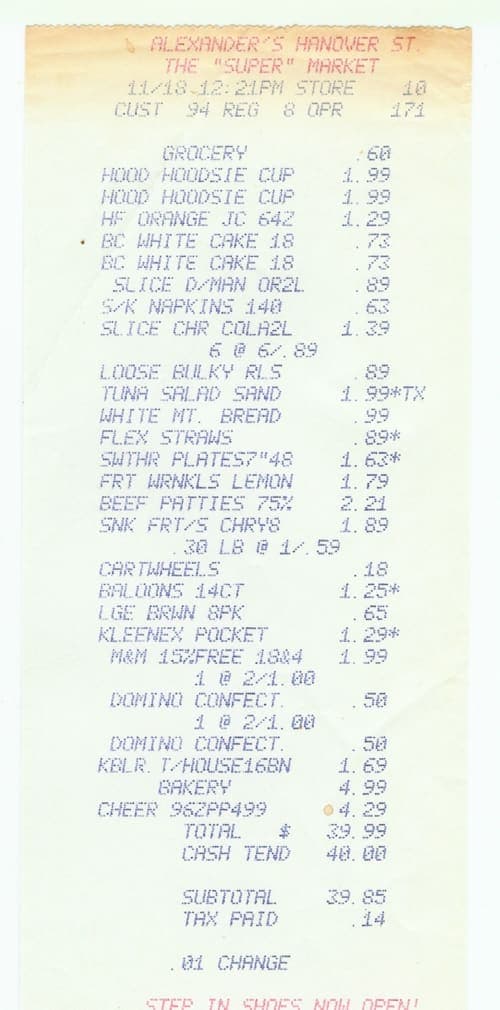 Business and Financial DocumentsRead invoices, receipts, ledgers and statements so every amount stays on its own line, with subtotals, tax flags, item codes and ditto marks preserved.
 Screenshots and Digital CapturesRead screenshots so interface labels stay apart from what people wrote, keeping handles, timestamps, badges, counts and text cut off by an ellipsis.
 Educational MaterialsTurn textbook pages, worksheets, handouts and marked-up class notes into text, with equations, numbered exercises and teacher corrections kept apart.
 Whiteboards and Workshop MaterialsCapture whiteboards, flip charts and walls of sticky notes as structured text, keeping clusters, arrows, colours and each note separate from the next.
 Signs, Labels, and Printed MaterialsRead shop signs, packaging, notices and newspaper pages, keeping the size hierarchy, prices, units, date codes and the words inside a logo.
 Official and Identity DocumentsRead certificates, permits, applications and travel papers as fields: names, numbers, dates, stamps and signatures, with personal data handled deliberately.
 Tables and Structured ContentTurn printed tables, timetables and scored forms into rows and columns, keeping merged cells, stacked headers, blank cells and footnote markers.
 Old English Insular Manuscriptsc. 700–1066Transcribe Old English manuscripts in Insular and square minuscule: wynn, thorn, eth, Insular g and the Tironian ⁊, on real folios with checked transcriptions.
 English Manuscriptsc. 1060–1220Transcribe post-Conquest English books: Insular letters inside Caroline and early Gothic hands, in chronicles, law codes, Domesday and glossed psalters.
 Later Middle English Manuscriptsc. 1250–1500Transcribe Anglicana, secretary and Textualis hands: yogh and thorn, minim thickets, con- and per- brevigraphs, pilcrows and tail-rhyme brackets.
 Tudor and Jacobean Secretary, Italic, and Mixed Handsc. 1500–1650Transcribe English secretary, italic and mixed hands: letters, bonds, accounts and registers, with superscript contractions and Roman-numeral money kept.
 Round Hand and Georgian Administrative Recordsc. 1650–1800Transcribe English round hand and engrossing hand: indentures, receipt books, ledgers and registers, with long s, ditto marks and pounds, shillings and pence.
Transcribing English across the centuries
The oldest layer is Insular and square minuscule, with wynn, thorn, eth and the Tironian sign standing where modern letters do not. After 1066 English books appear in Caroline and proto-Gothic hands beside Latin; from about 1250 Anglicana and secretary fill romances and devotional books, piling minims into ridges and abbreviating with signs no keyboard carries. Tudor clerks mix secretary with italic in one sentence, and by 1700 the round hand of the copybooks has taken over deeds, ledgers and parish registers.
The rest of what people send is modern: notebooks, questionnaires with tick boxes, photocopied files, receipts, worksheets marked in red, whiteboards shot at an angle, packaging small print, certificates, timetables and captures of an inbox. Each has its own failure: a scrambled table column, a checkbox read as a letter, a menu label mistaken for what someone typed.
The people doing this work are editors and palaeographers, archivists, genealogists, teachers, analysts pulling figures out of print, and anyone holding a photograph they need as text. Pick a period or a document type below; each page shows real examples, with checked transcriptions where a published one exists.
Not sure which hand you have?
Upload a page, pick the closest domain, and test the prompt on one page before running the rest. You can switch domains at any time.